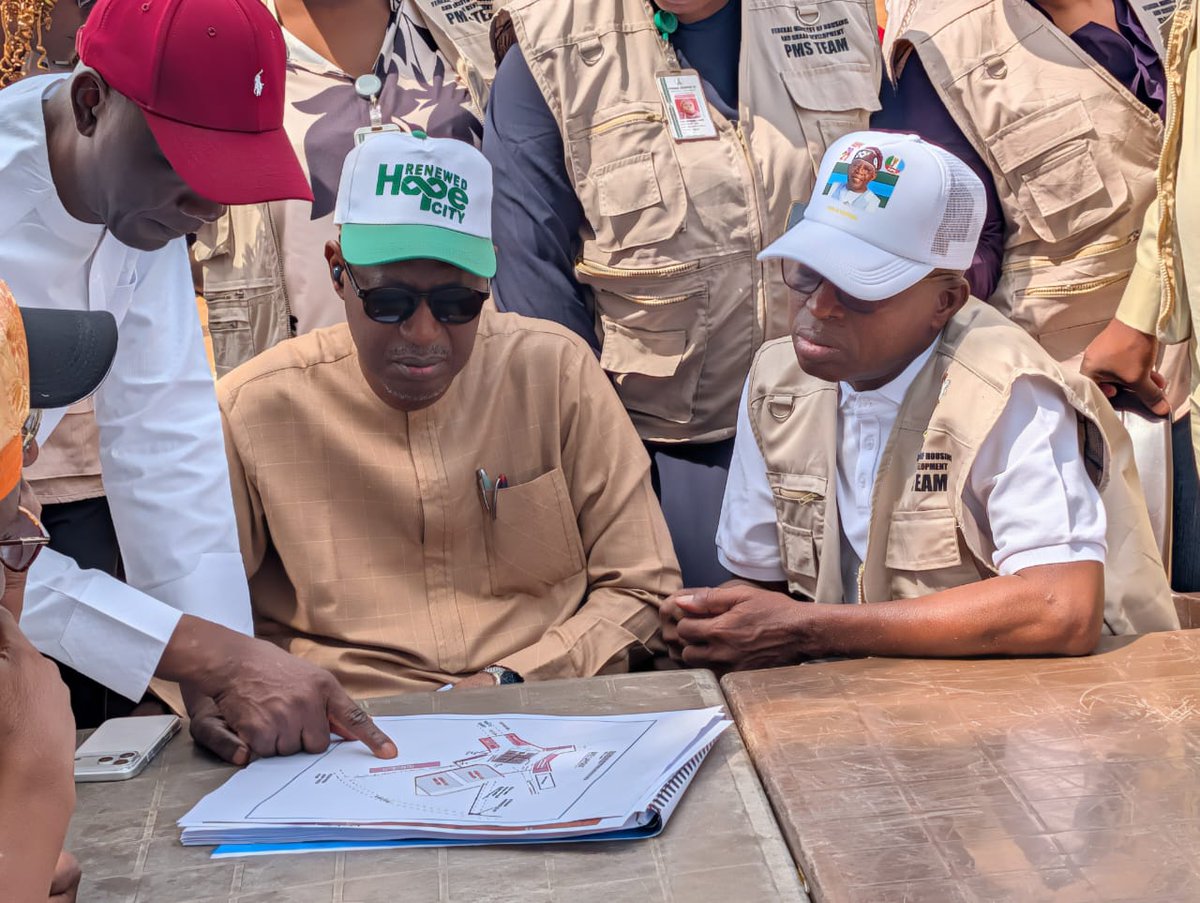
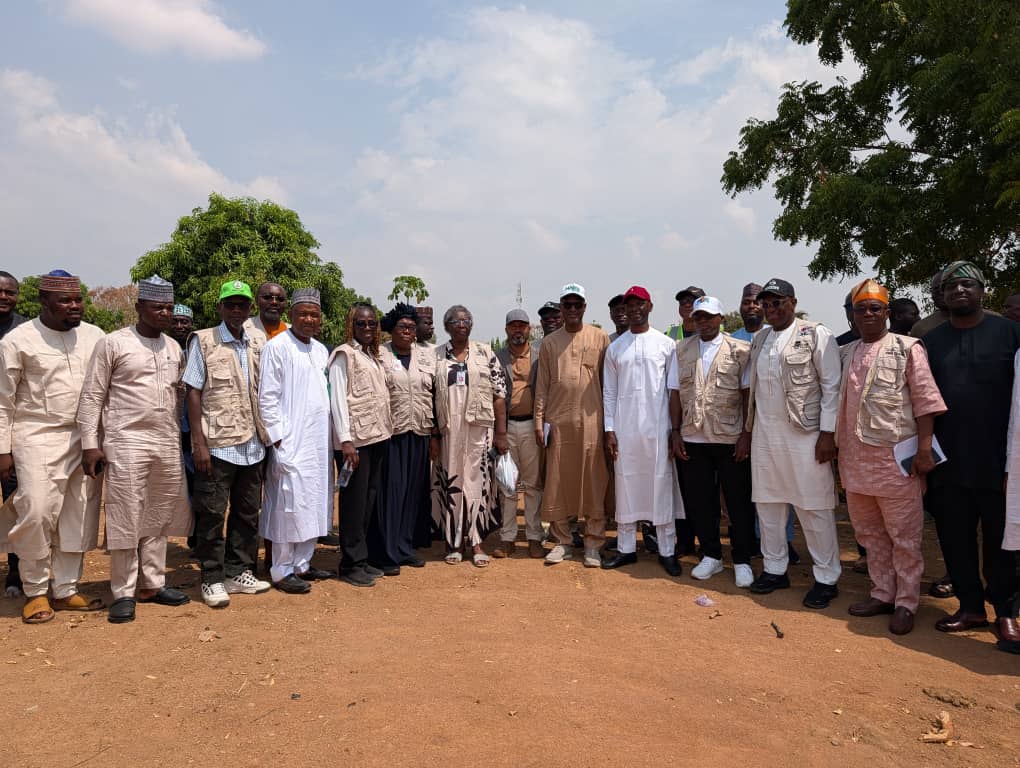
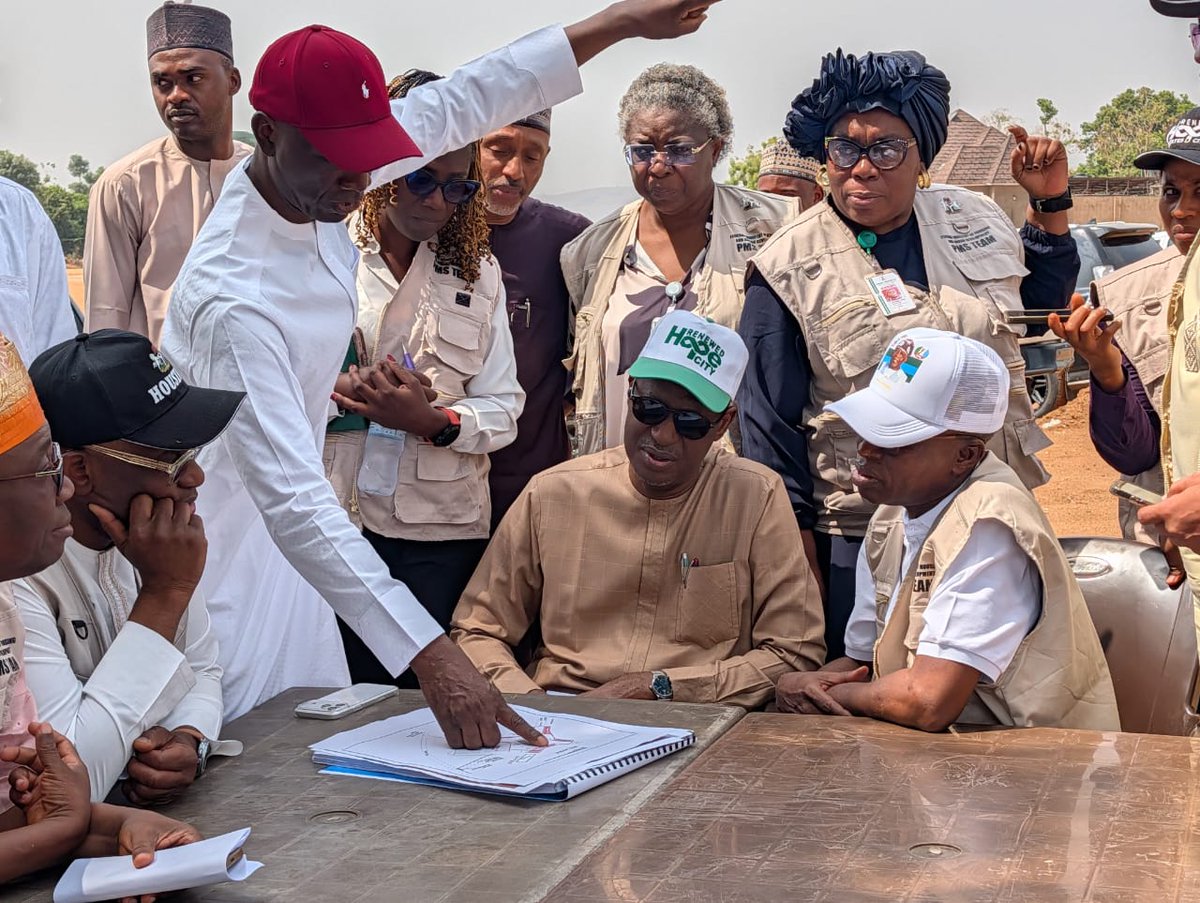
Good news for motorists, businesses, farmers and communities along the Abuja–Kaduna–Zaria–Kano corridor!
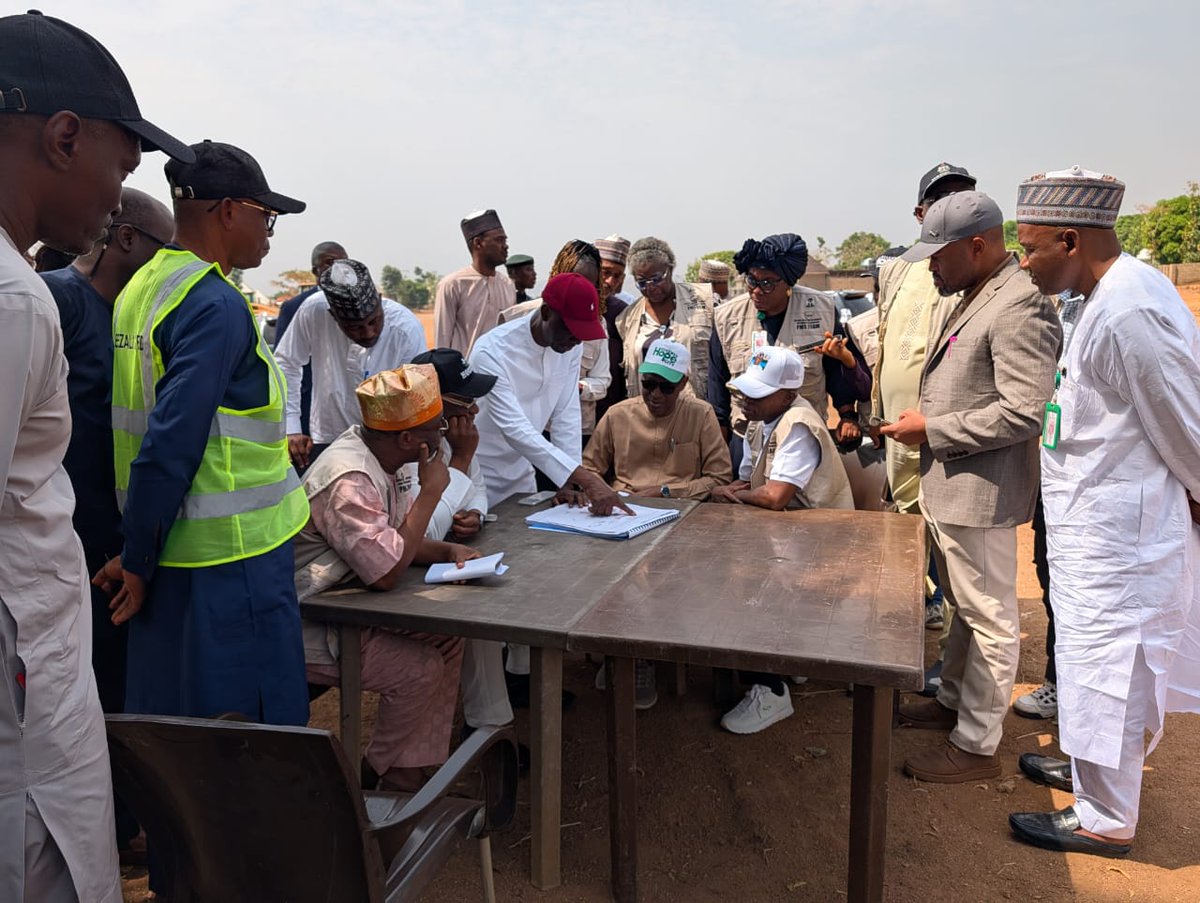
Tomorrow, Wednesday, 21 October 2026, I will be there to see President Bola Ahmed Tinubu, GCFR, officially commission 30.58 kilometres of the reconstructed Zaria–Kano Expressway, covering the Malam Aminu Kano Teaching Hospital–Karfi corridor and parts of Kunkumi in Kano State.
The commissioning is scheduled for 12 noon at Tamburawa Village, KM 382, Abuja–Kaduna–Zaria–Kano Expressway, Kano State.
Congratulations to His Excellency, President Bola Ahmed Tinubu, GCFR, the Honourable Minister of Works, Engr. David Nweze Umahi, and the entire Federal Ministry of Works team on this important milestone.
LET'S TALK ABOUT HOUSING
Housing affects almost every part of our lives. Where we live affects how far we travel to work, where our children go to school, how much we spend on rent and transport, and even our general quality of life.
Yet for millions of Nigerians, owning a decent home is still difficult. And the problem is not simply that we are not building enough houses. There are many other issues involved: the cost of land, access to mortgages, infrastructure, people's incomes, building costs, planning and government policies.
As Executive Director of the Housing, Urban Research and Development Initiative (HURDI), I want to use this platform to talk about these issues in a simple and practical way.
I will be sharing useful information for people who want to own homes, explaining how mortgages and other housing options work, discussing research and policy ideas, and looking at lessons we can learn from other countries.
Along the way, I hope we can answer some important questions: Why are houses so expensive? Why is getting a mortgage still difficult for many Nigerians? How can we make it easier and safer to buy land? How do we provide roads, water, drainage and other infrastructure as our cities continue to grow?
And, most importantly: How can we make decent housing and homeownership possible for more Nigerians?
These are some of the questions we are interested in at HURDI.
I don't expect that every question will have a simple answer. But I believe that when people understand how housing works, they are in a better position to make good decisions — and we can also have better conversations about what needs to change.
So, let's talk about housing.
Mark Chieshe
Executive Director
Housing, Urban Research and Development Initiative (HURDI)
#LetsTalkHousing #Housing #Homeownership #UrbanDevelopment #HURDI #Nigeria
YOUR LATE FATHER OR MOTHER MAY HAVE MONEY WITH FMBN THAT YOUR FAMILY HAS NEVER CLAIMED.
Yes, really. If your parent, spouse or relative worked in the civil service or another organisation where National Housing Fund (NHF) contributions were deducted from their salary, there could be contributions due for refund.
Here is something many people don't know: NHF contributions are not lost when you retire. When an NHF contributor retires from employment, the contributions are refundable, together with the applicable interest, in line with the NHF rules.
And if the contributor dies before collecting the refund, the money does not simply disappear. The next of kin or legal personal representative can make a claim, subject to FMBN's documentation and verification requirements.
So, if your father or mother retired after many years in the civil service, or you have a deceased spouse or relative who contributed to NHF, please check. There may be money due to them that the family simply doesn't know about.
What will FMBN need? For a retired contributor, FMBN will generally need information and documents that enable it to identify the contributor, confirm the NHF account and contributions, establish retirement, and process payment.
These may include the NHF registration/account details, means of identification, retirement letter or evidence of retirement, bank account details/BVN and completed refund documentation.
For a deceased contributor, the family should be prepared to provide information such as the contributor's name and NHF details, death certificate, identification of the claimant, evidence establishing the claimant's legal authority or relationship to the deceased, bank details and other documents FMBN may require to verify and process the claim.
Don't worry if you don't have every document immediately. Start by contacting FMBN with the contributor's full name and any employment or NHF information you can find. They can advise you on the records available and the exact documents required for your particular case.
In 2025 alone, FMBN refunded about ₦15.6 billion to more than 55,000 contributors.
If you are a retired NHF contributor, or the next of kin of a deceased contributor, it is worth making that enquiry.
Contact FMBN Customer Service on 0903 633 2566, 0902 323 9419, 0805 788 1824 or 0809 600 0018. You can also reach them on WhatsApp via 0809 999 0027 or 0809 999 0028.
Visit https://t.co/ueYFPd5VLQ or the nearest FMBN office for further information.
Please share this with your family, friends, retirees and especially the children and next of kin of deceased civil servants.
Someone you know may have NHF money waiting to be claimed — and the family may simply not know about it.
This is Homeownership Insights with Mark Chieshe
#HomeownershipInsights #NHF #FMBN #NHFRefund #Retirement #CivilServants
SO, HOW DO I ACTUALLY APPLY FOR AN FMBN MORTGAGE?
I’ve been getting quite a few questions about this, so let me make it simple.
If you contribute to the National Housing Fund (NHF) and want to access the FMBN mortgage at 6% interest, your application is processed through a Primary Mortgage Bank accredited by FMBN.
So the next question is usually: Which mortgage bank do I talk to?
You actually have a number of options.
If you’re in Abuja, you can start with First Generation Mortgage Bank on 0815 139 0727 or WhatsApp 0905 115 4975. There is also Infinity Trust Mortgage Bank on 0908 712 1713, Platinum Mortgage Bank on 0705 555 2585, Jubilee-Life Mortgage Bank on 0201 277 2492 or 0703 333 0245, and Nigeria Police Mortgage Bank on 0810 098 3639 or 0815 419 0109.
FHA Mortgage Bank is another option, with its head office at Plot 52, 3rd Avenue, Gwarinpa, Abuja.
And you are certainly not limited to Abuja.
You can also enquire from Abbey Mortgage Bank on WhatsApp 0913 444 4840, LivingTrust Mortgage Bank on 0916 000 0243, Lagos Building Investment Company (LBIC) on 0908 000 0721 or 0916 434 6568, Gateway Mortgage Bank on 0708 547 2393 or 0805 600 2373, and AG Mortgage Bank on 0815 554 3000 or 0806 653 4112.
Other mortgage institutions you may come across include Homebase Mortgage Bank, Akwa Savings & Loans, Delta Trust Mortgage Bank, Jigawa Savings & Loans, Brent Mortgage Bank and other PMBs participating in the mortgage market.
You don’t need to call everybody.
Pick one or two that are convenient for you and start the conversation.
Tell them you are an NHF contributor interested in an FMBN NHF Mortgage Loan. Ask them to check your eligibility, income, NHF contribution history and the property you want to buy. They can then tell you what you may qualify for and what documents you need.
And here is why I think it is worth asking. An eligible NHF contributor can currently access up to ₦50 million at 6% interest per annum, with repayment spread over as long as 30 years, subject to income, age, affordability and other requirements.
If the mortgage bank you want to use is not mentioned here, don't worry. This is not the complete list.
For the full and current list of FMBN-accredited Primary Mortgage Banks, visit the official FMBN website:
https://t.co/ueYFPd5VLQ
You can also confirm directly with FMBN Customer Service on 0903 633 2566, 0902 323 9419, 0805 788 1824 or 0809 600 0018, or WhatsApp 0809 999 0027 / 0809 999 0028.
One thing I keep telling people who ask me about homeownership is: don't disqualify yourself before you even ask.
A ₦30 million or ₦40 million house can look frightening when you focus on the full price. With a mortgage, the more useful questions are: How much do I need to start? How much can I borrow? And what will I pay every month?
So make that first call. Ask questions. Find out what you qualify for.
You may be closer to owning your home than you think.
#HomeownershipInsights #FMBN #NHF #Mortgage #Homeownership #AffordableHousing #HousingNigeria
THINKING ABOUT BUYING A HOME? TALK TO MREIF
I get quite a number of questions about how to reach MREIF, so let me make it easy.
If you earn a regular income and you're thinking about buying a home, the MOFI Real Estate Investment Fund (MREIF) is worth checking out. Their mortgage currently comes at 9.75% interest per year, with repayment of up to 20 years, and you can start with an equity contribution from 10%.
You don't need to figure everything out before contacting them. Just reach out, tell them what you earn and the kind of house you're looking at, and find out what you may qualify for.
You can call MREIF on 0201 330 1828, 0201 330 1829 or 0201 414 5855. You can also email [email protected] or [email protected], or visit https://t.co/mH9UEoesK0 to get started.
Sometimes, the best first step towards owning a home is simply finding out what is possible.
Give them a call. Ask questions. See what you qualify for.
Homeownership Insights with Mark Chieshe
#HomeownershipInsights #MREIF #Mortgage #Homeownership #HousingNigeria
YOU DON’T NEED ₦50 MILLION TO BUY A ₦50 MILLION HOUSE!
Let me share something that might change the way you think about buying a house. You see a house you like. It costs ₦50 million. You check your savings and say, “₦50 million? I can’t afford this.”
But wait. Who says you must have the entire ₦50 million in cash?
That’s where a mortgage comes in. For example, if you qualify for a mortgage that requires 20% upfront, you need ₦10 million to start — not ₦50 million. The mortgage finances the balance, and you pay it back gradually over several years.
So the next time you see a house you like, don’t immediately ask: “Where will I get ₦50 million?”
Ask instead: “How much do I need upfront?”; “What mortgage can I qualify for?”
And most importantly: “Can I comfortably afford the monthly repayment?”
Those three questions can completely change the way you look at homeownership. So, don’t disqualify yourself before you even find out what is possible.
You may be closer to owning your own home than you think.
I’m Mark Chieshe, and this is Homeownership Insights.
HOMEOWNERSHIP INSIGHTS
If you have a steady income and have been thinking about owning a home, don’t assume it is beyond your reach. There are actually some good options out there.
FMBN, Family Homes Funds and M-REIF have homeownership programmes that allow you to start with as little as 10% equity and spread payment over many years.
My advice to you is to give it a try and make the enquiry.
I have worked around Nigeria’s housing and mortgage sector for over 15 years, and from what I know, you may have a much better chance of pulling it through than you think.
FMBN: https://t.co/ueYFPd5VLQ | 0903 633 2566
Family Homes Funds: https://t.co/a1qAfbYsKr | 0906 000 8043
M-REIF: https://t.co/mH9UEoesK0 | 0201 330 1828
Homeownership Insights by Mark Chieshe - Executive Director, Housing, Urban Research and Development Initiative (HURDI)
You Have More Options Than You Think.
Over the past two years, four government-backed institutions have been quietly helping thousands of these Nigerians who know and are taking action to finance and own their homes. They are: the Federal Mortgage Bank of Nigeria (FMBN), MOFI Real Estate Investment Fund (MREIF), Nigeria Mortgage Refinance Company (NMRC) and Family Homes Funds Limited (FHFL).
In 2025 alone, FMBN financed the constrution of 6,911 housing units. It also disbursed N8.2 billion in individual NHF mortgages , while another N7.1 billion helped 367 Nigerians acquire homes through its Rent-to-Own programme.
MREIF, had by June 2026 provided about N128 billion in mortgages to 1,859 Nigerian families across 25 states. Family Homes Funds also expanded access through its Help-to-Own programme by facilitating 208 long-term mortgages worth N6.74 billion.
Then there is NMRC, which works a little differently. You don't normally go to NMRC to collect a mortgage directly. Instead, NMRC works behind the scenes by providing long-term funding to commercial banks and primary mortgage banks, enabling them to offer longer-term mortgages to Nigerians. NMRC has deployed about N22.3 billion to finance mortgage portfolios of mortgage lenders.
These are solid government-backed institutions and programmes that are making Nigerians homeowners. And together, they represent some of the most affordable homeownership financing options available in the country today.
With FMBN, an eligible NHF contributor can access up to N50 million at 6% per annum, repayable for up to 30 years. With MREIF, you can access substantially larger mortgages at a current fixed rate of 9.75% per annum, repayable for up to 20 years, with equity contribution starting from 10%. And with Family Homes Funds' Help-to-Own, a qualifying first-time homebuyer can start with just 10% equity, while FHFL and participating mortgage institutions provide the remaining financing.
What this means is that you have more options today to own a home than you did five years ago. So, if you earn a decent and regular income, live in rented accommodation and have never seriously tried to own your home by engaging any of these institutions, I encourage you to try. Don't just conclude that you cannot afford a house simply because you don't have N30 million, N50 million or N100 million sitting in your bank account.
Find out what you qualify for first. You may be surprised that with your income and the right equity contribution, you can begin the journey from tenant to homeowner sooner than you think.
I say this from experience. I have spent over 15 years working in Nigeria’s housing sector as a consultant, strategist and policy analyst.
For those of you who are interested, I have pulled the contact information of these information so you can contact them directly to start.
FMBN
https://t.co/ueYFPd5VLQ
09-2920689, 09-2920690
[email protected]
MREIF
https://t.co/mH9UEoesK0
+234 (0) 201 330 1828 / +234 (0) 201 330 1829
[email protected]
Family Homes Funds Limited
https://t.co/a1qAfbYsKr
+234 (0) 813 988 0390 / +234 (0) 906 000 8043
[email protected]
My advice to you is that: If you are already paying millions of naira in rent every year, find out whether that same income can help you start paying for a home of your own.
You really have more options than you think. Good luck!
About two years ago, when the Renewed Hope City – Karsana Abuja started selling, you could buy a 1-bedroom flat for about N22 million and a 3-bedroom terrace duplex for N65 million.
A couple of my friends made what has turned out to be a very smart decision. They did not wait until they had N22 million or N65 million sitting in their bank accounts. Instead, they used FMBN NHF mortgage loans to lock in those prices and spread payment over 20–25 years. With about 20% equity contribution, that meant they needed roughly: N4.4 million to secure the 1-bedroom flat; N13 million to secure the 3-bedroom terrace duplex.
Today, the 1-bedroom flat that sold for N22 million is now selling for about N27.5 million — an increase of N5.5 million, or 25%. The 3-bedroom terrace duplex that sold for N65 million is now going for about N90 million — an increase of N25 million, or about 38.5%.
What is interesting is that those my friends and several other Nigerians who subscribed have not finished paying for these houses. In fact, they still have many years left on their mortgages. But they are already enjoying the appreciation in the value of the properties they bought.
If you haven't acted yet, it may still not be too late. Take the 1-bedroom flat currently selling for N27.5 million as an example. If you qualify for an FMBN NHF mortgage and make a 20% equity contribution of N5.5 million, you will need a mortgage of about N22 million. At 6% per annum over 20 years, your indicative monthly mortgage repayment would be approximately N158,000.
Your mortgage repayment is about N158,000 per month, or roughly N1.9 million a year.
Interestingly, the annual rent for a 1 bedroom in that location is in excess of N2.5M. This means the rent alone from the property will pay your mortgage.
Interested - click this link to start: https://t.co/NmhMR6mauq
Homeownership Insights By Mark Chieshe – Executive Director Housing, Urban Research and Development Initiative (HURDI)
I have been active in the housing sector for over fifteen years. And I can tell you that things are changing for the better. Nigerians today have more convenient options to own a home than they did five years ago without necessarily breaking the bank.
One major government initiative that has made this possible was the introduction – two years ago – of Ministry of Finance Incorporated Real Estate Investment Fund (M-REIF).
With MREIF, eligible Nigerians can now access long-term mortgage financing to purchase homes, with repayment periods of up to 20 years. The current MREIF offering provides mortgages at a fixed interest rate of 9.75% per annum, with equity contribution starting from 10%, subject, of course, to income, credit and other eligibility requirements.
For more information, you can visit the official MREIF website: https://t.co/Ul3jz4AIpu. M-REIF is currently financing mortgages for houses been built under the Renewed Hope Housing Programme including Renewed Hope City Karsana in Abuja, Renewed Hope City – Ibeju Lekki, Lagos and Renewed Hope City – Janguza, Kano State. These houses range from N27.5M to N90M. This means if you have N3M – N9M you can begin the process to owning your home. Check the website: https://t.co/oqk1e7HZ9g...
Five years ago, outside of government institutions like FMBN NHF Mortgage loan and Family Homes Funds Limited, if you wanted to get a mortgage from a commercial bank or primary mortgage bank to buy an already built house, you would have to cough out at least 30 percent as equity contribution. You would then pay double digit annual interest rates ranging from 18-35% per annum, on the loan the bank provided to complete the purchase. In many cases, the repayment period was no more than about fifteen years.
What this means in simple terms is that if you wanted a N70M house in Abuja for instance – you would first need to save or find N21M from your own pocket as the 30 percent equity contribution. The Bank would then advance you the remaining N49M as loan to get the house. At a 25% interest rate per annum over a 15-year period, this means you will pay approximately N1M every month for 180 months. By the end of the 15 years, you would have paid the bank approximately N188.35 million on a loan of just N49 million. That means roughly N139.35 million of your repayments would be interest alone.
And remember: before taking the loan, you had already contributed N21 million as your deposit. Put the two together and the ₦70 million house would have cost you approximately N209.35 million by the time you finished paying for it — almost three times its original purchase price.
With MREIF, that burden has been reduced substantially. Let us use the same N70 million house. Instead of looking for ₦21 million as a 30% deposit, a 10% equity contribution means you could potentially start with about N7 million, subject to the applicable lender's terms and your eligibility.
That leaves a mortgage of approximately ₦63 million. At the current MREIF rate of 9.75% per annum over 20 years, the indicative monthly repayment on a N63 million mortgage would be approximately N598,000 per month. Compare that with the approximately N1.05 million per month in our earlier example. We have a a reduction of roughly N450,000 in the monthly repayment burden.
There is another important difference: time. Instead of squeezing repayment into 15 years at a very high interest rate, MREIF allows the mortgage to be spread over as much as 20 years. If a N70 million property is beyond your income, look lower. MREIF mortgages are available for lower amounts too.
We still have a long way to go in bringing down the cost of housing and mortgage finance. But compared with where we were five years ago, the road to owning a home is becoming wider.
My goal with Homeownership Insights is to help you understand these options in simple, practical language — what is available, how it works, what it will cost you and how you can determine whether it is right for you.
#HomeownershipInsights #MortgageNigeria #MREIF #AffordableHousing #HousingNigeria #OwnYourHome
Dangiwa Chairs APC Daura Zonal Committee as Radda Pushes Consensus for Party Unity
Former Honourable Minister of Housing and Urban Development, Arc. Ahmed Musa Dangiwa, has been appointed Chairman of the APC Zonal Consensus Committee for the Daura Zone in Katsina State, positioning him at the heart of the party’s preparations for its forthcoming primaries.
The announcement was made at a high-level APC stakeholders’ meeting convened by the Governor of Katsina State, Dikko Umaru Radda, who called on party members to embrace unity, discipline, and collective responsibility as the party moves toward its primaries.
Governor Radda stressed that the adoption of a consensus approach—where necessary—follows consultations with President Bola Ahmed Tinubu and is aimed at reducing internal disputes, strengthening party cohesion, and ensuring stability across party structures.
He urged aspirants to conduct themselves responsibly, cautioning against excessive spending and emphasizing that leadership must be driven by integrity, humility, and a genuine commitment to public service.
In his remarks, the APC State Chairman announced the constitution of key committees, including Consensus, Reconciliation, and Affirmation Committees, to guarantee a transparent, inclusive, and credible primary process. He expressed confidence that the consensus model—successfully adopted in other states—would deliver similar results in Katsina.
Dangiwa’s appointment as Chairman of the Daura Zonal Committee underscores his continued relevance and strategic role within the party’s structure, even after his recent exit from ministerial office.
The meeting was attended by top political figures, including ministers, members of the National and State Assemblies, party executives, and stakeholders from across all 34 local government areas of the state, reflecting broad-based engagement ahead of the primaries.
PRESS RELEASE
April 21, 2026
DANGIWA THANKS PRESIDENT TINUBU FOR OPPORTUNITY TO SERVE NIGERIA
The Honourable Minister of Housing and Urban Development, Arc. Ahmed Musa Dangiwa, has expressed profound gratitude to His Excellency, Bola Ahmed Tinubu, GCFR, for the opportunity to serve in the Federal Executive Council and contribute to the delivery of the Renewed Hope Agenda.
Reacting to the recent cabinet reshuffle approved by the President, Arc. Dangiwa described his time in office as a privilege and a call to national service, noting that he remains deeply honoured to have been entrusted with the responsibility of leading reforms in Nigeria’s housing and urban development sector.
“I wish to sincerely thank Mr. President for the confidence he reposed in me to serve as Honourable Minister of Housing and Urban Development. It has been a rare privilege to contribute to the advancement of policies and programmes aimed at expanding access to affordable housing for Nigerians,” he said.
The outgoing Minister noted that under the leadership of President Tinubu, the Ministry recorded significant strides in repositioning the housing sector as a key driver of economic growth, job creation, and social inclusion. He highlighted the rollout of the Renewed Hope Housing Programme, the strengthening of public-private partnerships in housing delivery, and ongoing reforms in land administration and housing finance as key milestones achieved during his tenure.
Arc. Dangiwa also expressed appreciation to members of the Federal Executive Council, colleagues in government, heads of housing institutions, development partners, and staff of the Ministry for their support and collaboration throughout his time in office.
“I am grateful to my colleagues in the Federal Executive Council, stakeholders across the housing value chain, and the dedicated staff of the Ministry and its agencies for their commitment and hard work. Together, we laid strong foundations for a more structured and sustainable housing delivery system in Nigeria,” he added.
While acknowledging the directive to hand over in line with the President’s decision, he assured of a smooth and orderly transition, reaffirming his commitment to the continued success of the Ministry and the broader objectives of the Renewed Hope Agenda.
He further extended his best wishes to the incoming leadership, expressing confidence that the Ministry will continue to build on the progress made and accelerate delivery in the sector.
Arc. Dangiwa reaffirmed his commitment to national development and pledged to continue supporting efforts that advance housing, infrastructure, and economic growth in Nigeria.
Signed:
Mark Chieshe
Special Assistant (Media & Strategy)
to the Honourable Minister of Housing and Urban Development
FEDERAL MINISTRY OF HOUSING AND URBAN DEVELOPMENT
Press Release
Friday, February 13, 2026
Tinubu Set To Kick off A Historic 500,000 Housing Unit MEGA RENEWED HOPE CITY In FCT/Nassarawa Uban Corridor
• Mega Renewed Hope City to Transform FCT/Nassarawa Growth Corridor - Dangiwa
The Honourable Minister of Housing and Urban Development, Arc. Ahmed Musa Dangiwa, has announced that the Federal Government is set to commence a historic 500,000-housing-unit MEGA RENEWED HOPE CITY within the FCT/Nasarawa urban corridor — one of the largest master-planned housing developments in Nigeria’s history.
The Minister made this disclosure during an inspection visit to Aso-B in Mararaba, Nasarawa State, the proposed site for the MEGA RENEWED HOPE CITY.
Spanning approximately 5,000 hectares and strategically located between Abuja and Nasarawa State, the MEGA RENEWED HOPE CITY is conceived as a modern, integrated urban district designed to significantly increase housing supply, strengthen critical infrastructure, stimulate economic activity, and support the long-term spatial development strategy of the Federal Capital Territory.
The project lies within a key urban expansion corridor, sharing boundaries with NAF Valley, Nyanya, Guruku, and the NHA Housing Scheme at Mpape. Its location is pivotal to the Federal Government’s strategy to decongest central Abuja while creating structured, sustainable residential and commercial alternatives through coordinated urban planning.
The master plan outlines six major districts — Kabuso, Guruku, Yelwa, Gbagalape, A.A. Sule, and Kudu. Each district will feature:
• Affordable and mixed-income residential communities
• Commercial and business hubs
• Schools and healthcare facilities
• Recreational and green spaces
• Integrated public utilities and modern infrastructure
The MEGA RENEWED HOPE CITY is being delivered under a structured Public–Private Partnership (PPP) framework, bringing together relevant government institutions and private sector partners with clearly defined roles to ensure efficiency, accountability, and long-term sustainability.
Under the framework:
• The Federal Ministry of Housing and Urban Development will provide overall coordination and development oversight.
• The Federal Ministry of Finance will support financing arrangements.
• The Federal Ministry of Works will be responsible for major road infrastructure.
According to Minister Dangiwa, the MEGA RENEWED HOPE CITY aligns squarely with President Bola Ahmed Tinubu’s Renewed Hope Agenda, particularly in its commitment to:
• Expanding access to affordable housing at scale
• Decongesting Abuja and improving urban liveability
• Delivering climate-responsive and resilient infrastructure
• Creating jobs and stimulating economic growth
• Promoting sustainable urban planning and environmental stewardship
“This MEGA RENEWED HOPE CITY represents a transformative step in structured urban expansion. It is about building inclusive, resilient, economically vibrant communities that will serve both present and future generations,” the Minister stated.
He further emphasised that adequate compensation and comprehensive stakeholder engagement will be ensured before full project commencement, reaffirming the Ministry’s commitment to fairness, transparency, and community inclusion.
His Excellency, President Bola Ahmed Tinubu, GCFR, is expected to perform the foundation-laying ceremony for the MEGA RENEWED HOPE CITY — marking a defining milestone in Nigeria’s housing and urban transformation journey and underscoring the administration’s resolve to unlock new growth corridors and accelerate infrastructure development nationwide.
@MSIngawa
Badamasi S Haiba, Fsca, mnipr
Director Press and Public Relations
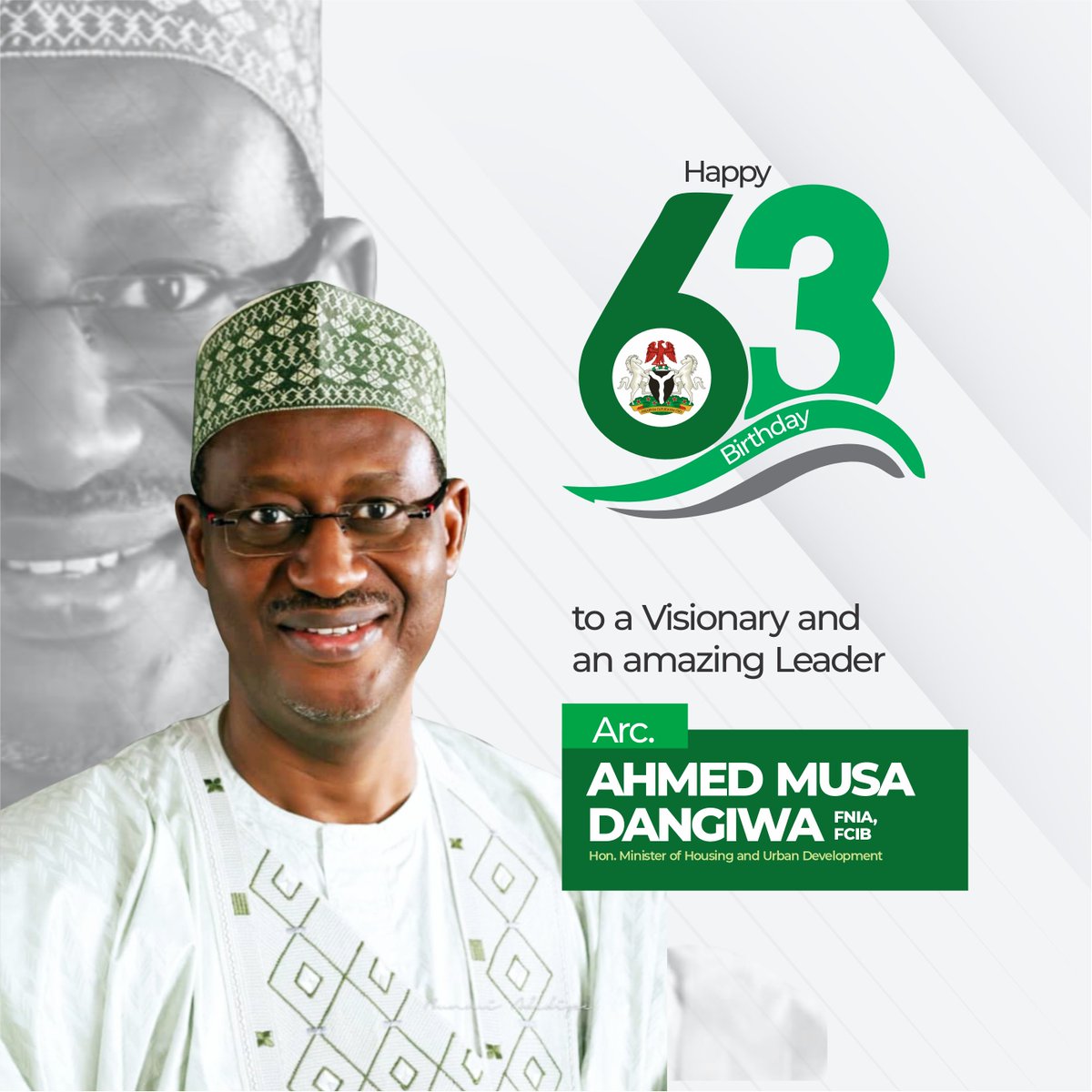
Happy 63rd Birthday to our Honourable Minister, Arc. Ahmed Musa Dangiwa fnia, fcib.
Dear Sir, we thank God for your life and celebrate you today. It has been a privilege working under your leadership and witnessing your steady, thoughtful approach to service, reform, and institution-building.
Your clarity of vision, calm leadership style, and commitment to doing things the right way continue to inspire us. We are grateful for your guidance and for the opportunity to contribute to the important work you are leading.
We wish you good health, continued strength, and many more years of impactful service to our nation.
May this new year bring you joy, peace, and even greater accomplishments.
Mark Chieshe
SA, Media & Strategy @MSIngawa
FROM DESERT TO DISTRICT: WHAT AL BARSHA REVEALS ABOUT HOUSING, LAND REFORM, AND NIGERIA’S NEXT CHAPTER - By Mark Chieshe
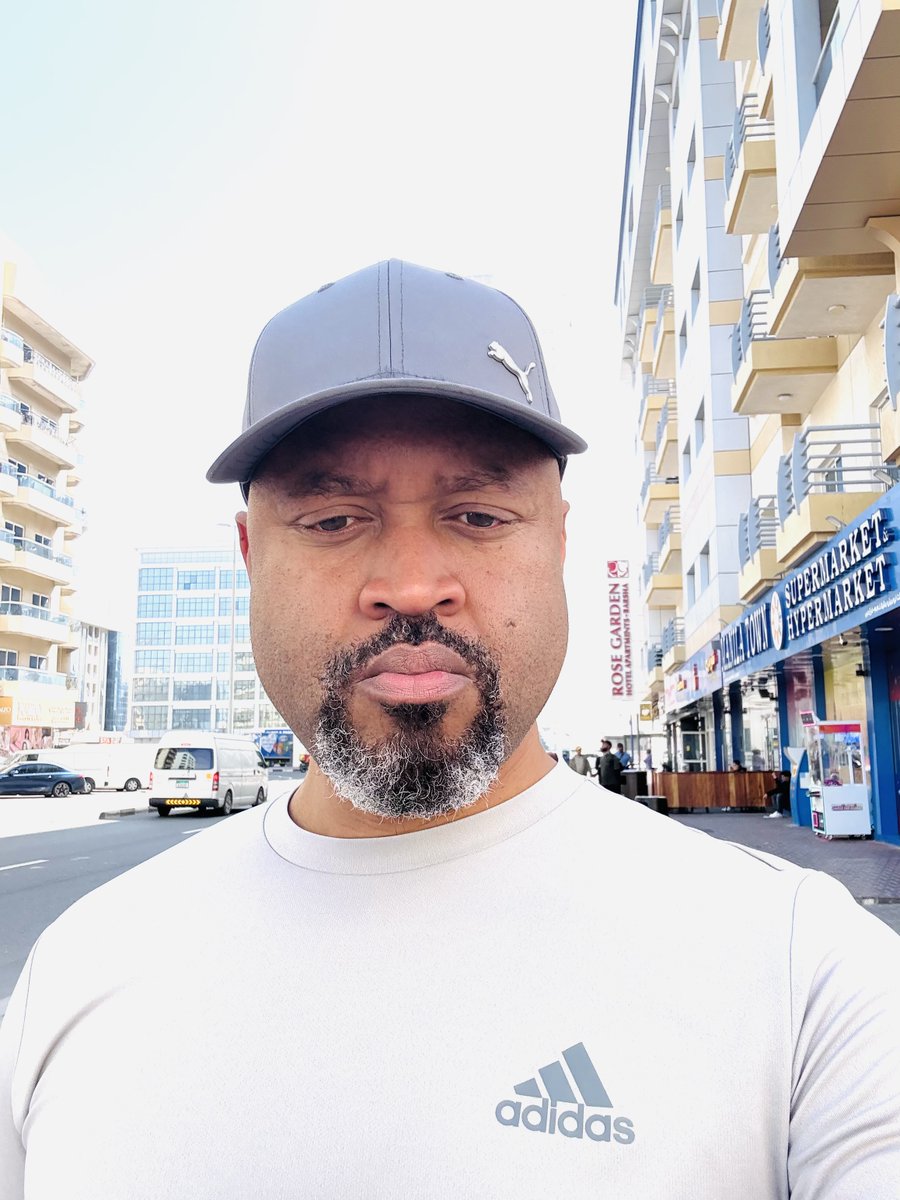
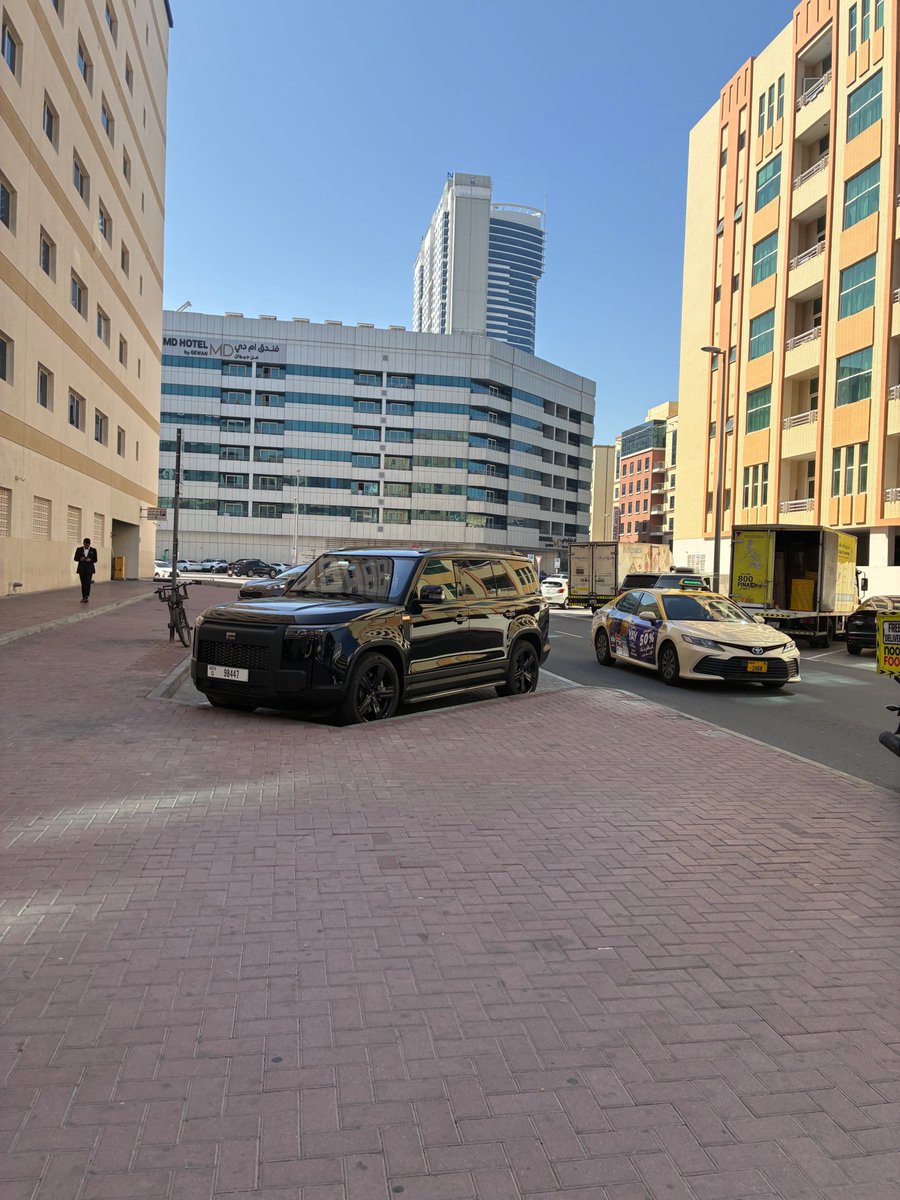
While in Dubai for the 2026 World Governments Summit in Madinat, staying in Al Barsha naturally prompts reflection on Nigeria’s own transformation journey—and the opportunity ahead.
Al Barsha’s story is instructive. As recently as 2000, it was largely undeveloped land. What changed was deliberate planning, infrastructure-first investment, clear land governance, and policies that welcomed capital and people. Today, it stands as a dense, mixed-use, opportunity-rich district.
Nigeria sits at a similar moment.
Across our cities—from Abuja and Lagos to Kano, Port Harcourt, and emerging urban corridors—we have vast underutilised land, rapid population growth, and a young, mobile workforce. What we need, just as Dubai demonstrated, is structured urban planning, serviced land, predictable land administration, and housing delivery at scale.
This is exactly what the Renewed Hope Agenda seeks to unlock in partnership with State Governments, who are the real owners of land in the country. Under the focused leadership of the Honourable Minister of Housing and Urban Development, Arc. Ahmed Musa Dangiwa, housing and urban development are being repositioned as economic infrastructure—driven by land reforms, upfront infrastructure planning, and clearly structured public–private partnerships.
When land is titled, infrastructure is planned upfront, and capital is properly mobilised, cities don’t grow by accident—they grow by design.
Al Barsha shows what is possible in one generation.
Nigeria’s task is to replicate that logic at scale—turning land into cities, cities into engines of jobs, and housing into a platform for economic growth.
That is the real lesson from Dubai—and the real opportunity for Nigeria. State Governments must key into the national housing and urban development reforms as major landowners to turn our country into cities of growth.
#RenewedHopeAgenda #UrbanTransformation #NigeriaDevelopment #HousingAndGrowth #LandReform #WGS2026 @MSIngawa
The Khuzam District, Riyadh, Saudi Arabia – Lessons for Nigeria
By Mark Chieshe, Special Assistant to the Hon. Minister of Housing and Urban Development
Last week, standing amidst the rising towers and sprawling green corridors of the Khuzam District in Riyadh, the air felt different. It wasn’t just the desert breeze; it was the palpable energy of a nation that has mastered the "Science of Delivery."
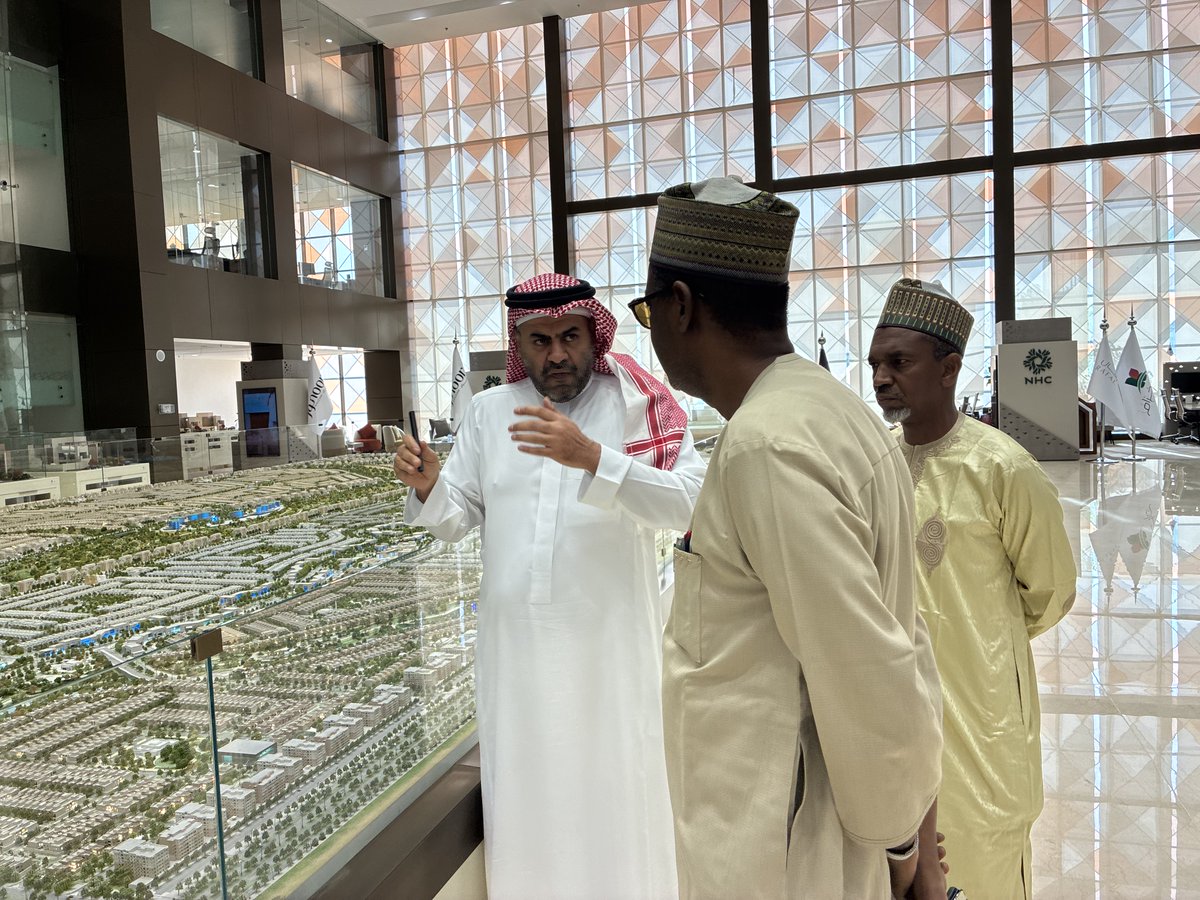
Our mission, following a successful participation at the Real Estate Future Forum (RFF) 2026, was to see firsthand how the Saudi National Housing Company (NHC) is turning ambitious blueprints into lived realities. The visit began at the NHC Headquarters, where the leadership provided the Hon. Minister, Arc. Ahmed Musa Dangiwa, with an immersive briefing on the entire design layout of the Khuzam destination.
Admittedly, the sheer size and scale of the Khuzam project are staggering, far exceeding the current scope of the Renewed Hope Cities and Estates. We are looking at an investment exceeding SAR 3.3 billion ($880 million) across a single 228,000 m² mixed-use project—part of a wider district meant to house hundreds of thousands.
However, as the Hon. Minister noted during our inspection of the already completed residential phases, it is not the volume of cash that offers the greatest lesson, but the volume of ambition and the precision of the system.
1. The Supremacy of the Masterplan
In Khuzam, they don’t build houses; they build ecosystems. Seeing the design layout revealed a level of meticulous masterplanning that ensures infrastructure (roads, electricity, water etc), schools, hospitals, and parks are ready before the first resident moves in. They adopt a "whole-of-society" approach. Masterplanning is the antidote to urban slums; it ensures that growth is intentional, sustainable, and high-value.
2. Mobilizing Private Capital at Scale
The Khuzam project is a masterclass in private sector mobilization. By partnering with international giants like Hassan Allam Holding from Egypt, the NHC has unlocked nearly $900 million in non-government funding for just one segment of the district. This is the cornerstone of our strategy that the Hon. Minister is trying to scale and enlarge so we can take on more expansive projects: the government cannot fund the housing gap alone. We are creating the avenues for private developers to lead the charge, ensuring that the "Renewed Hope" vision is powered by a robust, market-driven engine.
3. A Clear and Predictable Regulatory Environment
One thing was evident as we toured the built areas: developers are confident because the rules are clear. A transparent regulatory environment is what brought Egyptian and Saudi firms together in this district. For Nigeria, our focus is now on streamlining land titles and digitizing approvals. When the "rules of the game" are predictable, investors flock to the market.
4. Lead with Infrastructure
Perhaps the most visible lesson was that infrastructure precedes habitation. The NHC ensures that roads, power, and water are "plug-and-play." By taking on the heavy lifting of primary infrastructure, the government de-risks the project for developers and lowers the entry cost for citizens. This "Infrastructure-First" model is exactly what the Hon. Minister has embedded into the Renewed Hope Housing Programme and working to scale.
A Call to Our State Governors
A critical takeaway from this visit is the role of land ownership. In Nigeria, the Land Use Act vests land in the Governors. For the "Renewed Hope" agenda to succeed, States must adopt this "Whole-of-Society" approach to urban development. It is important for State Governments to move beyond selling isolated plots of land and instead embrace integrated masterplanning.
By providing encumbrance-free land and primary infrastructure, States can attract the kind of billion-dollar investments we saw in Riyadh, transforming their capitals into modern, organized cities.
As I departed Riyadh to Dubai, UAE for a UN Habitat function, the Hon. Minister charged that: We may not yet match the $880 million scale of a single Saudi district, but we can—and must—match their their ambition, masterplanning and discipline. @MSIngawa
PRESS RELEASE
January 31 2026
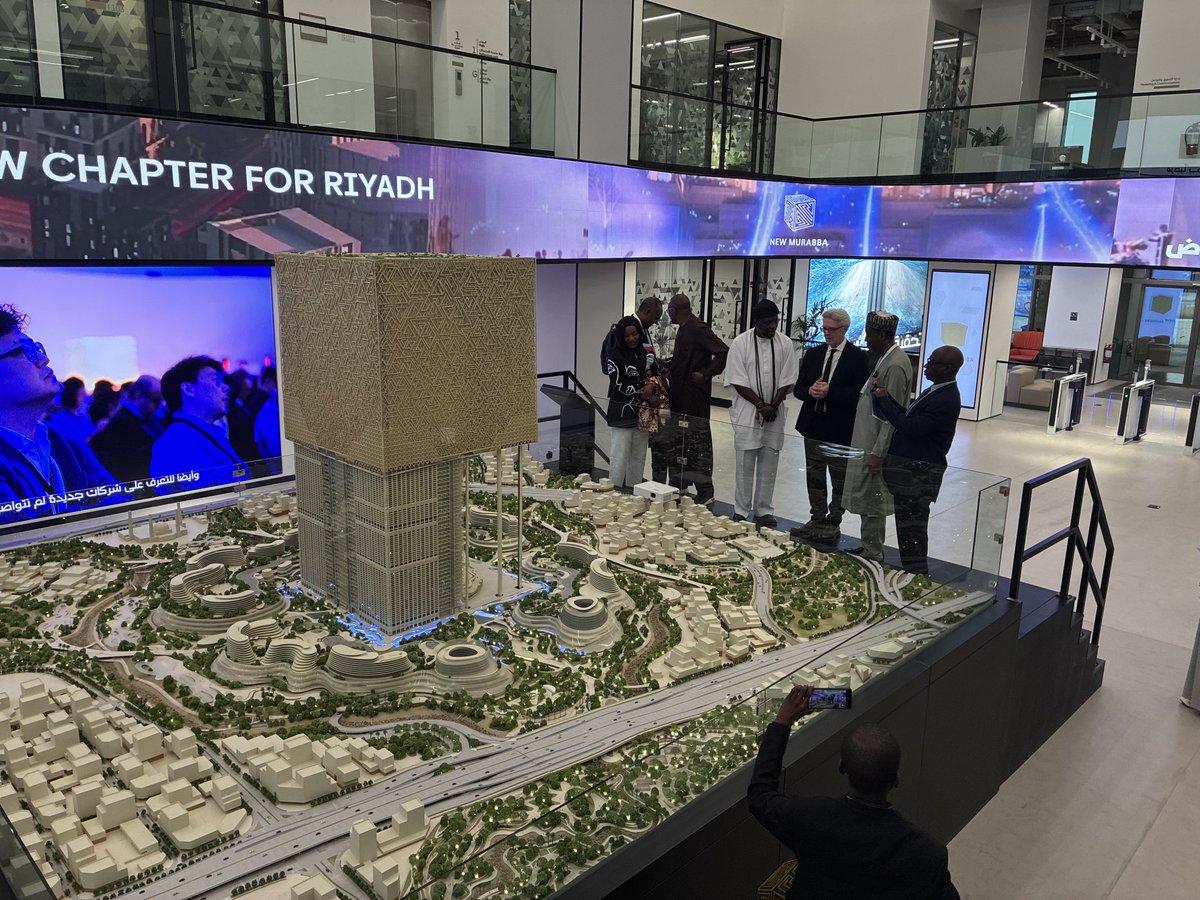
Dangiwa Leads Nigerian Housing Delegation on Strategic Visit to New Murabba Office, Explores Large-Scale Urban Development Partnerships
Riyadh, Saudi Arabia — The Honourable Minister of Housing and Urban Development, Arc. Ahmed Musa Dangiwa, has led a Nigerian housing delegation on a strategic courtesy and technical visit to the New Murabba Development Company Office in Riyadh, following Nigeria’s participation at the 2026 Real Estate Future Forum.
The delegation comprised the Managing Director of Family Homes Funds Limited, Mr. Abdul Mutallab Mukhtar, senior officials of the Federal Ministry of Housing and Urban Development, and a group of private sector real estate developers, as part of Nigeria’s broader investor engagement and global knowledge-exchange drive in housing and urban development.
The Nigerian delegation was received by the senior management team of New Murabba, led by its Chief Executive Officer, Michael Dyke, who provided an in-depth briefing on the vision, scale, governance model, financing architecture, and phased delivery strategy of the New Murabba project—one of the largest and most ambitious urban development initiatives currently underway in the Middle East.
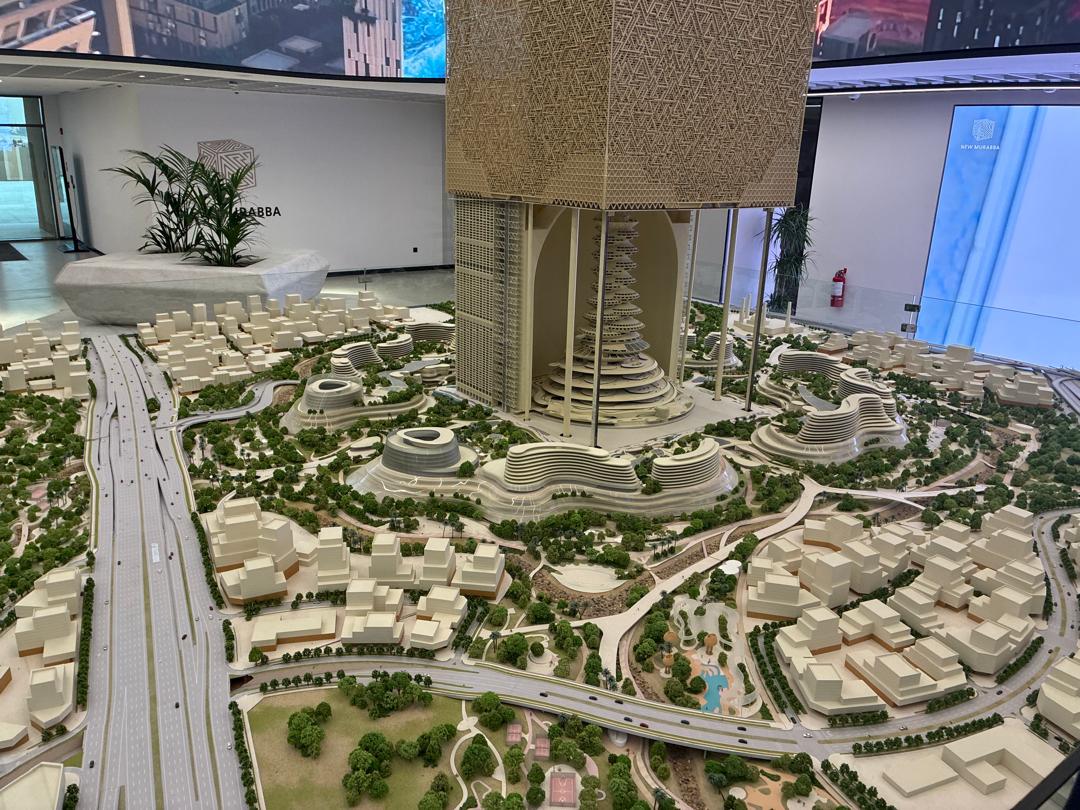
New Murabba is a flagship downtown city project located in northwest Riyadh and developed under Saudi Arabia’s Vision 2030 framework. The project covers approximately 19 square kilometres and is planned to deliver over 25 million square metres of built-up floor area upon completion.
The master-planned city is designed to accommodate:
· Over 100,000 residential units
· More than 9,000 hotel rooms
· Large-scale office, retail, leisure, and community facilities
· Extensive public realm and green spaces integrated into the urban fabric
At the centre of the development is The Mukaab, an iconic cubic structure measuring approximately 400 metres on each side, envisioned as a global destination combining immersive digital experiences, cultural attractions, hospitality, and commercial uses. The project is being delivered through a tightly coordinated institutional framework, blending public leadership with private sector execution and long-term capital mobilisation.
Discussions during the visit focused on:
· Delivery of large-scale, master-planned cities
· Integrated infrastructure and land-use planning
· Innovative financing and investment structures
· Public-Private Partnership (PPP) models
· Institutional coordination and risk-sharing frameworks
· Phased development strategies to manage scale and complexity
Speaking during the engagement, Arc. Dangiwa said Nigeria is deliberately engaging global best-practice projects to strengthen its housing and urban development delivery systems.
“Nigeria’s Renewed Hope Housing Programme is focused on scale, structure, and sustainability. Visiting New Murabba provides a clear, practical example of how large, complex cities can be planned, financed, governed, and delivered in a coordinated way,” the Minister said.
“We are particularly interested in how strong public institutions work with private developers, how risks are shared, and how delivery discipline is maintained across such a large development footprint. These lessons are highly relevant as Nigeria scales housing delivery, urban renewal, and new city development,” he added.
In his remarks, New Murabba CEO, Michael Dyke, welcomed the Nigerian delegation and highlighted the value of international technical exchange.
“New Murabba is being developed as a future-ready downtown anchored on integrated planning, long-term investment thinking, and strong governance. We are pleased to engage with Nigeria’s housing leadership and explore areas of continued dialogue and technical exchange, particularly with fast-growing economies facing similar urbanisation pressures,” Dyke said.
The Managing Director of Family Homes Funds Limited also underscored the relevance of New Murabba’s delivery approach to Nigeria’s social and affordable housing objectives, noting the importance of financing innovation, phased delivery, and alignment between public policy and private execution.
The visit concluded with mutual expressions of interest in continued engagement, structured technical knowledge exchange, and exploration of potential areas of collaboration between Nigerian housing institutions, private developers, and Saudi-based development partners.
The engagement forms part of Nigeria’s broader strategy to translate insights from the 2026 Real Estate Future Forum into practical reforms, scalable partnerships, and measurable delivery outcomes under the Renewed Hope Agenda.
Signed
Mark Chieshe
Special Assistant Media & Strategy to Hon. Minister
Federal Ministry of Housing and Urban Development @MSIngawa