Environmental writer, speaker and activist. Head of Policy @WePlanetint. Science advisor @theCVF. New book: 'Six Minutes to Winter' out now. Weekly podcast.
Can environmentalism lead to fascism?
In this season-ending episode of Saving the World from Bad Ideas, host @mark_lynas is joined by environmental journalist and author @GeorgeMonbiot to explore a new framework for understanding environmentalism. George argues that what is often treated as a single movement actually contains three distinct and frequently conflicting philosophies: Green Liberationism, Green Pragmatism, and Green Social Nostalgia.
The conversation traces the historical roots of each tradition, from anti-colonial activism and technocratic climate policy to rural revivalism and its relationship with fascism. Along the way, Mark and George discuss population debates, food systems, ecomodernism, the influence of religion on environmental thought, and the growing challenge of far-right infiltration into parts of the green movement. It is a wide-ranging examination of the ideas that shape environmental politics, and the tensions that may determine its future.
In this episode of Saving the World from Bad Ideas, Mark Lynas speaks with Anni Pokela of Operaatio Arktis about why “Hands off Mother Earth” is no longer a serious response to the climate crisis. The conversation explores how humans are already deeply entangled with planetary systems, whether through emissions, land use, or atmospheric pollution, and why the real question is no longer whether we intervene, but how we do so responsibly.
From Arctic tipping points and AMOC collapse risks to solar radiation management, social license, indigenous engagement, and the politics of research, this is a probing discussion about climate intervention in a world where inaction is itself a form of intervention.
Cobalt has become a symbol of everything wrong with the clean energy transition: child labour, unsafe mines, corruption, colonial legacies, and global supply chains built to keep consumers comfortably distant from the damage.
But the answer isn’t as simple as “move away from cobalt.”
Yes, many newer battery technologies have reduced or removed cobalt, meaning some of the worst cobalt controversies now belong partly to an earlier generation of lithium-ion batteries. That shift matters.
But cobalt remains a powerful material for battery performance. And abandoning it entirely risks dodging the real issue: broken supply chains, weak governance, and moral outsourcing.
In the latest episode of Saving the World from Bad Ideas, Mark Lynas speaks with journalist Nicholas Niarchos about cobalt mining in the Democratic Republic of Congo, and why the clean energy transition must be both fast and fair.
The problem is not the mineral.
The problem is a world that demands clean technology while tolerating dirty supply chains.
We don’t need less ambition.
We need better accountability.
Listen now.
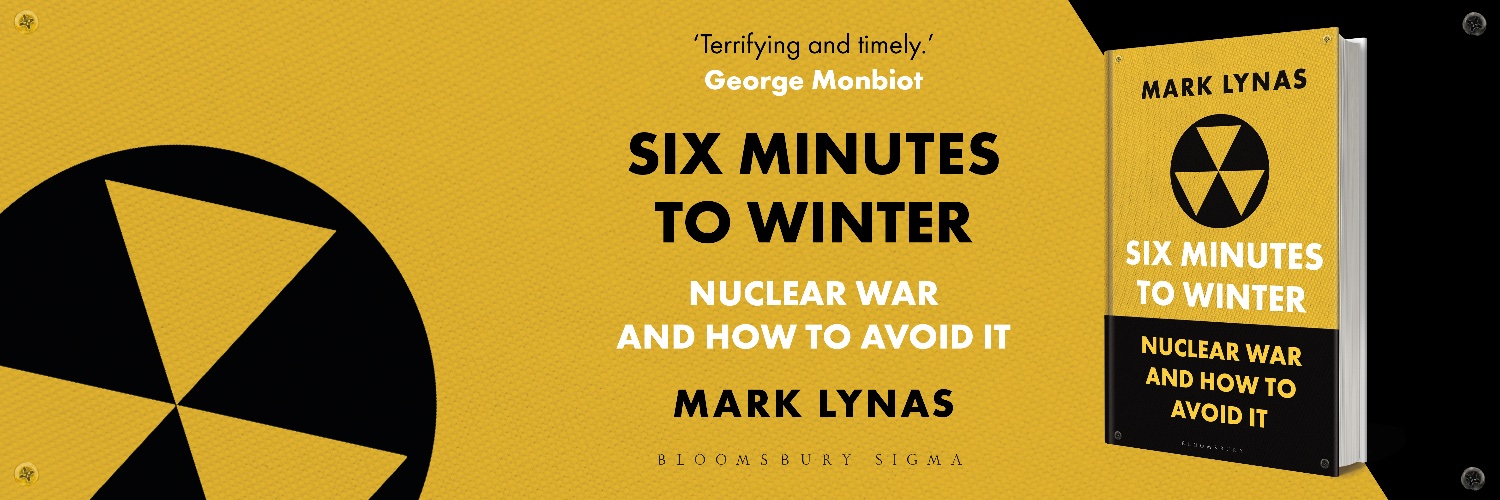
In our latest episode of Saving the World from Bad Ideas, @mark_lynas speaks with Stanford historian David Holloway about one of the most dangerous assumptions of the nuclear age: history shows nuclear war will never happen.
Drawing on Holloway’s new book Nuclear Weapons and International History, they trace the development of the bomb from the Manhattan Project to the thermonuclear age, the Cuban Missile Crisis, launch-on-warning doctrines, arms control, and the unraveling of the post-Cold War nuclear order. The conversation makes clear that the fact nuclear war has not happened yet is no guarantee it never will. Instead, it is a story of repeated near misses, fragile restraint, and a continuing risk that humanity has learned to treat as background noise.
“Attenborough’s films ignore human impacts.”
In this episode of Saving the World from Bad Ideas, Mark Lynas speaks with filmmaker and environmental storyteller Colin Butfield, co-founder of Open Planet Studios and a long-time collaborator of David Attenborough. They discuss how Attenborough’s work has evolved from classic nature spectacle toward a much more explicit confrontation with ecological destruction, restoration, and humanity’s role in shaping the living world.
Through the making of Ocean with David Attenborough, they explore the shocking reality of bottom trawling and Antarctic krill fishing, the changing grammar of nature documentaries in the Anthropocene, and why stories of damage now have to sit alongside stories of recovery. It is a rich conversation about storytelling, responsibility, and the power of film to show that human impacts can no longer be ignored.
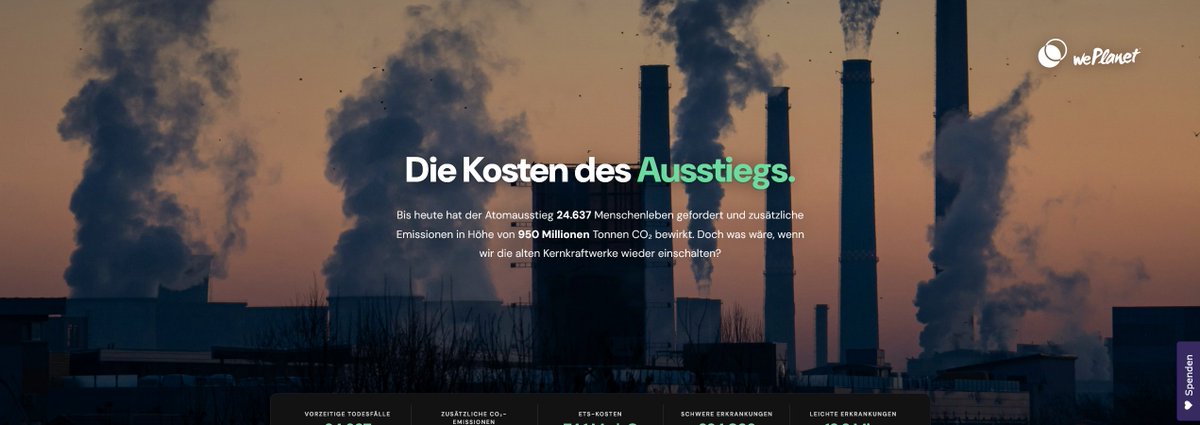
Der Atomausstieg brachte bis heute 6x Tschernobyl – neuer Bericht enthüllt erschreckende Zahlen
Am kommenden Sonntag jährt sich zum 40. Mal Tschernobyl, die größte Katastrophe in der Geschichte der Kernenergie. Einmal mehr wird die Erinnerung allenthalben zum Anlass genommen, die Angsttrommel gegen die vermeintliche "Hochrisikotechnologie" zu rühren. Wir hingegen nehmen den Jahrestag zum Anlass, eine andere Rechnung aufzumachen. Unser neuer Bericht zeigt: Von 2011 bis heute starben fast 25.000 Menschen an den Folgen zusätzlicher Luftverschmutzung aus Kohlekraftwerken, die nur liefen, um den fehlenden Strom aus Kernkraft zu ersetzen. Laut den Schätzungen der WHO sind das sechsmal mehr Tote als durch Tschernobyl.
👉Die schlimmste Atomkatastrophe der Geschichte forderte weit weniger Todesopfer als Kohleverbrennung im normalen Betrieb!
Hinzu kommen weitere Schäden durch CO₂-Emissionen und Schwermetalle, sowie weitere Kosten von über 74 Milliarden Euro allein für Emissionszertifikate. Und: In den kommenden Jahren werden diese Zahlen weiter steigen. – Es sei denn, wir schaffen einen Kurswechsel in der Energiewende inklusive Kernenergie.
👉Wir setzen uns deshalb für den Neustart der stillgelegten deutschen Reaktoren ein! Nur so können wir auch den Kohleausstieg vorverlegen.
Link zu unserer neuen Webseite und zum Bericht im ersten Kommentar!
Geothermal energy isn't niche—it's everywhere.
In this conversation, @mark_lynas speaks with Terra Rogers—program director for Superhot Rock Geothermal at @cleanaircatf—about how next-generation geothermal technology could deliver 24/7 carbon-free baseload power anywhere on Earth.
For a century, geothermal meant hunting for rare pockets where heat, water, and permeable rock aligned naturally—volcanic zones like Iceland, Japan, New Zealand. But it's hot everywhere. At 5 kilometers depth in the US West, temperatures hit 150-200°C. Go deeper—eventually to 10-15 kilometers—and you reach 400°C supercritical phase, where water acts simultaneously as liquid and gas, delivering 5-10 times more energy per well.
Borrowing from the shale gas revolution, next-gen geothermal creates artificial reservoirs by fracturing hot rock and cycling water through it—two straws in a sponge. No natural water pockets needed. Just drill, fracture, inject, extract steam, generate power, repeat. The technology exists. Forge in Utah cut drilling time from 60 days to 15 days and reduced costs 50% in three years. Fervo just sold 500 megawatts to California. Japan targets four 100-megawatt supercritical projects.
Full episode linked below.
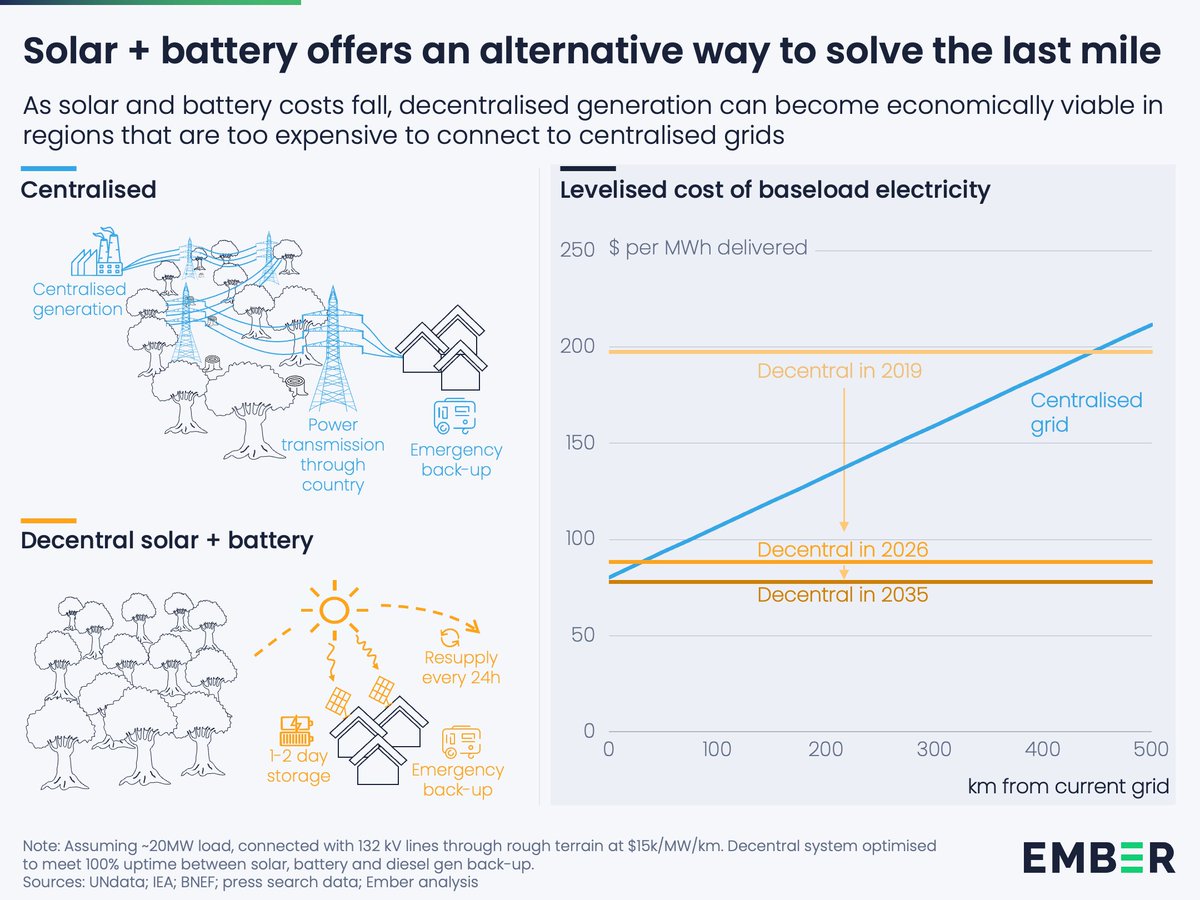
🚨 NEW | Emerging economies skipped fixed-line phone networks entirely. Now the same leapfrog is happening in energy – and it's moving faster than most people realise ⚡📱
A thread on the electric fast-track 🧵1/6
@TheCVF
https://t.co/TN6a6l7bui
Conspiracy theories are psychologically reassuring closed systems that are corroding democracy.
In this conversation, Mark Lynas speaks with Calum Matheson—associate professor and chair of Communication at the University of Pittsburgh—about why conspiracy thinking is more dangerous than ever.
The appeal is simple: know the conspiracy, and everything makes sense. You're exceptional because you see the truth while others are "sheep." Every event fits the pattern. And there's always a kernel of truth—the Epstein files validate QAnon, Purdue Pharma's opioid conspiracy fuels anti-vax narratives. Real conspiracies exist, making fake ones nearly impossible to debunk.
The problem? Conspiracy theorists use the same language we do—claiming we ignore evidence and suffer cognitive bias. Worse, conspiracy thinking now runs governments: RFK Jr. heads Health and Human Services, transvestigators claim all celebrities are secretly transgender, and deplatforming backfires.
Matheson's prescription: stop trying to demolish conspiracies with facts. Instead, teach probabilistic thinking. Science isn't absolute certainty; it's extremely high probability. We must learn to live with uncertainty and accept that expertise means "more likely to be correct," not "infallible." The goal isn't eradicating conspiracy thinking—it's mitigating its democratic corrosion.
Episode links below.
At 90 years old, Sylvia Earle has witnessed more ocean change than perhaps anyone alive. In this powerful conversation, the legendary oceanographer delivers an urgent message: we're destroying the very systems that keep us alive, and we're running out of time to stop.
But there's hope. When commercial whaling stopped in 1986, populations began recovering. The technology exists: cell-cultured fish is already on menus in Singapore and the US. The knowledge is here: we now understand that 97% of Earth's biosphere is ocean, generating most of our oxygen and maintaining habitable temperatures. The choice is ours: protect at least 30% of the high seas, stop extracting wildlife, let nature's life support system recover—or tip into a planetary phase unsuitable for eight billion people.
Grab some tea or coffee and enjoy this lovely conversation about the beauty and value of life, how our world has changed, and the hope for a better world.
Full episode linked below.
“Ultra-processed food” panic is shaping food policy in all the wrong ways.
In this episode, Mark Lynas speaks with food scientist Nesli Sözer about why processing is not the problem — poor nutrition is. From improving protein digestibility to creating sustainable alternatives to meat, food processing is essential to building a healthier, cleaner food system.
The real danger is pseudoscience slowing down innovation when we need it most.
Listen now: links below.
Should we be fishing for krill in the Antarctic?
In our latest episode, Mark Lynas connects via satellite with three researchers aboard a Sea Shepherd vessel in the Southern Ocean — one of the most remote and important whale feeding grounds on Earth.
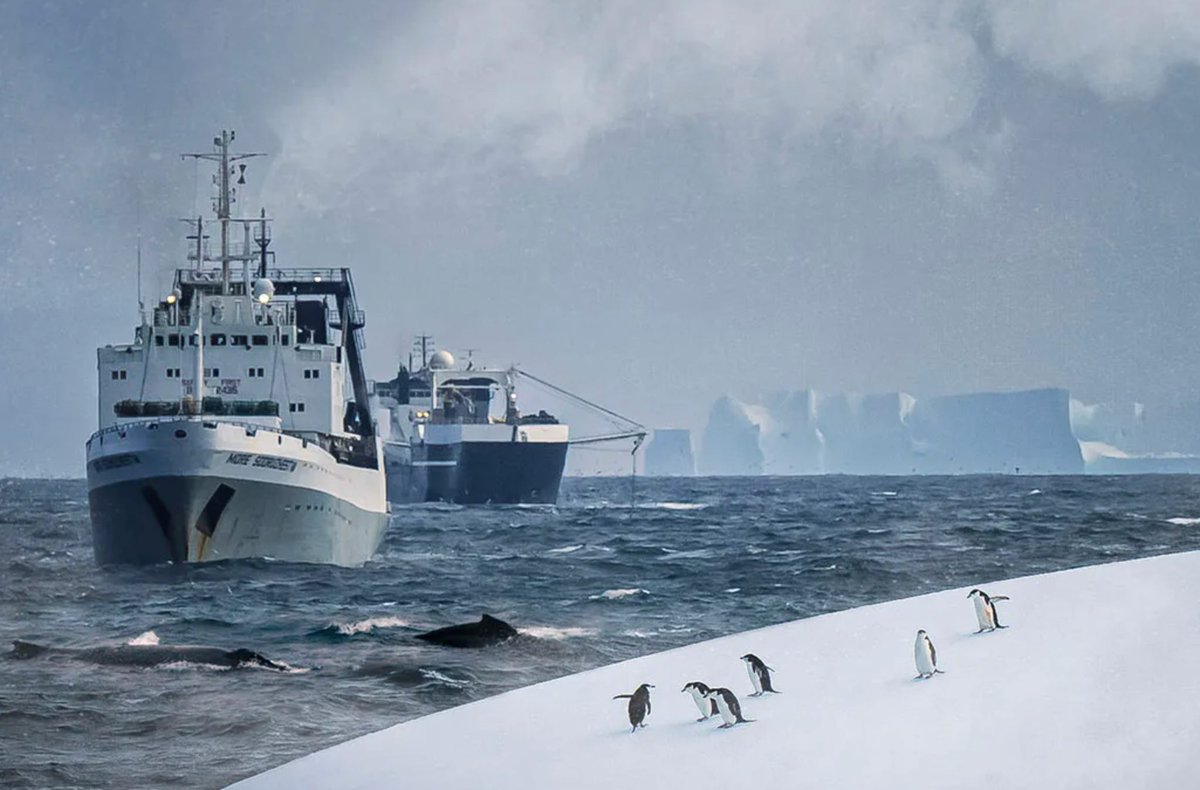
What they're finding is extraordinary. Aggregations of 200+ fin whales. Concentrations unseen since industrial whaling decimated 95% of Antarctic whales by 1970. And krill fishing vessels operating within rifle shot of feeding whales — each one taking as much krill daily as 100–500 whales need.
The industry claims it only takes 1% of krill stocks. What they don't say: that figure is calculated across a Europe-sized ocean. The fishing concentrates in the exact wildlife hotspots where that 1% matters most.
This episode covers the krill paradox, why whale poop is critical to ocean health, climate change shrinking krill habitat southward — and why the Marine Stewardship Council's sustainability certification is now facing formal objections from WePlanet, WWF and other major conservation groups.
Back in the 19thC people used to boil penguins, harpoon whales and club seals to death. Thank goodness the days of exploitation are over. Except they aren't - trawlers took 620k tonnes of krill from the Antarctic last year, competing with whales for food.
https://t.co/SPA209kNpo
Have you ever heard anyone say that there's not enough land for renewables? That solar farms will compromise food production? Bad idea! Joining me on 'Saving the World from Bad Ideas' this week is the BBC's Tom Heap...
https://t.co/nrGfvAW5sh
The EU's impending #veggieburgerban will do nothing to support farmers!
The @EU_Commission and MEPs like @CelineImart are pushing this through under the CAP (Common Agricultural Policy), but it's a distraction from the real issues farmers are facing.
Over the last months we've met with countless organisations and companies, and rallied citizens against it.
Here's where we're at:
✅ +600 organisations signed the No Confusion open letter.
✅ More than 350,000 signatures have been collected on petitions across Europe against this burdensome ban.
Tomorrow the trilogue meetings will decide whether to go ahead with the ban.
So ahead of this meeting, we rolled our tractors into Brussels with a simple message: farmers are fighting for a fair deal in the food chain and less pointless bureaucracy — not a crackdown on words.
Watch the video. Share it. Tag your MEP and tell them you want real support for farmers, not a ban on words.
Is industrial food actually the villain — or one of humanity's greatest achievements?
In this provocative episode, @mark_lynas sits down with @jan_dutkiewicz, assistant professor at the Pratt Institute and contributing editor at the New Republic, co-author of Feed the People: Why Industrial Food is Good and How to Make it Even Better.
Full episode available now.
Did you know? 💡
Achieving universal energy access will require $37 billion in investment by 2040, with LPG expected to supply 60% of new household demand ~@IEA
Yet development banks are blocking LPG financing across Africa, while the Global North continues to expand its own fossil fuel infrastructure.
Africa needs clean cooking now! 🔥
Join the call to #JustStopCooking and demand that the @worldbankgroup fund solutions that save lives and power a cleaner future.
#CleanCooking #ClimateJustice
🚨 MAJOR WIN FOR CLIMATE ACTION! 🚨
We've successfully halted the demolition of Tihange's cooling towers!
The Walloon authorities have confirmed the suspension of Engie's demolition permit following our appeal. This CO₂-free energy infrastructure will be preserved while awaiting a full review.
Why this matters:
✅ Prevents irreversible destruction of billions in clean energy infrastructure
✅ Keeps the door open for restarting Tihange 1 & 2
✅ Protects Belgium's energy security & climate goals
"Belgium is partially reversing the nuclear phase-out, but simultaneously allowing essential infrastructure to be demolished. From a climate and energy security perspective, that is socially unacceptable." - Rob De Schutter, Head of Communications
Restarting Tihange 1 & 2 is technically feasible and far wiser than irreversible demolition.
We'll always fight for evidence-based climate solutions.