$500 billion gone. $250 billion back. market closes slightly red off a record high.
the S&P was at 7,566 mid-session. the indexes hit all-time highs yesterday.
we live in a market that can lose half a trillion dollars before lunch and the headline by close is "stocks slip on geopolitical tensions."
completely normal
America is spending more building AI infrastructure than building roads, airports, and mass transit combined
data centers just outpaced all public transportation construction spending for the first time ever.
politicians have been arguing about infrastructure bills for decades. big tech just built a different country underneath everyone's feet
@ToonHive the industry isn't losing money because the technology doesn't work.
it's losing money because nobody's figured out how to charge enough for something everyone now thinks should be free
@BullTheoryio Michael Saylor didn't just build a company.
he built a machine powered by belief.
and belief is incredibly powerful right up until the moment it's tested.
Gemini doubled from 400M to 900M monthly users in a year.
everyone talks about model quality.
almost nobody talks about distribution.
Google already owns Android, Search, Gmail, Chrome, Maps, and YouTube.
now imagine Gemini embedded across all of it.
ChatGPT won the opening round.
the distribution battle is just getting started.
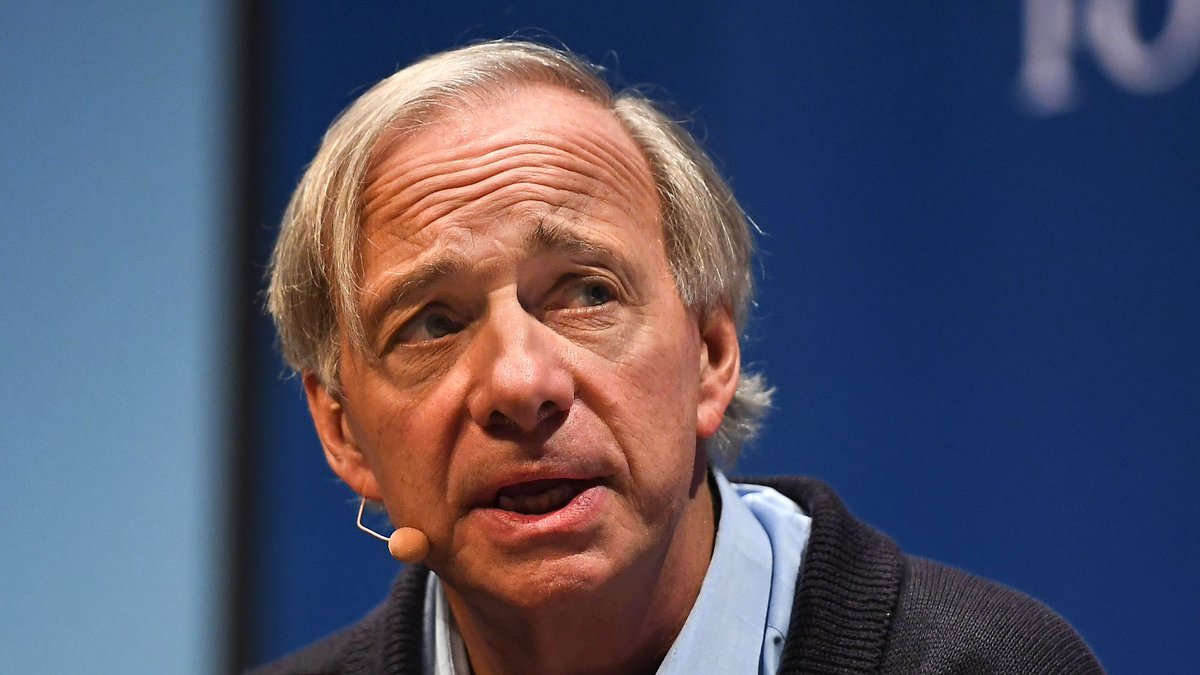
🚨 RAY DALIO IS WARNING THAT AI STOCKS ARE STARTING TO LOOK LIKE 1999 AGAIN.
The founder of Bridgewater said today’s AI boom is showing classic bubble behavior:
• extreme valuations
• aggressive speculation
• huge debt-funded spending
• and stock prices rising much faster than actual cash flow
His biggest warning was this:
“The pricking is the converting of wealth into money.”
Meaning the moment investors start trying to cash out, the entire AI trade can collapse very fast.
Dalio said this is exactly how every major technology bubble works.
Companies are now spending enormous amounts of money just to avoid losing AI market share.
That is the same thing internet companies did before the 2000 crash.
Meanwhile the numbers are becoming extreme:
• AI-related capex for 2026 is projected around $527 BILLION
• AI startups raised $202 BILLION in 2025 alone
• Nvidia and AI chipmakers became the most crowded trade on Wall Street
• Big Tech companies are massively increasing debt and spending to build AI infrastructure
• Credit risks on major AI companies have already started rising
Even Nvidia CEO Jensen Huang recently promoted the “insane” returns investors made from betting on AI.
Dalio is not saying AI is fake.
He called it a “wonderful technology.”
But the internet was also a real technology in 2000.
The technology survived.
Most of the stocks did not.
The current AI boom is starting to look dangerously similar:
• record optimism
• massive leverage
• runaway spending
• and valuations pricing years of perfect growth in advance
If AI profits fail to catch up with the spending, this market could face a massive valuation reset.
@cryptorover Dalio's exact words: "the pricking is the converting of wealth into money."
translation: the bubble doesn't pop when people get scared. it pops when people try to get paid
paper gains are fine until someone actually tries to leave. then everyone tries to leave.
the AI race isn't being driven by certainty.
it's being driven by the cost of being wrong.
if AI becomes as important as its biggest believers think, underinvesting could be fatal.
so everyone spends.
not because they know they'll win.
because they can't afford the possibility that someone else does.
@QuiverQuant you and I would call that incredible investing. when a senator does it while sitting on committees that vote on AI and chip policy, there's a different word for it
The AI Industry Has Reportedly Spent $1.4 Trillion and Still Isn’t Profitable
A website called https://t.co/K0HJo0WWtq is tracking the economics of the AI boom to determine if it is profitable, and the answer is no.
As of May 2026, the AI industry has spent roughly $1.4 trillion on model development, data centers, chips, networking, and other AI infrastructure. Over the same period, it has generated about $613 billion in revenue.
The biggest losses belong to the leading companies:
- Amazon: -$291 billion
- Google: -$262 billion
- Microsoft: -$235 billion
- Meta: -$227 billion
- Oracle: -$39 billion
- OpenAI: -$27 billion
- Anthropic: -$26.5 billion
- xAI: -$19.2 billion
Only one company is profitable: Nvidia.
According to the dashboard, Nvidia has generated an estimated $478 billion in AI revenue against $225 billion in AI-related spending, for a profit of roughly $253 billion.
The figures are compiled from public filings, earnings reports, analyst estimates, leaks, and industry reporting. The site’s creator describes the project as a best-effort snapshot rather than a formal audit and updates the numbers monthly.
The estimates also exclude indirect benefits from AI, such as improved search, advertising, and software sales.
@Pirat_Nation Goldman Sachs confirmed that $700 billion in AI investment during 2025 contributed basically zero to US GDP growth.
the entire thing is load-bearing on the assumption that revenue eventually catches up to spending. nobody actually knows if it does.
@AshCrypto the same institutions that were supposed to legitimize crypto and make it stable are the ones hitting sell. institutional adoption is a double-edged sword and people forgot
@pubity analysts are already saying the combined capital demand will be so large it could disrupt capital markets. we're genuinely stress-testing the whole system here
@PolymarketMoney Codex hit 5M weekly users, 6x growth since February. legal and corporate finance plugins are next.
they didn't come for developers.
they came for everyone who thought their job was too complex to automate. turns out it wasn't.
@PolymarketMoney bro Google reported $62.6B in net income last quarter$36.9B of it was literally just "our SpaceX and Anthropic stakes went up"that's not a search engine company. that's a hedge fund that also has a search engine
@BullTheoryio Hillary Super took over a brand everyone had already eulogized
didn't chase trends. didn't do a rebrand. didn't hire a new creative director.
just fixed the core product and let the math do the rest.
that's it. that's the whole playbook.