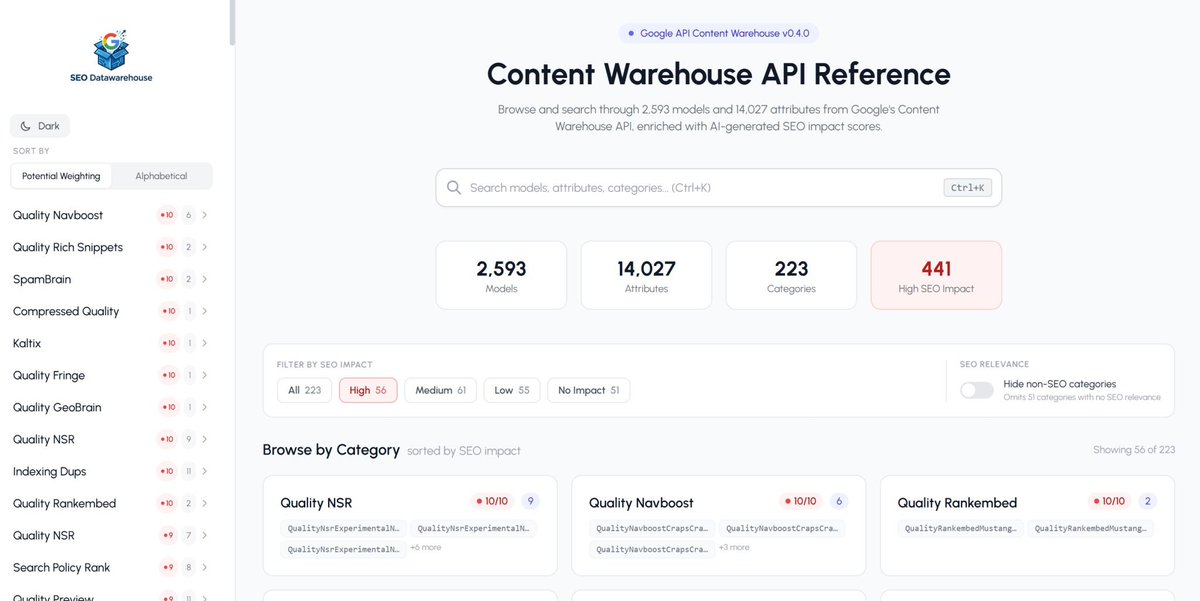
This post is ONLY for SEOs who actually do SEO and love it.
I've put together a re-build of the leaked GOOGLE CONTENT WAREHOUSE documentation and applied "probabalistic" weighting to factors.
This is SPECULATIVE as in, it's not certain, I do not know HOW Google uses or applies each thing - no one does, and that's what makes it fun.
ENJOY!
https://t.co/CWpC57dwKW
If you like and appreciate the content a link from your website wouldn't go a miss :)
842% ROAS.
Sounds high, right?
Until you split branded vs non-branded.
Brand ROAS: 38x. People already searching your name. You'd get most of those clicks anyway.
But someone "forgot" to exclude it from your report.
Non-brand ROAS: 0.9x. The campaigns actually supposed to bring in new customers? Losing money.
If your agency is reporting ROAS including branded, that number leveled up with Rare Candy - it'll faint in the first real battle. 😄
You set location bid adjustments on your smart bidding campaigns.
You set schedule bid adjustments. Audience adjustments. Demographics.
Google ignores all of them.
Smart bidding uses its own signals. The only bid adjustment it respects is a -100% device exclusion. Everything else is silently discarded.
That +20% you put on Amsterdam? Ignored.
That -30% on ages 18-24? Ignored.
That +15% on weekday evenings? Ignored.
You're staring at a dashboard of settings that do nothing. And making decisions based on adjustments that never applied.
The fix: remove every non-exclusion bid adjustment from automated campaigns. If you want to influence smart bidding, use audience signals, conversion value rules, or separate campaigns with different targets.
Stop tuning knobs that aren't connected to anything.
mark-eting Google Ads gem #2
1/6 Stop guessing what drives your Performance Max results and start taking control with our latest updates. 👇
🎯 Exclude first-party audiences.
🗺️ Get visibility into your ad placements.
💰 Project spend with budget reporting.
👥 Analyze audience demographics.
Learn more → https://t.co/Az0CS2oWBl
Stop trying to "fix CPA."
CPA is not a problem. It is a ratio. It goes up when your cost per click rises OR your conversion rate drops.
Most people react to rising CPA by pausing keywords, lowering targets, tightening audiences. CPA drops. So does volume. Revenue falls.
They treated the symptom as the constraint.
The real question is always: what changed in the numerator or denominator, and why?
CPA up + CVR flat = traffic got more expensive.
CPA up + CVR down = your landing page or offer broke something.
Same symptom. Completely different fix.
Diagnose before you optimize.
mark-eting Google Ads gem #1
So far - my experience building WEBSITES with Lovable has been mixed - but, in short DON'T DO IT.
Google absolutely CANNOT HANDLE CSR JS rendering properly.
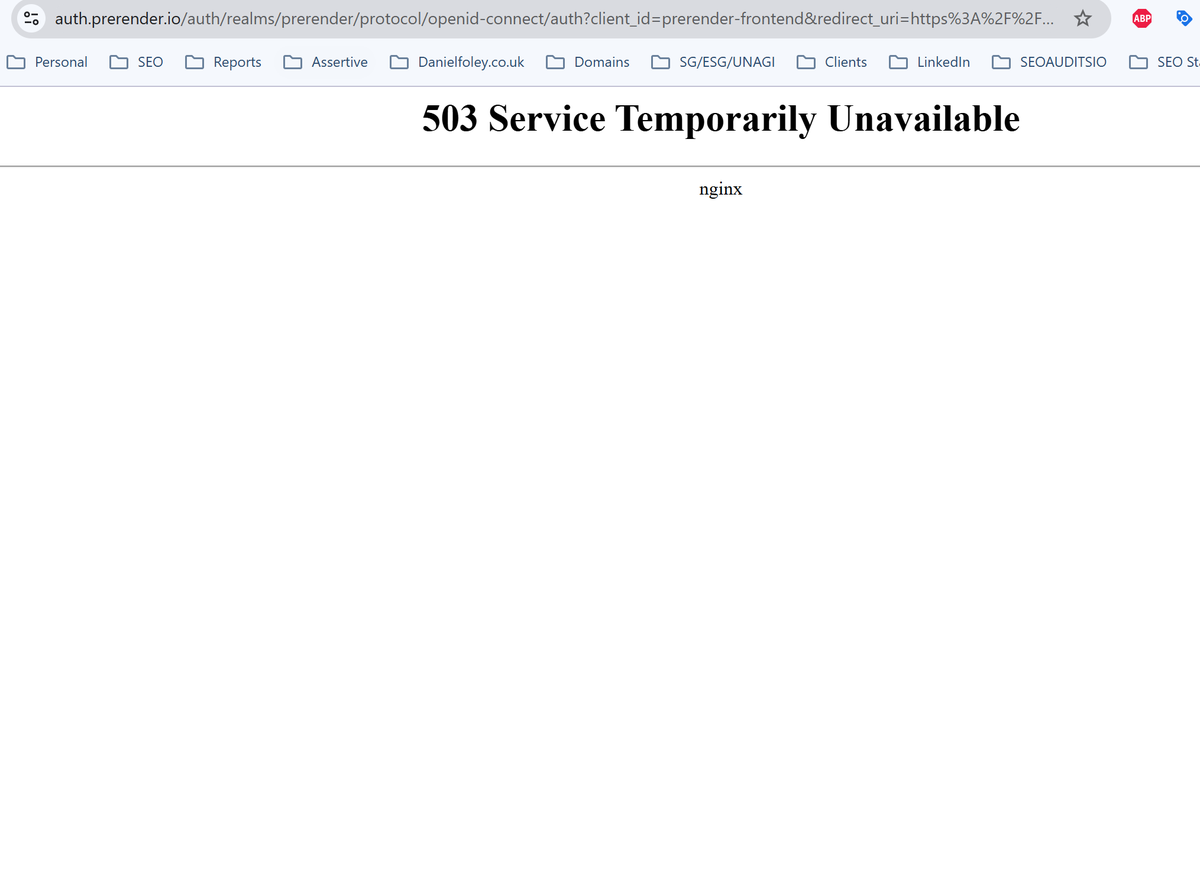
It's even worse when things like PRERENDER go down!
Lovable is for vibe coding web apps, not websites.
Yes there are workarounds for CSR to SSR but even then it's not great!
Tried Cloudflare Workers + Prerender - Google still has trouble with indexing.
Other issues include things such as META HYDRATION - no CMS means you have to set the data to be dynamically injected in on initial DOM, but, in most cases Google just sees the initial template pre-hydration even with Prerender in place.
Moved away from LOVABLE to Claude Code + Vercel = much better.
X just released a feature where only people you follow (and who they follow) can reply.
Meanwhile on LinkedIn, every post has the same 3 comments:
"Great insights!"
"This really resonates!"
"Couldn't agree more!"
Written by AI. Read by nobody.
So @nikitabier implemented @photomatt's idea to stop AI bots from destroying the reply section on here
You can set it to only allow people you follow and the people in turn they follow to reply, nobody else
If on average ppl follow 500 people that means still 500*500=250,000 possible repliers
But all the spammers are isolated out 👏
Two large advertisers in one of my client's niches have been in the news lately. Not for good reasons.
And we're seeing the effect in the campaigns right now.
Their Shopping impression share has roughly halved in a matter of weeks. That traffic doesn't just vanish. It gets redistributed. Fast.
So I pulled the auction insights and compared the last 6 months.
The pattern is predictable. Amazon absorbed the most. Other large platforms and marketplaces quietly grew their share too.
The big platforms move fast because they're always bidding on everything. They don't need to react. They're already there.
For smaller advertisers, that's where it gets interesting. My client's campaigns picked up double-digit percentage points in some product categories. In a single month. Not because we did anything special - but because the campaign structure was already built to capture that kind of shift automatically.
It's crazy how two big advertisers pulling back can ripple through an entire market like that.
But we also found blind spots. Categories where budget caps were blocking us from capturing the extra traffic. Others where rank had dropped and we were leaving the opportunity to competitors.
It's basically free opportunity. But only if you know it's happening.
And that's why business context matters. If you're just staring at dashboards without knowing what's going on in the market, you might pat yourself on the back for a great month. When really, two competitors just disappeared and handed you the traffic.
Don't take credit for luck. But do make sure you're ready to catch it.
I built a skill for Claude Code that optimizes any form on your site — demo requests, contact forms, lead capture, applications.
You tell it about your form and current conversion rate, and it identifies exactly what's killing completions. Too many fields? It tells you which ones to cut. Weak CTA? It rewrites it. No social proof? It tells you where to add it. It recommends multi-step progressive disclosure so the form feels short even when you need a lot of information. Every recommendation comes with a projected impact.
The difference between a 3% form completion rate and a 12% one is usually removing 4 fields and changing the button text.
It's called /form-cro and it's part of Marketing Skills — a free, open source collection of 32 marketing skills for AI agents like Claude Code, Cursor, and Codex.
Can Claude Code replace a designer?
I've been building websites and apps with it for the past 6 months. A Next.js site with dynamic blog. A prediction platform with auth and payments. A landing page with Shopify checkout. A client dashboard. A personal site for a friend.
All live. All in production. All "designed" entirely through prompts.
I describe the layout, the vibe, the colors. Claude Code builds it. Responsive, clean, fast. If something's off, I say "more whitespace" or "make the header sticky" and it adjusts in seconds.
The results look professional. They load fast. They work on mobile.
And it goes further than just prompting. There are now design skill files you can load into Claude Code. Libraries with 67 design styles, 96 color palettes, 57 font pairings, accessibility rules, UX guidelines. It knows when to use glassmorphism vs. minimalism. It checks color contrast ratios. It picks font combinations that actually work together.
So it's not just "AI generates a page." It's AI with a design system baked in.
But is it design?
A designer thinks about user psychology. Brand storytelling. The subtle tension between a heading and a subheading. The reason a button is that exact shade of blue. The emotion a page should trigger before a single word is read.
Claude Code gives you good defaults. Clean spacing, solid hierarchy, consistent components. It executes fast. But it doesn't have opinions. It doesn't push back on your brief. It doesn't surprise you with something you didn't know you wanted.
Then again, most websites don't need any of that. They need clear structure, readable text, and a fast page. Done.
So where's the line? When is AI enough, and when do you actually need a designer?
Genuinely curious what designers and builders think about this. 💡