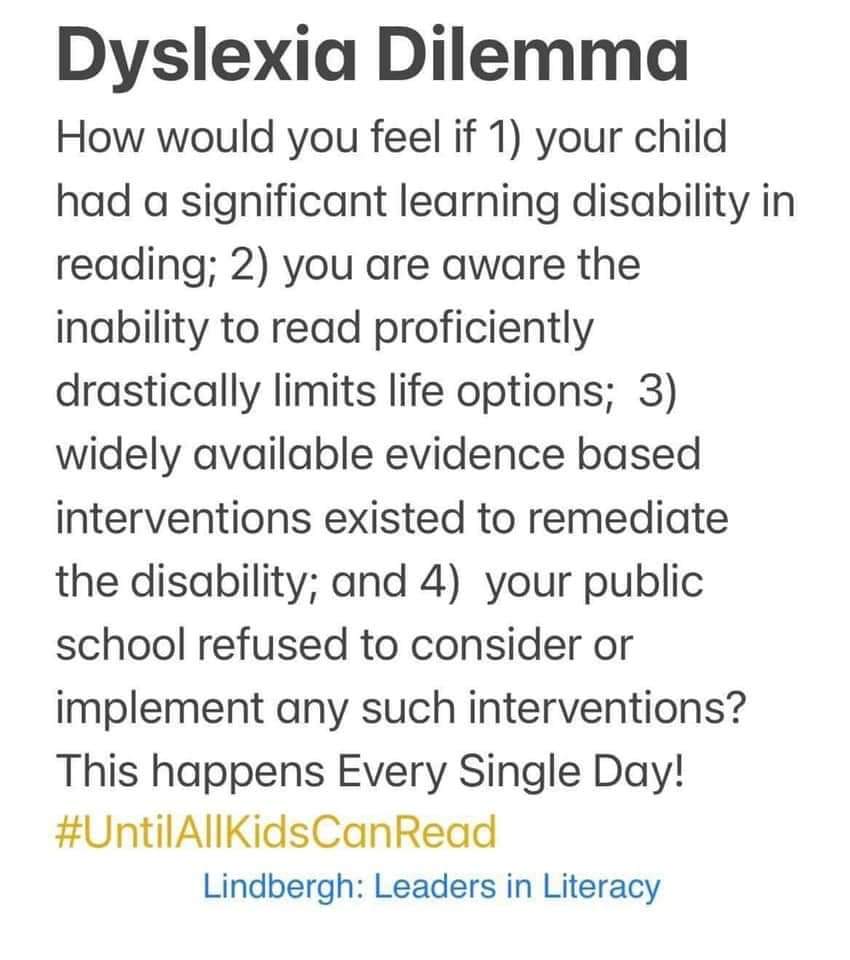
Many have strong feelings about teaching reading. Kids desperately need us to get out our feelings and do what's proven to work for the greatest number of students. Bottom line.
I’m shocked that this needs to be said, but: If you have a student who struggles to read, you should not blame the parents, for not reading enough. Lots of kids with dyslexia struggle to read despite having their parents read to them every day. You don’t know what happens in a kids home. Making assumptions like this is deeply offensive for the parents of kids with dyslexia. It also is a reflective of the disproven whole language model. Kids learning to read is not only a product of reading experience, for many kids it requires explicit instruction. Schools bear the primary responsibility for teaching kids to read, not parents.
🇨🇦 “Manitoba teachers and school leaders have been urged to change how they spot struggling readers and intervene sooner to boost literacy rates.”
https://t.co/eS8hZTTjBl
#UniversalScreening#RightToRead#mbed
”Accommodations can not come at the expense of teaching children to read. Audiobooks or speech-to-text apps for writing, while great tools, should not be a replacement for teaching children to read.”
Orly Klapholz
Literacy skills seem to fuel literacy enjoyment, rather than vice versa
https://t.co/NuQC4njoq4 "The best-fitting direction-of-causation model showed that skills impacted enjoyment, while the influence in the other direction was zero."
More of this please!!! Reading Recovery ending in New Zealand.
The end of an ineffective reading program that gave the illusion of working but that scientific evidence has proven again and again not only is ineffective but detrimental to the reading development of the most vulnerable of children is something worth celebrating and emulating!!!
Benefit to teaching *phonological awareness ALONE*?
Paper by @melissa_stalega with me and others about whether there is a benefit to teaching PA alone...
Basically:
Teaching PA: better PA
Teaching PA WITH letters: better PA AND better word reading.
https://t.co/VVof6vERHs
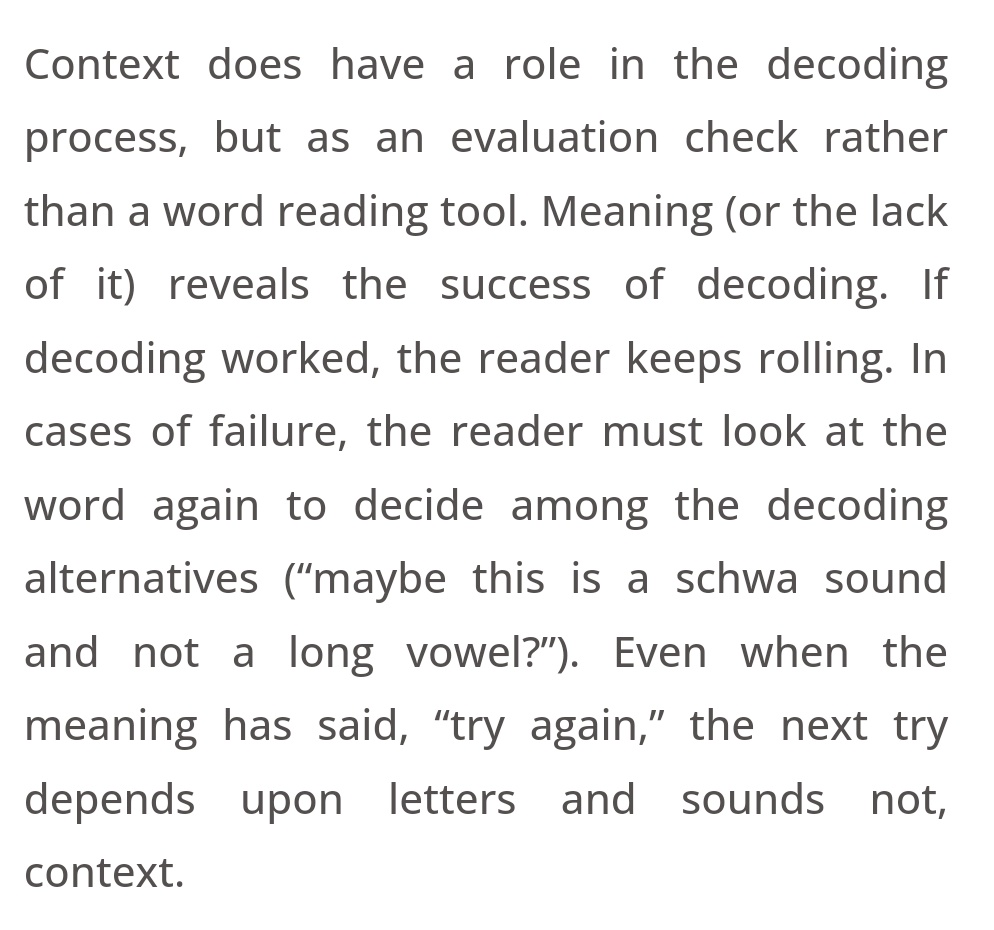
@robrandel @Addysg_Cymraeg @lynne_neagle@WG_Education I'd gamble that the person who wrote that - like plenty of education academics - genuinely doesn't know the difference between cueing strategies (which is what seems to be espoused by the quote you shared) and set for variability (which Shanahan espouses below):