TPLF is provoking the Ethiopian government to defend Eritrea.
The Adwa gangs must stop using the people of Tigray as a shield & the youth as cannon fodder to keep non existent power .
Tigrayan mother should no longer mourn but call the killer TPLF by their name , enemy
TPLF 🤡 are hard to understand them , once they declare Pretoria agreement null and void , & now after they caused they youth to eliminated by drone “violation of the Pretoria Cessation of Hostilities Agreement”
TPLF and their cadre are responsible for live losses in Tigray .
In violation of the Pretoria Cessation of Hostilities Agreement, the Ethiopian regime executed a drone strike in the Sheraro area of the Northwest Tigray Region this morning, resulting in fatalities and injuries among members of the Tigray Army during their routine activities. This breach is not an isolated incident; the regime has previously conducted drone strikes targeting civilians in various parts of Tigray. Justice and accountability for the genocide perpetrated by this regime and its allied forces against the Tigray people remain absent. Furthermore, the regime is reportedly preparing for another campaign aimed at exterminating the people of Tigray, having failed to subdue them through measures such as budget cuts, restrictions on fuel, medicines, food aid, and cash, alongside committing further atrocities. @SecRubio@StateDept@SenateForeign@SenatorShaheen@SenatorRisch@SenatorCardin@SenateGOP@SenateDems@BradSherman@antonioguterres
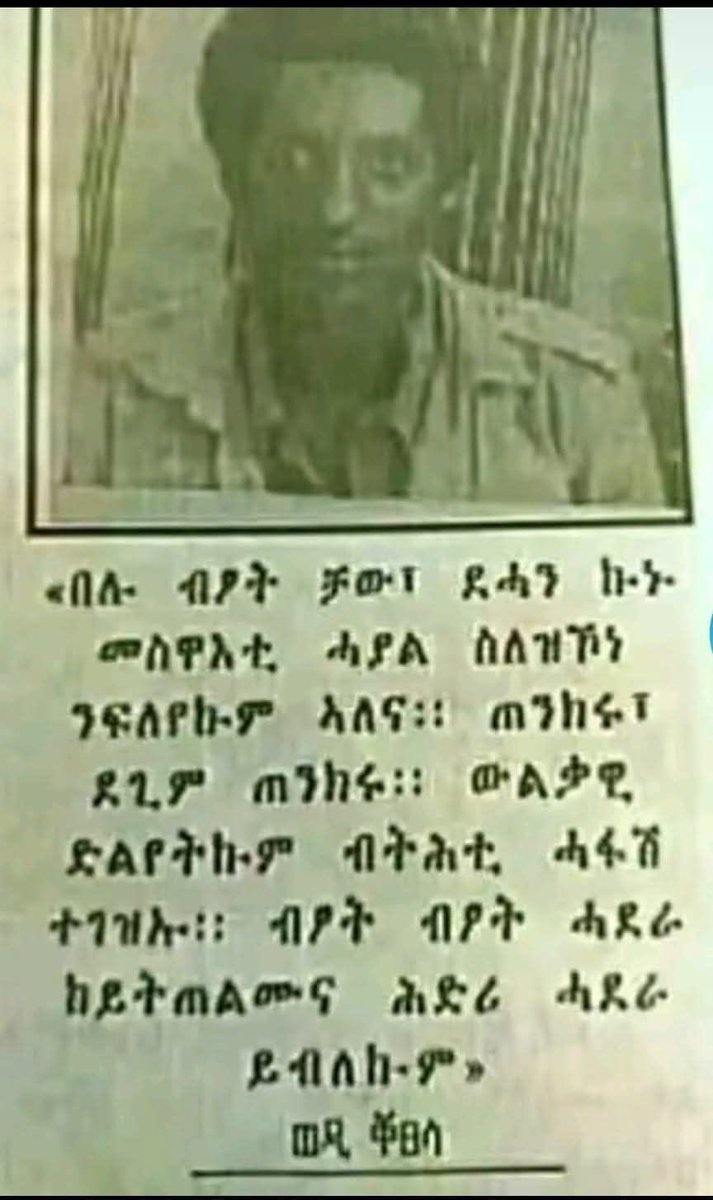
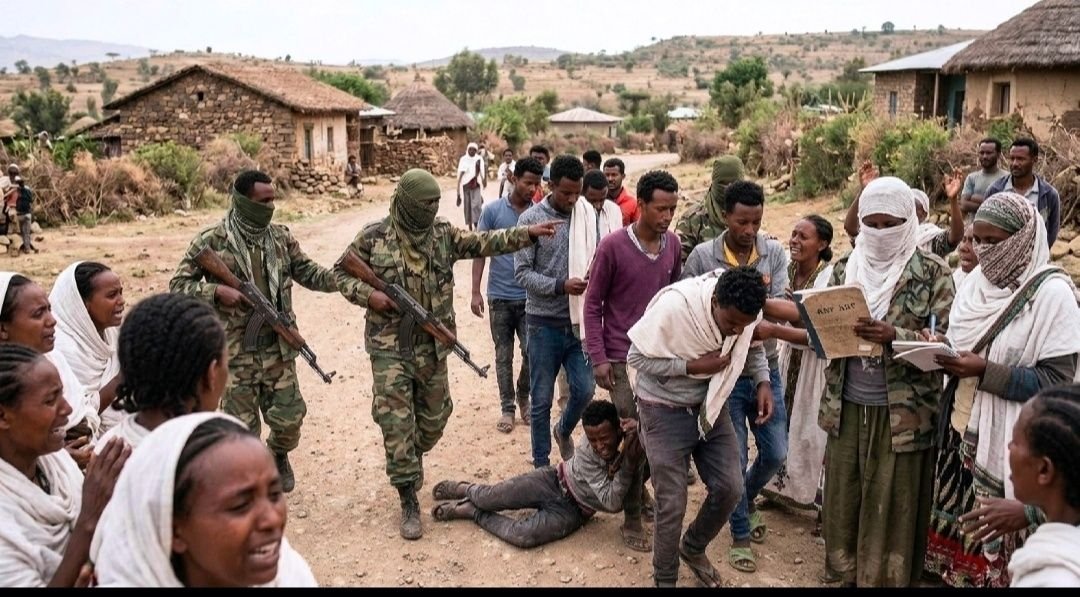
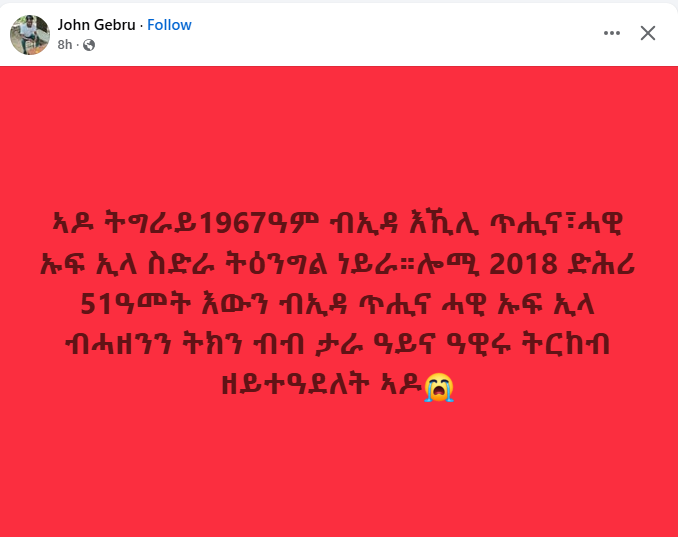
The leaders & commanders, as usual, watching the battle from faraway, flee or will captured.They have taken their children to a safe place.But the poor children,the youths, are forced to die.Then the leaders call the dead martyrs. So youths, save your lives!
Live for tomorrow.
@ACLEDINFO, https://t.co/2UYkdzjebP
ACLED’s latest analysis on Tigray should be read not only as conflict reporting, but as part of a longer and deeply troubling pattern.
During the Tigray war, ACLED’s Ethiopia-related publications repeatedly gave unusual weight to narratives that closely tracked the Ethiopian government’s framing of the conflict. In some of its wartime updates, government briefings, state media, and government-linked “fact check” materials were not merely treated as sources to be tested against other evidence. They were often reproduced in a way that helped normalize the federal government’s language of stabilization, law enforcement, unilateral ceasefire, and anti-TPLF security operations, even while Tigray was under siege, civilians were being massacred, ethnic Tigrayans were being arbitrarily detained, humanitarian access was obstructed, and Eritrean forces were committing atrocities.
That record matters. The latest ACLED piece repeats the same institutional weakness. Instead of presenting conflict data and allowing conflict experts, lawyers, humanitarian actors, and political analysts to reach careful conclusions, it moves from selective incidents to sweeping geopolitical claims. It presents assumptions as near-certainties. It portrays the TPLF’s attempt to reassert full control over Tigray as the central expanding threat in the Horn of Africa, while giving insufficient analytical weight to the federal government’s conduct, drone attacks, the collapse of the Pretoria framework, unresolved western Tigray, Eritrean interference, Amhara armed actors, forced recruitment, displacement, and the total absence of accountability.
Let me be clear. The TPLF’s reinstatement of the pre-war regional council is legally indefensible, politically reckless, and morally dangerous. It should be criticized without hesitation. But serious conflict analysis does not turn one actor’s wrongdoing into a convenient framework for minimizing the wider architecture of responsibility.
ACLED’s problem is not merely methodological. It is institutional. An organization that claims to provide neutral conflict data cannot behave like an interpreter of political guilt while hiding behind the prestige of data. Its leadership and institutional posture during the Tigray war already created serious credibility concerns among many who closely followed the conflict. This latest report does not repair that credibility problem. It deepens it.
Conflict data should illuminate reality. It should not launder half-truths into expert analysis.
#ACLED
#Tigray #Ethiopia #HornOfAfrica #ConflictData #HumanRights #Accountability #Peacebuilding #PretoriaAgreement #TransitionalJustice #ConflictAnalysis #AtrocityPrevention
News: Residents report drone strike near #Sheraro town in Northwestern #Tigray
“The place is less than two kilometers from here,” the official said, referring to the location of the strike.
🚨TPLF using Tigrayans as mercenaries in Sudan to fight RSF is not hearsay
Watch this video of a TPLF soldier, conscripted against his will, narrating operations on the ground
Sudanese always stood with Tigrayans. We must NEVER take sides in Sudan’s war
TPLF must be uprooted‼️
Today marks 28 years since an #Eritrean airstrike hit #Ayder Elementary School in #Mekelle, #Tigray, killing scores of children as they sat in their classrooms.
We remember the children who never came home that day. Their names, dreams, and futures must never be forgotten.
Apply now!
In a world facing complex global crises, the next generation must be prepared to act as adaptive and ethical leaders of transformation.
@STGEUI Master of Arts in Transnational Governance gives future changemakers the foundations to tackle transnational challenges rooted in policy, foresight, and action.
https://t.co/j2gFw96Cg9