Cybercrime is on the rise and becoming more advanced every day. Have you experienced a deepfake scam call? Dig into more cybersecurity insights in our Oh Behave! Report: https://t.co/vrDacWc8HZ
Teen Depression Gone Viral: Why Kids Are More Vulnerable Than Ever and How You Can Protect Your Child's Health and Happiness https://t.co/rsed0nkhFU #Amazon via @Amazon
AI Security Warning from Signal app's Meredith Whittaker – The Hidden Da... https://t.co/Jr1Xb0vqsw via @YouTube great conversation about privacy and why it matters
☀️ While summer brings a well-earned break, it’s also the ideal time to plan for the months ahead.
Digital platforms are constantly evolving, and so are the risks facing children and young people online. From cyberbullying to harmful content and wellbeing concerns, the challenges are real.
At SWGfL, we offer the tools, guidance and services to help schools, colleges, and youth settings build safer online environments and strengthen safeguarding practices.
Explore what’s available from our website. ⏬
🌐 https://t.co/pU4Ma6wQI1
#Education #OnlineSafety #Youth
Vishing scams are surprisingly common and incredibly sneaky. But with a bit of knowledge, you can learn how to recognize a vishing attempt and hang up on the bad guys. Learn more: https://t.co/h7l9iVGapV
Watch the book trailer (1 min) for Daniel Solove’s new book, ON PRIVACY AND TECHNOLOGY https://t.co/mFuGhtnC54
The book is here: https://t.co/HRvpcrZ5DF
CONGRESS FUNNELED $516 BILLION INTO EXPIRED PROGRAMS WITH ZERO OVERSIGHT IN 2024
The CBO just revealed that Congress spent $516 billion in 2024 on programs with expired authorizations, some dating back over 40 years.
Despite rules against funding unauthorized programs, lawmakers ignored them—letting billions flow without updated approvals or oversight.
Even worse, 251 more authorizations are set to expire this year, including $892 billion in defense spending, yet Congress keeps writing blank checks.
This isn’t governance—it’s corruption. Congress is recklessly burning taxpayer money on programs they haven’t even bothered to approve.
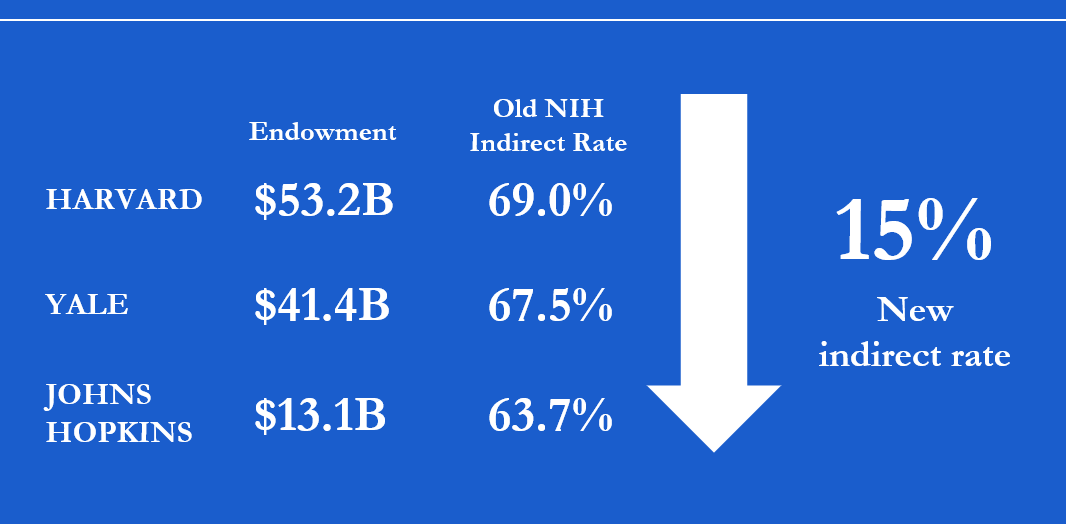
Last year, $9B of the $35B that the National Institutes of Health (NIH) granted for research was used for administrative overhead, what is known as “indirect costs.” Today, NIH lowered the maximum indirect cost rate research institutions can charge the government to 15%, above what many major foundations allow and much lower than the 60%+ that some institutions charge the government today. This change will save more than $4B a year effective immediately.
Federal employee retirements are processed using paper, by hand, in an old limestone mine in Pennsylvania. 700+ mine workers operate 230 feet underground to process ~10,000 applications per month, which are stored in manila envelopes and cardboard boxes. The retirement process takes multiple months.