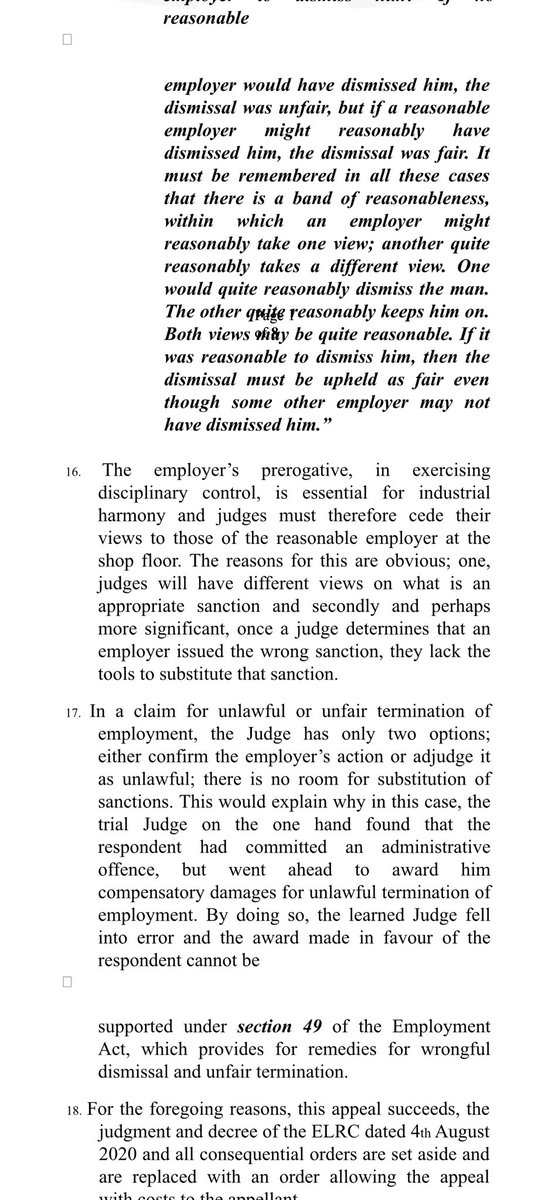
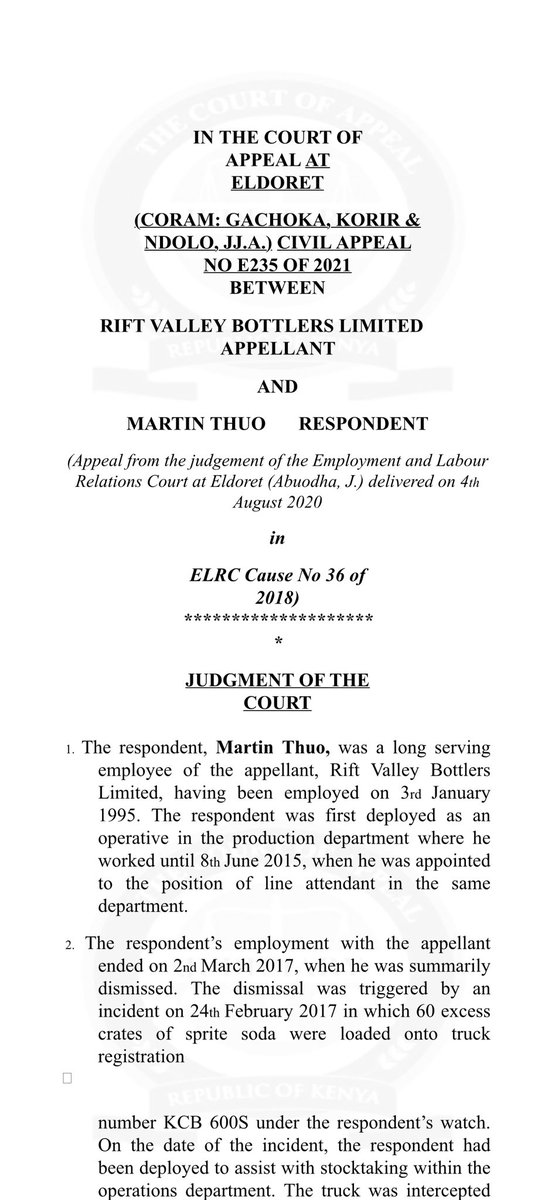
🚨 Can your employer fire you over an honest mistake you’ve made even when they have suffered no loss?
This is Rift Valley Bottlers Limited v Martin Thuo, decided by the Court of Appeal on 24 July 2026. It is one of the most counterintuitive employment rulings of the year, and it exposes a limit on judicial power that few employees, or employers, understand.🧵
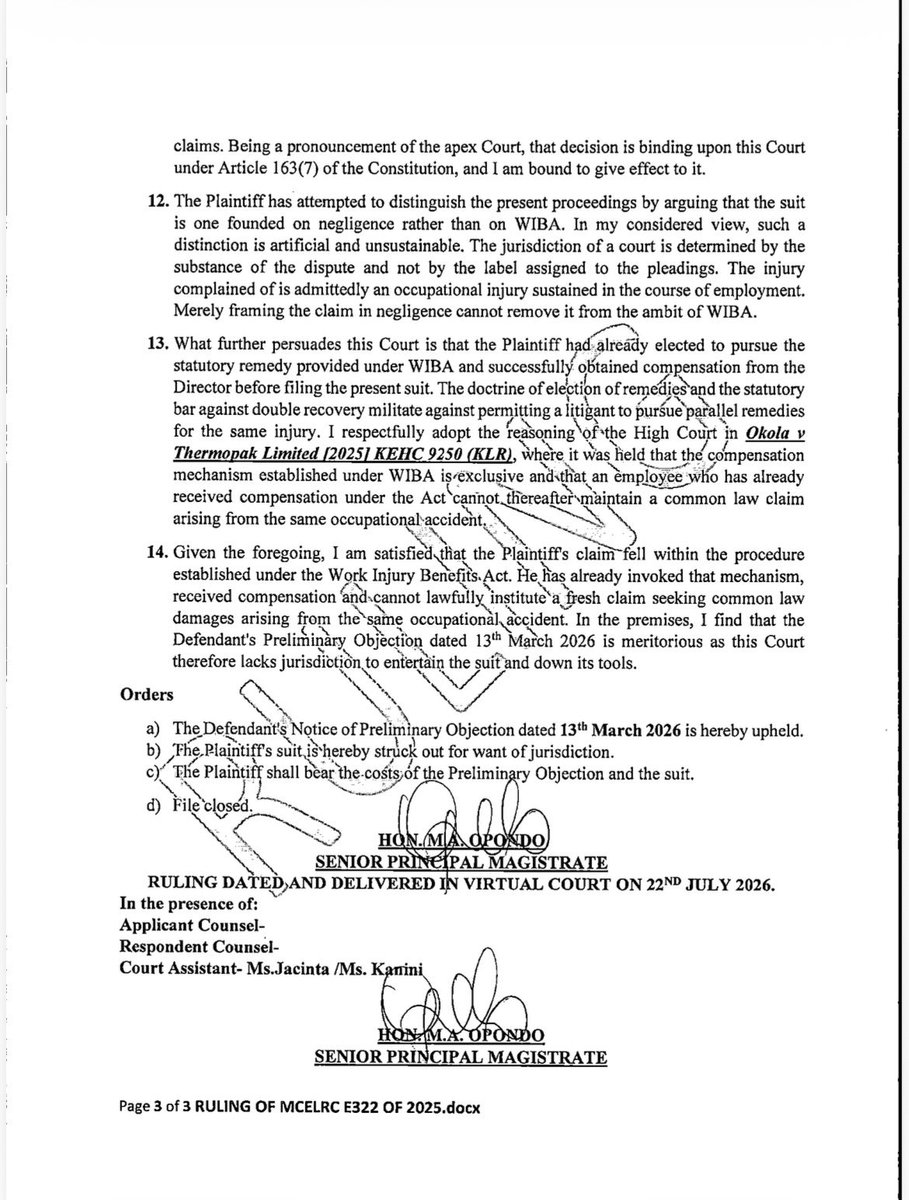
We received a ruling yesterday in absentia as we were boycotting. This one may be helpful to practitioners. Once an employee is injured at work, DOSH has the original jurisdiction to deal. The employee cannot be compensated then file a common law tort for damages. PO succeeds
🚨🚨 BREAKING: YOUR EMPLOYER'S CASHFLOW PROBLEMS DO NOT SUSPEND YOUR RIGHT TO A SALARY.
The Employment and Labour Relations Court at Kisumu has delivered an important decision clarifying a question that affects thousands of Kenyan workers: what happens when an employer simply stops paying salaries because business is struggling? In Pride King Services Ltd v Innocent Onyango [2026], a security guard resigned after going four consecutive months without receiving his salary. The employer admitted that it had experienced financial difficulties, explained that employees had been informed of the situation, and argued that the Respondent should have waited for the company to stabilize because the outstanding salaries would eventually be paid. The Court rejected that reasoning. In one of the most striking passages of the judgment, Justice Nzioki wa Makau reasoned that it is not the responsibility of a worker to figure out how the employer will pay his wages. The Court held that by failing to pay wages for months, the employer had created the very circumstances that led to the termination of employment and therefore upheld the finding that the employee had been constructively dismissed.
The Court's reasoning is significant. A salary is not a discretionary benefit that an employer may postpone until business improves; it is the primary consideration for an employee's labor and one of the employer's most fundamental contractual obligations. While the employer pleaded financial hardship, the Court found that such hardship could not be shifted onto an employee who continued reporting to work without pay. At the same time, the Court carefully distinguished liability from quantum. Although it upheld the findings on unlawful termination, salary arrears, notice pay, service pay and compensation, it reduced the awards for underpayments, house allowance and accrued leave because those claims were subject to the statutory limitation period under the Employment Act.
The jurisprudential importance of this decision lies in its reaffirmation that the risk of running a business belongs to the employer, not the employee. Courts will not readily accept financial difficulties as a legal justification for withholding wages while expecting employees to continue working. Equally, employees who seek relief must be alive to the limitation periods governing employment claims, as even a successful claim may be substantially reduced if brought outside the periods prescribed by law. The judgment therefore strengthens two important principles of Kenyan employment law: wages remain a fundamental contractual obligation despite economic hardship, and statutory employment rights must be enforced within the timelines established by Parliament.
Kindly repost widely 🙏
🚨 Can a public officer enjoy absolute immunity in the course of their functions? A constitutional question about where the State's protection ends.
A District Commissioner was ordered to pay six citizens KShs. 800,000 each, personally, for a malicious prosecution he set in motion while in office. He argued the State should carry the cost. The courts said no.
The sequence raises a question that runs deep into Kenya's constitutional design. When a public officer harms a citizen through the office he holds, who answers for it? Can he be sued personally? Where does lawful authority end and personal liability begin? And how do we protect that line from being abused by every litigant who simply dislikes an official decision?
Here are the key issues. - A Thread
The cardinal rule of judicial review is absolute: if the process is flawed, the decision cannot stand. By establishing that the right to a fair hearing was violated, the court was legally bound to declare the impeachment null and void. Failing to do so is utter absurdity.
In US v. Heppner, the court held that feeding client info into a public AI chatbot breaches the attorney‑client privilege because using AI without locked‑down, enterprise‑grade safeguards, and not being innovative, is handing clients’ secrets to the internet.
Hon Mulwa’s judgement on liability of Guarantors is sound in law.A guarantor
becomes liable upon default by principal debt. It is not the role of guarantor to see to it that the borrower complies with his contractual obligation but to pay on demand the guaranteed sum. 1/2
🚨🚨MUST READ: You Can Live on Family Land for 40 Years and Still Be a Trespasser🙌🙌
This was not a strangers’ land grab. It was family land, inherited, subdivided through succession, then turned hostile. This started the way many Kenyan stories start. In Kigathi & 3 others v Kigathi (ELC E004 of 2024) [2025] KEELC 18393 (KLR), a son build a home on his father’s land. He raised a family there. Decades passed. Nobody complained. Then the father dies. The family goes to court, succession happens, and the land is formally subdivided. Title deeds are issued. Suddenly, what was “home” is now partly sitting on someone else’s land. Siblings ask him to move a few feet. He refuses. Emotions rise. Police are called. Court papers follow. What felt like a family issue becomes a legal one.
The court did not sugar-coat it. Once succession is completed and title deeds are issued, the law does not care about how long you lived there, who showed you where to build, or how old the house is. A title deed gives exclusive ownership. From that moment, staying on land registered in someone else’s name, even by one foot, becomes trespass. Family history does not defeat registration. Sentiment does not defeat a title.
The court also reminded us that justice is not revenge. Because the house existed long before subdivision, the owner was given time to relocate instead of being thrown out overnight. But the destination was clear: he had to leave. The lesson is brutal but necessary. Succession changes everything. If your home is on inherited land, confirm where boundaries fall before titles are issued. If you hold a title, the law will protect it, but courts will still insist on fairness. Ignore this reality, and one day you will learn it in court.
@Thuranira_1@georgediano@NelsonHavi @MikeSonko
#newkcbapp #ForPeopleForBetter Jake Paul #RISERCONCERT #womenendorsewaiguru Vodka Singapore Asake Spiro
Next week i will release the annual, "Kenya Judiciary JurisPESA Report, 2025". I will also disclose the "JurisPESA Court of the year". I will also announce the case that attracted the highest bribe in 2025. @Kenyajudiciary@LawSocietyofKe@NelsonHavi@omwanza@THE_SCOK
You chose a profession where nobody gets a level field.
Some have judges in the family. Some land internships because of surnames. Some study without worrying about rent. Some already know the partners you are still trying to impress
If you have time while others are juggling jobs, dive into the work and master the craft
If you have contacts, use them to get in the room where decisions are made
Use any type of freedom to sharpen your mind and skills till nobody can ignore you
The ones who rise are never playing a fair game. They lean into what gives them a head start.
Find what gives you yours. Stop feeling guilty about it. Use it fully.
You want a life where you do not need luck to survive. So take whatever edge you have and push it until the competition cannot breathe on your level
I am holding you to this. You are capable of more than playing fair and staying behind.
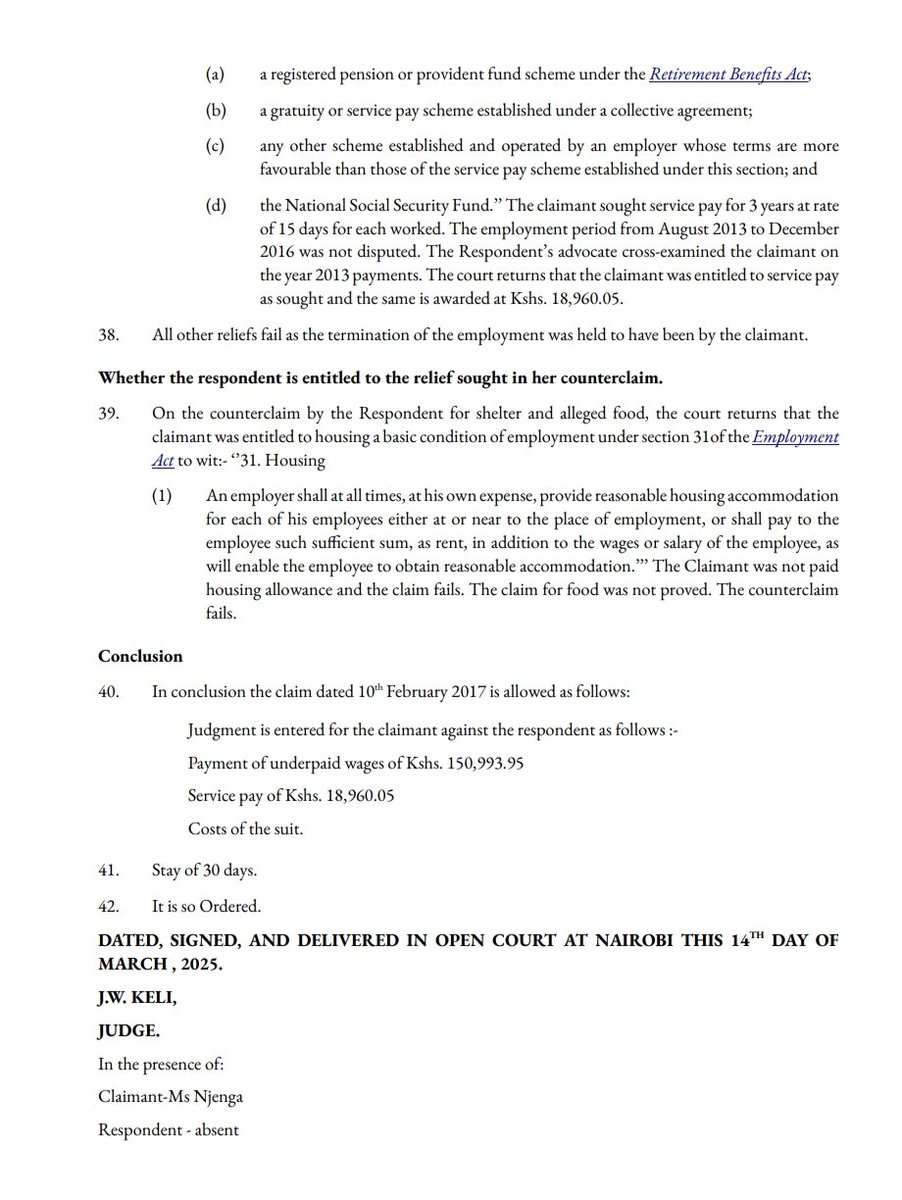
An employer has been ordered to pay Kshs. 169,953.95 for years of underpaying her house help.The employer paid her an average monthly salary of Kshs. 6,000 instead of the minimum wage of 10,954.70.
Minimum wage is NOT a suggestion.
Domestic workers deserve dignity and the court just reminded employers.
The Supreme Court held that justice is a three-legged stool, it must serve the accused, the victim and the society. The Court reiterated that where a miscarriage of justice has occurred, a retrial is the lawful remedy.
-CHIROMA v. STATE (2025) 15 NWLR (Pt.2008)325.
It is an unfair labour practice to subject compensation for unfair termination of employment to deductions like the housing levy and social health insurance deductions.
https://t.co/0HQrhXD4CS
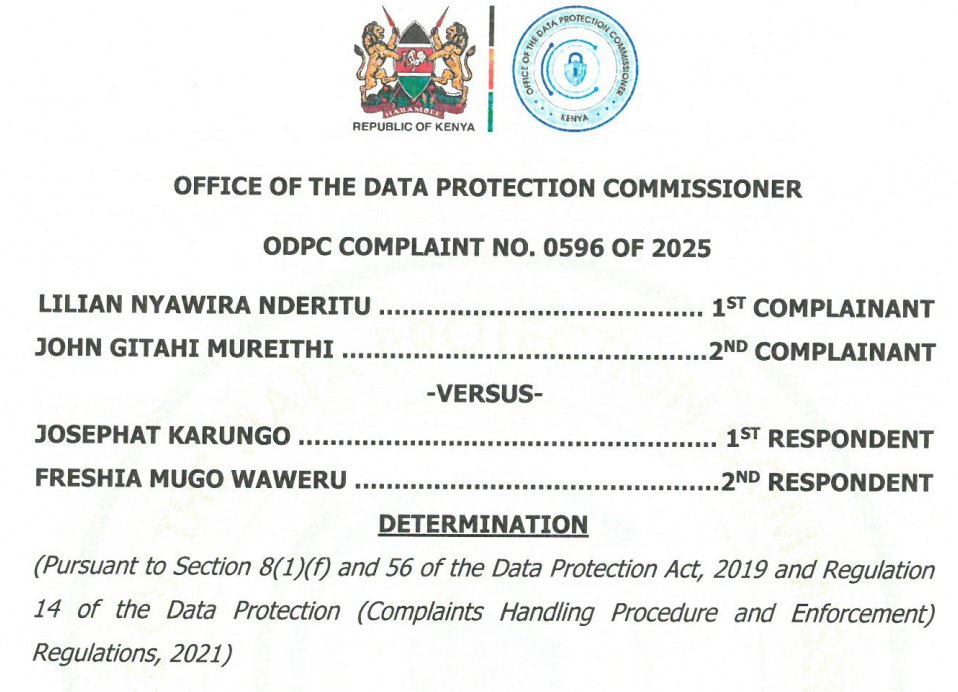
If Your Neighbour's CCTV Can Zoom Into Your Compound, They Owe You Money -ODPC Just Proved It.
If you’ve ever felt uncomfortable because a neighbour’s CCTV is pointed at your gate, your children’s play area, your laundry line or your kitchen door, this one is for you. In a fresh ODPC ruling, two neighbours finally got justice after being recorded for months inside their own compound. They begged, complained, involved the estate officials, even reported to the police. Nothing. The cameras kept rolling. When the matter reached the ODPC, the hammer fell: KES 200,000 compensation plus an enforcement notice. This means you cannot turn your neighbour’s life into your personal Big Brother episode.
The ODPC went straight for the neck. Security is fine. Protecting your home is fine. But the moment your cameras cross the fence and start collecting footage from someone else’s private space, you’ve stepped into illegal territory. And the usual excuses don’t work. “It wasn’t intentional,” “I only wanted to secure my home,” “I didn’t know the angle was covering them” are all useless. The law cares about the effect, not your excuses. The respondents ignored complaints for almost a year, and that alone was enough to show unfair, unlawful, careless handling of personal data. Funny enough, once they finally tilted the cameras, ODPC took note that it proved they knew the setup had been wrong all along.
This decision should make every estate, every landlord and every CCTV-happy neighbour sit up. Your right to feel safe does not include the right to spy on others. If your cameras face outside your fence, you’re already on the wrong side of the law. And if your neighbour complains and you brush them off, just know ODPC now has a precedent that bites. We expect Kenyans to start reporting these cases. Estates to start rewriting CCTV rules. And privacy, real privacy, to finally become something people are willing to fight for. Your right to privacy is protected in our Constitution. @Thuranira_1@georgediano@KensonMutethia@NelsonHavi@joshuamalidzo
Mogadishu #BrokenButNotDefeated live now now #SupremeCourt2027 #MikeAndKingangi Tosin Somalis Meta #BomaYanguAnswers #KenyaUSHealthAgenda
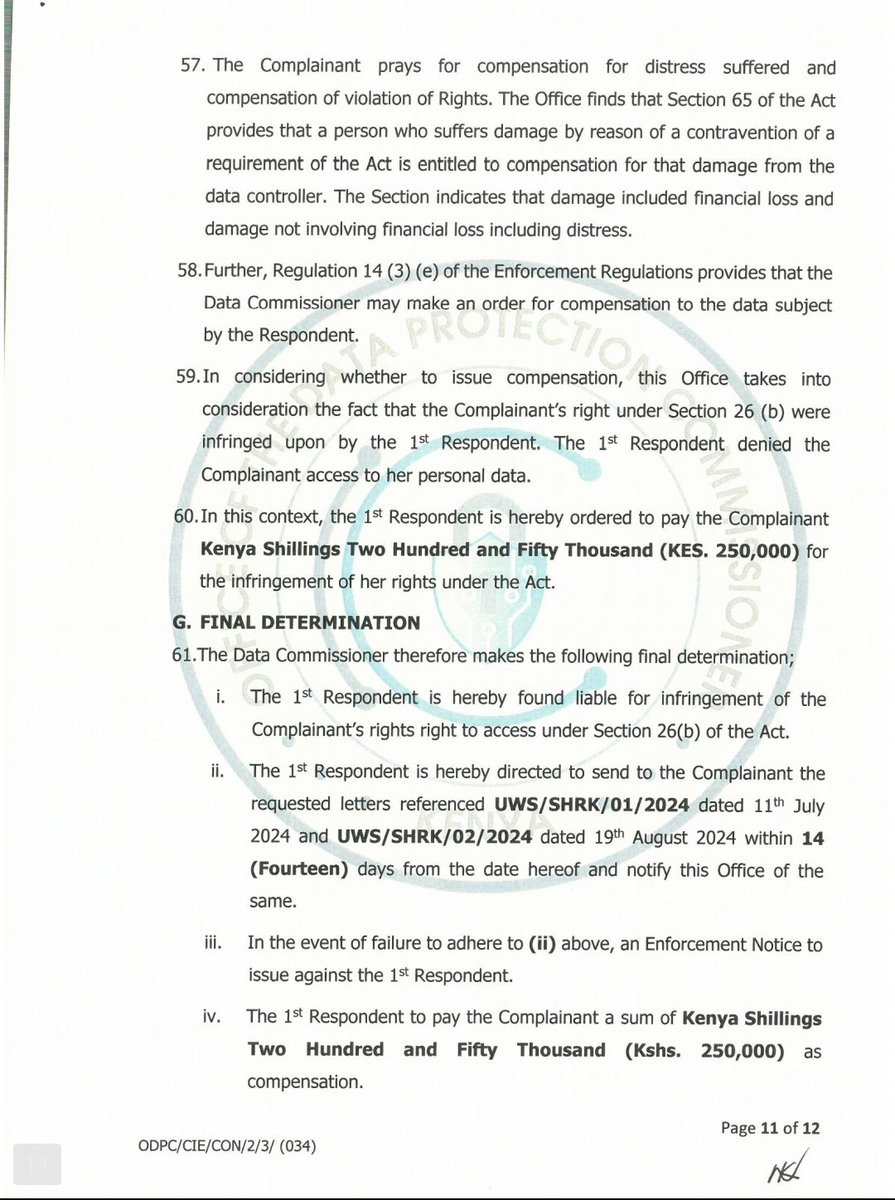
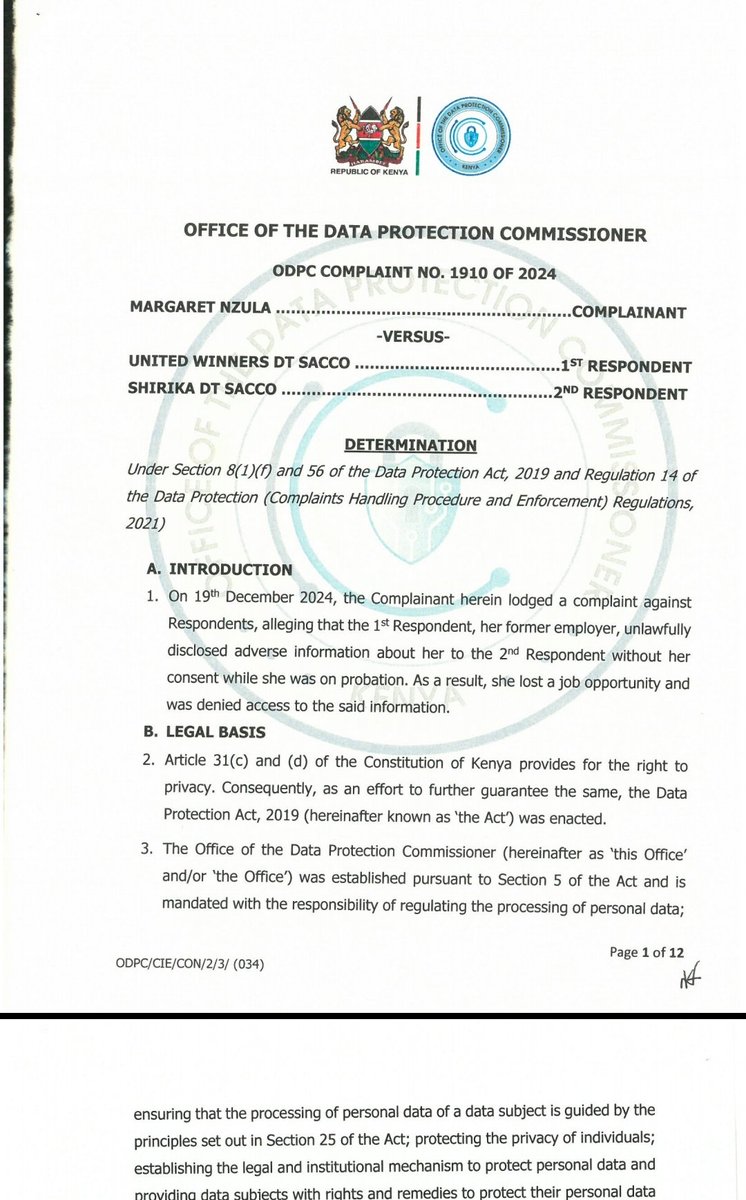
An employer has been ordered to pay Ksh 250,000 for refusing to show a former employee what they said about her to a potential employer . She believed a negative reference cost her a new job. When she asked for answers, the employer hid behind “confidential.” The ODPC said no. If you talk about someone, they have a right to see it.
Employers must now choose their words carefully. If you can’t say it to someone’s face, don’t whisper it to their next boss. Employees are finally protected from secret sabotage. And workplaces must become more honest.Usinichomee na sijui!
Makofi kwa @ODPC_KE
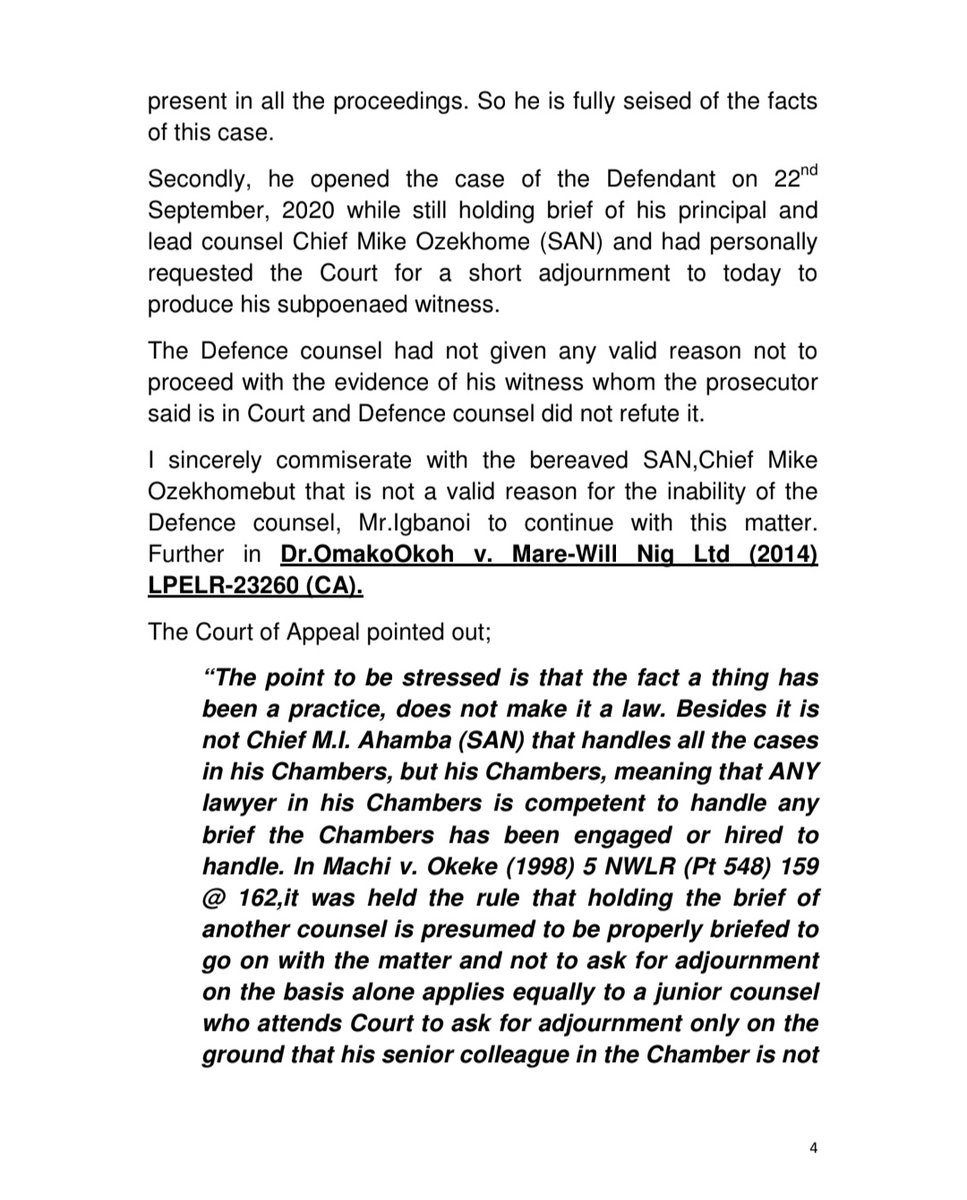
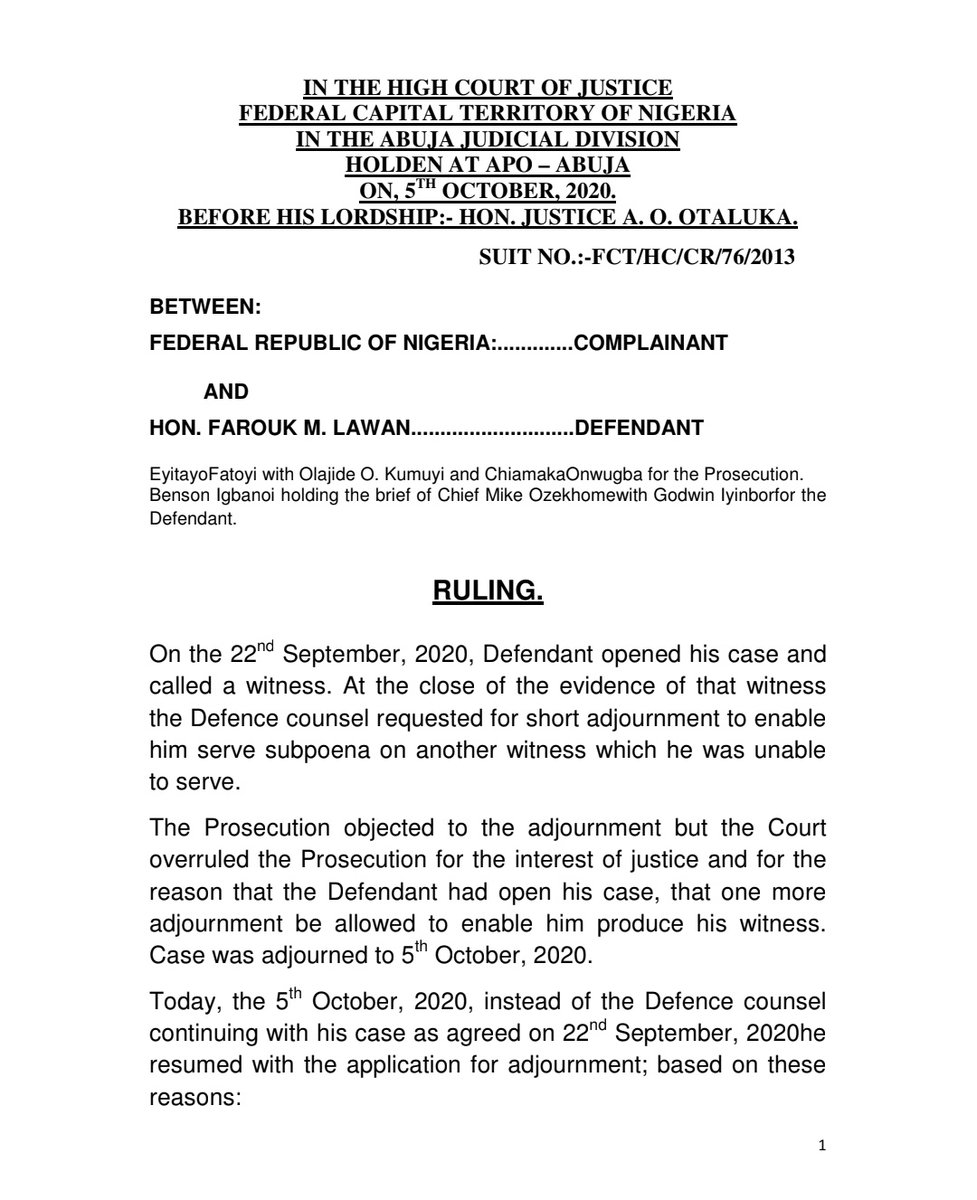
A lawyer holding brief for another is deemed properly briefed and properly seised of the matter.
FRN v Farouk Lawan
Yemishylom v Asern
MFA v Inongha
Chevron v Masemebarelowaz & Ors
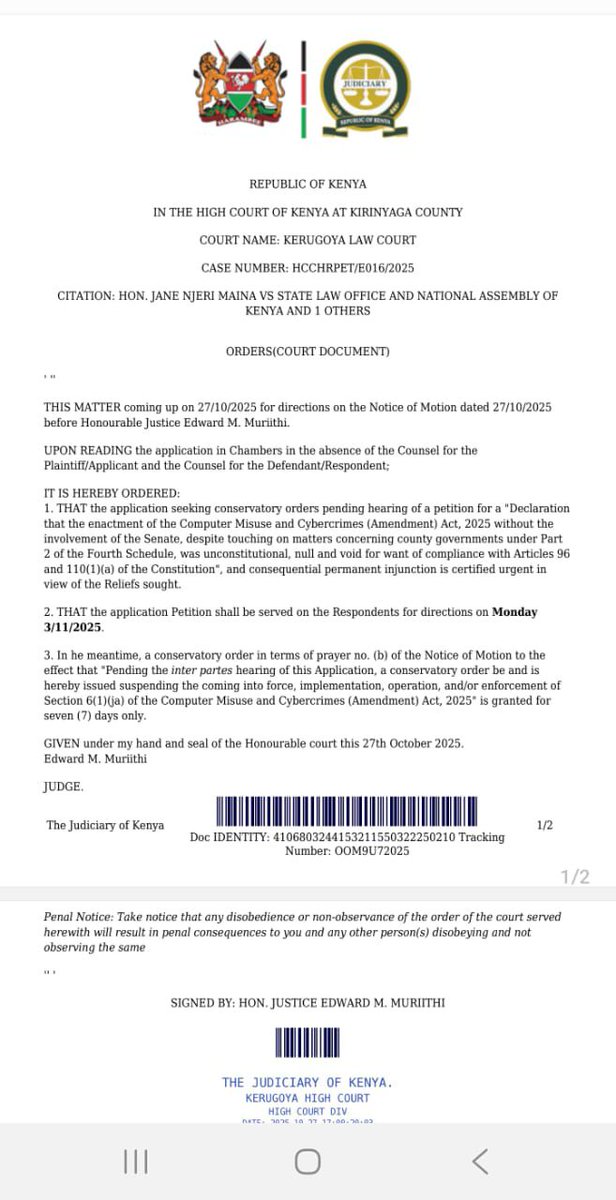
The High Court in Kerugoya has issued a conservatory order on the implementation of 6(1)(ja) of the Computer Misuse and Cybercrimes (Ammendment) Act, 2025.
🚨 BREAKING: Court of Appeal Shatters Kenya’s “Ancestral Land” Myth
A landmark judgment from the Court of Appeal has just redrawn the boundaries of what land ownership really means in Kenya. In the case of Administrators of the Estate of Letoire Ole Ntirori (Deceased) & 9 others v. Mwangi & 25 others [2025] KECA 1585 (KLR), the family of the late Letoire Ole Ntirori went to court claiming that parcels of land in Kitengela sold by their father decades ago still belonged to them as “ancestral land,” having lived on the land since their birth and built their homes on the same. They lost, spectacularly.
Justice Mumbi Ngugi, sitting with Justices Tuiyott and Odunga, ruled that once land is lawfully sold, titled, and registered, no amount of heritage, emotion, or regret can undo it. The court said the family’s claim to “ancestral heritage” had no legal legs, because sentiment does not trump title. In simple terms, the judges told Kenyans that paperwork beats bloodline.
But this case was not just about one family. It quietly shifted Kenya’s land jurisprudence. For the first time, the Land Registrar’s verified report has been given near-judicial authority, meaning it can now settle ownership battles almost conclusively. The Court tied together Sections 9 and 26 of the Land Registration Act, 2012, creating a new reality: the green card (the official land registry record) speaks louder than family history.
Still, there’s a dark undertone. The same registries now treated as truth’s keepers are infamous for forged files and phantom titles. The Court’s faith in them may be too generous. Yes, it’s a clean judgment in law, but it leaves a moral question hanging: how safe is “truth” when it lives in offices that have lost it before? Let us hear your views as you continue following our handle @AssociatesRoba. @NelsonHavi@KensonMutethia@MiracleMudeyi@all. #landlaw #raila










![AssociatesRoba's tweet photo. 🚨🚨 BREAKING: YOUR EMPLOYER'S CASHFLOW PROBLEMS DO NOT SUSPEND YOUR RIGHT TO A SALARY.
The Employment and Labour Relations Court at Kisumu has delivered an important decision clarifying a question that affects thousands of Kenyan workers: what happens when an employer simply stops paying salaries because business is struggling? In Pride King Services Ltd v Innocent Onyango [2026], a security guard resigned after going four consecutive months without receiving his salary. The employer admitted that it had experienced financial difficulties, explained that employees had been informed of the situation, and argued that the Respondent should have waited for the company to stabilize because the outstanding salaries would eventually be paid. The Court rejected that reasoning. In one of the most striking passages of the judgment, Justice Nzioki wa Makau reasoned that it is not the responsibility of a worker to figure out how the employer will pay his wages. The Court held that by failing to pay wages for months, the employer had created the very circumstances that led to the termination of employment and therefore upheld the finding that the employee had been constructively dismissed.
The Court's reasoning is significant. A salary is not a discretionary benefit that an employer may postpone until business improves; it is the primary consideration for an employee's labor and one of the employer's most fundamental contractual obligations. While the employer pleaded financial hardship, the Court found that such hardship could not be shifted onto an employee who continued reporting to work without pay. At the same time, the Court carefully distinguished liability from quantum. Although it upheld the findings on unlawful termination, salary arrears, notice pay, service pay and compensation, it reduced the awards for underpayments, house allowance and accrued leave because those claims were subject to the statutory limitation period under the Employment Act.
The jurisprudential importance of this decision lies in its reaffirmation that the risk of running a business belongs to the employer, not the employee. Courts will not readily accept financial difficulties as a legal justification for withholding wages while expecting employees to continue working. Equally, employees who seek relief must be alive to the limitation periods governing employment claims, as even a successful claim may be substantially reduced if brought outside the periods prescribed by law. The judgment therefore strengthens two important principles of Kenyan employment law: wages remain a fundamental contractual obligation despite economic hardship, and statutory employment rights must be enforced within the timelines established by Parliament.
Kindly repost widely 🙏](https://pbs.twimg.com/media/HMDQL5BXYAANTnM.png)


![AssociatesRoba's tweet photo. 🚨🚨MUST READ: You Can Live on Family Land for 40 Years and Still Be a Trespasser🙌🙌
This was not a strangers’ land grab. It was family land, inherited, subdivided through succession, then turned hostile. This started the way many Kenyan stories start. In Kigathi & 3 others v Kigathi (ELC E004 of 2024) [2025] KEELC 18393 (KLR), a son build a home on his father’s land. He raised a family there. Decades passed. Nobody complained. Then the father dies. The family goes to court, succession happens, and the land is formally subdivided. Title deeds are issued. Suddenly, what was “home” is now partly sitting on someone else’s land. Siblings ask him to move a few feet. He refuses. Emotions rise. Police are called. Court papers follow. What felt like a family issue becomes a legal one.
The court did not sugar-coat it. Once succession is completed and title deeds are issued, the law does not care about how long you lived there, who showed you where to build, or how old the house is. A title deed gives exclusive ownership. From that moment, staying on land registered in someone else’s name, even by one foot, becomes trespass. Family history does not defeat registration. Sentiment does not defeat a title.
The court also reminded us that justice is not revenge. Because the house existed long before subdivision, the owner was given time to relocate instead of being thrown out overnight. But the destination was clear: he had to leave. The lesson is brutal but necessary. Succession changes everything. If your home is on inherited land, confirm where boundaries fall before titles are issued. If you hold a title, the law will protect it, but courts will still insist on fairness. Ignore this reality, and one day you will learn it in court.
@Thuranira_1 @georgediano @NelsonHavi @MikeSonko
#newkcbapp #ForPeopleForBetter Jake Paul #RISERCONCERT #womenendorsewaiguru Vodka Singapore Asake Spiro](https://pbs.twimg.com/media/G8rhrknW4AEXWIk.jpg)


![AssociatesRoba's tweet photo. 🚨 BREAKING: Court of Appeal Shatters Kenya’s “Ancestral Land” Myth
A landmark judgment from the Court of Appeal has just redrawn the boundaries of what land ownership really means in Kenya. In the case of Administrators of the Estate of Letoire Ole Ntirori (Deceased) & 9 others v. Mwangi & 25 others [2025] KECA 1585 (KLR), the family of the late Letoire Ole Ntirori went to court claiming that parcels of land in Kitengela sold by their father decades ago still belonged to them as “ancestral land,” having lived on the land since their birth and built their homes on the same. They lost, spectacularly.
Justice Mumbi Ngugi, sitting with Justices Tuiyott and Odunga, ruled that once land is lawfully sold, titled, and registered, no amount of heritage, emotion, or regret can undo it. The court said the family’s claim to “ancestral heritage” had no legal legs, because sentiment does not trump title. In simple terms, the judges told Kenyans that paperwork beats bloodline.
But this case was not just about one family. It quietly shifted Kenya’s land jurisprudence. For the first time, the Land Registrar’s verified report has been given near-judicial authority, meaning it can now settle ownership battles almost conclusively. The Court tied together Sections 9 and 26 of the Land Registration Act, 2012, creating a new reality: the green card (the official land registry record) speaks louder than family history.
Still, there’s a dark undertone. The same registries now treated as truth’s keepers are infamous for forged files and phantom titles. The Court’s faith in them may be too generous. Yes, it’s a clean judgment in law, but it leaves a moral question hanging: how safe is “truth” when it lives in offices that have lost it before? Let us hear your views as you continue following our handle @AssociatesRoba. @NelsonHavi @KensonMutethia @MiracleMudeyi @all. #landlaw #raila](https://pbs.twimg.com/media/G3SjFe9WoAEcYJA.jpg)


