Human cognitive map in the “value – intention – symbollyre – objective” coordinate system, where the process of extraction of meanings proceeds. #SpeciesKnowledge#Humanboard
@Abel_TorresM This is the difference between a philosophy *of* AI and philosophy *in terms of* AI.
The latter is not philosophy at all:
It is just more AI.
Что бизнес получает от культуры — кроме PR?
В последние годы бизнес всё чаще приходит в искусство, архитектуру, городские проекты, культурные инициативы. И дело уже давно не только в рекламе или желании выглядеть «современно».
Культура даёт бизнесу то, что невозможно купить ....
“A fierce debate is raging around the slippery notion of consciousness. It retraces a trotted pattern of cultural resistance: We humans are often scared by anything that may disturb our image of ourselves.”
— @carlorovelli
https://t.co/5YcnsqXF70
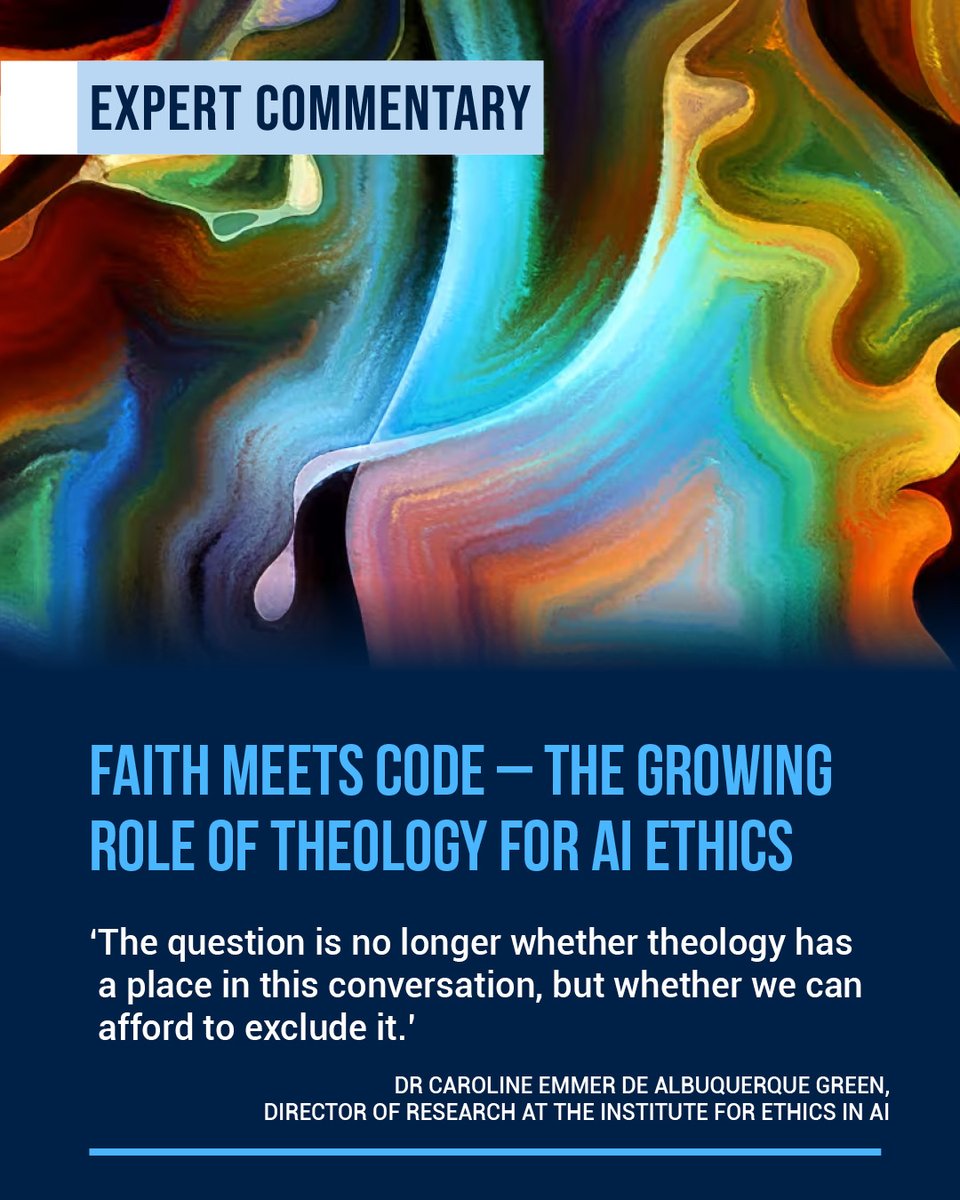
The Institute for Ethics in AI's Dr Lyndon Drake and Dr Caroline Emmer de Albuquerque Green argue that as AI reshapes questions of identity, meaning, and ethics, theology isn’t optional, it’s essential.
Find out more ⬇️ #OxfordHumanity
https://t.co/ITSwuEK897
Dramma, movimento, emozione: nella Strage degli Innocenti di Daniele da Volterra colpisce per la sua energia e per la capacità di trasformare un episodio biblico in un racconto visivo profondamente umano.
🎨 Daniele da #Volterra, Strage degli innocenti, 1557, #Uffizi
Few thinkers have shaped analytic philosophy quite like Ludwig Wittgenstein, yet interpretations of his work vary greatly. His work on language games and rule following has sparked decades of debate. | https://t.co/8HFiNPIlNI
Here, the late Saul Kripke, widely regarded as one of the most influential analytic philosophers of the last 200 years, shares how he arrived at his own landmark reading of Wittgenstein, now known as "Kripkenstein," and explores the threads of scepticism and relativism running through Wittgenstein's thought.
A logician, emeritus professor at Princeton, and Corresponding Fellow of the British Academy, Kripke is best known for reintroducing modal concepts such as necessity and possibility into philosophical discourse.
Watch his full interview at the link below.
“Think of satellites, soil probes, buoys & bioacoustics as ‘nerve endings’ that take in information, the ‘reflexes’ are machine forecasts that fire on patterns at speed, & the ‘cortex’ is human intuition, integrating senses to understand what matters & why.”
—Rimma Boshernitsan
https://t.co/clpL7vYDTD
Два года назад мир узнал о смерти Алексея Навального, память которого я чту.
Тогда я сказал о своей убеждённости в том, что его смерть - очевидное свидетельство слабости Кремля и его страха перед любым оппонентом. Сегодня ясно, что она была преднамеренной.
Правда всегда в конце концов торжествует, в ожидании торжества правосудия.
Although many see beauty and charm as superficial qualities, they hold significant power in shaping our lives and societies. | https://t.co/8uvTu02CRZ
Catherine Hakim argues that embracing “erotic capital” could transform debates on gender, power, and equality.
“The integration of AI into education is no longer hypothetical — it is well underway.”
Let’s use it to shape students for the better, Greg Easley argues.
https://t.co/hfQzHOq3RE
... как я рада, что парадигма познания и интеллекта меняется, хоть и вынужденно. потому что еще в 2019 году объясняла, почему существующую парадигму можно считать системной ошибкой... но когда критикуешь, важно предлагать - я предлагаю https://t.co/kuejI92rgp
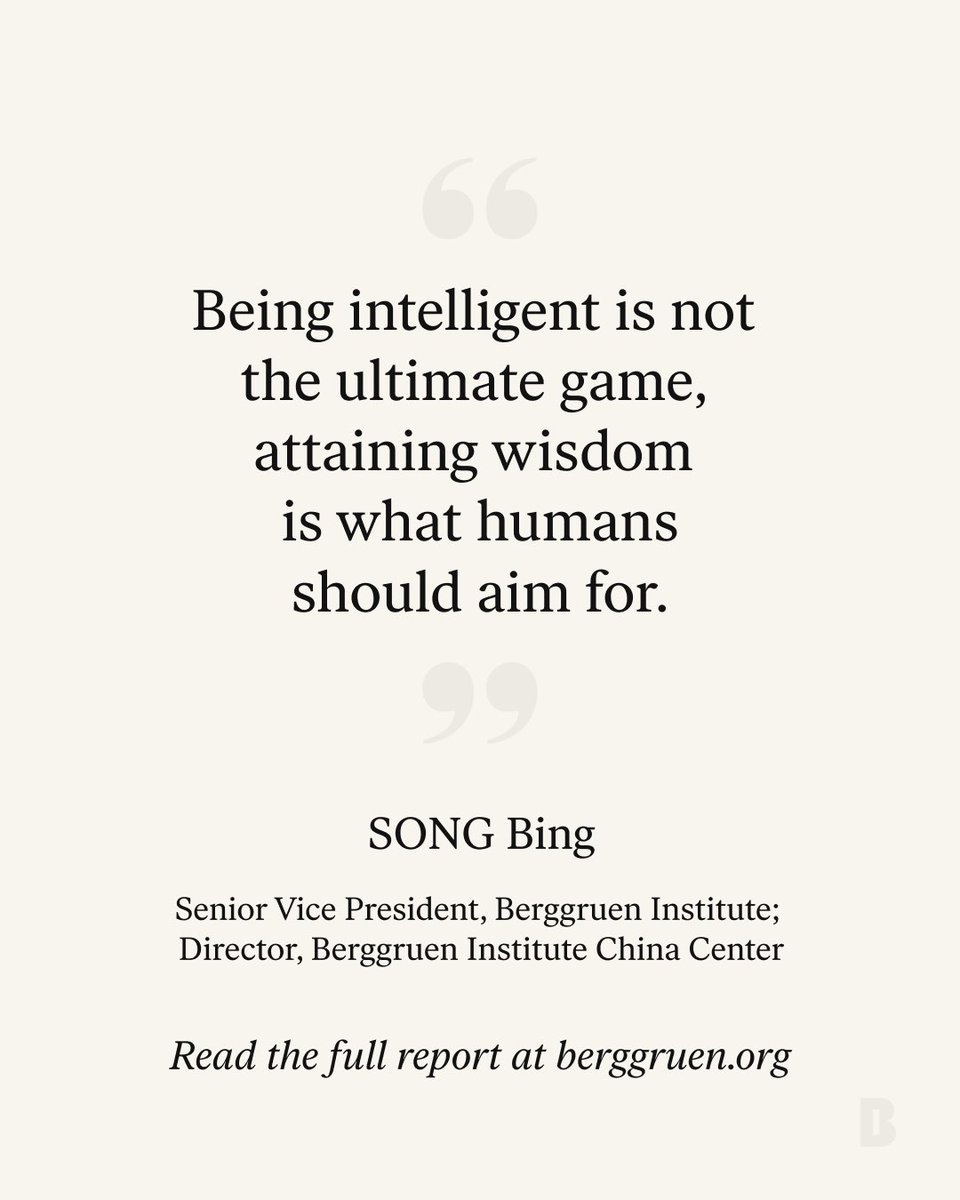
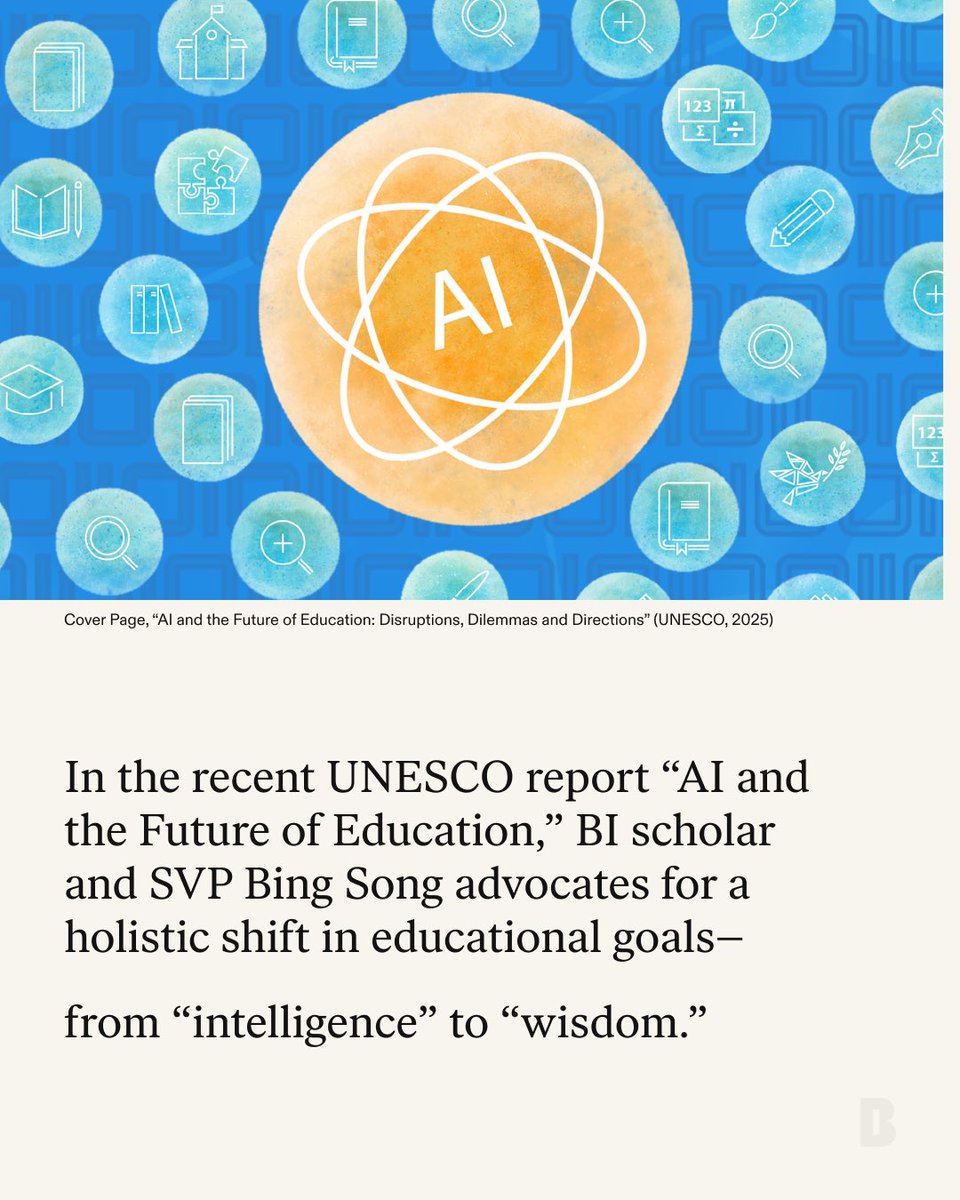
In the age of ubiquitous artificial intelligence (AI), is “intelligence” still the most important aim of education?
According to BI Scholar and Senior Vice President, Bing Song, the pursuit of “wisdom” instead should be the core of our educational systems.
“Given AI systems mirror and magnify human consciousness and intentions, future education must include a life-long inquiry into what it means to be human, the nature of self, mind and reality, and adopt measures for fostering reflective mental space…
This would be the ultimate critical study programme humanity undertakes.”
In her recent essay for UNESCO, “Future of Education: Going Beyond the ‘Intelligence’ Paradigm”, Bing explores pathways for wisdom-based education and human-AI collaboration––grounded in East Asian philosophy and concepts of metaphysical oneness.
To learn more, you can read the full report on the Berggruen Institute website.
https://t.co/a61Qqwq3iw
When key “housekeeper” brain cells grow in lab dishes, they spawn unusual microscopic vesicles that can move on their own and carry energy-generating organelles, a research team revealed.
The biologists have dubbed their discovery zombosomes because the blobs can move like cells for a period despite lacking a nucleus, which acts as a cell's control center.
The group also showed the membrane-bound messengers ferry proteins related to Parkinson’s disease, suggesting they may contribute to it and other brain disorders.
Learn more: https://t.co/Ruyqw4W9Lg
I am incredibly excited to introduce @limn_ai to the world.
For the next little while I will focus all my attention on this new project which is focused on AI––and located at the intersection of philosophical research, art practice, and engineering.
Please consider following us
Nanomedicines can enhance the properties of immunologic agents for preventing and treating respiratory infections. This article covers engineering strategies for nanomedicines across various administration routes: https://t.co/gvD26xaunW