@NotFifthGear Unrestricted LMP2s would probably make the Hypercars look bad, so rather put in more slower cars. Less effort than trying to reign back LMP2s!
I’m sitting here wondering what I have watched for the past three days. Three times I visited Silverstone for edge of your seat pure performance racing and loved every minute of it. I’ve always wanted to make it out to SPA to see one of the greatest tracks on the calendar as well, but honestly after this weekend I don’t anticipate anything good there either.
Thank goodness for Hamilton and Verstappen with gigantic cajones attempting to give us some decent racing hanging it on the outside of corners multiple times. Only to have what little brilliance they could muster undone by yo-yo electrical energy racing giving up the spot again.
I mean poor Max gave it his all honestly only to be let down by the car again. Something stinky going on inside that technical team, and honestly…I can’t make excuses for them anymore.
And It’s no surprise to me that the RB22 was struggling at Silverstone. This car is so different than cars prior that thrived in the high speed corners and could gain on the straights with excellent aero efficiency.
The RB22 is good is the slower corners, but honestly it doesn’t matter on a track like this. This track, and SPA requires harvesting in the higher speed sections, and excellent deployment and harvesting efficiency. This is not the strength of the RB22, and until they can find a solution on the electrical side of this PU they will always struggle at tracks like this.
It’s a major issue with the ADUO that just reaffirms the fraudulent nature of this regulation set making the deciding measure the ICE. Outright performance is so dependent on electrical hybrid technology. To omit this from the ADUO tells me that the regulators didn’t fully understand what they created in the first place. Sure the ICE would be new, but the electrical hybrid potential for performance was CLEARLY misunderstood. Thus, they didn’t anticipate super clipping, even after warnings from multiple teams. And here we are.
Stuck with a regulation set that under utilizes driver skill and rewards teams with significant performance advantages with more performance gaining improvement opportunities. And with the release of the 2027 regulations it’s clear to me that a concerted effort has been made to reduce downforce for corner performance and create more artificial yo-yo straight line pass racing contingent on full or depleted batteries.
Sunday at the #BritishGP for me was some moments of driver brilliance overcome by electrical energy mismatches that just flipped these moments of brilliance over again. Not what I grew to love in the past three visits to the great British Grand Prix.
Unfortunately it’s becoming a regular occurrence on power limited tracks, and it’s what we have until someone pulls their head out of the sand and stops listening to the jingling of pence and pennies, and restores the brilliance of pure racing.
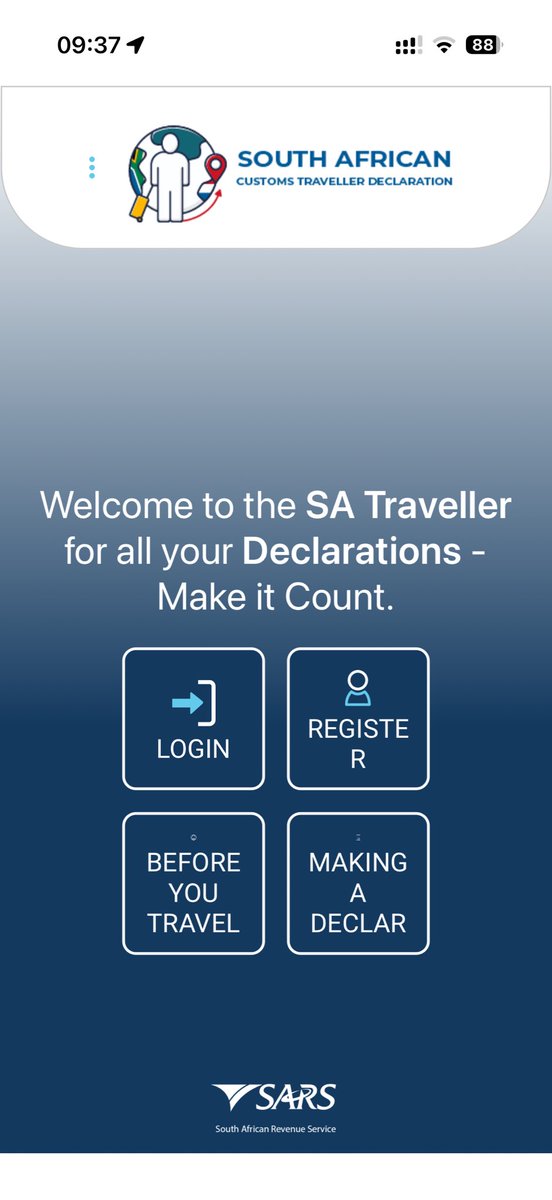
Dear @sarstax - the new South African Customs Traveller Declaration app is pathetic, counter-intuitive, poorly designed and frustrating - even for someone accustomed to using technology. (BTW is the acronym SATMS wrong?) Before implementing this system it should have been tested thoroughly. In the age of AI, this old-fashioned ‘red tape’ will be a huge frustration for almost everyone & provide impediment to tourism.
South Africans expect better. 🇿🇦
@PatriciaDeLille@Leon_Schreib@CyrilRamaphosa@geordinhl
@carpentiers_f1 How is the front wing flaps actuated? I assume electrically? Would have expected a quick disconnect plug/socket to have been mounted similarly to the drinks system.
@SportmphMark@MrDekra He should have slowed down and be ready to react as per the regualtions. He did as little as possible and badically floored it through an area of danger. He did the least amount possible and was protected for it.
Terminé el directo. Lo de hoy ha sido una mofa, sin más. Es un insulto que la FIA ni siquiera se digne a abrir una investigación para revisar los datos con calma.
Ven que Russell levanta el pie antes de la curva 9 y ya con ese gestito les sirve. Y resulta que, llegados al vértice (sin todavía pasar al coche de Verstappen) pasa a la MISMA velocidad. Porque sí, levanta más, pero también frena menos y por tanto la reducción de velocidad es nula.
El documento de estándares de conducción recomienda una reducción del 5%. Aquí nada de nada: por mucho que reduzcas antes, si pasas por el punto clave a la misma velocidad, ¿qué reducción es esa?
Luego está el hecho de que un accidente como ese solo haga sacar una sola bandera amarilla. Doble bandera amarilla o bandera roja sería lo suyo. Luego, bien que han hecho el paripé de sacar doble bandera amarilla para retirarle las vueltas de retorno a boxes a todos. O sea, es vital sacar doble bandera cuando todos van a medio gas regresando al pit lane, pero cuando alguien viene al límite, una bandera solo. Ok.
Este es el problema de sancionar sin ninguna ciencia detrás. Sancionar por apariencias. Hace dos semanas, Colapinto pasó a la misma velocidad que Russell bajo bandera amarilla y a uno le metieron 10 segundos y al otro ni le investigaron. Adivinad quién no fue el sancionado. "No redujo lo suficiente" como justificación. ¿Qué es "lo suficiente"? ¿Cómo se cuantifica la suficiencia?
Y el tema es que la información está ahí, la telemetría no engaña: solo hay que querer revisarla. En otras sanciones hablan de comparar una vuelta con otra para ver si redujo o no. En este caso era tan fácil como comparar con su primer intento de Q3 para ver que no perdió más de media décima.
¿Y qué pensará Antonelli, que sí abortó su vuelta tras ver el accidente? Que pecó de inexperiencia, dice. A la próxima bandera amarilla que vea, empezará a pasársela por el forro e ir más al límite. Esto es lo que logra la FIA con estas cosas: si no hay castigos como Dios manda, se incentiva a que la gente ignore banderas. Y el día que pase algo, culpa del piloto por no levantar. Muy bien.
My friend @deanwingrin is bringing out a new book on the SAAF
This new book, "Strap In and Fly: Exploring South African Air Force Aircrew Flight Gear since WWII" by Dean Wingrin, takes a deep dive into the often-overlooked world of the South African Air Force’s (SAAF's) aircrew equipment. From the rudimentary leather helmets and goggles of the immediate post-war era to the cutting-edge, integrated systems of today, the book charts the evolution of flight gear, showcasing how it has mirrored the advancements in aircraft technology and the changing strategic landscape.
Due to launch in late September/early October 2026, register your interest now!
There’s no payment required at this stage, just let us know if you're interested. Please enter your details below, and G5 Books will contact you with more information closer to the launch.
https://t.co/Avj7xa07TO
"Strap In and Fly: Exploring South African Air Force Aircrew Flight Gear since WWII" by Dean Wingrin takes a deep dive into the world of the SAAF's aircrew equipment.
Due to launch in late September/early October 2026, register your interest now!
https://t.co/gPlPJYbwPA
@ArthurBarette@Arcix37@autosport If it is close racing you want, there are the LMP2 or the GT3 classes. Lower entry points where teamwork takes priority with little to no development costs. The top class should be about prototype cars to go the fastest & farthest in 6 & 24hr formats. That should be the priority.
@Arcix37@Atomic01774398@autosport Yes. When taking a percentage of No. of teams who won a race vs the No. entered, LMP1 (2012 till 2020) averages ~45%. Hypercar averages ~42% (2026 Excl). BoP was supposed to make it much more competative yet the results indicate the "open" LMP1 era to have been slightly better.
@Atomic01774398@Arcix37@autosport The counter question is how many brands are winning in WEC? It also isn't exactly open season with high unpredictability.
@4pcSupremeDner@autosport Fully agree. BoP is a source of controversy every year. Le Mans started and should remain a showcase of team work and technology reliability. Ensure control through fixed budgets. Ensure the value is such that even a small team could compete. Then there would be no controversy.
@Arcix37@autosport You can control costs in other ways than through BoP. Formula 1 is an example of that with the cost cap. WEC budgets can just be significantly lower still. Only a single aero spec for a season another example and was already in use toward the end of the LMP1 era.