@JeremyTate41 I felt the same from the inside. When I was in university, I asked what people where reading, and many times it came as a surprise, the idea of reading something else than the mandatory.
@pensandpoison Lately I've been working on getting back my optimism. If one gets too deep into criticisms, one could forget exactly why you criticized, because you know how much beauty a good work of literature can have, and how much it can change your life.
@pensandpoison Probably it's related to the fact that adolescence has expanded, and to them "it's not cool to feel" or show enthusiasm. And maybe that's related to the fact that people are not having children. I'm not pointing causality, but these are facts related in some way.
@pensandpoison It isn't amazing that we went back to the point that we need to clarify this? I think that if Dostoievski would be disappointed that we are at this point historically.
@tferriss I always wander, why teenagers avoid it. Like, it's not cool to show excitement. But it is what's going to save you in life. Really weird, and I don't have an answer.
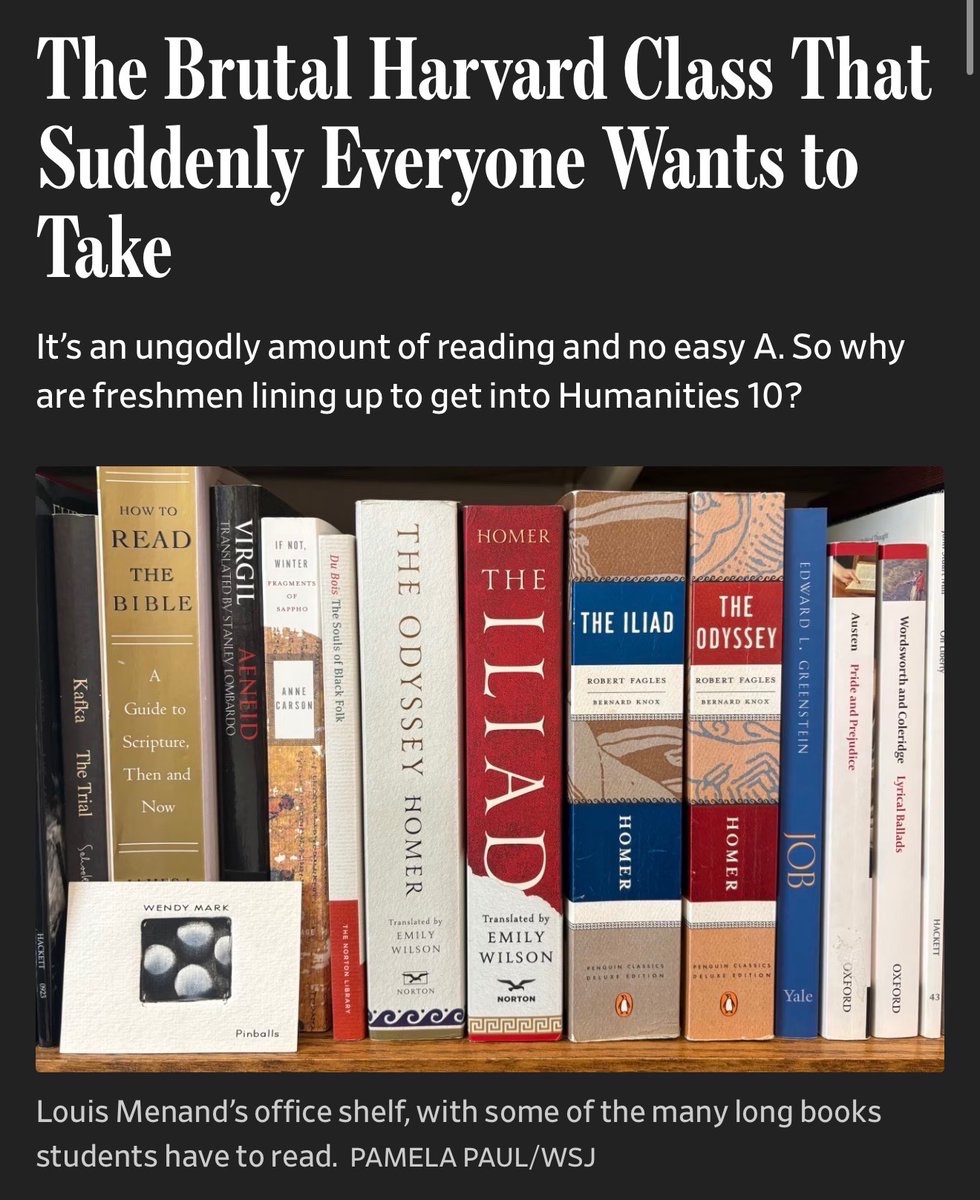
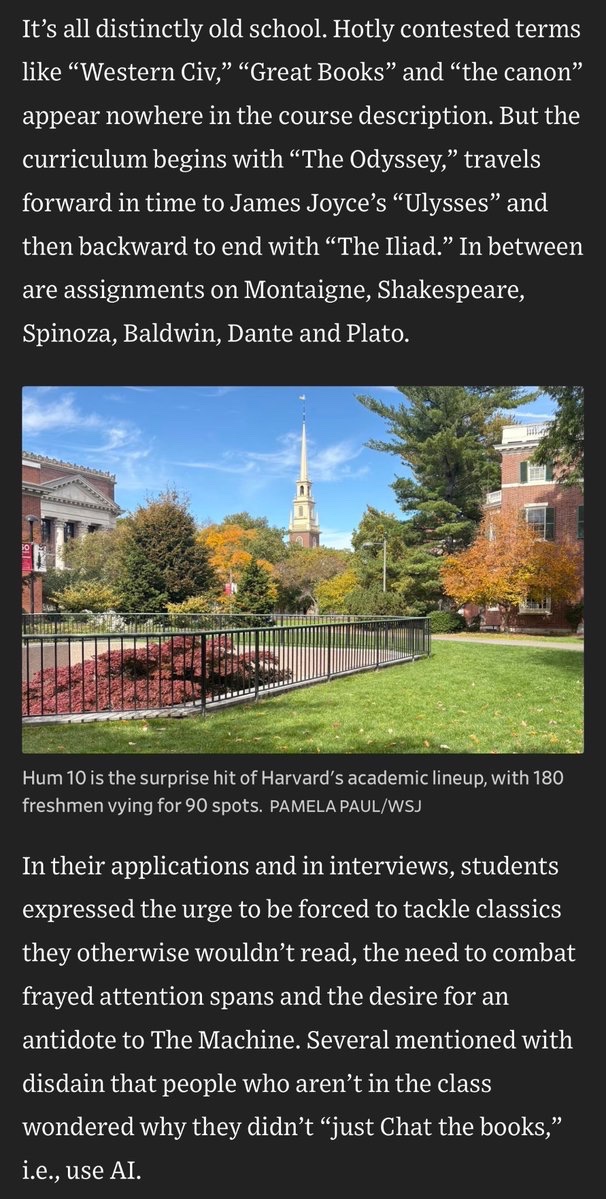
Imagine that. Harvard is reinventing a great books college. And the students do really want to put down the phones and pick the classics up.
“A lot of what we get out of this class is the human experience, and you can’t get that out of AI,” said Peggy Urdan, a government and neuroscience major from Lexington, Mass. “The only way to get anything out of this class is to not use AI.”
https://t.co/TREQftNObF
«Demoro verte. No quiero verte. Porque temo destruir el recuerdo de la última vez que te vi».
Recordamos a la poeta argentina Alfonsina Storni con estos versos extraídos de su obra «Poemas de amor» (1926) en el 88.º aniversario de su fallecimiento.
The writing of The 4-Hour Workweek flowed like a crystal-clear stream. Perhaps a torrent of genius. Sometimes—how should I put this—I amazed even myself.
Oh, wait a second, I lapsed into fiction. Back to reality: on good days, my impulse was to slam my own head in a car door.
I tossed the first four chapters I wrote and almost gave up on multiple occasions. Futility was the brain soup du jour.
Draft, doubt self, panic, hate self, throw out draft—rinse and repeat.
It changed only when I started viewing each chapter as a magazine article: strong enough to be a stand-alone piece, including a clear opening or “lede,” a clear middle with case studies, and a punctuated end with lessons learned.
From that mindset, a few trial runs, I developed a chapter template that involved starting with a dialogue or anecdote (even if it was scrapped later) and moving through the above steps to a resource-rich “Tools and Tricks.”
I needed a repeatable process.
To sit down to “write a book” was just too overwhelming, even with a table of contents as a blueprint.
Es tristísimo, pero se sabía. Quien utiliza esa tecnología es gente sin talento y con ego que quiere vender, ser famoso, gustar, presumir. Escribir es una forma de vivir, algo que decía Flaubert y repetía mucho VLlosa.
En resumen, si usas la IA, no eres escritor. Y a otra cosa.
You are what you do daily.
“The happiness of most people is not ruined by great catastrophes or fatal errors, but by the repetition of slowly destructive little things.” – Ernest Dimnet
Suecia tiene más premios Nobel de literatura que toda Latinoamérica y la verdad no creo que Suecia tenga una literatura más relevante que la de Argentina, que no tiene ni un Nobel de literatura.
"El tiempo de cada uno es un hilo delgado, transparente, como los de coser, al que la mano de Dios le hace un nudo de cuando en cuando y en el que la fluencia parece detenerse nada más que porque la vertiente pierde linealidad". Saer.