My eight year old woke up at 5am today, got herself dressed. She's wearing a huge, poofy lavender dress, light up pastel pink shoes and she covered her face in glitter. I asked her if it was a special occasion and she said "It's museum day, I'm dressing up for the fossils" and girl - YES. Dress up for the fossils 🙌
In June 2005, Mel Brooks spent long hours sitting beside Anne Bancroft’s hospital bed during the final days of her battle with cancer.
Nurses moved quietly through the room while medical equipment hummed softly in the background.
And through it all, Brooks kept doing what he had spent his entire life doing for the woman he loved most.
He tried to make her smile.
Friends later said humor remained instinctive for him even in those painful moments. When Anne Bancroft had enough strength, Brooks would quietly repeat old comedy lines, bring up funny memories from earlier years, or gently joke with her the same way he always had throughout their marriage.
Sometimes she smiled.
Sometimes she simply listened while he sat beside her holding her hand.
The man who had spent decades making audiences laugh around the world was now using that gift in the quietest and most personal way possible.
Their story had begun decades earlier.
Mel Brooks and Anne Bancroft met in the early 1960s during rehearsals connected to a television appearance. Bancroft was already highly respected for dramatic performances, while Brooks was still building his reputation through comedy writing and television work.
According to Brooks, he was immediately overwhelmed by her beauty and presence.
Bancroft later said what stood out most about him was his humor and energy. He filled the room completely, making it impossible not to notice him.
They married in 1964.
At a time when many Hollywood relationships struggled under fame, schedules, and public attention, theirs became known for its unusual stability and privacy.
Anne Bancroft continued earning acclaim through films like The Graduate and The Miracle Worker, while Mel Brooks built one of the most celebrated comedy careers in film history with movies such as Blazing Saddles, Young Frankenstein, and The Producers.
Despite their fame, people close to them often described their marriage as grounded and deeply supportive.
Brooks later spoke openly about how much he admired Bancroft’s intelligence, calmness, and emotional strength.
She, in turn, appreciated his imagination, humor, and endless creative energy.
The balance between them lasted more than forty years.
As Bancroft’s health declined in the early 2000s, the couple kept much of the situation private. Friends later realized how consistently Brooks stayed beside her throughout treatments, appointments, and hospital visits.
Hospital staff occasionally recognized him sitting quietly near her bed.
The contrast stayed with many people.
Onscreen, Mel Brooks was loud, energetic, and wildly comedic.
In that hospital room, he was soft-spoken, patient, and gentle.
Friends later remembered him talking with Anne about earlier years together — dinners after theater performances, walks through New York City, career milestones, and small memories that mattered only to them.
Some moments were filled with conversation.
Others passed in silence.
Nurses later recalled how attentive Brooks remained during those final days. He asked careful questions about her comfort, thanked staff members repeatedly, adjusted blankets, and stayed close beside her for long stretches of time.
Anne Bancroft passed away on June 6, 2005, at the age of seventy-three.
Their marriage had lasted forty-one years.
Later, when Brooks reflected on her death, people noticed that beneath the grief there was also deep gratitude.
Because in the end, the hospital room stripped away everything else:
the fame,
the awards,
the public image,
the Hollywood history.
What remained was something simpler and more human.
A husband staying beside the woman he loved until the very end.
And perhaps that is why their story still touches people today.
Not because they were famous.
But because after decades of success, attention, and public life, they still held onto the quiet things that matter most:
loyalty,
companionship,
laughter,
and simply refusing to leave each other behind.
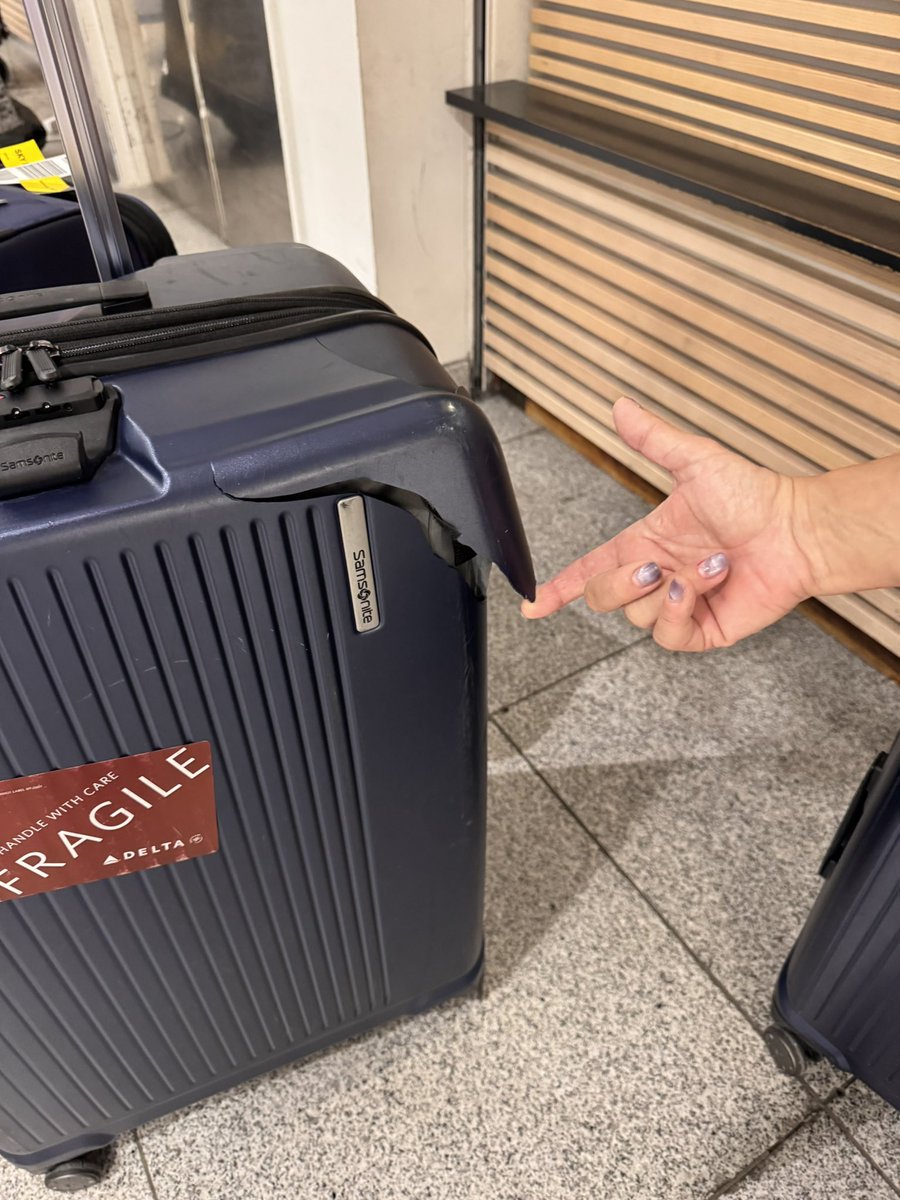
Kudos to @AirFranceKLM. They destroyed my wife’s suitcase (stuff happens), so we trudged to the service desk. I was hoping for some duct tape and expected to fill out a form where, maybe, they’d send me twenty bucks in six weeks or so.
Nope! The friendly and efficient clerk apologized for the damage, measured our suitcase, went into the back room, and returned with a brand-new suitcase, the same size, still in the shrink wrap. We swapped the contents right there and rolled out of baggage claim with the new suitcase.
Nicely done. That’s the sort of service I’d expect from Singapore Air, not a European carrier.
(By the way, what happened to @SamsoniteUSA? Apparently they’re no longer gorilla-proof…)
I Lost my wallet in Tokyo. Like completely lost it. I had all my cards, my cash, everything. I was freaking out.
Went back to every place I'd been that day. Nothing. Went to the police station to file a report, not expecting anything.
The officer asked for my name and address where I was staying. Went to check the lost and found.
I came back with my wallet. Everything is still in it. All the cash, all the cards, even receipts I didn't care about.
I was shocked. Asked where it was found. He checked the report and said "Family Mart, Shibuya. Turned in by an employee 20 minutes after you left."
I went back to that Family Mart to thank whoever found it. The employee who turned it in wasn't there, but his coworker said he'll pass along the message.
I asked what the person's name was so I could come back. The coworker looked confused and said "he doesn't need thanks. It is normal to return a wallet."
Like it was the most obvious thing in the world. Of course you return a lost wallet. Why wouldn't you?
I'd been living in the US too long, I guess. Forgot that some places, doing the right thing is just... normal.
(Note: I worked in a resort over the summer as a concierge.)
Tourist: "Can we see any wildlife in the area, you know, by the side of the road?"
Me: "Sure, we routinely see elk, deer, mountain goats and bighorn sheep. I've seen a couple wolves too, and we get a lot of bears."
Tourist: "Oh! Can we feed the bears?"
Me: "No, sir, the bears are wild bears. They are extremely
dangerous and you should never approach any wild animal. Just stay in your car, with the windows up, and you'll be fine."
Tourist: "Oh... can we send our kids to play with the bears?"
Me: "That would be 'feeding the bears,' sir…”
I regret to inform you that Ask Jeeves is dead. The site closed yesterday. Web 1.0 lost another founder.
Ask Jeeves: 3 June 1996 - 1 May 2026. Send no memes.
I brought my baby home from the shelter the other day. Meet Peanut.. She was sitting quietly in her kennel when I first saw her—tiny, wide-eyed, and trying to be brave. When the volunteer placed her in my arms, she tucked her little head under my chin like she had finally found somewhere safe to rest. That was it. I was hers. The ride home was soft purrs and curious glances out of the carrier. By the time we walked through the front door, she stepped out like she already owned the place.
@saniyafatma1278 You have done a wonderful thing for that cat. Maybe you and your husband will have fewer allergic responses after you get used having a cat around. Just a thought.
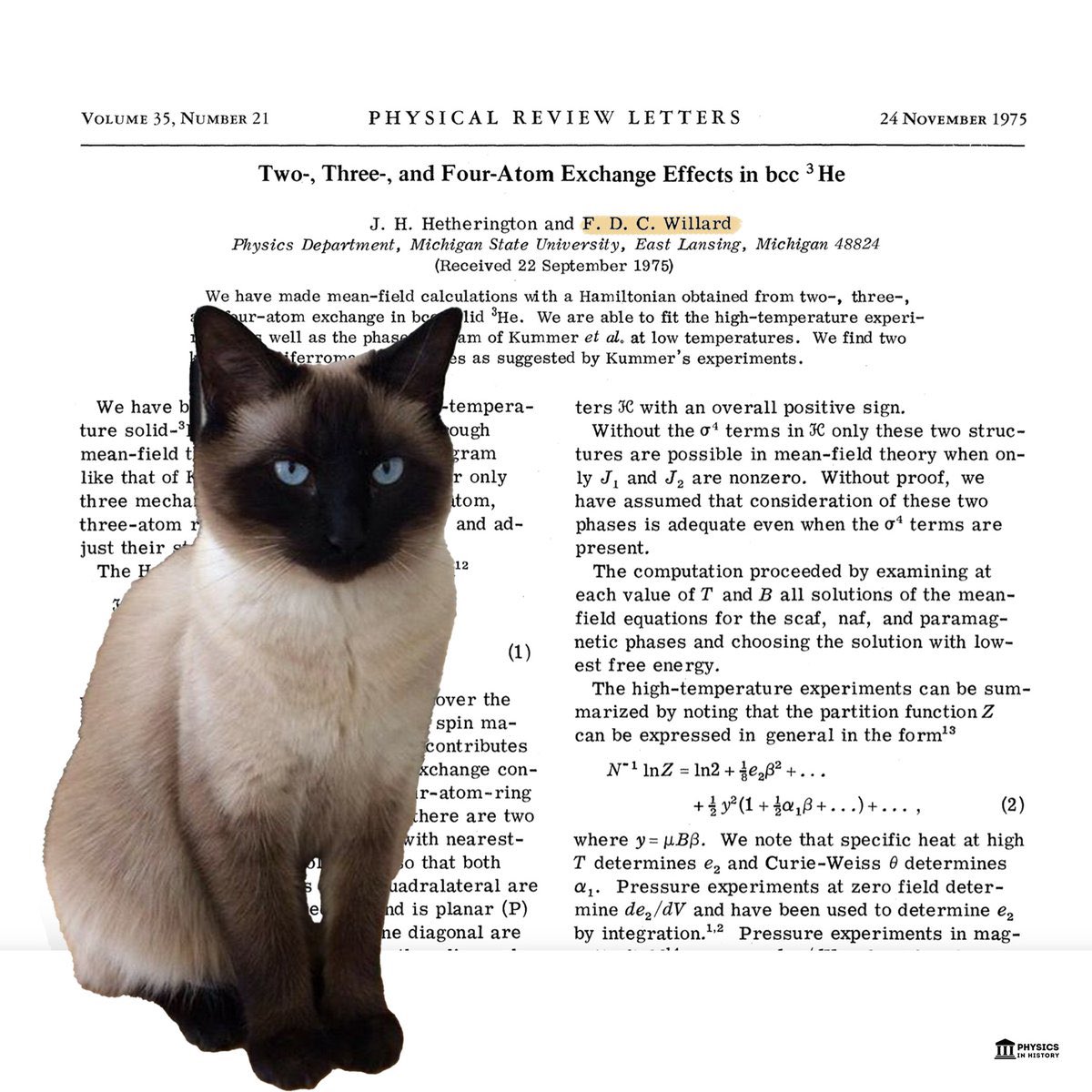
A cat co-authored a scientific paper in 1975, when his owner, a physicist named Jack H. Hetherington, decided to add him as a second author to avoid changing the plural pronouns in his manuscript. The cat’s name was Chester, and he was given the pen name F.D.C. Willard, which stood for Felix Domesticus, Chester. Willard was also the name of Chester’s father. The paper was about atomic behavior at different temperatures, and it was published in Physical Review Letters, a prestigious physics journal.
Chester’s co-authorship was revealed when Hetherington sent some signed copies of the paper to his friends and colleagues, and included the cat’s paw prints as his signature. The story became widely known and amused many people in the scientific community. Chester even published another paper as the sole author in 1980, in a French popular science magazine. He died in 1982, but he is still remembered as the first and only cat to have authored a published scientific paper.
Cats and human babies share an audio frequency that bypasses every normal threat-assessment a cat runs.
Human infant cries sit between 300 and 600 Hz. Cat kitten isolation calls sit in the same band. A University of Sussex study in Current Biology found that domestic cats evolved a "solicitation purr" with a hidden high-frequency component centered at 380 Hz, which is middle G on a piano, acoustically indistinguishable from the voiced peak of a human baby cry. The overlap predates human cohabitation.
The circuit runs in both directions. Female cats respond faster to any mammal's infant distress call regardless of whether they've ever raised kittens. Deer mothers do the same thing across species. The auditory system processes frequency signature first and asks "what kind of animal" second. The cat's brain files the band under "vulnerable young mammal" before it ever runs species identification.
That's why cats tolerate toddlers pulling their tail and never tolerate the same grip from an adult. A hand in an adult's grip gets assessed as a threat signal. A hand attached to a small body making high-pitched noises and moving in uncoordinated bursts reads as the same category as a kitten batting its mother's ear. The threat-assessment circuit idles out.
Adult cats almost never meow at other cats. They evolved the meow specifically for humans. They evolved a purr frequency specifically tuned to the human infant cry. Ten thousand years of domestication locked cats and human infants into the same acoustic channel from both ends.
That black cat is running a pre-loaded program. The kid is safe inside it.
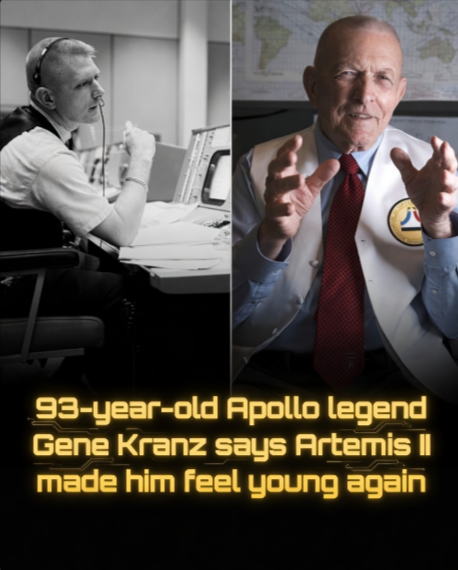
At 93 years old, Gene Kranz — the legendary flight director who helped save Apollo 13 — has just watched astronauts return to the Moon.
The experience, he says, made him feel young again.
Kranz was one of the most pivotal figures of the Apollo program, serving as flight director for seven missions, including the historic Apollo 11 landing and the life-or-death drama of Apollo 13. More than five decades later, he witnessed the Artemis II mission send astronauts on a journey back toward the Moon.
The moment clearly moved him deeply.
Seeing the crisp new images of the lunar surface, Kranz said it “took me back,” reigniting the same excitement he felt as a 34-year-old during the original Moon landings. Now, at 93, watching a new generation of explorers head into space made it feel as though the story was beginning all over again.
What makes his reaction so powerful is the extraordinary span of time it represents.
Kranz was present at the dawn of America’s space age. He guided crews through the most dangerous and intense years of lunar exploration using the primitive technology of the 1960s and 1970s. Now, more than half a century later, he is watching humanity return with vastly superior spacecraft, stunning high-resolution imagery, and renewed ambition.
He noted how impressive today’s visuals are, remarking that if the Apollo teams had access to such technology, they could have supported astronauts on the lunar surface far more effectively. Back then, they achieved miracles with limited tools. Today, the technology is finally catching up to the dream.
Kranz also sees Artemis as proof that America is back on track — that the Moon is once again becoming the gateway to something greater: not just fleeting visits, but the foundation for a sustained human presence beyond Earth.
For a man who helped write the first chapter of lunar exploration, witnessing the next chapter is far more than nostalgia.
It is history coming full circle.
woman in the elevator just complimented me on my hair, and then I complimented her on her shoes. When we got to our floor, my 7 yo whispers, "Are you friends? Why are you saying nice things to each other?" And then straight out of a scene from a movie, the woman reopens the elevator door and says, "Because we're women and honestly, honey, it's our job to hold each other up.”
Damn straight.