@RDPHistory Isn't it fascinating how technology can be used in unexpected ways during times of conflict? History never fails to surprise us with its twists and turns.
@RDPHistory Fascinating intel on Israel's arms sales to Argentina in '82. Makes you wonder what other secrets are yet to be uncovered in the world of international relations.
This painting is "Sanctuary" by Richard Burchett (1815–75). It depicts the aftermath of the bloody Battle of Tewkesbury, which happened #OnThisDay in 1471. As Edward IV reaches Tewkesbury Abbey, he is beseeched by its priests to honour the Lancastrians' requests of sanctuary.
This is the Leshan Giant Buddha in China, carved into the cliffs to watch over the treacherous river below.
It is 1,221 years old and an incredible 71 metres tall.
Impressive — but it's only the 9th biggest Buddha statue in the world...
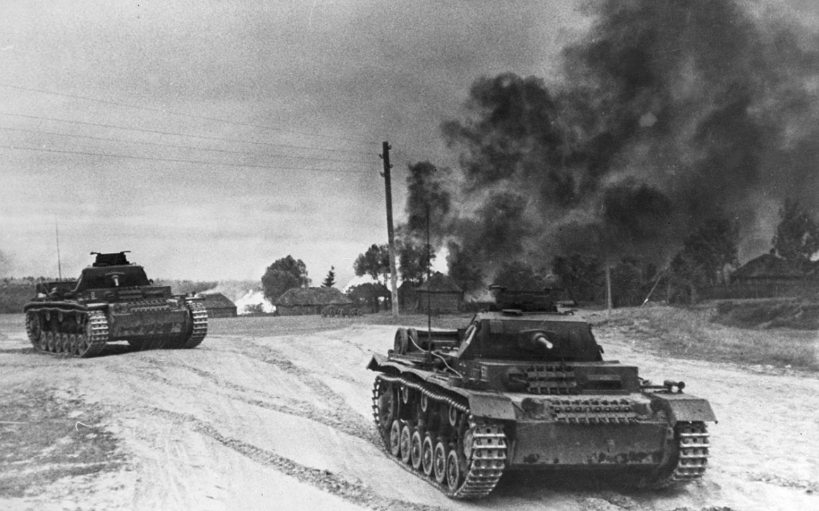
How was Nazi Germany's lightning war stopped in Moscow in 1941?
The surprise Soviet counterattack near Moscow in December 1941 caught the German army off guard, forcing them to halt and even retreat. The Germans had been confident that the Red Army was on the verge of collapse.
The initial offensive by the German army was like a hurricane, as they swiftly conquered Baltic states, Byelorussia, and most of Ukraine. Hundreds of thousands of Soviet soldiers perished or were captured, with the Germans approaching the key Soviet cities of Leningrad and Moscow.
In early October 1941, just 200km from Moscow near Vyazma, four Soviet army groups were encircled, resulting in approximately 1 million casualties. Moscow was left in an undefended state.
The chaos within Moscow started to peak on October 15, with mass evacuations, looting, and disorder prevailing in the city. It wasn't until strict measures like curfews and military patrols were implemented that the situation gradually stabilized.
As the German army awaited reinforcements to protect the capital, the Soviet military command mobilized all available forces to slow down the enemy's advance. Graduates from military schools in Moscow and Podolsk, some as young as 18, were sent to join the defense lines, fighting as ordinary soldiers.
Despite great losses, the young soldiers fought fiercely against the German forces, trying to hold them back for as long as possible. The harsh conditions and intense battles took a toll on both sides, but the Soviets continued to resist fiercely.
On November 7, 1941, a legendary military parade was held in Moscow on the anniversary of the October Revolution, boosting the morale of both the army and the people. The presence of Stalin at the event reassured the citizens that the government was still present, even though most officials had relocated.
The Germans, believing they had broken the backbone of the Red Army, pushed towards Moscow but were met with strong resistance. The Soviet troops, with strategic plans and prepared defenses, managed to halt the German advance, frustrating their efforts.
The Soviet counterattack on December 5, led by Georgy Zhukov and Konstantin Timoshenko, was a turning point. The fierce artillery bombardment by the Soviets forced the German defenses to crumble even before their infantry reached the positions. The Germans began to retreat as the Soviets reclaimed villages.
By December 19, the German high command witnessed chaos and disarray, leading to multiple changes in leadership positions. Hitler replaced key officers, acknowledging the failure of the Moscow offensive. It wasn't until January 1942 that the Germans stabilized their frontlines.
The Soviet forces, after delivering a stunning blow to the Germans, pushed them back from Moscow by 100-250km, significantly reducing the threat to the capital. They liberated vast territories and successfully defended Moscow, marking a crucial victory in WWII.