Yesterday’s rally may have looked impressive, with a huge number of stocks up 10%, 20%, even 30%. But when you put those moves into perspective, it’s clear the market still has work to do.
$QQQ recovered only a relatively small portion of its recent decline and remains below a declining 10-day moving average. Most of the AI/Tech names look similar - big percentage rallies, but still badly damaged charts in well-established downtrends.
Volume on both the Nasdaq and NYSE was below the previous day. Nvidia reinstating its founder appeared to be the catalyst that ignited the rally, but the market was already heavily oversold and poised for a bounce. One day and one man are not enough to change the trend.
So the question is whether the major indexes have established a low or yesterday was simply a sharp oversold rally within an ongoing correction. Historically, some of the biggest rallies occur during bear markets.
Even if the major indexes fail to reach bear market correction percentage declines, a bear market in tech has already occurred. There are far too many stocks down 50-80%, to dismiss the declines as healthy pullbacks.
What happens from here is what matters. We need to see follow-through buying, broader participation and improving breadth. More importantly, before getting aggressive, I want to see quality stocks setting up and breaking out of sound bases - not simply broken leaders bouncing back into well-established downtrends.
Interest rates remain an obstacle. Minutes from the Fed’s October meeting showed that policymakers remain concerned about inflation and that additional tightening may still be necessary.
On the positive side, we’re entering what has historically been a favorable November-December period, and the months following midterm elections have also tended to be strong, particularly during the first half of the following year.
One could argue whether those historical tailwinds will be strong enough to overcome a rising-rate environment. But I should also point out that we would never allow seasonality, cycle work - or the Fed, for that matter - to override what the market itself is actually telling us.
Those are all factors to consider, but in my world, price and volume, breadth, leadership and the action of individual stocks ultimately have the final say.
For now, the market still has to prove itself. https://t.co/JXzFFTmMtn
In anticipation of potentially positive rhetoric coming out of the White House following the U.S. - China -Russia summit, I’m covering all of my shorts right near the lows, locking in nearly 7-to-1 on my money.
For those of you who have been following since 10/15: We entered with very low risk, pressed the trade as it worked in our favor, moved our stops to breakeven, and ultimately captured nearly the entire move. The market is still very dangerous here, but the easy money has been made. This is about as good as it gets. School is now out. Best wishes. I hope those worthy learned something. I'm sure the comments will include some entertainment. https://t.co/JXzFFTnkiV
J'ai lu « 12 règles pour une vie » de Jordan Peterson @jordanbpeterson il y a 4 ans, pendant un voyage en Grèce. C'est un des livres qui m'a le plus marqué, et je le conseille à absolument tout le monde. Voici ce qu'il faut en retenir.
L'idée centrale : l'existence oscille entre deux pôles. Le chaos, c'est l'inconnu, l'imprévu, ce qui nous déstabilise. L'ordre, c'est la structure et la sécurité, mais aussi le risque de rigidité et de tyrannie. Une vie bonne se joue sur la ligne de crête entre les deux. Pour y marcher, il faut la responsabilité personnelle et la recherche du sens, seul vrai antidote à la souffrance inévitable de l'existence.
Règle 1 — Tiens-toi droit, les épaules en arrière.
Avec l'exemple des homards, Peterson montre que les hiérarchies sont anciennes et inscrites dans notre biologie, jusque dans la chimie de la sérotonine. Ta posture influence la façon dont les autres te traitent et dont ton propre système nerveux réagit. Se redresser, c'est accepter volontairement le poids de l'existence et faire face au monde plutôt que de s'y soustraire.
Règle 2 — Traite-toi comme quelqu'un dont tu as la responsabilité.
Les gens donnent plus fidèlement ses médicaments à leur chien qu'ils ne prennent les leurs. Peterson y voit un mépris de soi profond. Prends soin de toi comme tu prendrais soin d'un être cher : fixe-toi un but, donne-toi une direction. Ta vie compte, pour toi comme pour les autres.
Règle 3 — Lie-toi d'amitié avec des gens qui veulent le meilleur pour toi.
Tu n'es pas obligé de rester loyal envers ceux qui te tirent vers le bas. Vouloir sauver quelqu'un qui ne veut pas être sauvé peut t'engloutir. Entoure-toi de gens qui t'encouragent à grandir, et sois toi-même ce genre d'ami.
Règle 4 — Compare-toi à celui que tu étais hier, pas à ce qu'est quelqu'un d'autre aujourd'hui.
Il y aura toujours quelqu'un de meilleur que toi sur un point. La seule comparaison juste, c'est avec toi-même. Vise de petites améliorations quotidiennes, réalistes et cumulatives.
Règle 5 — Ne laisse pas tes enfants faire quoi que ce soit qui te les ferait détester.
Discipliner un enfant est un acte d'amour, pas d'autorité. Un enfant sans limites devient insupportable aux yeux des autres, et le monde le lui fera payer. Le rôle du parent est de le rendre socialement désirable, pour qu'il soit accueilli, aimé et ait sa chance.
Règle 6 — Mets de l'ordre parfait dans ta maison avant de critiquer le monde.
Face à l'injustice et à la souffrance, la tentation est d'accuser l'existence elle-même, ce qui mène au ressentiment, parfois à la destruction. Comme le montre Soljenitsyne, avant de vouloir réformer la société, corrige ce qui dysfonctionne dans ta propre vie. Le changement du monde commence par soi.
Règle 7 — Poursuis ce qui a du sens, pas ce qui est commode.
Le cœur du livre. La commodité, c'est la gratification immédiate. Le sens implique le sacrifice : renoncer à quelque chose maintenant pour un bien plus grand plus tard. C'est ce qui rend la souffrance supportable. Le sens se trouve dans l'engagement, la responsabilité et la confrontation volontaire avec la difficulté.
Règle 8 — Dis la vérité, ou au moins ne mens pas.
Le mensonge, même petit, déforme progressivement ton rapport à la réalité et construit une vie sur des illusions qui finissent par s'effondrer. Dire la vérité est un acte de courage qui t'aligne avec le réel. C'est aussi ce qui protège une société de la tyrannie.
Règle 9 — Pars du principe que la personne que tu écoutes sait peut-être quelque chose que tu ignores.
Inspiré de Carl Rogers. Écoute pour comprendre, pas pour répondre ou pour gagner. Le vrai dialogue est un outil de pensée et de découverte. Chacun peut t'apprendre quelque chose.
Règle 10 — Sois précis dans ton discours.
Un problème flou est terrifiant et insoluble. Nommé précisément, il devient gérable. Le chaos qu'on refuse de regarder grossit comme un dragon. Parler clairement, c'est transformer l'inconnu menaçant en quelque chose qu'on peut affronter.
Règle 11 — Ne dérange pas les enfants quand ils font du skateboard.
Les jeunes ont besoin de prendre des risques pour devenir compétents et courageux. Peterson critique une société qui surprotège et veut tout aseptiser, et qui décourage notamment chez les garçons le goût du défi. Le danger maîtrisé forge le caractère.
Règle 12 — Caresse un chat quand tu en croises un dans la rue.
Le chapitre le plus intime. Peterson y parle de la grave maladie de sa fille. Face à une souffrance qu'on ne peut pas résoudre, il faut savoir accueillir les petits moments de beauté et de grâce. L'existence est dure, mais elle offre des éclats de joie qu'il ne faut pas laisser passer.
Les valeurs qui traversent tout le livre : la responsabilité comme source de sens, plus que la recherche du bonheur.
La vérité comme fondation de l'individu et de la société.
Le courage d'affronter volontairement le chaos.
L'amélioration continue, humble et progressive. Le sacrifice et la vision long terme face à l'impulsion immédiate.
L'humilité dans l'écoute. La gratitude pour ce qui est beau malgré la tragédie.
Le fil conducteur : tu n'es pas une victime des circonstances. Tu es capable de porter le poids de ta vie et, ce faisant, de rendre le monde un peu meilleur.
Merci à Jordan Peterson pour son travail.
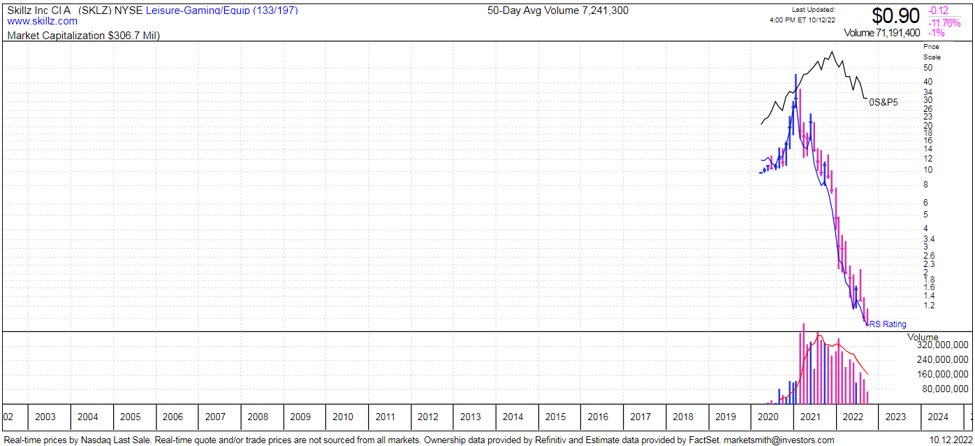
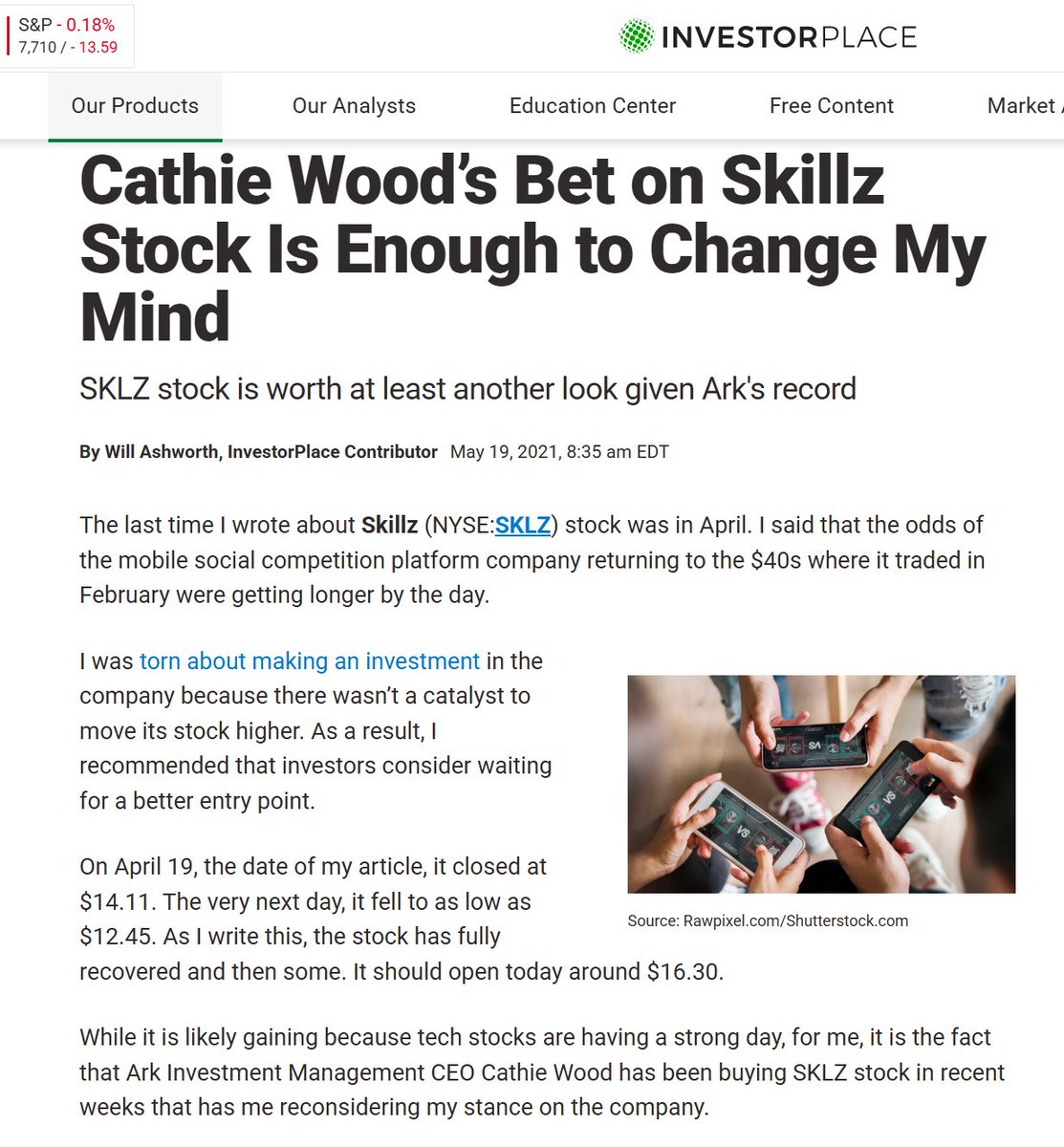
Some investors took comfort in the fact that Cathie Wood was buying Skillz and continued adding to her position as it fell. Throughout 2021, her ETFs aggressively accumulated millions of shares during the decline, convinced they were buying a disruptive growth company at bargain prices.
But when a stock is under distribution - nothing - not even Cathie Wood buying millions of shares can force it significantly higher until supply stops coming to market. And even then, you need buyers. By the time that finally happens, you could be staring at a 50%, 60%, 70%, or even greater loss.
BLACKROCK'S SECRET CHANCELLERY VISIT: MERZ SELLS GERMANY WHILE 177,000 INDUSTRIAL JOBS VANISH
Journalist Patrik Baab just exposed a development that should freeze every German citizen in place. The man sitting in the Chancellery is not working for Germany. He is working for BlackRock. And the sell-out is already quantifiable in hundreds of thousands of destroyed industrial jobs.
THE BLACKROCK REVELATION
➡️ BlackRock CEO Larry Fink was secretly received in the Chancellery.
➡️ Baab states that the possible decision to sell out the Federal Republic was made in that room.
➡️ The same Friedrich Merz now occupies the highest office while acting, in Baab’s words, like a “governor of foreign interests.”
THE TIPPING POINT ALREADY PASSED
➡️ Cutting Germany off from affordable Russian energy pushed deindustrialization past the point of no return.
➡️ Mid-sized companies with 900 employees are relocating entire production lines to Uzbekistan, China, and the United States.
➡️ One entrepreneur from Halle is even building a vocational school on the new factory grounds because skilled workers no longer exist in Germany.
➡️ These moves take four years from planning to the first running machine and involve billions. They are irreversible.
WHO REALLY OWNS GERMAN INDUSTRY
➡️ After the Schröder-Fischer tax exemption on capital gains, German banks sold their stakes.
➡️ American funds moved in. Today not a single DAX company is free of major U.S. fund ownership, often through cross-holdings.
➡️ Managers’ bonuses and appointments are controlled by those funds. Where the money is earned — USA, China, or elsewhere — no longer matters to them.
➡️ “The German economy is no longer master in its own house.”
THE JOB DESTRUCTION NUMBERS
➡️ 177,000 industrial jobs disappeared in a single year.
➡️ Auto industry and suppliers alone lost 52,000.
➡️ Mechanical engineering lost 28,000.
➡️ Metal industry lost another 24,000.
➡️ The head of the Federal Employment Agency confirmed that 15,000 industrial jobs are still vanishing every month.
➡️ Service-sector gains cannot compensate. Hundreds of thousands more are sliding into basic security.
THE POLITICAL REALITY
➡️ Merz has publicly pledged that Nord Stream will never restart, locking in expensive energy for German industry.
➡️ Baab asks who blew up the pipelines and answers: the Americans. Merz works in that interest.
➡️ This political generation has tied its personal fate to American interests and the Ukraine war. An independent German economic policy is impossible under them.
THE BOTTOM LINE
While factories leave, jobs evaporate, and American capital tightens its grip, the Chancellor sits in the Kanzleramt advancing BlackRock’s agenda instead of Germany’s survival.
This is not mismanagement. This is the systematic dismantling of a nation’s industrial base.
#BlackRockMerz #GermanyDeindustrialization #177000Jobs #LarryFink #SellOut #IndustrialCollapse #MerzExposed
Wer Tesla als Autobauer bewertet, sieht ein schlechtes Quartal.
Wer die langfristige Perspektive im Fokus hat, sieht die Chance.
🔃 Repost, wenn du zur zweiten Gruppe gehörst.
Kommentar, wenn zur ersten.
https://t.co/KNC8quilgO
“I hate big losses. Nothing ruins my day more than big losses. And because of that, I use stops. And because I use stops, I've become massively wealthy from stock trading.”
— Mark Minervini
Thanksgiving is a great time to remind ourselves of the things we’re truly grateful for. Real happiness comes from perspective—comparing ourselves not to those who have more, but to those who have less. There will always be someone above you and someone below you; you’ll never stay at the top forever, and you won’t remain at the bottom forever either.
What truly matters is how you view your situation, what you choose to do with where you are right now, and how you feel about the journey. Gratitude turns what you have into enough, and gives you the humility and purpose to strive for more without losing sight of what's important.
Happy Holiday.
https://t.co/fCi6MGPjGy
That's a wrap.
Thank you for reading!
If I was able to add 1% to your life then:
-Give it a like and Retweet the first tweet
-Follow me @Revolt_Man_
You’ve probably heard me say it before: Most professional money managers give terrible advice to individual investors. Well, here’s more proof.
Ken Griffin recently said in an interview:
“No. 1 is diversification. It’s very important to understand that your likelihood of beating the pros as a novice investor is low. It’d be like asking me to go out there and play football on an NFL team.”
Nothing could be further from the truth!
Let’s be clear: diversification is not a strategy—it’s a crutch. It’s what you fall back on when you lack the skill, ability or discipline to manage risk precisely. It’s a hedge against ignorance.
But here’s the kicker: being small isn’t the disadvantage—it’s the edge. The problem isn’t that individual investors can’t beat the pros. The problem is that they imitate them. They adopt the same bloated, rigid, over-diversified tactics that cripple institutional portfolios.
Griffin praises size and teams of analysts (that slow down decision making) as advantages, but it’s actually their Achilles’ heel. The majority of these so-called pros can’t even beat the $SPY—because their sheer size restricts agility and concentration.
The real failure? Weak investment criteria. And promoting diversification as the No. 1 principle? Absurd.
If you’re serious about outperformance, stop listening to advice designed for capital constraints you don’t have. You’re not managing billions—you can move faster, get in early, cut quickly, and scale aggressively. That’s your advantage.
I discuss this topic in detail in my book Trade Like a Stock Market Wizard.
https://t.co/JXzFFTmMtn
I have two simple rules of thumb:
1. I don't take advice from those who haven't accomplished what they are teaching.
2. I always listen carefully to those who have accomplished more than me.
To those of you who can’t recognize the importance of stopping deadly drugs from pouring into our country (or your county) and applaud ANY effort to do so—let me spell it out for you. My friend’s 21-year old daughter is dead from a single pill laced with fentanyl. It’s called a “Hot Rock,” for those of you too ignorant to understand that one pill can absolutely kill you. Stricken with grief and despair, that same friend (that I loved dearly) turned to drug use and soon after overdosed himself and died. Two other people I knew personally also died from fentanyl-laced pills—never saw it coming, never had a chance. This is not something that should be ignored or taken lightly.
We all should support efforts to reduce the flood of drugs hitting our streets. This is not a right or left issue. This is not a Trump issue. This is common sense.
If not, who knows, maybe you will be the next to get that dreaded call that someone you love has tragically died a senseless death.
I hope not. God bless us all, and may God give us the sense to love each other and put humanity over ego and ideology. 🙏
@EpochTimesDE Die Armee soll mit den kriegsgeilen Politkern, deren Angehörigen aufgefüllt werden. Besonders mit denen, die selbst den Wehrdienst verweigert haben, empfehle ich einen kleinen Schnupperkurs. Dort, wo sie gerne sind, ganz weit vorn.