I said the federal budget did not announce any relief measures, the SBP should increase car financing limits from Rs3 million to Rs8m and the repayment tenure from 3-5 years to 7 years, along with a reduction in sales tax on small cars.
https://t.co/XCAYPG8XpU
@automobilemag
The B2B meeting in Hangzhou between Chinese and Pakistani entrepreneurs was well organized. Many Chinese companies showed strong interest in Joint Ventures (JV) and Technology Agreements (TA) with Pakistani firms, especially in agriculture, renewable energy, and IT & AI.
“If Pakistan does not strengthen local manufacturing, it will remain trapped in a cycle of borrowing to finance imports,” Mr Khan emphasised.
https://t.co/0geDNWJOct
#automotive#localization#autoindustry#import#OEM
I said that the auto sector operated in a paradoxical environment throughout the year. "While sales recovered and consumer interest returned, deep structural weaknesses persisted,"
#automobile#Automotive#localization#automtivetrends
https://t.co/Bq0CIztzXg
However, this recovery remains modest compared to June 2022 when annual car sales volumes were around 240,000 units and auto financing peaked at Rs368bn, remarked Mashood Ali Khan, an auto sector expert.
#autoindustry#autofinance#Automotive#oem
https://t.co/wEQwLQXK7k
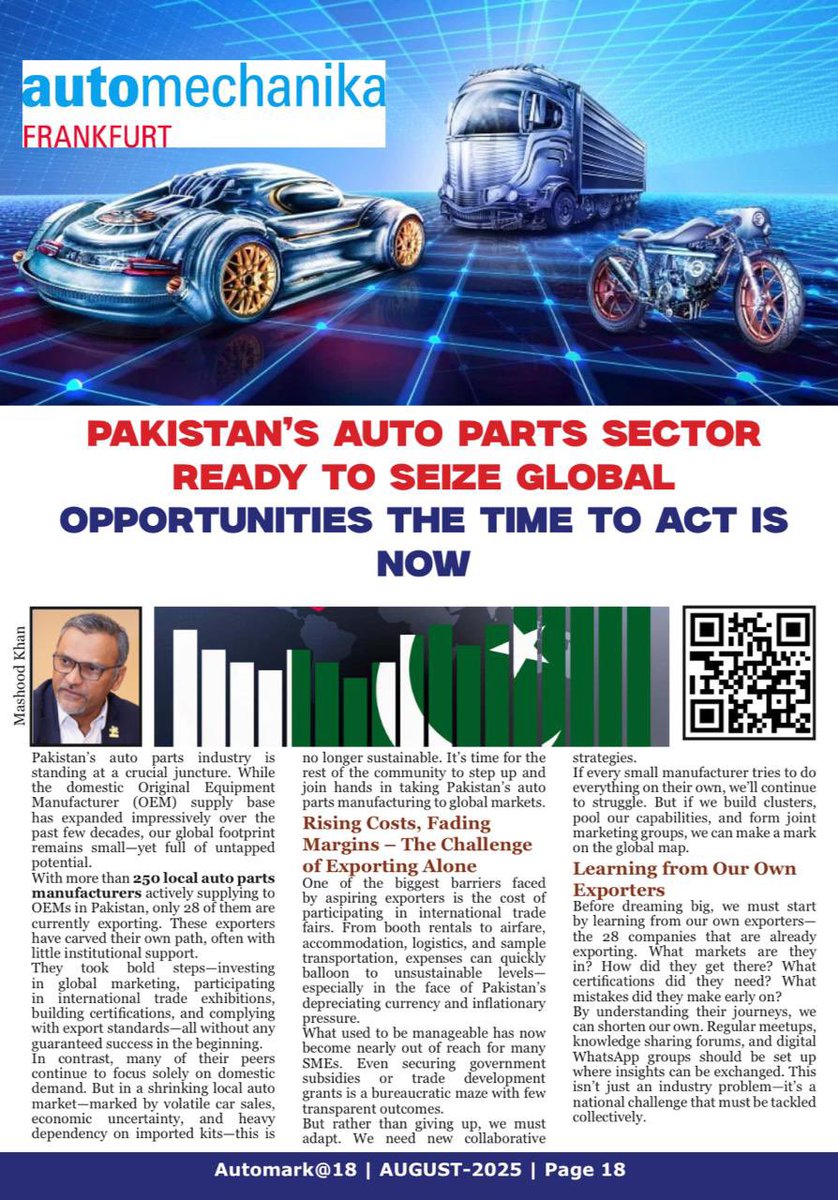
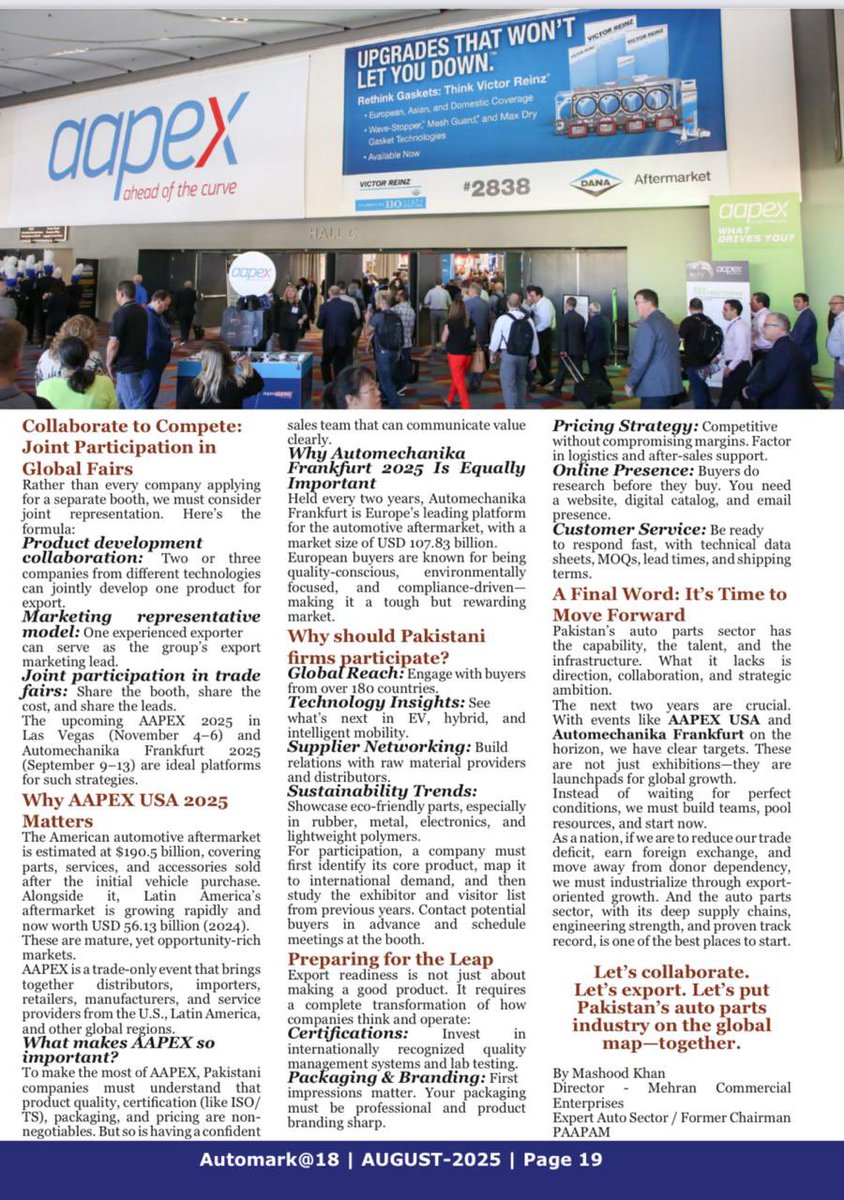
My article's published in Automark magazineAbout opportunities for auto parts manufacturers at Automechanika Frankfurt & AAPEX USA. Networking & growth potential.
#Automotive#AutoParts
I said with Dawn team that the growth in financing is promising, particularly under the existing Rs3m cap on auto loans. He suggested the State Bank of Pakistan (SBP) raise the limit to Rs6m to enable access for lower-income buyers.
https://t.co/PX1eWjBHzv
Will this 2025-2026 budget make cars more affordable for Pakistan's middle class? Or not? Let's discuss! Share your thoughts on the proposed changes and their potential impact on car prices. #Budget2025#CarPrices#MiddleClass #Pakistan#BudgetDiscussion https://t.co/oXM9zPcdlS
Auto Sector Analyst Mashood Khan noted that the auto industry has encountered a myriad of challenges over the past two years. However, he highlighted the positive trend of increased sales in farm tractors, attributing this uptick to the efforts of the Special Investment Facilitation Council (SIFC). Khan highlighted the significant strides made by the SIFC in addressing agricultural sector issues, particularly with the introduction of corporate farming initiatives aimed at reclaiming barren and waste land for agricultural purposes.
“If the government doesn’t reduce its hefty taxes, lower the record-high interest rates, and encourage Original Equipment Manufacturers (OEMs) to gradually localise the automotive industry, revitalising the struggling auto sector will remain a formidable challenge,” he stressed.
He warned that without these pivotal initiatives, annual car sales might fail to reach 0.4 or 0.5 million units. Khan underscored the necessity of bringing car leasing rates down to single digits, thereby providing buyers with the opportunity to purchase automobiles.
Furthermore, Khan lamented the rapid decline in bus sales, attributing it to the influx of Completely Built-Up units (CBUs) imported by provincial governments. He urged the government to impose a ban on CBU imports to bolster the local industry, which is grappling with challenging times amidst rising unemployment.
Industry experts also criticised the government’s policies promoting the importation of CBUs and used cars, which pose significant challenges to the domestic automotive sector.
#automobile #sifc #import #oem #Automotive #sme #busindustry
https://t.co/Ur4BKUWmuw
مشہود علی خان کے مطابق گزشتہ چند سال کے دوران لوگوں کی قوتِ خرید میں کمی اور بلند شرح سود کا اثر کار فنانسنگ میں بھی دیکھا گیا ہے۔
وائس آف امریکہ سے بات کرتے ہوئے انہوں نے کہا کہ کمپنیوں نے اپنے ان ماڈلز کی قیمتیں کم کی ہیں جن کا مارکیٹ میں فیڈ بیک کم مل رہا تھا۔ اس وقت مارکیٹ سکڑ گئی ہے۔
ان کے بقول گزشتہ برس ایک لاکھ پانچ ہزار گاڑیاں بنائی گئی تھیں اور رواں برس یہ تعداد ایک لاکھ سے بھی کم نظر آ رہی ہے۔ اگر یہ صورتِ حال اسی طرح جاری رہی تو کمپنیوں کا کام مزید کم ہوجائے گا۔
مشہود خان کے مطابق اس وقت مختلف کمپنیوں کی گاڑیوں کے مختلف ماڈلز میں سے ایک آدھ ویرینٹ ہی ایسا ہوتا ہے جو کمپنی کو چلا رہا ہوتا ہے۔ ہر ماڈل کا مارکیٹ میں رسپانس نہیں مل رہا اور صرف ایک ماڈل کی وجہ سے کمپنیاں اب تک چل رہی ہیں۔
انہوں نے کہا کہ 25 فی صد جی ایس ٹی کے ساتھ گاڑیاں بنانے کی انڈسٹری کیسے چلے گی۔ اس میں بہتری صرف اسی صورت آسکتی ہے کہ لوکلائزیشن پر زور دیا جائے۔
پاکستان میں گاڑیوں کی زیادہ قیمت ہمیشہ سے مسئلہ رہی ہے اور اس کی بڑی وجہ مقامی سطح پر گاڑیوں کا تیار نہ ہونا ہے۔
غیر ملکی کمپنیاں پاکستان میں پارٹس تیار کرنے کے بجائے بیرونِ ملک سے منگوا کر اسمبلنگ میں دلچسپی رکھتی ہیں جس میں ان کے منافع کی شرح ڈالر کی شرح کے ساتھ ساتھ بڑھتی رہتی ہے۔
مشہود خان کہتے ہیں حکومت غیر ملکی آٹو میکرز کو ٹیکسز میں سہولت دے اور اس بات پر زور دے کہ آئندہ دو سے تین سال کے اندر وہ مقامی سطح پر پرزے بنائیں گے۔
ان کے بقول، پاکستان میں موجود پرانی کمپنیاں 20 سے 30 فی صد لوکل سامان بنوا رہی ہیں لیکن بعد میں آنے والی کمپنیاں سو فی صد سامان بیرونِ ملک سے منگوا رہی ہیں جس کی وجہ سے گاڑیاں مہنگی بھی ہیں اور ملک کو زرِ مبادلہ کے باہر جانے کا نقصان کا سامنا ہے۔
#autoparts #oem #sme #goverment #media
https://t.co/GECfsUUPPX