CEO at PatternedScience | Ph.D. | Data Science Platform Architect (Big Data & ML) | Advanced Solutions for Quantitative Finance, Telecom & Big Data Geoscience
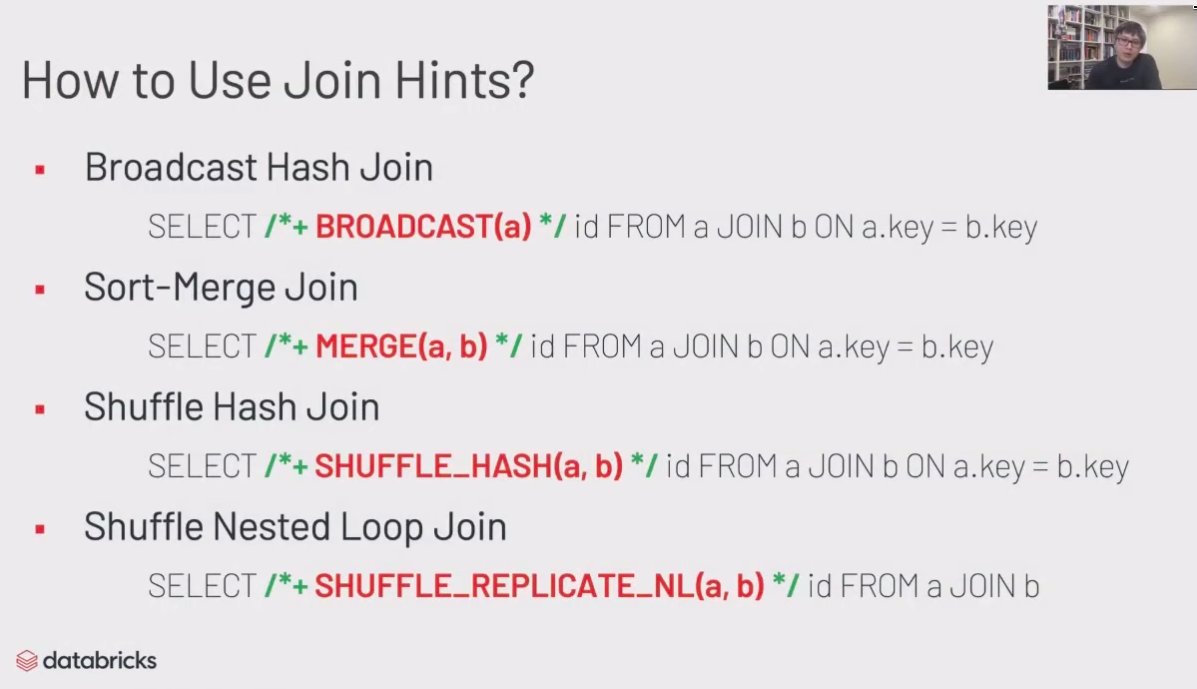
My talk/demo of performing 12K+ #MachineLearning experiments on an @ApacheSpark cluster and using a Parallel Coordinates plot to find the best model. Stay tuned for future demos and more advanced use cases in #DataMining, #BigData & #DistributedComputing
https://t.co/iipkgsjivu
✨big news: we are starting a non-profit!✨
It is called 2i2c, which stands for "The International Interactive Computing Collaboration".
We think it will do a lot of good for the world. Here's a short blog post about our hopes, plans, and next-steps:
https://t.co/PB35VY1FO1
@choldgraf Nice write-up, Chris! The 100% Python definitely is on my wish-list; I am not too interested in dealing with Ruby gems, etc., but Jekyll is still gonna rule my sites for some time 🤷♂️
I am super excited for this release as it is packed full of unexpected new features and a huge performance boost that should serve most of your day-to-day time series analysis needs! 💪 Check it out and let me know what you think! Please r/t for reach.
Great talk covering tokenizers and predictions/transformers, among others.
Building a Pipeline for State-of-the-Art Natural Language Processing Using Hugging Face Tools: https://t.co/PVOYi7kFj7
2/2
Site: https://t.co/gBULP6SLHI
How to convert your existing model: https://t.co/W1odyl4E0x
I'm curious to learn about applications where this has been used in areas other than image classification (and w/ frameworks other than PyTorch).
2/2
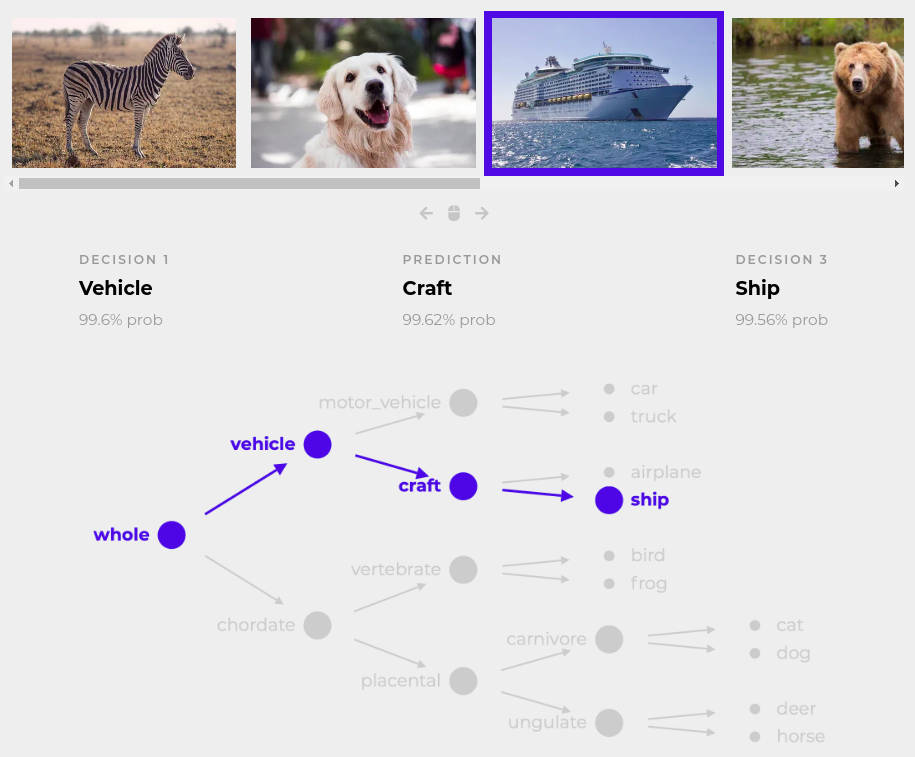
Neural-Backed Decision Trees (NBDT) mixes the power of #deeplearning w/ the interpretability of decision trees, with minimal impact on accuracy. Best of both worlds? Interesting discovery.
Paper: https://t.co/xDo2ZP1JP8
#ArtificialIntelligence#MachineLearning#DataScience
1/
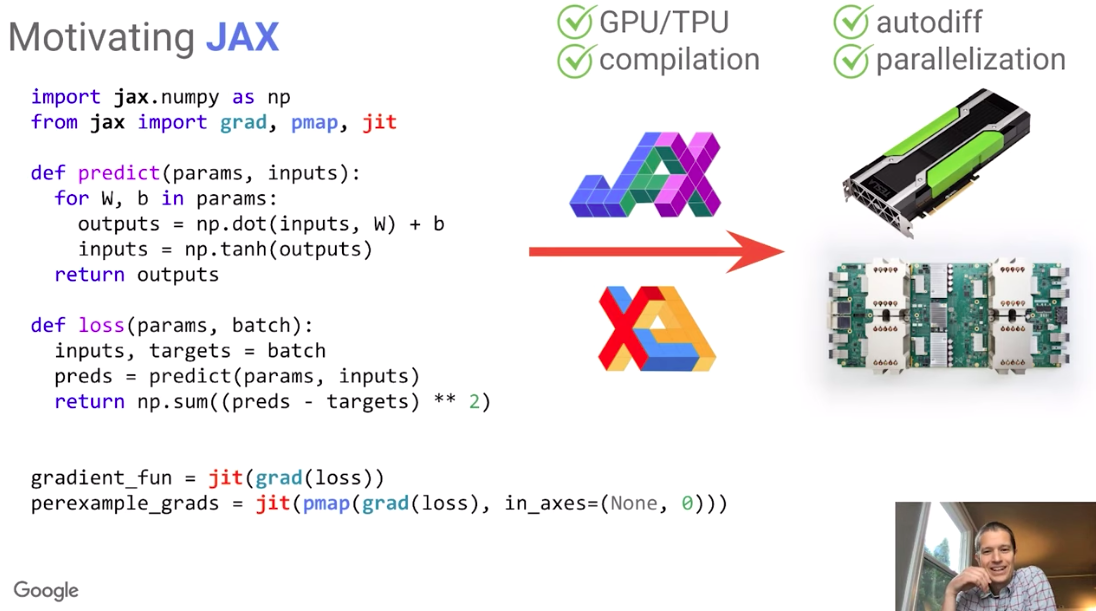
JAX (& its Flax neural library) is the front runner as a next-gen framework. Numpy-like API w/ automatic parallelization, GPU/TPU execution, JIT compilation & differentiation.
Good intro by @jakevdp@SciPyConf:
https://t.co/PK7OPcKcbs
#ArtificialIntelligence#MachineLearning
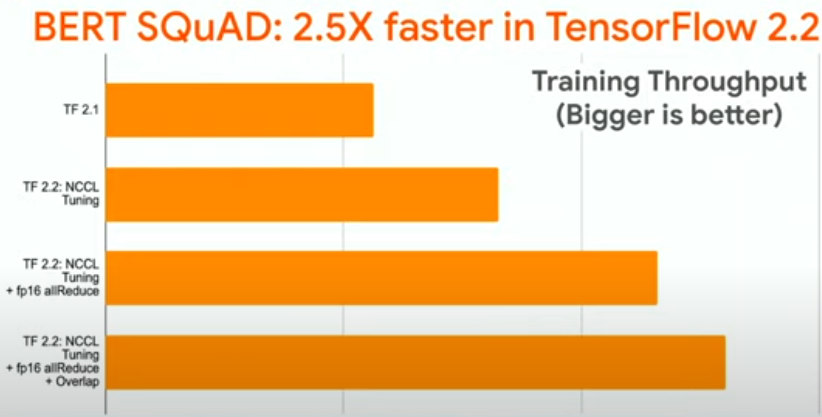
Partial use of FP16 gets you a 2-4x speedup in the aggregation portion, w/o losing model precision. Other 2 tricks involve NCCL which currently need some manual fine-turning.
Scaling TensorFlow 2 models to multi-worker GPUs (TF Dev Summit '20)
https://t.co/vmWr2dN5oR
2/2
@jeremyjkun You don't have to necessarily label your data. If you're looking for a recurring pattern/anomaly, even if it's very rare, take a look at @stumpy_dev
You don't have to know the pattern beforehand. It's not ML.
The plot is also used in MLFlow.
A year ago, I also gave a talk showcasing how I was using the plot to optimize a model with Spark: https://t.co/tFdByuqlRb
Glad to see major players caught up; it's a super useful technique.
3/3
TensorBoard has also nice features for uploading logs to the interweb:
Collaborative ML with https://t.co/QrxWEiWK4F (TF Dev Summit '20)
https://t.co/Iat8NDhaph
2/3
@random_forests Nice initiative!
I had also done some interpretability work for OD in images with Class Activation Maps, some 3 years ago, which you might find useful. TF 1.x code, but pretty results still :)
https://t.co/ZX6JzTmcLG