From Goldsmiths to Central Banking: The Origins of Private and Public Money in Britain
In 17th-century London, private money in its modern form first emerged from the goldsmith-bankers. Wealthy merchants deposited gold and silver for safekeeping in the goldsmiths’ secure vaults. In exchange, they received receipts. These receipts gradually became transferable — anyone who trusted the goldsmith could accept them as payment. The goldsmiths soon discovered they could lend out a portion of the deposited metal while still honouring every receipt on demand. They began issuing additional notes against these loans. This created new private money: paper claims that circulated independently of physical coin, expanding the money supply through credit. Early examples include the notes issued by houses such as Hoare’s Bank, which began as goldsmiths in the 1670s and still operate today. Private money was born as a convenient, expandable claim on trusted private institutions.
Public money has much older roots in sovereign power. E.g., for centuries in England the Crown issued coins through the Royal Mint — gold and silver pieces such as the sovereign, first authorised by Henry VII in 1489. These coins were public money: legal tender carrying the full authority and credit of the state. They were accepted everywhere without doubt about the issuer’s ability to honour them, forming the stable foundation of the monetary system long before paper existed.
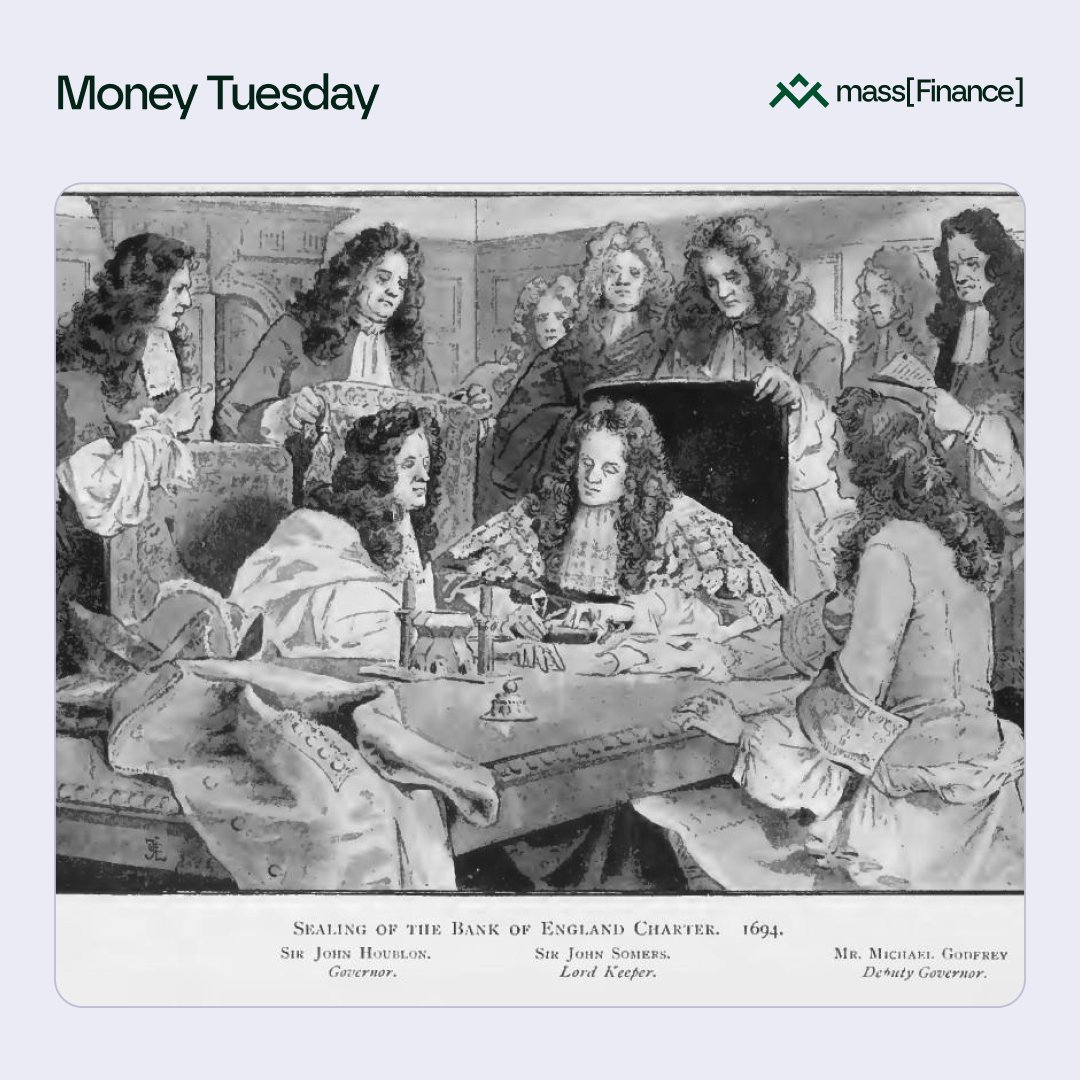
The two systems began to merge with the founding of the Bank of England in 1694. Created as a private joint-stock bank to finance the government’s wars, the Bank immediately started issuing its own notes. At first it operated alongside the goldsmith-bankers and country banks, all of which continued to issue their own private notes. Over the next 150 years the Bank steadily gained a special position as the government’s banker and the holder of the nation’s ultimate reserves.
The decisive integration occurred with the Bank Charter Act of 1844. This Act gave the Bank of England a near-monopoly on issuing new banknotes in England and Wales. Existing private issuers were limited to their current circulation and could not expand; new banks were prohibited from issuing notes at all. Private banks shifted from printing their own notes to creating money in the form of deposits — transferable claims spendable by cheque. These private deposits ultimately cleared and settled through the system in Bank of England notes and reserves. The Bank of England itself evolved from one bank among many into the central anchor of the entire structure: its liabilities became public money, the final means of settlement with sovereign backing, while commercial banks expanded the money supply on top through private credit creation.
The result was the two-tier monetary architecture that still defines modern finance — private innovation and scale built securely on a public foundation of trust and finality.
Our team spent the past days in Paris, meeting with infrastructure players that work across the broader financial ecosystem.
It was a good reminder that the future of finance is being shaped in many rooms at once.
Glad to be part of that dialogue under mass[Finance].


![massfinance's tweet photo. Our team spent the past days in Paris, meeting with infrastructure players that work across the broader financial ecosystem.
It was a good reminder that the future of finance is being shaped in many rooms at once.
Glad to be part of that dialogue under mass[Finance]. https://t.co/BenaLqTcLW](https://pbs.twimg.com/media/HHE9FmCa0AAXO_w.jpg)
![massfinance's tweet photo. Our team spent the past days in Paris, meeting with infrastructure players that work across the broader financial ecosystem.
It was a good reminder that the future of finance is being shaped in many rooms at once.
Glad to be part of that dialogue under mass[Finance]. https://t.co/BenaLqTcLW](https://pbs.twimg.com/media/HHE9FmBacAAzKCz.jpg)



![massfinance's tweet photo. Our team spent the past days in Paris, meeting with infrastructure players that work across the broader financial ecosystem.
It was a good reminder that the future of finance is being shaped in many rooms at once.
Glad to be part of that dialogue under mass[Finance]. https://t.co/BenaLqTcLW](https://pbs.twimg.com/media/HHE9FmVasAAEszY.jpg)