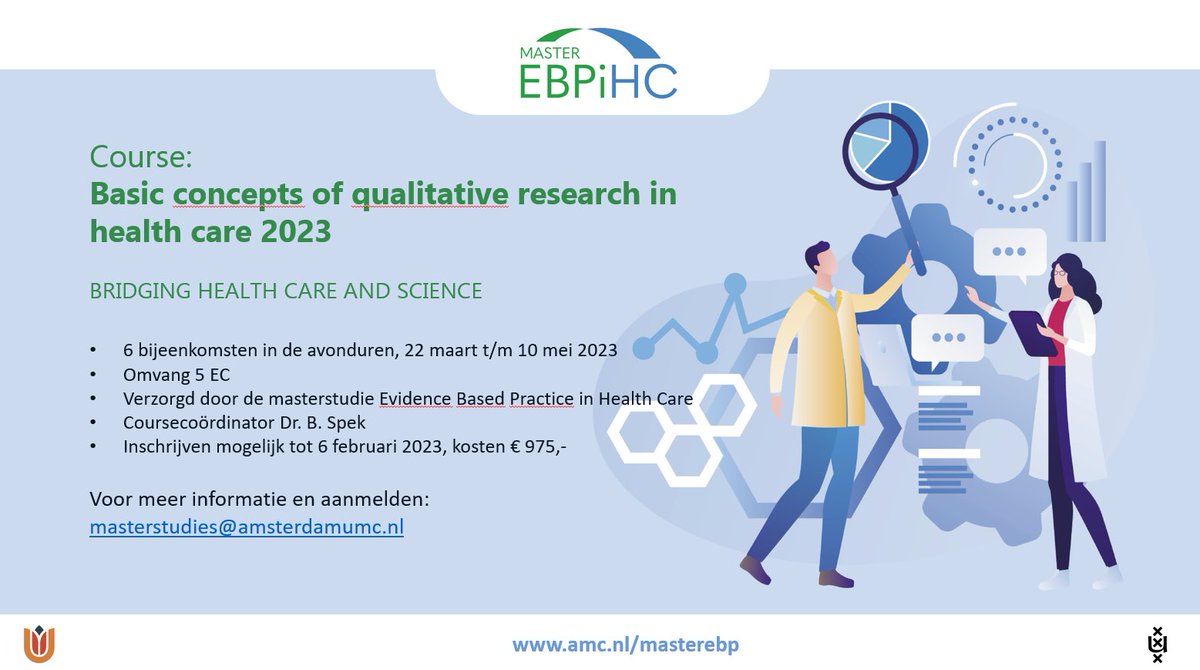
Wilt u als kwantitatief opgeleide onderzoeker leren kwalitatief onderzoek te ontwerpen en op te zetten? 22 maart 2023 start onze course Basic concepts of qualitative research in health Care. De course bestaat uit 6 modules in de avonduren.
Mail voor meer informatie/aanmelding.
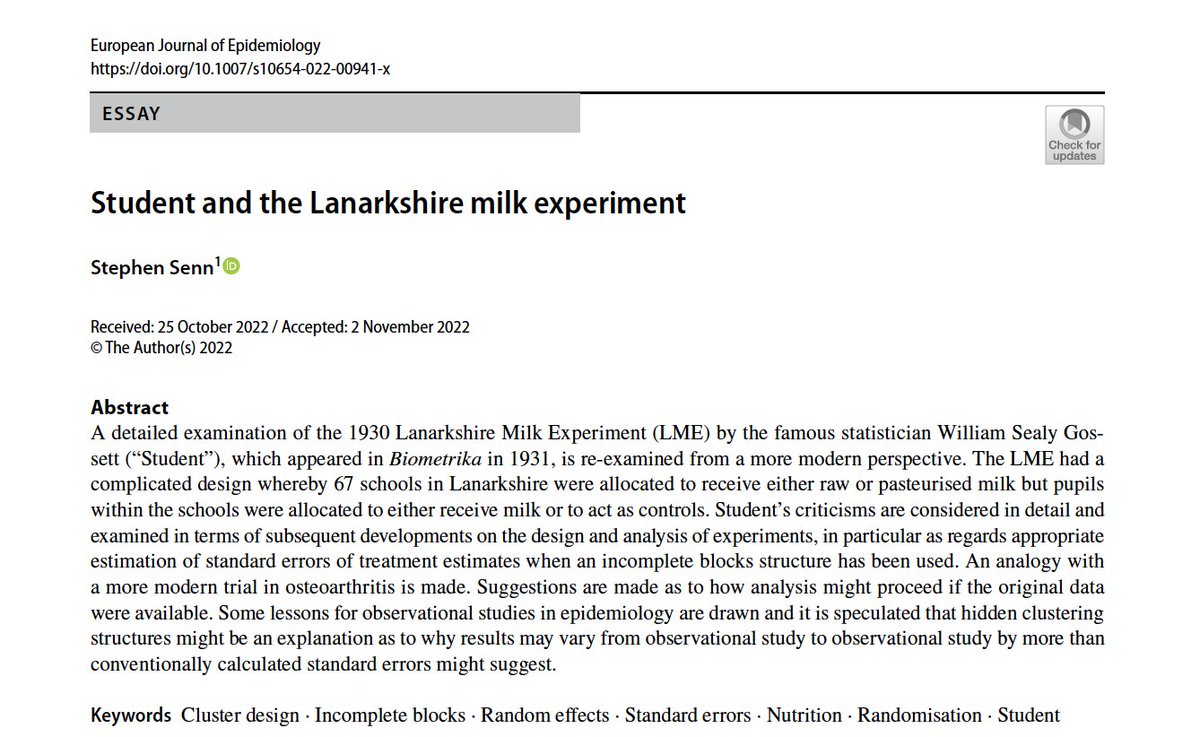
Great new read from @stephensenn for any trialist, observationalist or casualist with an interest in analyzing data that are nested (or clustered, multilevel,...)
https://t.co/Igmfevc2q6
No matter what you were taught,
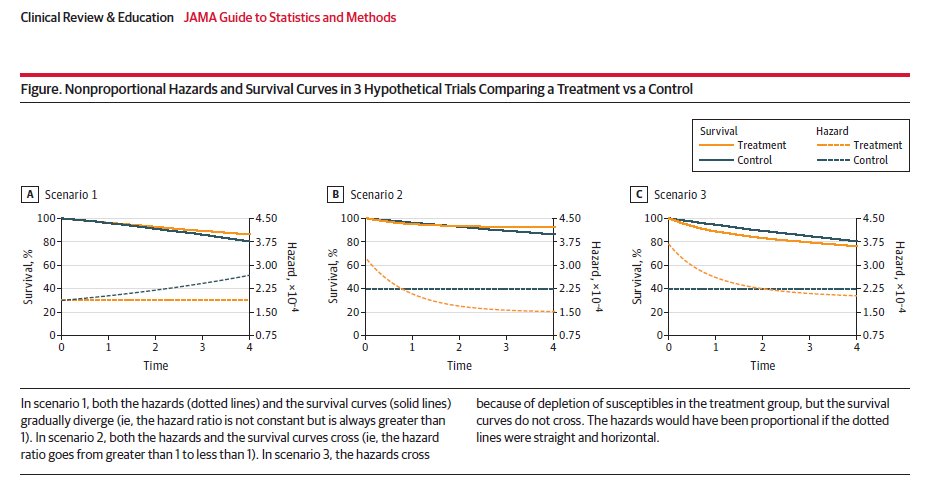
don't bother to test for proportional hazards
in survival analyses.
Hazards are never proportional because hazard ratios vary over the follow-up if treatment has an effect on survival.
@mats_julius and I explain it here:
https://t.co/hlRstEmPse
From its inception, EBM has had its critics. In 2008 we were asked to engage in a debate about whether EBM has a sound scientific basis. The paper we wrote for the debate presents one of the nicest explanations of the role of EBM and what it offers. https://t.co/7XEGVktyR3
Because what patients care about is absolute and not relative effects, it is crucial that systematic reviews provide absolute as well as relative effect estimates. Sadly, they very often don’t. https://t.co/6fUciDL1xH
New slides on some common paradoxes and fallacies in epidemiology covering absence of evidence fallacy, T2 fallacy, winner's curse and Stein's paradox @NorskEpi
https://t.co/nEjuaR5tNC
Helpful and insightful explanation of how predictive values change when prevalence changes.
But beware - it is not certain that sensitivity and specificity remain unchanged.
In theory they do, but in reality different prevalence may correspond with a different patient spectrum/
We wrote a comment on interpreting the AUC, including a literature search of qualitative labels (w/ Anne de Hond and @ESteyerberg):
https://t.co/SNG1cMn1of
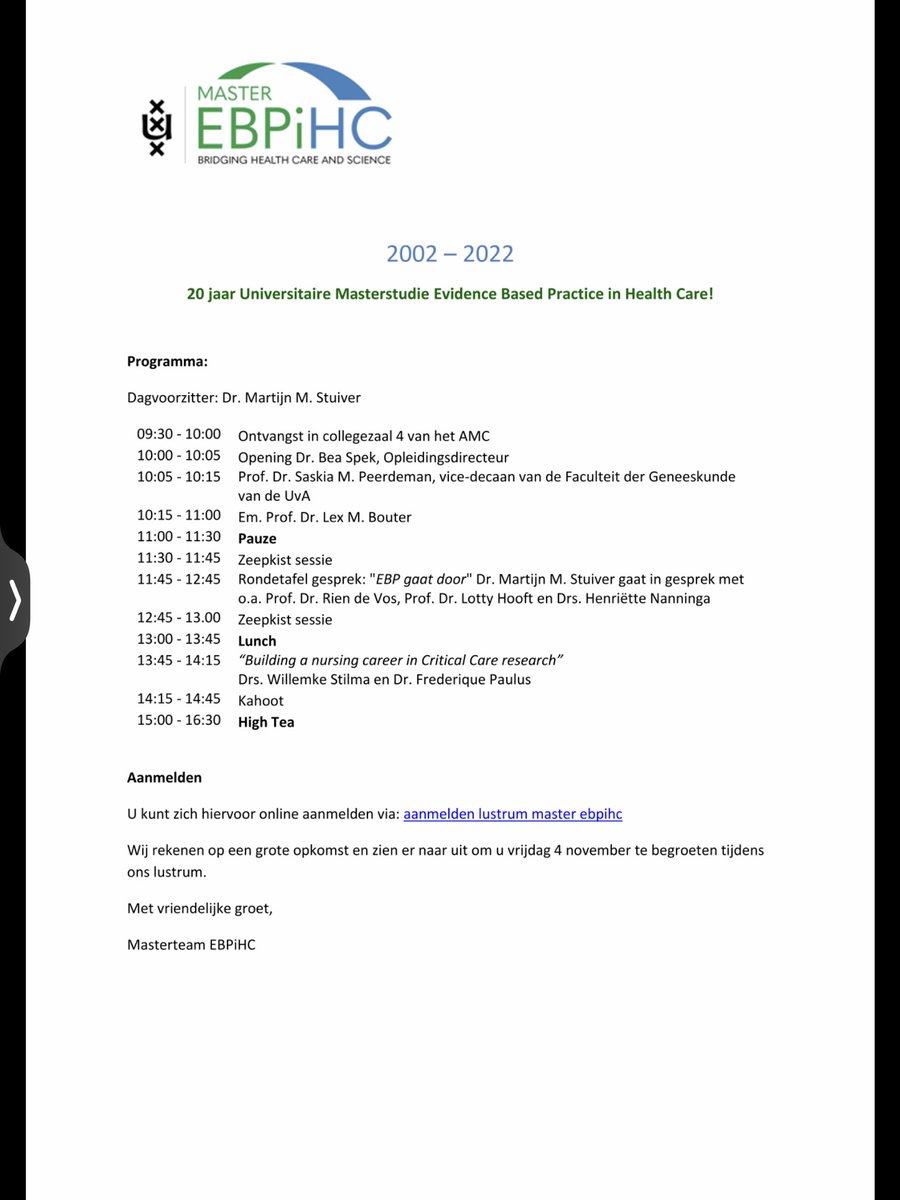
🥳 Nog 2 weken en dan vieren we ons 4e lustrum🎉 Benieuwd naar wat Dr. Stuiver gaat bespreken met Prof. Rien de Vos, Drs. Henriëtte Nanninga, Prof. Lotty Hooft en Prof. Dagmar Slot? Meld u aan!
I’ve spoken recently about how EBM teaching should move away from risk of bias/methods to understanding overall quality of evidence & results. Latest a 10 minute exposition for a meeting celebrating the 25th anniversary of the Iberoamerican Cochrane Center https://t.co/0QBlWykoE5
Writing tip: Not hard and fast, but preferable only start sentences with “However…” if usage “However smart you are…”.
For more common use, instead of “However, when reporting results, most studies omit information”, use “When reporting results, however, most studies…”
The Journal Observational Studies has just published interviews with 4 causal inference
contributors, Don Rubin, Jamie Robins, James Heckman, and humble me. Here's a link to my interview:
https://t.co/484NRgdxFa
The other 3 can be found via Obs. Studies.
Ian Schrier is moderating
ScHARRHEDS: RT @CTRU_Sheffield: The DIAMOND Study are hosting a free course on the design and analysis of n-of-1 trials for non-statisticians on 26th October. This will be delivered by Professor Stephen Senn @stephensenn, renowned expert in n-of-1 trials… https://t.co/DoU5op11dM
Hoogleraar @MarkvanderWel (werkzaam bij de afdeling waaronder ook onze master valt) schrijft een pittige brief aan dhr./mevr. AI. Begrijpt deze laatste de (zieke) mens wel? Zou AI niet eens vaak vaker een statisticus (en epidemioloog denken wij) moeten consulteren?
Spoiler:ja!!!
Confused about discrimination and calibration? Lead author of our JAMA Users’ Guide summarizes these key concepts for prediction models in an interview with a well-informed interviewer – yours truly. https://t.co/we9pqhSeww