My "Roman Empire is the realization that my life is a lottery win. Somewhere in Sudan, Pålestine, iran, Afghanistan, Iraq or Congo, there is a boy smarter than me. He is more disciplined, more resilient, and holds more potential in his single finger than I do in my entire career.
The only difference? I am siting in a train and he is sting in the rubble of his dreams.
My "bad days" are his wildest dreams.
My "burnout" is a luxury he can't afford because his only job is staying alive.
It's geographical luck and it's a haunting injustice that we all refuse to acknowledge and look away
Personally I view him as an unfiltered view of how americans think about the rest of the world and operates. It just cuts through all the bullshit these people throw around their evil deeds.
If you are Vietnamese and "shocked" by me comparing Khamenei to Hồ Chí Minh, ask yourself very simply:
Shocked by what exactly?
That he led a country demonized by America?
That he refused to kneel to Washington and Tel Aviv?
That he chose sanctions over surrender?
That he was called a monster by the same media that once called us "gooks" and "communist aggressors"?
You do not have to love Iran.
You do not have to agree with everything Khamenei ever did.
But if you grow up on stories of Điện Biên Phủ, of the Trường Sơn trail, of B52s over Hà Nội, and then you find yourself instinctively defending the narrative of the very empire that napalmed your grandparents, you should pause.
Hồ Chí Minh and Khamenei are not identical men.
Vietnam is not Iran.
Our paths, cultures, and systems are different.
The comparison is about something else:
Both led countries that refused to be obedient clients.
Both were marked for destruction by the same empire.
Both were turned into caricatures so that bombs and sanctions would look like "justice" to Western audiences.
Both paid, and made their people pay, a huge price to hold a line against a global system that prefers compliant oil monarchies and comprador elites.
If you can understand why Uncle Hồ accepted isolation, bombing, hunger, and demonization rather than hand Vietnam back to France and America, you already understand the logic of why Iran chose resistance over humiliation.
If that logic looks noble when it is Vietnamese, but "fanatic" when it is Iranian, then the shock is not moral. It is colonial.
You are uncomfortable that someone placed our own symbol of resistance next to a man your enemies told you to hate.
So instead of interrogating their propaganda, you defend it for free.
We do not honor Hồ Chí Minh because he was perfect.
We honor him because he refused to sell our future for comfort.
Khamenei, for his people, played a similar role: a leader the empire could never buy, who chose to live and die under siege rather than kneel.
If that comparison offends you, fine.
But be honest about why.
Is it because you truly believe no nation has the right to resist empire the way we did?
Or is it because somewhere along the way, you started seeing through American eyes which struggles are "legitimate" and which are "terrorism"?
As a Vietnamese, I will not let the country that slaughtered ours dictate which other nations are allowed to fight back with dignity.
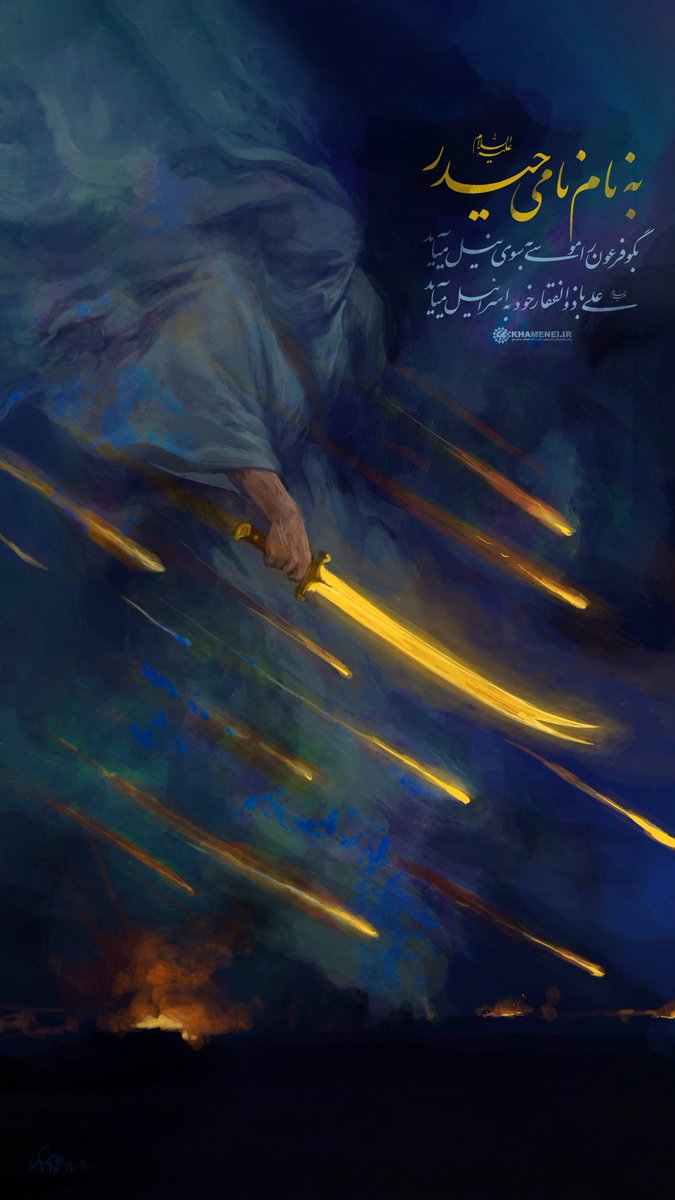
What is this eulogy performed in Iran?
It refers to the martyrdom of Abbas, son of Ali ibn Abi Talib, who was the son-in-law of the Prophet Muhammad (s), during the Battle of Karbala. Abbas was the 'Alamdar' (standard bearer) of his half-brother Imam al-Husayn (the Prophet's grandson). In the battle, following 10 days of siege, hunger and thirst imposed on Husayn's camp, he lost his brother and standard bearer after he attempted to reach the Euphrates river to collect water for the camp's thirsty children. The enemy brutally cut Abbas down, chopping off his arms and filling his body with arrows. So, in this video, they are chanting 'Alamdar Nayamad' ('the standard bearer did not return'). What does this mean? It means the end of the battle has begun, as all hopes have been cut off from the severity of the loss suffered. It means, even if you kill our most beloved, we will fight to the very end. This is the true essence of Islam.
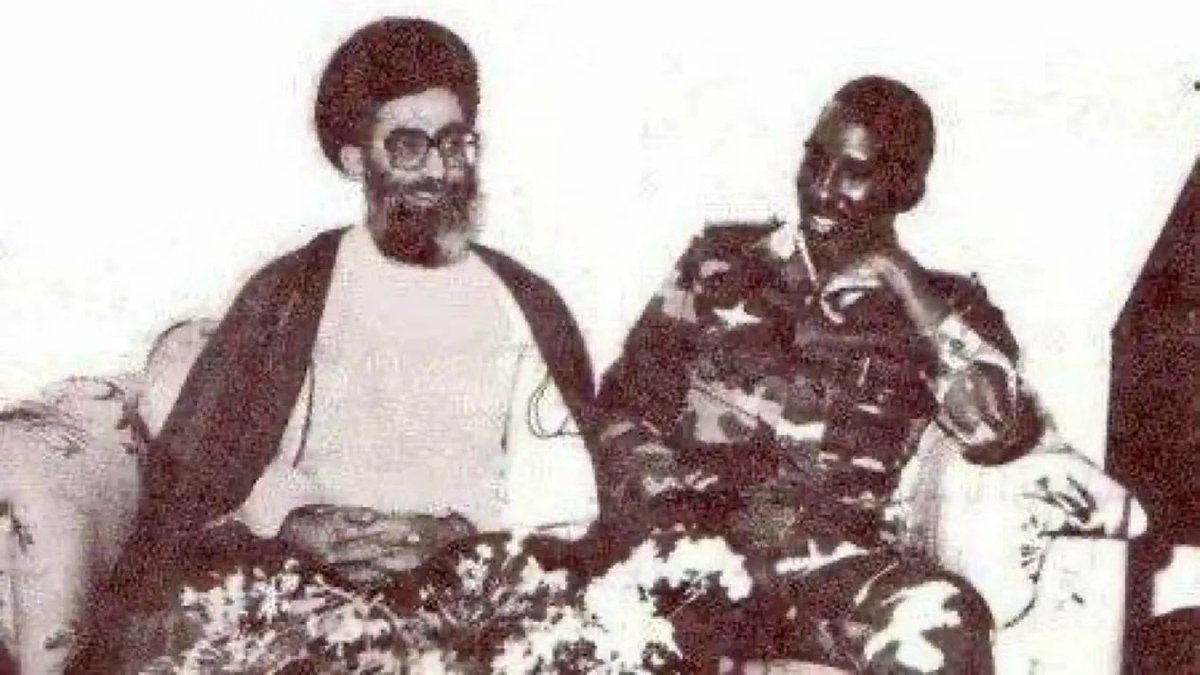
🇮🇷🇧🇫 A young Ayatollah Khamenei sitting with Thomas Sankara.
Two men from opposite ends of the world. One a Shia cleric from Iran. The other a Marxist soldier from Burkina Faso. Both shared one conviction: their people would never be free under Western domination.
Sankara was assassinated in 1987, overthrown in a French-backed coup at the age of 37. He wanted to free Africa from debt, dependency, and foreign control.
Khamenei was killed yesterday by American and Israeli bombs. He spent 35 years trying to keep Iran free from the same forces.
Both men were called dictators by the West. Both were loved by millions who saw them as defenders of sovereignty.
History separated them by decades. Empire united their fate.
Some thoughts on the current situation with Iran:
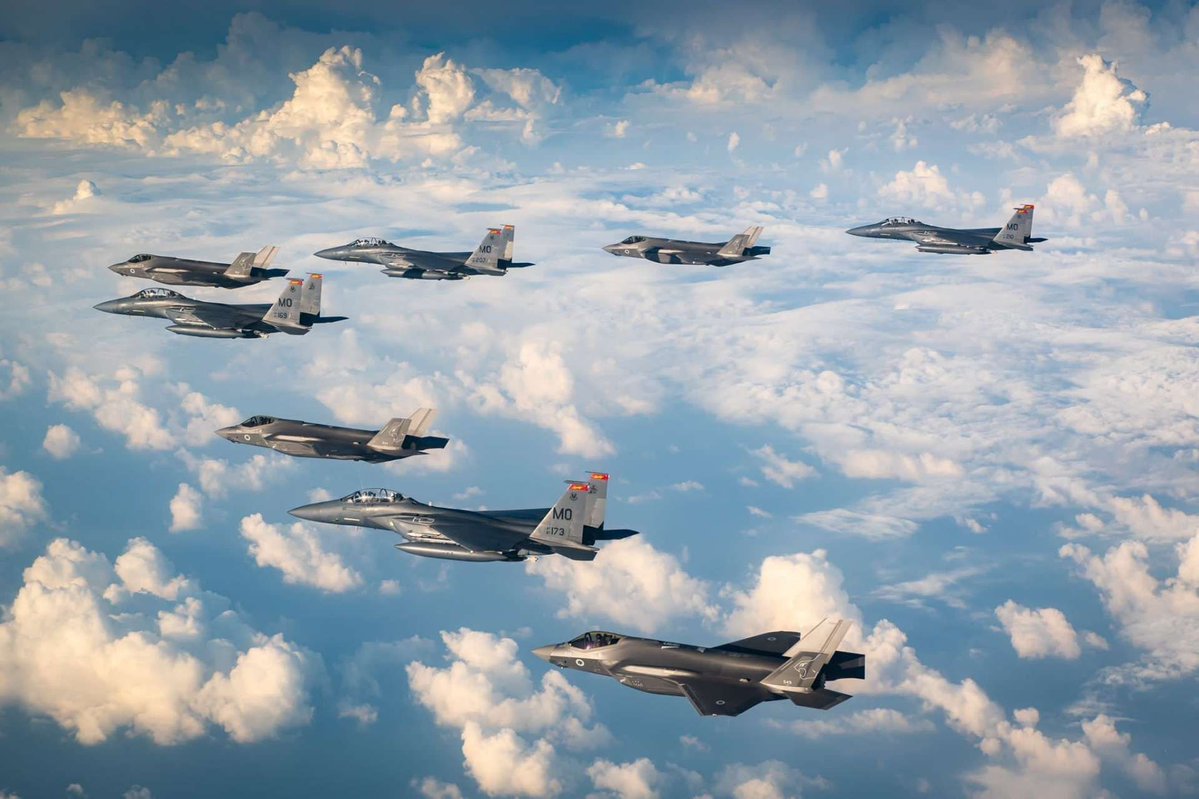
1. Deployment prior to this week was, as I pointed out at the time, consistent with a show of force to underline a negotiating position rather than a serious operation. Although that has begun to change, US aerial forces in the Middle East remain inferior in strength to the Israeli Air Force that quickly ran out of steam in combat last year. Any air campaign would not be a step-change from that of the Twelve Days' War.
2. The departure of huge numbers of tankers to the Middle East, without concomitant massive fighter deployments, indicates that the USAF intends to base its strike aircraft out of the easy range of Iranian short-range missiles on the other side of the Middle East or even farther afield in Cyprus, Diego Garcia, etc. This will dramatically curtail sortie generation compared to aircraft flying out of Al Udied in Qatar and other bases on the Gulf - established for exactly this confrontation but now perfectly useless given the number of short-range missiles the Iranians have pointed at them.
3. USN forces in the region have a realistic total throw-weight of 300 to 400 badly out of date Tomahawk missiles, which is grossly inadequate for a sustained strike campaign against Iran. Recall that the USN fired almost eighty in a single strike against Syrian WMD targets a decade ago and most were shot down. The USN task force realistically has two or three missile salvos against defended point targets before its magazines run dry.
4. Iranian offensive and defensive capabilities are formidable and have been overtly bolstered by the Chinese in recent weeks. Any attacks on Iranian soil will need to be - as in the Twelve Days' War - conducted from a limited pool of standoff munitions. The Israelis, who are expected to join any strikes, certainly have not replenished their own stockpiles. This dramatically curtails the combat endurance of the coalition forces.
5. The Chinese and Russians are feeding intelligence to Iran. This likely allowed them to stymie a US bomber strike last month prior to latest force buildup. The Iranians can be expected to have an excellent picture of US and Israeli moves at the tactical level.
6. In the aftermath of the Twelve Days' War and the insurrection in Iran last month, Mossad's attack network is likely a spent force and cannot be expected to contribute meaningfully to the war effort.
7. Iran retains significant proxy capability across the region. Iranian proxies in Iraq and Yemen are practically untouched. Hezbollah in Lebanon sat out the Twelve Days' War but can be expected to join in a regional Götterdämmerung.
8. No significant US ground forces have deployed, and the Iranians killed or arrested all of their compradors two weeks ago. Ergo, there is no route to actual regime change in Iran. There's no Delcy Rodriguez and Vladimir Padrino interested in a coup d'etat by proxy and able to elaborately set conditions for it to happen.
9. US facilities in the Gulf and the VERY vulnerable US embassy in Iraq (and the somewhat less vulnerable US embassy in Beirut) remain un-evacuated at this time. Evacuation of those facilities is a short-notice indicator of war - as we saw last month when bombers were likely airborne before being called off.
10. The TACO trade is real. Trump talks a big game until the markets start to believe him, whereupon he reliably beats a hasty retreat and pivots to a new distraction from the Epstein Files. The moral hazard here is that Trump has done this so many times that by this point global markets don't actually take him seriously and so they're reacting late and weak to what are objectively very concerning developments. With that said oil prices are - finally - starting to rise.
US deployments to the Middle East thus far are to give Trump a credible military option if he decides to use force against Iran - prior deployments were non-credible and the Iranians would have taken them as such - but talk that war is necessarily imminent or that this force is actually adequate to the absolutely colossal task at hand (Iran is a country of 90 million and a geographic fortress) is irresponsible. As ever, use strict informational hygiene and consider source bias and attempts to box in US decision-making through planted reporting from controlled outlets and journalists. Netanyahu desperately wants a war (fought by the US on his behalf, of course) but Trump probably wants a deal - and it's noteworthy that Iranian reports suggest one may be developing.