Thank you to the @HCPLiveNews editorial team and @ChelsieDerman for the opportunity to discuss this work.
💡In a FLAME post-hoc analysis we found 3-month withdrawal effects on COPD exacerbations after ICS or LAMA discontinuation.
🔗 https://t.co/PznxJuF85x
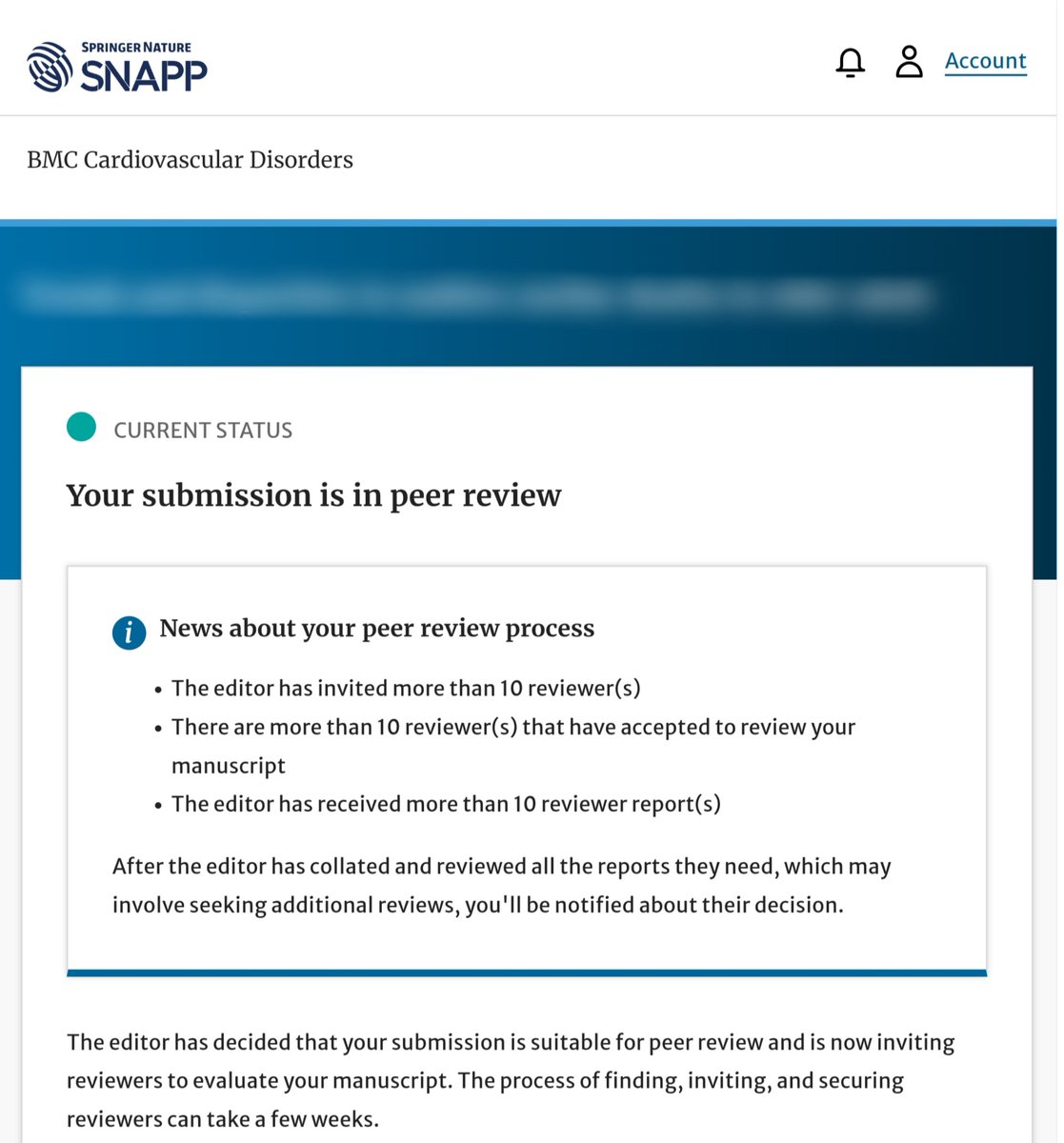
I’m starting to think our manuscript at BMC Cardiovascular Journal didn’t go out for peer review. It went on a world tour. 😆
The editor didn’t just invite reviewers, they basically launched an open call to the entire cardiovascular community 😄
@WFostier@DrSachinAnanth@Freddy_Frost1@BMA_Academics First, current funding structures (PhD fellowships, ACLs) are not set up as recognisable LTFT-style roles.
More importantly, this should not be about trying to “work around” the system. The system should recognise academic training, an established pathway, and offer a solution.
🚨 Clinical academics undertake years of additional research training — but this is not recognised in NHS consultant pay progression.
This creates a structural inconsistency → ~£72,000–£81,000 lifetime loss per research year during training.
📖https://t.co/GGhBIpum4T
🚭 ERS urges other countries to follow the example of the United Kingdom (UK) after it announced a generational sales ban on tobacco.
Read more: https://t.co/PfQrkXUKUe
@victoriachgr Dr Victoria Chatzimavridou gave us a fascinating run through of her work on pelvic insufficiency fractures caused by radiotherapy. #BoneUp#ECTS26
I’m seeing more and more referrals like this to the clinic
@SaraOcana1@DrSachinAnanth@Freddy_Frost1@BMA_Academics By contrast, there are recognised exceptions, for example, doctors who train less than full time (for entirely valid wellbeing reasons) have their starting salary adjusted to align with full-time peers.
🎯At a time when the UK is seeking to strengthen its life sciences sector and reverse declining numbers of medical academics, pay arrangements should support — not discourage — doctors from undertaking research training.
ERR: This meta-analysis (111 studies) quantifies viral prevalence in acute/stable asthma in children and adults, and highlights links between specific viruses and acute asthma severity. PCR alone may be limited in identifying viral acute asthma triggers. https://t.co/9BgxQTDRor
This article in @AnnalsofIM highlights ethical problems in stopping trials early for benefit: seriously inflated overestimates of treatment effect violates ethical requirements of scientific validity and social value and leads to misguided patient choices.
https://t.co/2rMYJG44b1
#LAMA and #ICS are both associated with significant withdrawal effects.
Important implications for practice, adherence, and trial interpretation.
Here is our independent post-hoc analysis of FLAME trial: https://t.co/N1rX9O5aHh
Great to see our work featured by @ChestPhysician .
Discontinuing LAMA or ICS in COPD is not neutral—there is a transient spike in exacerbation risk (~2x) for 3 months, consistent with withdrawal effects.
https://t.co/kdzPrQEOnq
Redundancies, retirement and funding cuts threaten the UK’s global standing in medical research as fewer NHS doctors can secure posts as clinical academics. Government inaction to address this loss of talent risks harming patient care and the UK’s economic future.
🚨 Our new meta-analysis quantifies the prevalence of respiratory viruses in both stable and acute asthma, across children and adults.
👉 Based on 111 studies
Just published in European Respiratory Review (ERS Publications):
https://t.co/3suvFMhNkE
• Rhinovirus is the most frequently identified pathogen in acute and stable asthma, both in adults and children.
• Certain viruses (e.g. influenza, adenovirus) may be linked to more severe attacks.
https://t.co/3suvFMhNkE
@ManchesterBRC