𝑇ℎ𝑒 𝑃𝑢𝑏𝑙𝑖𝑐 𝑃𝑜𝑙𝑖𝑐𝑦 𝑎𝑛𝑑 𝑅𝑒𝑠𝑒��𝑟𝑐ℎ 𝐼𝑛𝑠𝑡𝑖𝑡𝑢𝑡𝑒 𝑜𝑓 𝑍𝑖𝑚𝑏𝑎𝑏𝑤𝑒 𝑦𝑒𝑠𝑡𝑒𝑟𝑑𝑎𝑦 𝑣𝑖𝑟𝑡𝑢𝑎𝑙𝑙𝑦 𝑙𝑎𝑢𝑛𝑐ℎ𝑒𝑑 𝑖𝑡𝑠 𝑟𝑒𝑐𝑒𝑛𝑡 𝑝𝑢𝑏𝑙𝑖𝑐 𝑜𝑝𝑖𝑛𝑖𝑜𝑛 𝑠𝑢𝑟𝑣𝑒𝑦 𝑤ℎ𝑜𝑠𝑒 𝑓𝑖𝑒𝑙𝑑𝑤𝑜𝑟𝑘 𝑤𝑎𝑠 𝑐𝑜𝑛𝑑𝑢𝑐𝑡𝑒𝑑 𝑏𝑦 𝑡ℎ𝑒 𝑀𝑎𝑠𝑠 𝑃𝑢𝑏𝑙𝑖𝑐 𝑂𝑝𝑖𝑛𝑖𝑜𝑛 𝐼𝑛𝑠𝑡𝑖𝑡𝑢𝑡𝑒 𝑖𝑛 𝐴𝑝𝑟𝑖𝑙 𝑜𝑛 𝑡ℎ𝑒 𝑗𝑢𝑠𝑡-𝑒𝑛𝑑𝑒𝑑 𝐶𝑜𝑛𝑠𝑡𝑖𝑡𝑢𝑡𝑖𝑜𝑛 𝐴𝑚𝑒𝑛𝑑𝑚𝑒𝑛𝑡 𝐵𝑖𝑙𝑙 𝑁0.3 (𝑛𝑜𝑤 𝐴𝑐𝑡) 𝑝𝑟𝑜𝑐𝑒��𝑠.
𝑇ℎ𝑒 𝑝𝑟𝑒𝑙𝑖𝑚𝑖𝑛𝑎𝑟𝑦 𝑓𝑖𝑛𝑑𝑖𝑛𝑔𝑠 𝑜𝑓 𝑡ℎ𝑒 𝑠𝑡𝑢𝑑𝑦 𝑤𝑒𝑟𝑒 𝑟𝑒𝑙𝑒𝑎𝑠𝑒𝑑 𝑖𝑛 𝐻𝑎𝑟𝑎𝑟𝑒 𝑜𝑛 2 𝐽𝑢𝑙𝑦.
By Reinford Khumalo
Good morning, distinguished guests, our valued partners, members of the media, colleagues, and fellow Zimbabweans joining us online from across the country and beyond.
It is my great pleasure to welcome you to this important occasion.
The Public Policy and Research Institute of Zimbabwe (PPRIZ) is an independent, non-partisan think tank committed to strengthening constitutional governance and evidence-informed public policy through high-quality research.
Our mission is to bridge the gap between citizens and public policy by generating credible evidence, facilitating informed public dialogue, and providing practical policy options that strengthen accountability, improve governance, and ensure that the lived realities of Zimbabweans remain central to policy discussions.
Since our establishment in 2015, PPRIZ has contributed to informed national conversations through public opinion surveys, policy research, multi-stakeholder dialogues, and civic education programmes covering constitutionalism, elections, devolution, public participation, and service delivery.
Our work has brought together elected leaders, Parliament, constitutional institutions, local authorities, residents’ associations, civil society organisations, academia, development partners, and communities.
We believe that sound research should not remain on library shelves but should inform constructive dialogue, support evidence-based decision-making, and contribute practical options for addressing national challenges.
We also collaborate with fellow think tanks, universities, and research institutions within Zimbabwe and beyond to strengthen research quality, encourage scholarly exchange, and enrich public discourse.
Our reputation has been built upon methodological rigor, professional independence, transparency, and ethical research practice.
Over the years, our findings have contributed to policy discussions, legislative reviews, academic inquiry, civic engagement, and public programmes because policymakers, practitioners, researchers, and citizens alike recognise our work as credible, balanced, and firmly grounded in Zimbabwean realities.
We chose to undertake this study because Constitutional Amendment Bill No. 3 proposed important changes relating to constitutional governance, including provisions concerning the judiciary, elections, and the Presidency.
Given the significance of these issues, it was important to understand what ordinary Zimbabweans thought during the period when the Bill was still under public consideration.
The survey was therefore conducted while the Bill was still before the relevant constitutional processes, allowing citizens to express their views at that important moment. Since then, the constitutional process has been concluded, and the Bill has been enacted into law.
Accordingly, this report should be understood as an important historical record of public opinion during that consultation period.
It preserves the voices of Zimbabweans at a particular point in time and contributes evidence that may inform future constitutional and policy discussions.
Many of you will recall that we presented the preliminary findings of this study at a launch event in Harare on 2 July 2026.
Today, we are pleased to present the full report through this virtual platform, making the complete findings accessible to a much wider audience.
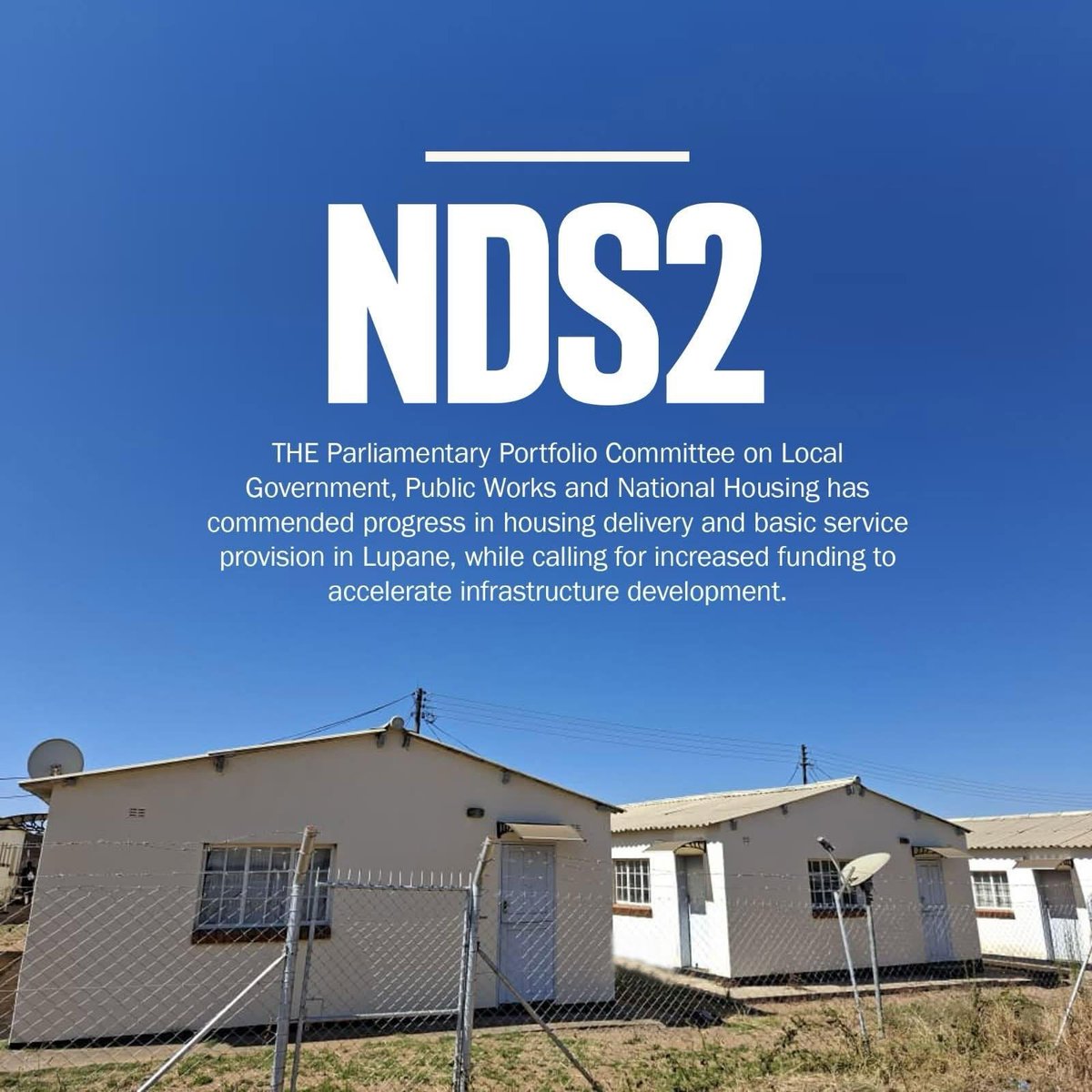
The Parliamentary Portfolio Committee's findings highlight steady progress in housing delivery services in Lupane. Continued investment in infrastructure will help accelerate development, improve living standards and unlock greater opportunities for communities. #NDS2#Vision2030
The Parliamentary Portfolio Committee's findings highlight steady progress in housing delivery services in Lupane. Continued investment in infrastructure will help accelerate development, improve living standards and unlock greater opportunities for communities. #NDS2#Vision2030
When they give you money they make sure they keep evidence and V11s like what Mukanya just did,imbotipaiwo evidence yekutengwa kwaNero nhasi or forever hold your peace.
@JamesonTimba Executive advocacy for CA3 is entirely distinct from its constitutionality. In democratic systems, govts champion specific legislative agendas, while the legislature retains the mandate to debate and vote. #CA3
When Alexander Sørloth refused to pass to a wide-open Erling Haaland, it wasn't just a missed shot, it was a total breakdown in team discipline. Stripped of external factors, this blunder perfectly mirrors the internal dysfunction and strategic short-sightedness that drives voter apathy within Zimbabwe's opposition.
1. Structural Chaos vs. Tactical Discipline
When Sørloth failed to pass, it wasn't just a moment of selfishness; it was a breakdown in tactical discipline. A highly functional, organized team operates on institutional trust—knowing where the striker will be and executing a pre-planned strategy rather than relying on frantic, ad-hoc individual decisions.
The core failure of Zimbabwe’s opposition movements has often been their structural formlessness. By relying heavily on personalized, charismatic leadership rather than building robust, institutionalized political machines, they create an unpredictable playing field. When a party lacks clear, constitutional internal structures, individual actors start playing their own game, leading to the public infighting and sudden leadership squabbles that define their campaigns.
2. The Mechanics of Voter Disengagement
In sports, when fans watch a team repeatedly fall apart due to unforced internal errors, they stop buying tickets. It is a psychological shift from anger to detachment.
This is the real driver of voter disengagement. When the electorate witnesses a political movement consistently trip over its own internal power struggles—such as the constant fracturing of coalitions or the public recalls of their own representatives—voters don't necessarily switch sides; they simply stop participating. The apathy doesn't stem from external pressure, but from a exhaustion with the opposition's internal dysfunction. Voters lose confidence that the opposition can effectively govern itself, let alone a nation.
3. The Cult of the Hero vs. The Power of the System
Sørloth wanted to be the solo savior of the match. He forgot that football is an eleven-man system.
Opposition parties in Zimbabwe have historically suffered from a "Big Man" political culture, where the entire movement centers around a single personality. When that individual is incapacitated, exits, or falls out with colleagues, the entire structure collapses because there are no deep institutional roots holding it up.
By prioritizing individual political profiles over building a durable, institutional bureaucracy, the opposition continuously sets itself up for the exact kind of breakdown seen on the pitch: a single player dominating the ball, ignoring the wider team layout, and ultimately missing the target.
Success in any arena requires institutional cohesion. As long as opposition politics functions as a collection of competing individual ambitions rather than a disciplined, structured organization, it will naturally struggle to maintain the confidence of a weary electorate.
#CA3
Air Zimbabwe resumes direct Harare to London Gatwick flights from 22 July 2026, ending a 14 year absence. Three times weekly, Airbus A330 300, wet leased via Plus Ultra Líneas Aéreas.
https://t.co/iRhuvq2wQ2 #AirZimbabwe#Zimbabwe#Aviation#LondonGatwick
@shumbakadzi_zim If "hat in hand" was a person. Never antagonise people on your way up because you'll meet them on your way down. This should be a lesson to everyone watching this. #EDWORKS#Vision2030
The newly formed coalition Sungano yeVanhu, or whatever they are calling their latest temporary banner this week,is already proving to be nothing more than the same old political circus under a different name.
Before the ink could even dry on their launch press release, this self-proclaimed "Alliance of the People" has already collapsed into its own identity crisis. Convened by Rev. Kupukwashe Mtata and parading the exact same retreaded political figures we've seen for decades, @BitiTendai , @ProfMadhuku, @JamesonTimba , and @NgarivhumeJ couldn't even keep their original name for 24 hours before hastily rebranding into the "Constitutional Restoration Movement."
They claim a grand mandate to fight Constitutional Amendment No. 3 (Act No. 6 of 2026) through the courts and "mass action." But let's look at reality:
The Same Tired Faces: This isn't a fresh civil movement; it is a recycled collection of fragmented opposition actors, professional NGO activists, and career politicians who have consistently failed to build a coherent strategy on their own. Bringing them under one roof doesn't make them stronger; it just consolidates the dysfunction. Instant Rebranding: Transitioning from "Sungano yeVanhu" to a "Restoration Movement" within a single day shows a complete lack of planning and a desperate attempt to pivot the moment the President signed the bill into law. It screams reactionary panic rather than strategic vision. Empty Rhetoric: Vowing "broadest constitutional mobilisation" while relying on predictable legal challenges that have historically yielded nothing but press conference photo-ops shows how out of touch this coalition is. They talk about the "social contract" while standing in front of microphones in Harare, completely disconnected from the actual grassroots population.
Sungano yeVanhu is not a historical turning point; it's a predictable political reflex. It's the same actors, using the same playbooks, expecting different results, while masking their relevance under high-sounding acronyms. Dismiss them with the utmost contempt because the is nothing to restore. THE PEOPLE HAVE SPOKEN.
Zimbabwe's power shift: What Mnangagwa's constitutional changes mean
By Karabo Ngoepe
Zimbabwean President Emmerson Mnangagwa has signed into law sweeping constitutional amendments that abolish the direct election of the President, extend the terms of the presidency, Parliament and local authorities from five to seven years, and significantly reshape the country’s electoral and governance framework.
The Constitution of Zimbabwe Amendment (No. 3) Act, 2026, gazetted as Act No. 6 of 2026 and widely known during its passage through Parliament as Constitutional Amendment Bill No. 3 (CAB3), was published in a special Government Gazette on Tuesday after Mnangagwa assented to it on July 7.
https://t.co/3UrH3yOtbi
If Mayor Mafume Wants to Fix Harare’s Traffic, He Must First Clean Out His Own House
Harare’s gridlock, non-functioning traffic lights, and daily road chaos are reaching a breaking point. While Mayor @JMafume talks about modernizing the city and improving public transport, there is a massive elephant in the room that Town House continues to ignore: the rampant corruption within the Harare Municipal Traffic Enforcement department.
It is no secret to any motorist in the capital that municipal traffic officers have turned law enforcement into a highly lucrative personal business. Instead of managing traffic flow or targeting the actual causes of congestion, the focus has shifted almost entirely to spot fines, bribery, and predatory towing.
If Mayor @JMafume is serious about tackling the traffic nightmare:
Stop Protecting Corrupt Elements: The continuous shielding of compromised officials inside the enforcement unit destroys public trust. A leader cannot claim to fight chaos while harboring the very people fueling it.
Make Traffic Enforcement the First Port of Call: True reform doesn't start with new road layouts or grand policy announcements; it starts with an internal audit and a massive cleanup of the traffic police department.
Prioritize Flow Over Shakedowns: Enforcement must be restructured to focus on maintaining order at major intersections, not setting up bribery traps on side roads.
Harare cannot police its way out of a traffic crisis using a broken, corrupt system.
Mayor @JMafume , the residents are watching. Clean up Town House first, or the chaos on our roads will remain your legacy.
#Harare #CityOfHarare #JacobMafume #Zimbabwe #PublicAccountability
blessings delayed aren't blessings denied, Since February when it was gazetted, to public hearings, parliamentary debates & now finally being signed into law, the #CA3 journey has been nothing but constitutional. Let us unite in ushering in a new Zimbabwe. #CA3#Vision2030
@nelsonchamisa The north remembers all who supported us. Thank you mkoma for standing with #CA3 from start to finish, your support will never be forgotten. #RuleOfLaw#Zimbabwe
This is political fiction dressed up as analysis. There is no evidence that current governance reforms were designed to advance Mukanya's ambitions. Leadership is determined by party processes, performance and consensus not speculative succession scripts. #CA3#Vision2030
This is political fiction dressed up as analysis. There is no evidence that current governance reforms were designed to advance Mukanya's ambitions. Leadership is determined by party processes, performance and consensus not speculative succession scripts. #CA3#Vision2030
Awu kodwa Sbusiso, running back to our abusive ex won't solve anything. You've been gone for so long you have no idea how much progress we have made as a country. We are even waiting for our President to sign #CA3 so that we maintain the trajectory we are on. #Vision2030#EDWORKS