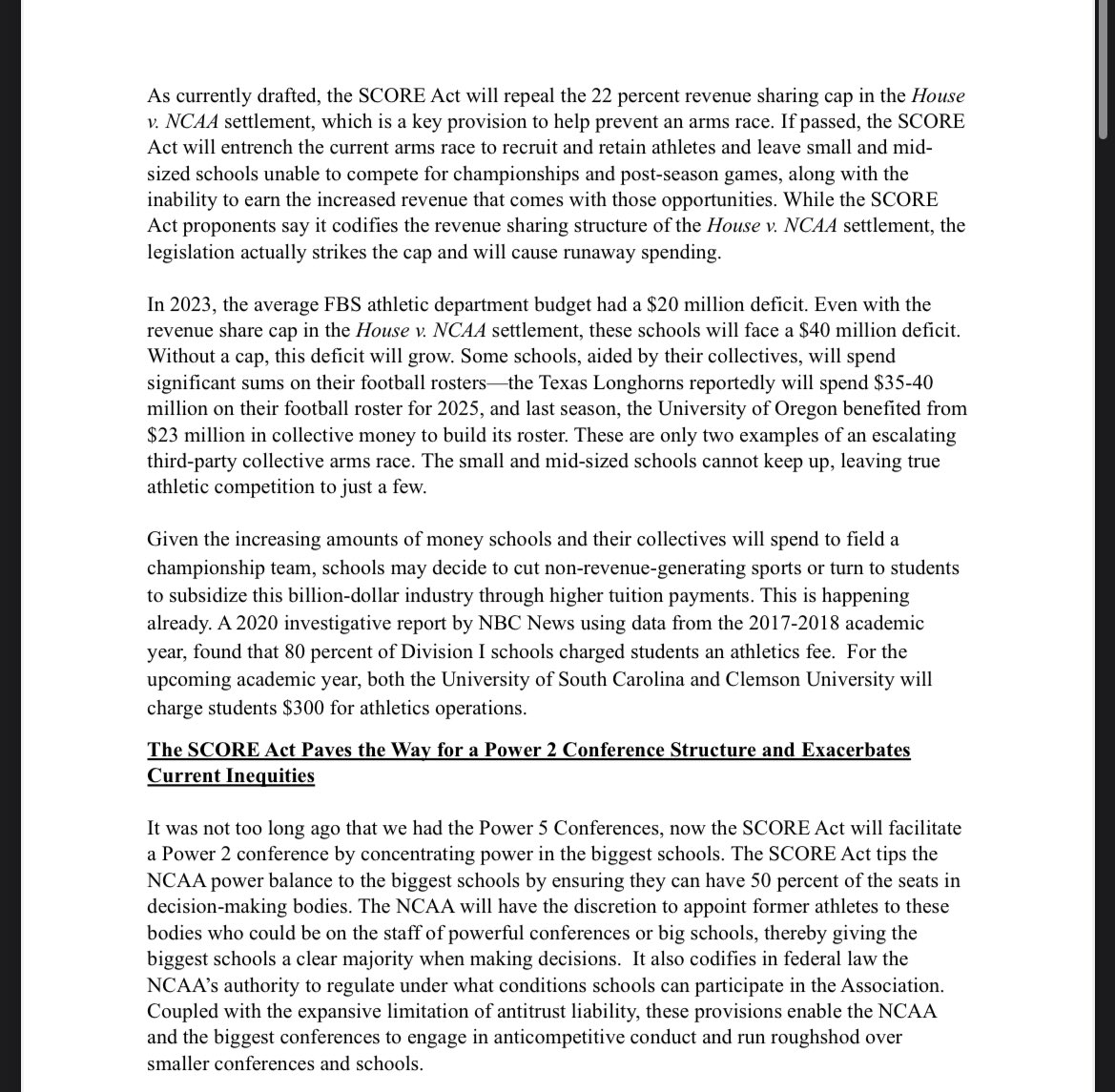
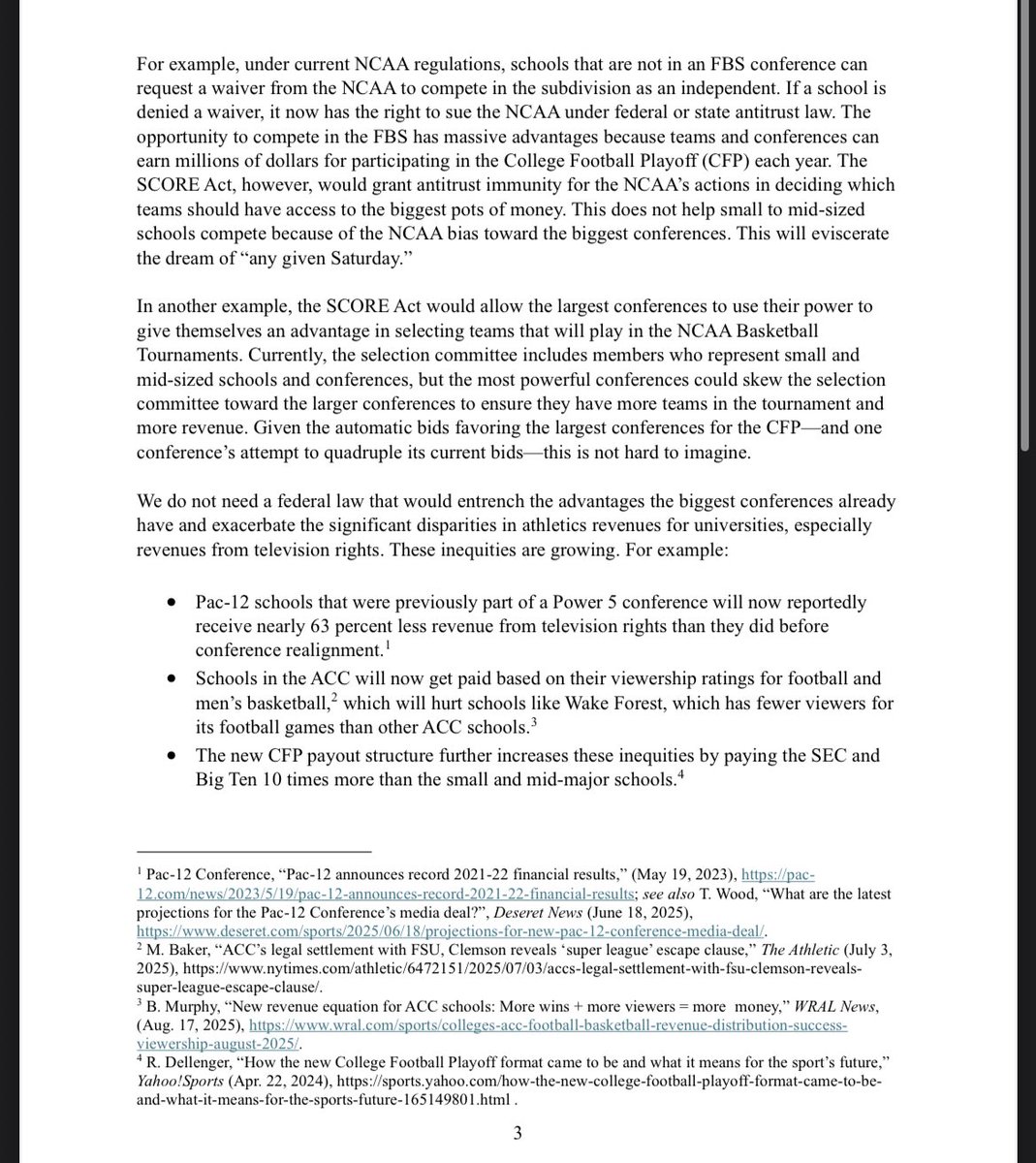
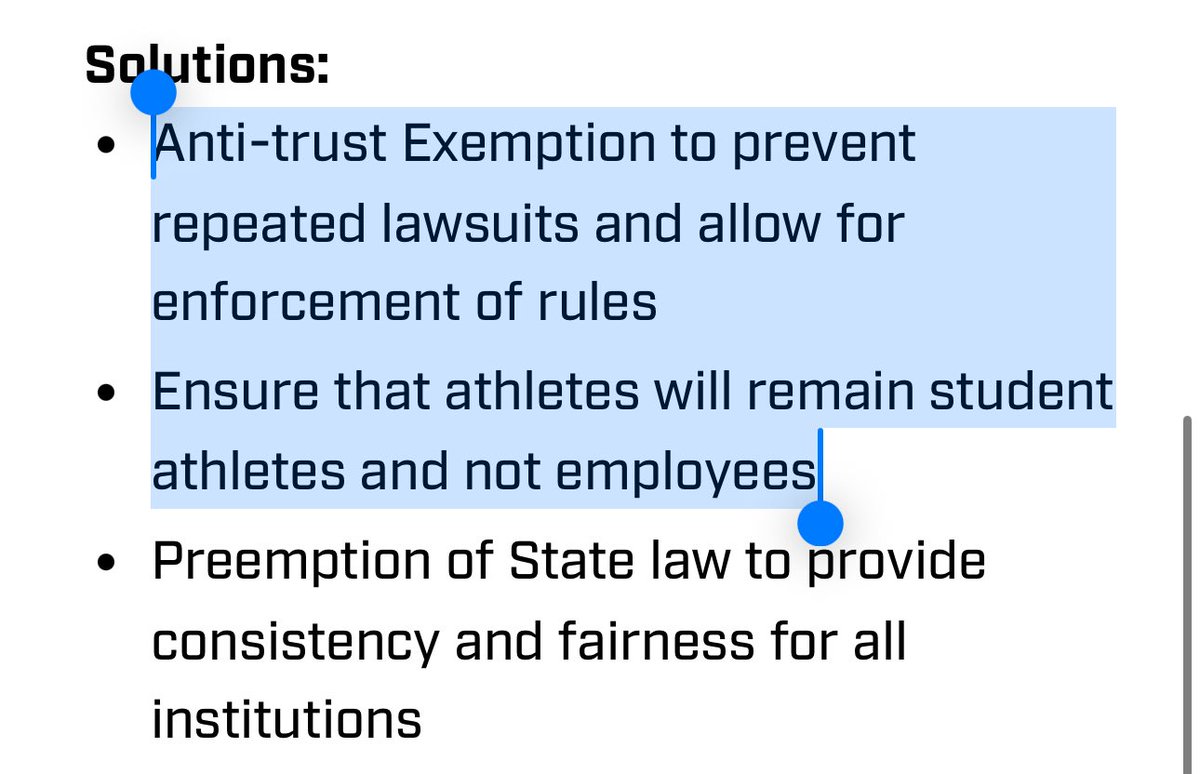
We are all still reading this bill, but its primary effect seems to be to limit the compensation of athletes while protecting the huge salaries of all the adults - coaches, ADs, sports industry executives - who are getting rich off the performance of the players. And it gives the NCAA an antitrust exemption that no other industry gets just so they can keep underpaying the athletes. Sure, there are some good things for players in this bill, but this seems like a great deal for the NCAA and the rich guys who run college sports, and a bad deal for athletes.
Opposed to the 5% agent fee cap to the extent that it applies to true marketing endorsement deals. The industry standard in the creator economy ranges from 15-20% for traditional partnerships. The cap could have the effect of limiting representation opportunities for athletes in “true NIL” deals and expose the athletes to unneeded risk.
However, 5% cap for rev-share deals and other deals directly between athletes & schools/collectives is more than justified and should be the norm since these take far less time & effort to source and negotiate.
Aside from a litany of other issues re antitrust exemptions for the NCAA, etc., the bill’s language needs to differentiate between “true NIL” deals and rev-share/collective deals.
America needs bipartisan leadership. But the bipartisan leadership we need is absolutely not that which strips away rights and limits income earning potential of a class of Americans to protect untaxed entities possessing billion dollar endowments and massive real estate assets.
Capping agent earnings from NIL deals at 5 percent may have the unintended consequence of making it so that reputable and qualified agents may not see enough benefit to work with lower-earning athletes.
But creating a private right of action for SPARTA is SO needed.
The 5% cap is a well-meaning proposition, and you’re definitely right that many agents will be dissuaded from working with many non-football and non-basketball athletes who have to rely on “true NIL” marketing deals and can’t earn in the portal. Some of the terms I’ve seen in proposed deals make it clear just how critical proper advisement is for these athletes.
Not completely opposed to the cap on transfer portal/rev-share deals, however. Especially when some agencies are taking 20% on those. But applying a 5% cap to ALL NIL work likely isn’t realistic.
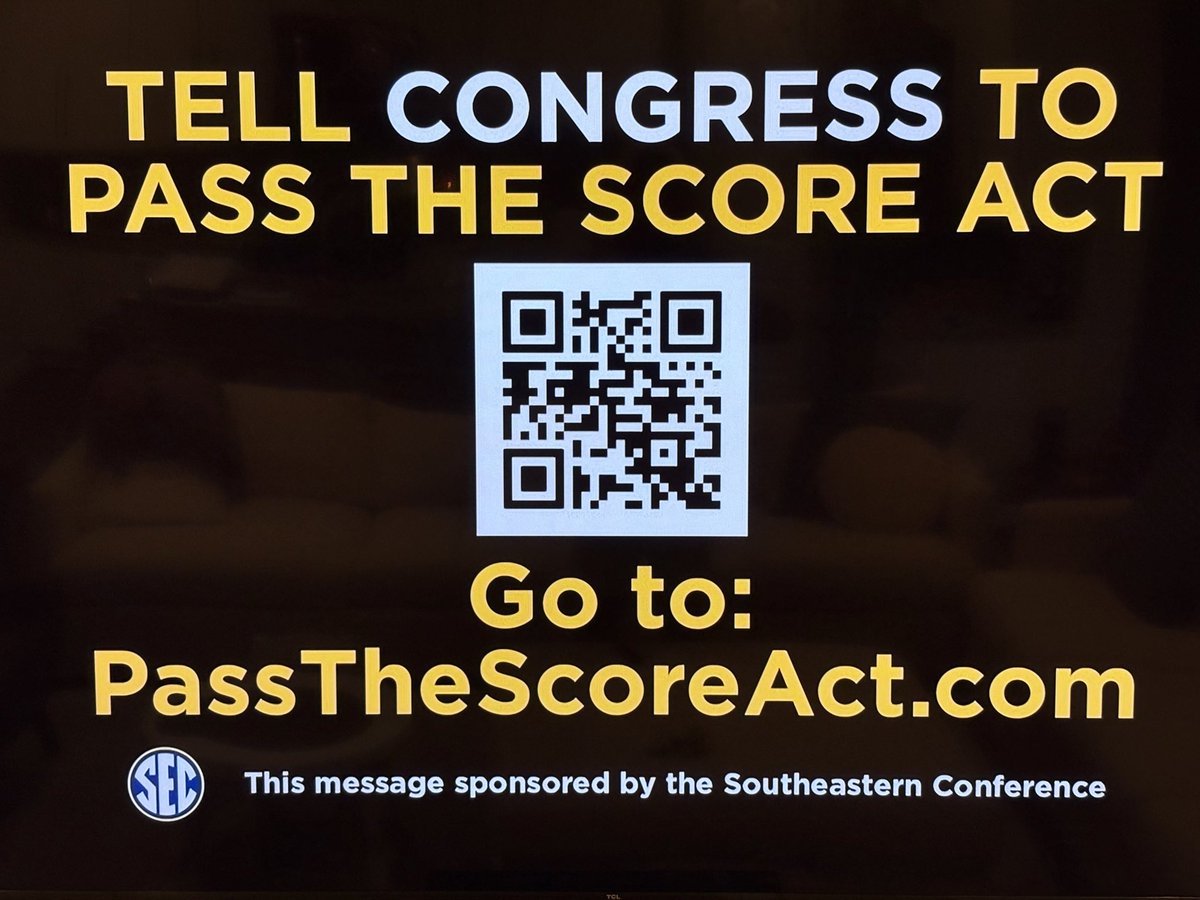
The @SEC ran this TV ad over the weekend, thar provides a link to a website. The ad and the website make many false claims, the most egregious being that the SCORE Act, in its current form, is supported by every D1 conference in America. This is NOT true. In fact, the large majority of conferences and their members (including many members of the Power 4) believe that the SCORE Act needs to be amended and modified so that women’s sports, Olympic sports, smaller schools, and the Student Athletes can be protected and represented in the final solution.
Yes, the SCORE Act is a good start, and we are all grateful that DC is finally paying attention to the existential issues facing college sports, but we ALL need to come together (Big Schools, Small Schools, Women’s Sports, Olympic Sports AND the Student Athletes),to come up with a compromised and comprehensive solution that works for the betterment of the entire system - not just major college football. 500,000 Student Athletes and hundreds of communities are depending on us! Deception and dishonesty, as displayed through this @SEC ad, only drive a wedge between what we were hopeful was becoming a constructive and productive conversation. Let’s get this discussion back on track and work together to find the right solutions that will preserve the Great American Institution of College Athletics!!
San. Maria Cantwell, the top Democrat in the Senate Commerce Committee, sent scathing letter to university presidents criticizing the SCORE Act.
Indicates that the Score Act could have trouble passing the senate, even if it passes the House.
Excerpts:
Friendly reminder that NIL GO has no legal authority to determine what constitutes fair market value, or in their own terms “reasonable range of compensation,” and will fail any legal challenge if they attempt to prohibit an athlete from entering into an NIL deal on that basis.
This is so silly - with the House settlement and NIL Go, teams are capped at $20.5M/yr in revenue sharing for all athletes in all sports.
3rd Party NIL deals must be fair market value endorsement deals that clear NIL Go, not roster value deals.
$10M just isn't possible anymore.
@MattHand13 And as far as the comment that the settlement means that Judge Wilken found that the cap and third party provisions don't violate antitrust law is concerned...
House attorneys have reached a deal with the power conferences and NCAA officials that will alter the College Sports Commission relating to how NIL collectives can pay athletes, per @RossDellenger
The CSC is expected to treat collectives in a similar fashion as other businesses.
https://t.co/1H9nGx2luA
A Nevada federal judge has granted a preliminary injunction to JUCO transfer Cortez Braham re: the NCAA's 5-Year Eligibility Rule. This is a major win for athletes amid recent NCAA victories against Jagger Giles and on appeal against Nyzier Fourqurean.
https://t.co/gtUyAOIlzV
Per CBS News, Donald Trump is expected to issue an executive order "establishing national standards" for #NIL. This comes just days after lawmakers in the House introduced an updated version of the SCORE Act. It’s unclear whether this executive order would actually set binding rules around college athlete NIL compensation, or just signal political intent.
Source: https://t.co/h6jdQGKgHO
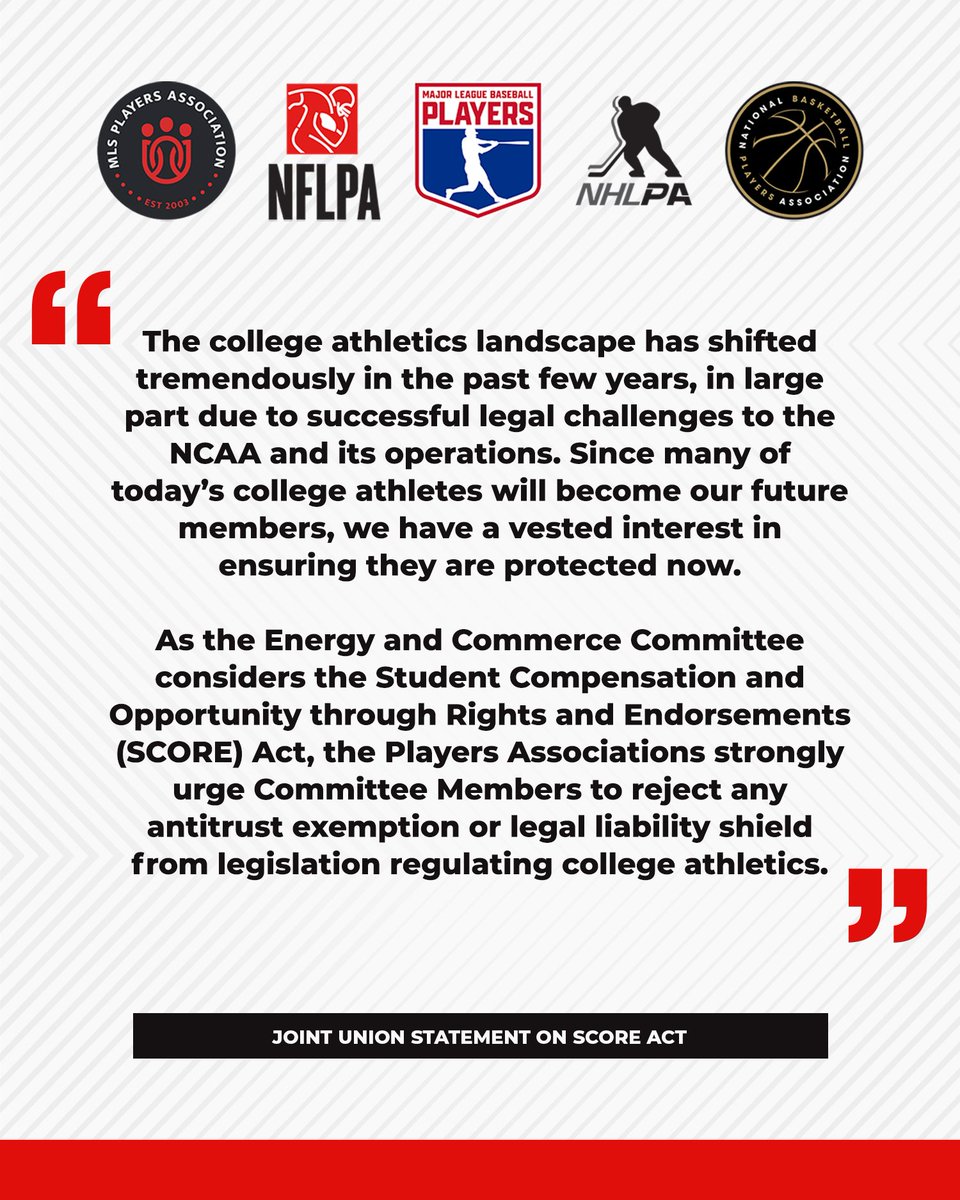
A powerful statement from every major players association re: the proposed SCORE Act granting the NCAA an antitrust exemption.
“The NCAA should not have a blank check to impose their will on the financial future of over 500,000 college athletes.”
It’s obvious NIL Go isn’t evaluating fair market value. Approvals appear to be dictated entirely by who’s on the other side.
Very hard to see how they’ll survive any legal challenge.
Here’s a real example of a deal we submitted that was denied. It included social media posts, appearances, and brand promotion—real deliverables, clearly documented.
Total compensation was $2,333.
The athlete had responsibilities. The compensation matched the work. Still denied.
College sports are in trouble. We need to save ALL of them - From big schools to small schools and from big money sports like football and basketball to non-revenue Olympic sports like wrestling, swimming, track, tennis, golf, and volleyball.
I’m on a mission to make sure that all 500,000 student athletes in this country continue to have the opportunity of education and character development.
Join me and help. Go to https://t.co/cP1pfvzPWq to learn more.
I’ve been saying—and writing about this for nearly half a decade—so I’m thrilled that more ADs are opening up to the most sensible option in the new era of college sports.
EA Sports College Basketball is officially returning.
This time, however, players will be rightfully compensated for the use of their NIL. A big win all around.