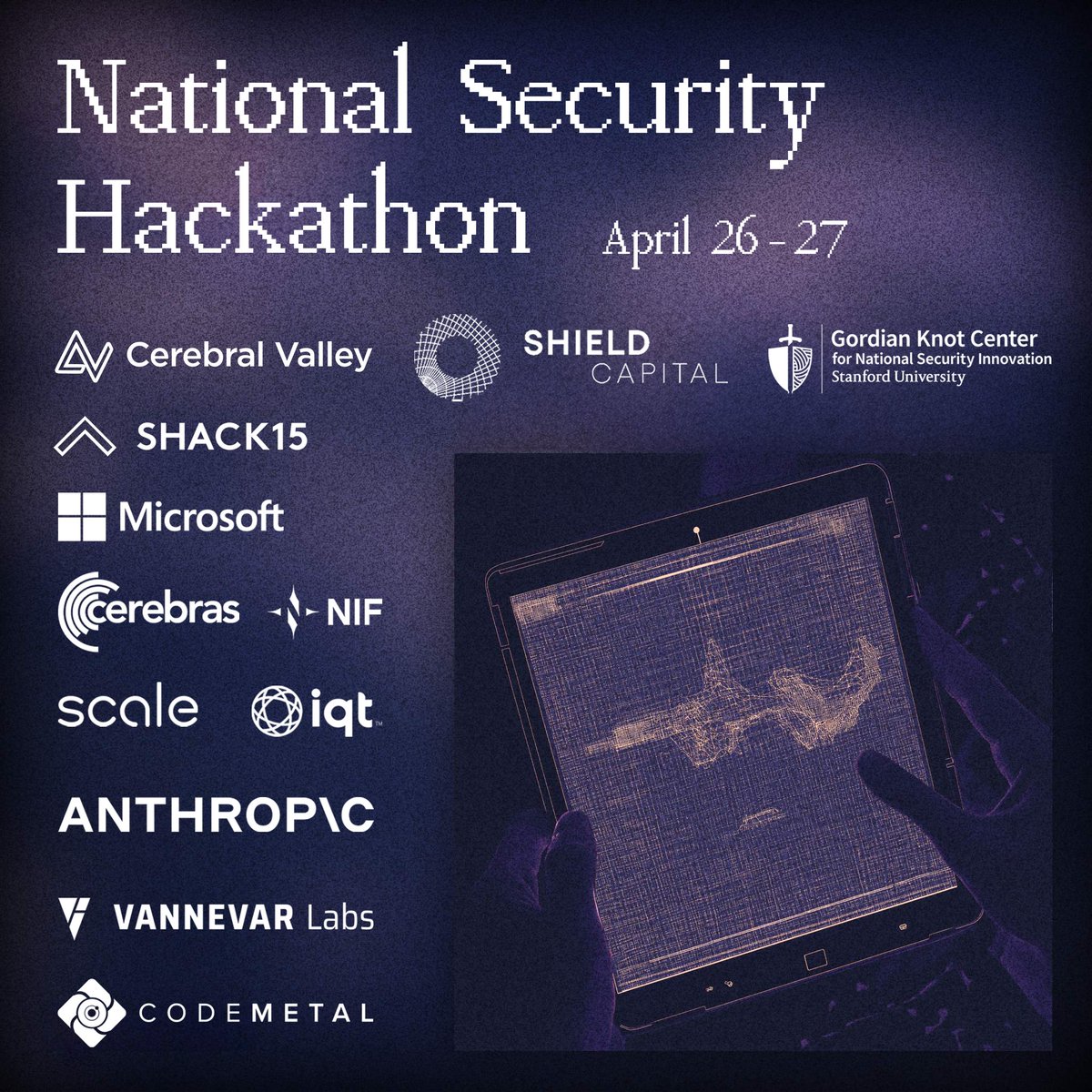
Thrilled to launch our 2nd annual National Security Hackathon, April 26-27, @SHACK15sf 🇺🇸
Defense is rapidly evolving. It's an honor partnering w/ category definers @ShieldCapVC, @VannevarLabs, @scale_AI, the NATO Innovation Fund, In-Q-Tel, & more.
Apply below👇
My latest on the importance of American leadership in open-source AI. The chip war and the open source race are merging. Given the stakes, second place is not an option.
https://t.co/iGWsQy0qDw
Huge thanks to the @ForeignAffairs team & all the friends who helped along the way.
@ShieldCapVC colleague Mike Brown and I wrote in Foreign Affairs about how the U.S. can secure what we call the “commercial frontier”: essential wartime capabilities developed and controlled by civilian tech firms
Read the full article here:
https://t.co/RqRYjNYHxu
During the first few weeks of Russia’s invasion, Ukraine’s survival depended on American commercial tech firms—AWS and Microsoft for cloud migration, Microsoft and Google for cyber defense, and SpaceX/Starlink for comms. That tech was provided at their discretion and for free. 1/
“Technology corporations are likely to play an ever more important role in future wars,” write Matthew Kaplan and Michael Brown. “The challenge will be ensuring that these companies’ interests are aligned with national ones.”
https://t.co/toJkXIZxs9
The U.S. needs a plan to ensure the availability of the right capabilities ahead of conflict, which will hopefully serve to deter conflict in the first place. 3/