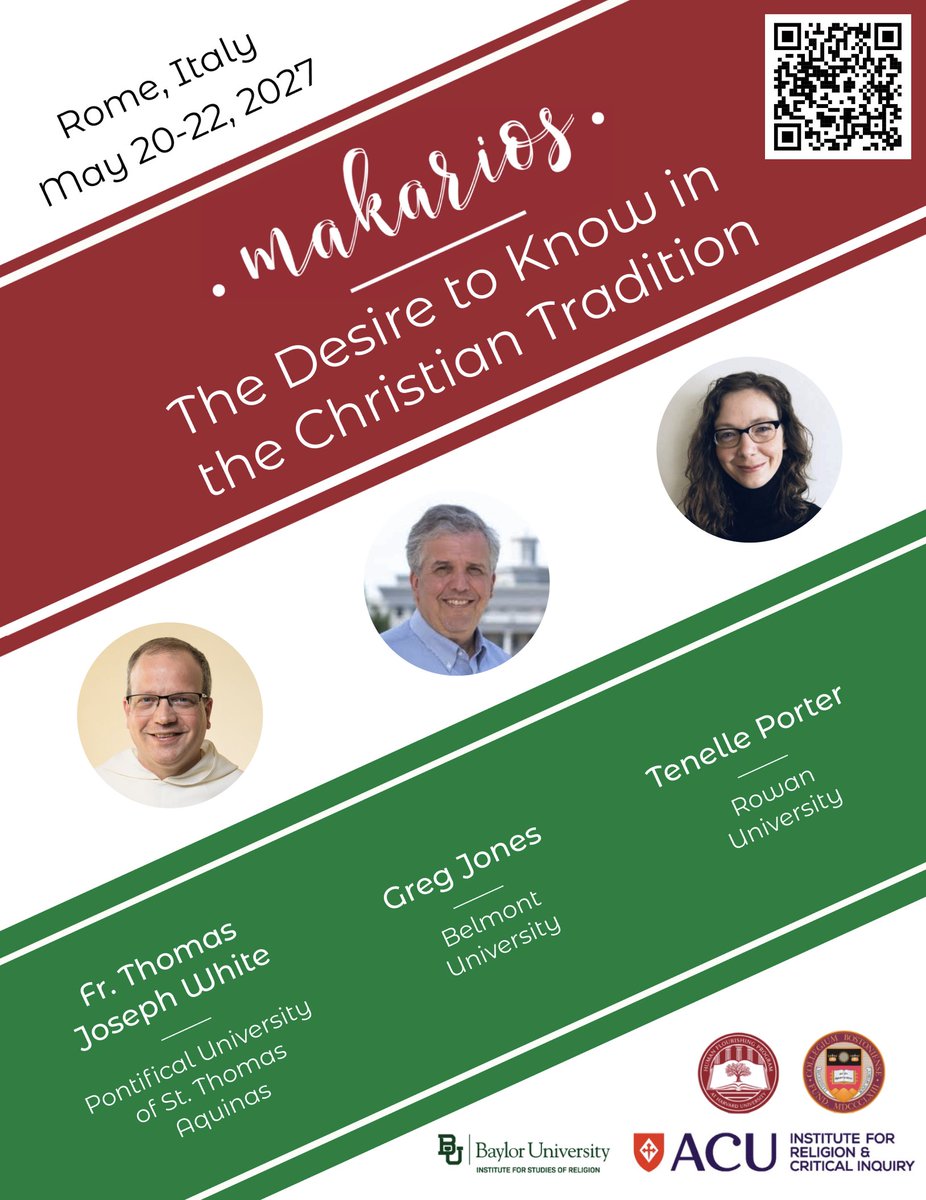
This is going to be a terrific conference.
If you're interested in these matters, I encourage you to submit a proposal.
(I will also be there, if that is an inducement to apply--or a reason to not!)
Friends, we are now accepting proposals for the next Makarios conference, co-sponsored by @IRCI_ACU, @HFHarvard, @BostonCollege, and @BaylorISR, and hosted at ACU's Rome campus. The submission form is available at the QR code below or at this link: https://t.co/vku62VUq9m.
@kvallier Also, I realized recently that my twitter presence has been largely reduced of late to antagonizing you.
I kind of like it! I hope our paths cross again sometime so I can enjoy correcting you in person.
One reason Magnifica is extremely underrated is that Pope Leo recognized the most important question about AI: who governs it. That’s the first question, not the student ethics question, the safety question, or the hallucination question. As I read Magnifica, Leo thinks AI must be co-governed by a diversity of perspectives, including on the nature of AI.
To draw the analogy farther, I suspect Kevin's use of "governance" as the main question rather than "use" actually presupposes a metaphysical framework about AI in the same way that Rawlsian treatments of abortion actually presuppose metaphysical accounts of the person.
Thesis: Charles Taylor's politics of recognition and authenticity are democratic, egalitarian forms of honor and honesty.
Someone has written this already, surely?
This is an extraordinary new resource.
I think concerns about AI-translation are eminently reasonable. However, the sheer volume of texts in their original languages is astonishing: I am not sure of a single existing database that has the breadth this one does.
I think there are hard questions for academics about how to regard translations from places like this, what should be done regarding citation, etc.
But for someone looking to get a broad handle on, say, how interpretations of 'honor thy father and mother' have gone throughout much of church history, this could prove invaluable.
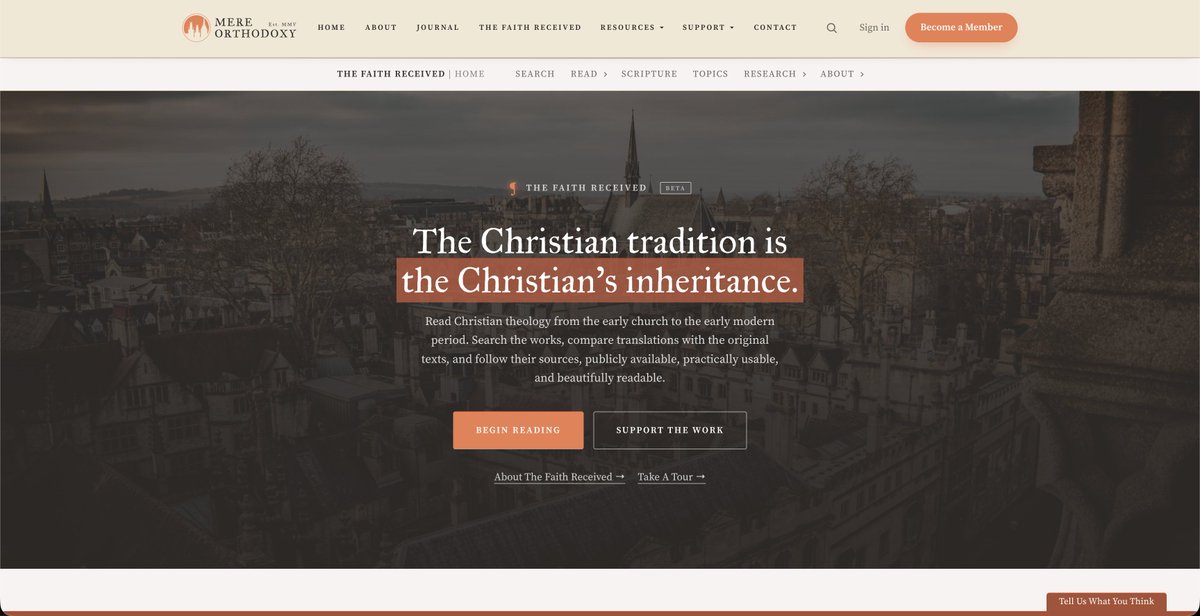
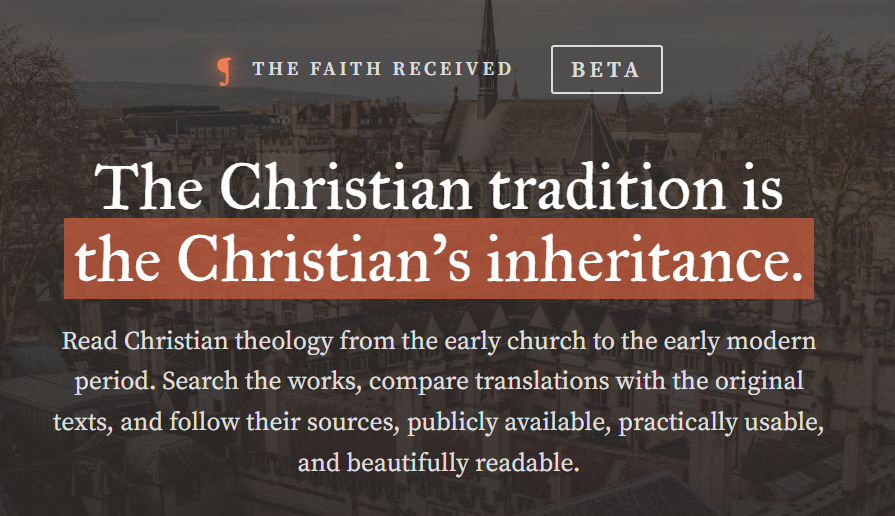
Today we're releasing a brand new resource called The Faith Received.
It's a massive online library and research tool featuring nearly 20,000 primary sources across church history.
You can see it here: https://t.co/tfskxPHgw3
And read about it here: https://t.co/tTWO55i4LP
This is exactly the right take on this resource, both in its cautions and its commendations.
The page scan of the original is a *wild* feature. I think it might have been my idea (or so goes my memory, @ianharber), but I honestly didn't think they'd be able to pull it off. They did.
There are going to be a lot of flaws with this site, as it is in beta. And it's 20,000 texts(!), which may not all have been perfectly incorporated. But the thought with launching it now is that the collective scrutiny will help find errors faster.
Yes, that's like Wikipedia for Theological History. And yes, that has downsides. But our current choice is to either keep these texts reserved in their pristine condition for the seven people who care enough about them to read them, or to find ways of expanding access.
This is only one part of what should be a broader theological and intellectual ecosystem--and I don't think that @mereorthodoxy has claimed anything more for it.
I think I understand the objections to AI translation decently well. But I also think this kind of venture contributes to an increased demand for Real Latinists, rather than takes people's jobs.
MereO has put together a powerful online tool for reading old Christian books. The Faith Received, though still in beta mode, is kind of a moon shot for retrieval. Congrats to @StvenWithAnI, @ianharber & co for hopping over numerous hurdles to get this started. A few thoughts:
Sed contra: it is of considerable importance to properly understanding the Phaedrus to consider the fact that it is written and that we are reading it.
https://t.co/n6dtqfPHAd
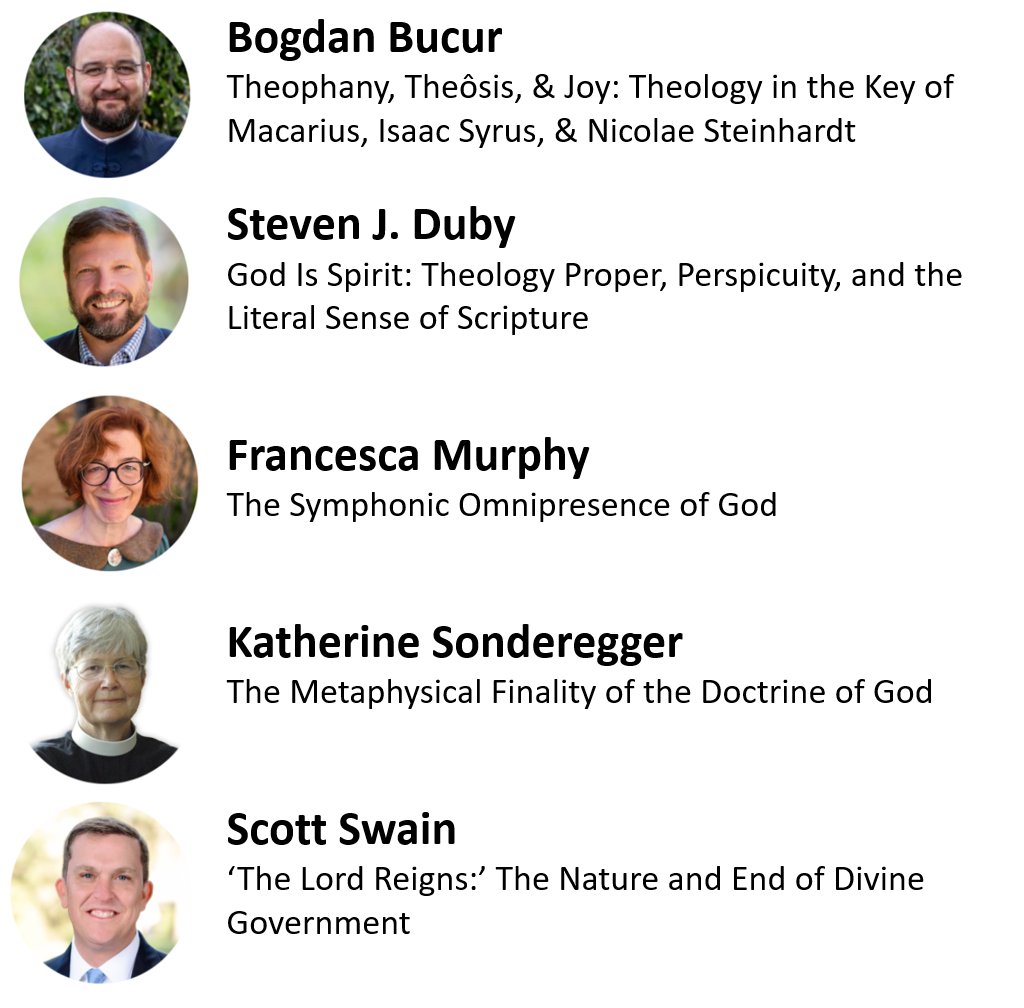
Breaking: Los Angeles Theology Conference 2027 (Mar 10-12) will be on "God in All Things: The Omnipresence of the Doctrine of God." Here is our lineup of plenary speakers, along with their chosen approaches to our doctrinal topic:
Not everything that has a soul is a person. And personhood is not the only basis for treating something with dignity.
A soul is not 'consciousness,' and algorithms that mimic the latter are not alive.
Participating in the ongoing collapse of personhood by extending it to AI is only going to contribute to the ongoing instrumentalization of real persons.
The fact that this happened without loads of grant money is also extraordinary. Huge credit goes to @ianharber and @StvenWithAnI.
If you're grateful, you would do well to become a member. https://t.co/IrvAcJFyIg
I'm going to be in St. Andrews for two weeks in late October.
If you're in the Edinburgh area and want to say "hello," shoot me a DM. (My responsibilities will keep me fairly geographically limited to St. Andrews.)
With all due respect to that other musical performance that went around last week, beauty in music has been in steady decline since Bach wrote this: https://t.co/ODfTuRVGMw
I think the humanities would be well-served by becoming more rigorous, so I assigned Augustine's De Trinitate for class this week.
I think it might be the most demanding text I've assigned at Baylor. I almost regret what I have done to students. Almost.