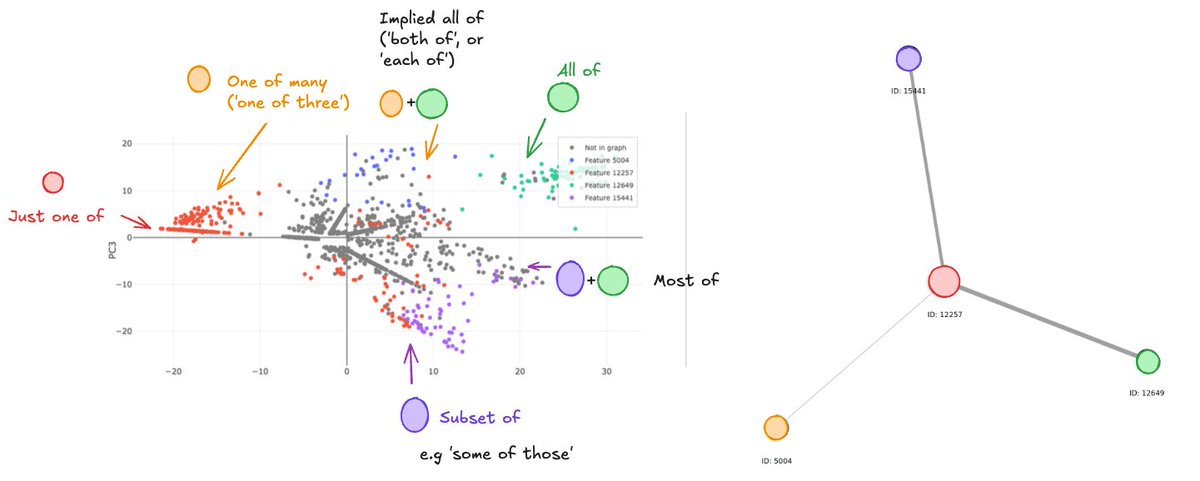
0/7 Excited to publish my work from my @pibbssai Fellowship with @hrdkbhatnagar and @JBloomAus. We find that SAE latents are sometimes non-independent, instead forming clusters that map interpretable subspaces. Post: https://t.co/9lOtd47KDr and app: https://t.co/CoKwtWZhtB
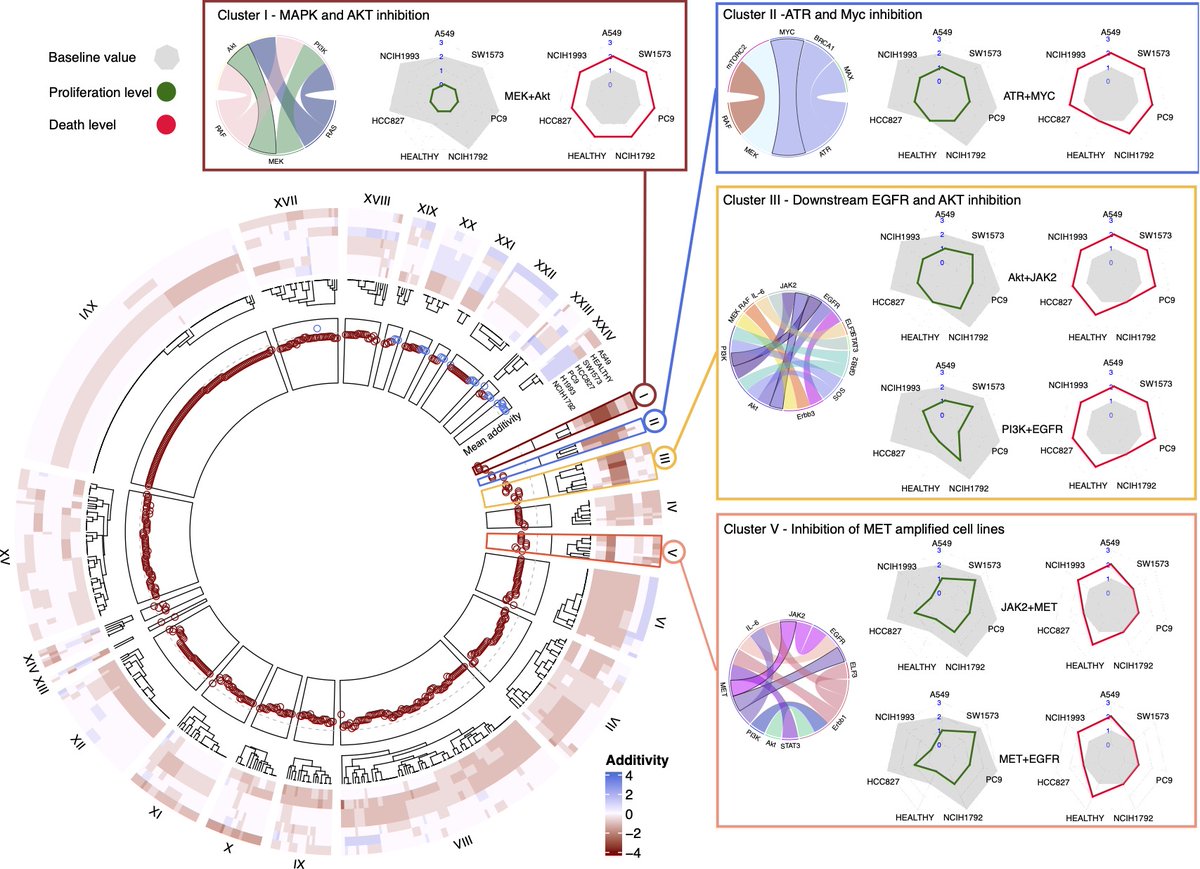
🚨 New preprint!🚨 Tackling non-small cell lung cancer (NSCLC) adenocarcinoma with in silico models:
🌟 Models tumor pathways (EGFR, AKT, JAK/STAT, WNT)
🌟 personalized drug & radiotherapy combos
🌟 Identifies a signature for patient radiotherapystratification
Special thanks to my co-first authors @cgbarker_
and @AJNics for their incredible work on this project, to all our collaborators, and especially to the Jasmin Fisher lab at @uclcancer!
Excited to share our new preprint exploring the potential to personalise treatment for non-small cell lung cancer (NSCLC) using in silico modelling: https://t.co/vodY0HHiuF
By predicting the effect of radiosensitisers, as well as over 10,000 combinations of drugs and driver mutations, we find promising strategies to improve treatment outcomes, and identify a 19-gene signature that could help predict response to radiotherapy.
0/7 Excited to publish my work from my @pibbssai Fellowship with @hrdkbhatnagar and @JBloomAus. We find that SAE latents are sometimes non-independent, instead forming clusters that map interpretable subspaces. Post: https://t.co/9lOtd47KDr and app: https://t.co/CoKwtWZhtB
6/7 How confident are we? We focus on SAEs for two models (GPT2-Small and Gemma-2-2b) with different SAE architectures, and observe similar phenomena in both, but that Gemma clusters tend to be less interpretable. We also focus mostly on interpretability of small clusters.
NEW Perspective! MA Clarke & J Fisher discuss how executable computational cancer models can be used to represent dynamic biological behaviours inherent in cancer & how they can help in precision medicine.
😎 https://t.co/y2DAga2GG2
@uclcancer@uclmedsci@uclnews @NatResCancer
Excited to see this work from my postdoc in the Fisher Lab @uclcancer out. In this project we combined a computational model of #melanoma and immune cells to understand the early stages of immune surveillance.
Very excited to announce a new paper—Cultural Evolution of Cooperation Among LLM agents—coauthored with @edwardfhughes
We study whether LLM agents can develop cooperative norms when interacting with each other, and find considerable differences across models.
Thrilled to share the first research paper from my PhD, out today! Here we use agent-based simulations to shed light on how cells behave during the very first stages of lung cancer initiation. Thanks so much to @DrClareWeeden, @pearce_maths, (1/2)
https://t.co/r0H2aLuiud
New preprint out! 🚨 Sumana Sharma, @e_petsalaki & I explored the surprising effects of ARID1A KO in melanoma using network-based multi-omics. Interesting findings on signaling & drug resistance! Check @e_petsalaki's tweetorial or read here: https://t.co/4nnU0CONOc
Really excited to share my PhD work with the Secrier lab which has just been published in @GenomeMedicine, exploring homologous recombination deficiency in multi-scale and its links with drug response and the TME!
https://t.co/cdOyoLTCIn
@mariasecrier@UGI_at_UCL@uclcancer