Gait monitoring with wearable and depth video are both viable options for objective quantification of gait in people with MS in a clinical setting
@MayoClinicNeuro
https://t.co/SdaphEzutl
“All my past experiences brought me here.”
Dr. Graham Johnson’s career path has been anything but linear, shifting from film school to neurosurgery. Yet every step led him closer to his true calling: helping patients through the science and art of brain surgery.
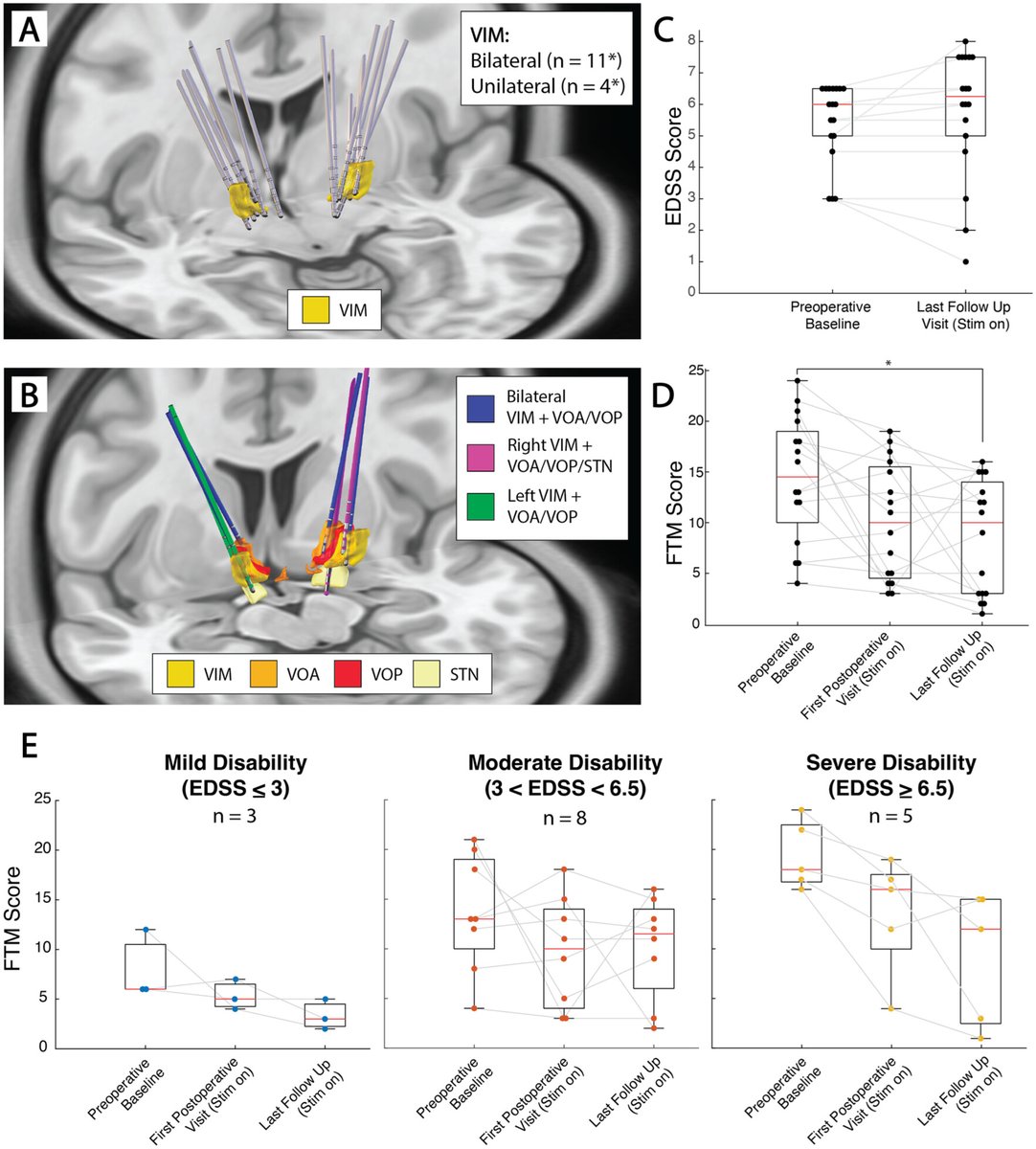
Deep brain stimulation is a potential treatment for severe tremor in #MultipleSclerosis, by not provoking relapses, optimizing tremor control and maintaining MRI access.
Study from @SamanthaBanksMD@MayoClinicNeuro@MayoClinic ▶️ https://t.co/a4SfjhlCrj
MS tremor can be very difficult to treat. Here we report the outcomes from our center’s experience with DBS in 18 patients.
https://t.co/5KvUpmPNys
@MSJ_Research
Key take aways:
We presented our recent work on awake deep brain stimulation surgery at @CNS_Update annual meeting, and was selected as “best operative technique” in the stereotactic and functional track!
W/ Bryan Klassen, Kai Miller, @HunterProuty
Preprint: https://t.co/r46A1SVw3I
Congrats to Dr. Baker, Dr. Klassen and Dr. Miller from the CaMP Lab!
Their work earned Best Operative Technique Poster in the Stereotactic & Functional Track at #CNS2025. Learn more: https://t.co/01lTw68Wlh
The 3rd Annual Adaptive Neuromodulation Research in Humans Workshop at @MayoClinic was a powerful convergence of science, innovation, and collaboration.
Falls are a common problem in people with MS, can we use patient reported outcomes and gait testing to identify those at risk? Here we present a clinical scoring tool for fall risk assessment. https://t.co/9mIgidqn03
🚨Don't miss the next #ASSFN Webinar!
Join us on for an advanced discussion on DBS Targeting Tools, Imaging Techniques & Research.🧠💡
Hear from top experts:
🔹 @Kai_J_Miller
🔹 Chengyuan Wu
🔹 @Dr_JP_Parker
🔗 Register now: https://t.co/fSD3foO1m6
#DBS#BrainScience
Dr. Kai Miller is a #Neurosurgeon at @MayoClinic in Rochester, MN, shares how he is working with the advancement of #neuromodulation for the care of patients keeping at the forefront of advancements for Mayo Clinic. Visit: https://t.co/2QxgmNikYL #DrMiller
What’s the source for MS tremor? Typically we think of posterior fossa lesions, but it’s likely more complex. Here we present a series of patients with unilateral tremor and critical lesions in the motor strip. https://t.co/cOCa2y7k71
Mayo Clinic researchers can more precisely detect and monitor brain cell activity during deep brain stimulation, a treatment for Parkinson's disease and tremor.
Learn more: https://t.co/tAVpOXntre @MayoClinicNeuro@MatthewBaker_
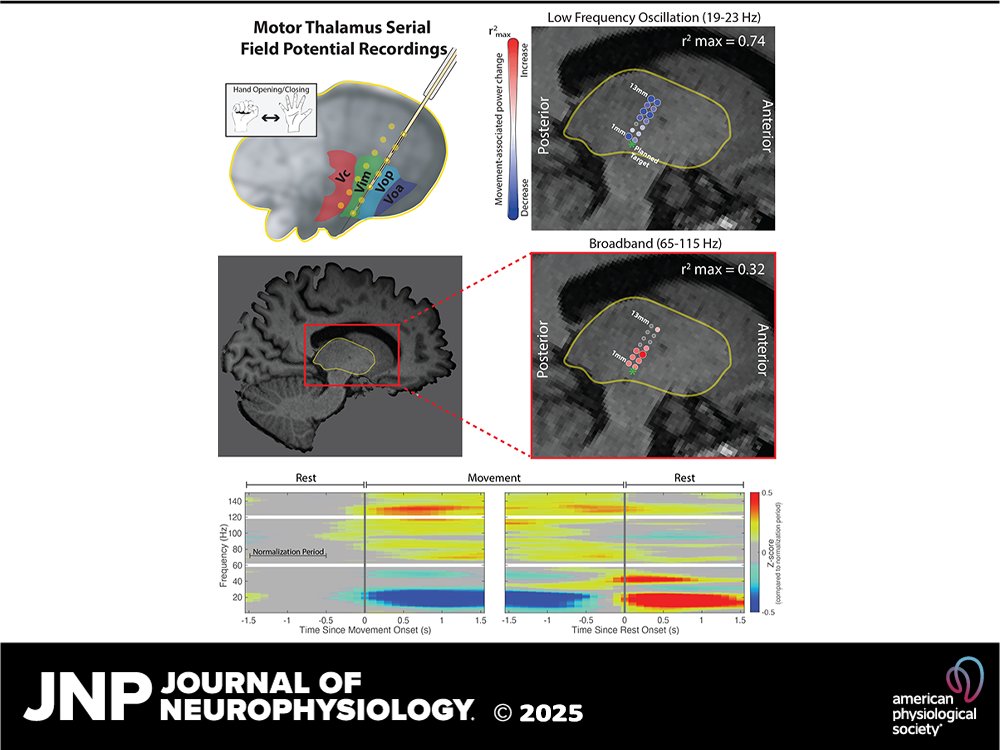
New from the CaMP lab over the holidays: Spectral changes in motor thalamus field potentials during movement - Led by Bryan Klassen. https://t.co/pXigBewleJ
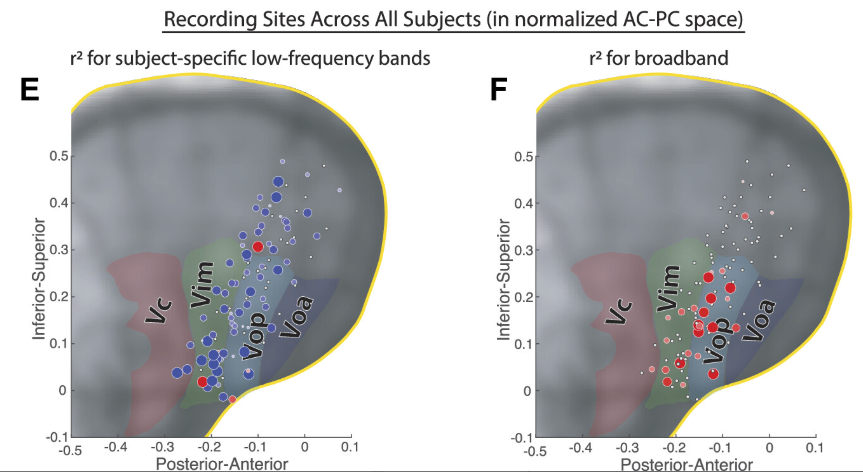
We find movement-associated changes in broadband power in the motor thalamus in DBS intraop recordings. Similar to motor cortex, these changes are more focal in the motor thalamus compared to low-frequency oscillations.
Identifying neurologic involvement in patients with systemic histiocytosis can be difficult. Here we show blood neurofilament light chain is associated with CNS involvement in histiocytosis and may be a useful screening and staging tool https://t.co/MFUO8YzDey @MayoClinicNeuro
Hirayama disease may present with abnormal movements, here we share a case with video and surface EMG recordings of polyminimyoclonus in a patient Hirayama disease. https://t.co/rFOKkBMKn3 @MJClarkeMD @FarwaAli_
@GreenJournal@MayoClinicNeuro