@rpondiscio I feel like the same data could support the claim that I made a midterm so easy that it ran into a ceiling effect, but then used that information to better calibrate a final exam to my students' ability.
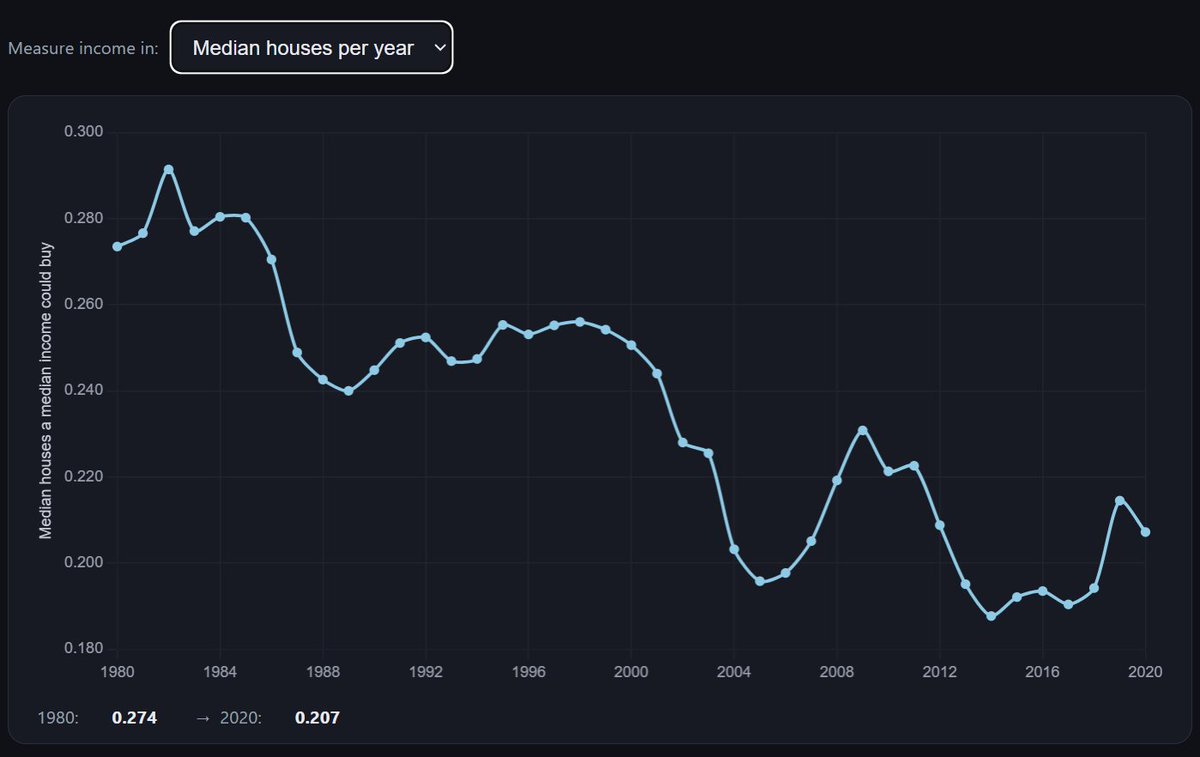
@Noahpinion Hey Noah! Here's a thing I don't understand: Inflation-adjusted dollar income increased, but year-matched buy-stuff income didn't. Shouldn't those correlate better?
@Gong_io
I have a meeting coming up in less than two hours. Forwarding the invite (to the new email address) didn't work; it somehow couldn't find the Teams link in the invite. Clicking the support link returned a 404. Would you please help?
I can't think of the right word to describe dismantling the Department of Education. Symbolic? Representative? What's the opposite of the opposite of irony?
filni - Scandinavian - the new to-do list items spawned by crossing something off your to-do list
ex: taking out the trash and putting the new bag in the can
but it's the last bag, so +2 filni
--> throwing away the empty box of bags
--> adding trash bags to your shopping list
@tomowenmorgan @RakeTheGates I wonder the extent to which it's a reflection of how frequently in its corpus that is the response, and therefore what it is most likely to generate given the prompt.
My message here is: LLMs work best when combined with humans.
That means the thing to be most excited (or scared) of is the power of computers+humans, not just computers on their own
...which is something Douglas Engelbart pointed out in 1962!
https://t.co/17sLas1NdQ
@themartonfi@philfreo@BenjaminDEKR An LLM does not really "know" almost anything. It uses a statistical model to simulate what someone would say in response to what someone else said. In context, the thing most common after "did you search the internet" is "yes"
... but it doesn't really know what "yes" means.
Is anyone aware of research on the extent to which students go to college just to get a degree / for work / to have gone? As opposed to (or in conjunction with) the extent to which they go because they actually want to learn?
I found research indicating that the proportion of educators who say learners are unmotivated is about triple the percentage of learners who agree...but I suppose I'm looking for extrinsic vs intrinsic motivation for taking college classes and doing coursework.