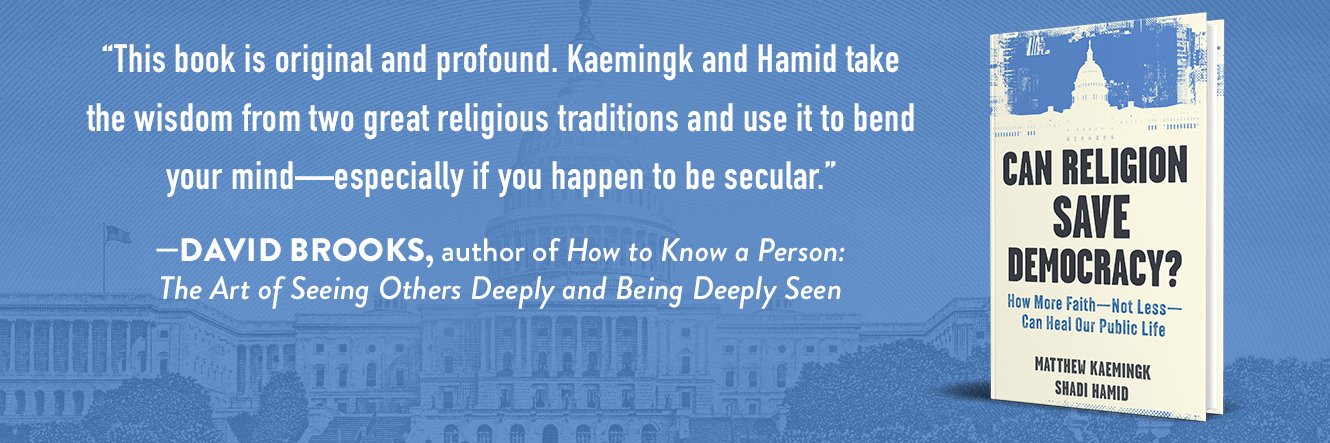
“This book is original and profound. Kaemingk and Hamid take the wisdom from two great religious traditions and use it to bend your mind—especially if you happen to be secular.”
—David Brooks
https://t.co/T0StFscOba
Orthodox Muslims and Christians are routinely told that if they want to contribute to democratic life they need to assimilate to a more secular way of life.
But this assimilation is not simply bad for their personal faith **its bad for democracy as well.** @shadihamid
Breaking: Nvidia’s board is preparing to oust CEO Jensen Huang after he had two extramarital affairs, including one with a suspected Chinese spy. https://t.co/Pjsu5j87CF
Is national pride only for the Right? Author of “Can Religion Save Democracy?” @shadihamid shares his perspective with @carlo_versano on loving America, and why criticisms of the country are an expression of that love.
Watch the full episode: https://t.co/Vny4O7cvbR
@Yascha_Mounk, @shadihamid, and @matthewkaemingk discuss how the decline of faith has fueled polarization—and whether Democrats should make more room for religious voters.
https://t.co/UEbfVN2VGT
Does democracy need religion?
Has Europe's lack of faith proven that democracy no longer needs religion?
We had a spirited debate with @Yascha_Mounk on the Good Fight podcast about our new book "Can Religion Save Democracy?"
https://t.co/bZ4OIpgzpH
Many have argued that less religion in public life would make for a more peaceful, unified democracy. Yet as religious practice has declined, the nation has grown more polarized, anxious, and unstable.
In this episode, @MatthewKaemingk and @ShadiHamid argue that, across their differences in faith, they agree secularism has deepened our divides, and that the resources of faith can help us rebuild trust, shared purpose, and our commitment to democracy. Listen: https://t.co/eli2ExQ338
Can religion help heal America’s fractured politics? Columnist and political analyst @shadihamid joins @carlo_versano on The 1600 to discuss his new book, Can Religion Save Democracy?, and his argument that America’s decline in religious life has helped turn politics into a substitute for faith.
When being just and honest comes at a price, pay it. When forgiving seems like a defeat, forgive. When everyone tells you to think of yourselves first, do not be afraid to put yourselves in the last place. Be willing to give up time, money, comfort and plans to serve others. May those who see you find themselves asking: “Why do they live in this way? Where do they get this freedom? Why do they love one another so much?” #ApostolicJourney #Uruguay
Trump is a prisoner.
You can see it in his eyes.
He's in a prison of his own making. Friends, your hatred will not give you peace, it can only bring chains.
Marco Rubio: "For years to come, there are many people on the right...that are going to be having to explain and justify how they fell into this trap of supporting Donald Trump because this is not going to end well.” (2016)
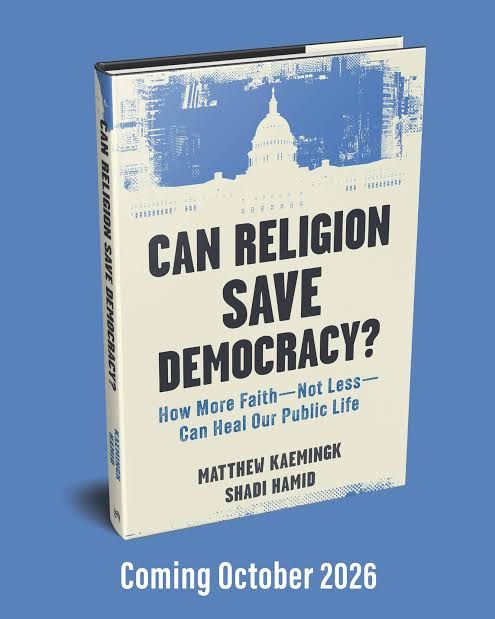
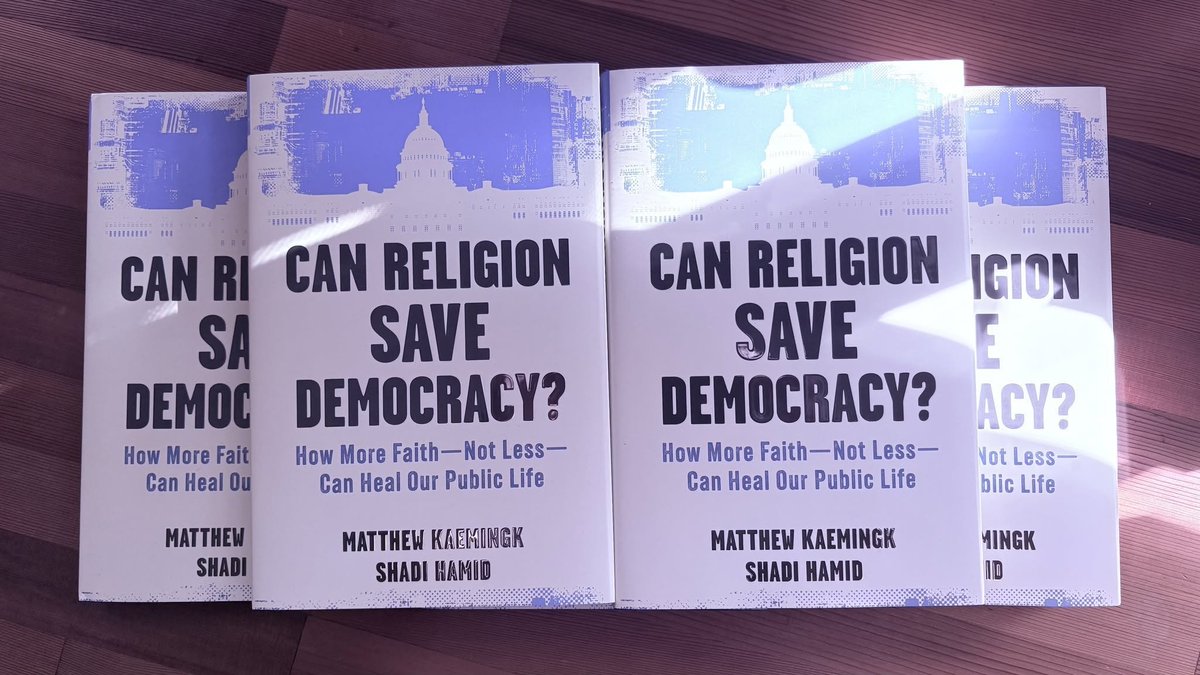
Today is the day! My new book CAN RELIGION SAVE DEMOCRACY? is officially out — co-authored with the Evangelical theologian @matthewkaemingk and more importantly my friend. There’s no feeling quite like holding your book after years of toil, excitement, and occasionally doubt.
If you're intrigued and perhaps even a bit skeptical, please consider ordering a copy below. We argue that secularization has not made our politics more rational or reasonable. The opposite has happened. In losing our religion, politics has come to resemble a holy war. And we argue that lessons from Islam and Christianity can provide us a better path forward and help us be better democratic citizens. We’re not asking anyone to convert, but we are asking readers to be open to the possibility that religion at its best can play a constructive role in our public life.
Christianity and Islam allow us to "delay judgment" of our fellow citizens because final judgment is only God's alone. If God is all-knowing, we are anything but. If we recognize that we are mere mortals who are tempted and broken by sin, then that should allow us to hold a posture of humility about whether we're right and whether others are wrong. We see through a glass darkly.
There's also a strong utilitarian argument for religion. The religiously affiliated are more likely to give to charity and volunteer. They're even less likely to cut in line. They drink and smoke less. They are more likely to be married and have kids, which in turn leads them to be happier on average compared to their secular counterparts.
We have mixed feelings about the utilitarian argument. First and foremost, Matthew and I believe in Christianity and Islam because we believe they are true. In that sense, we disagree on the most profound theological questions regarding the very nature of God. But despite that — or perhaps because of it — we felt it was important to write this book together.
https://t.co/boHAk35wGj
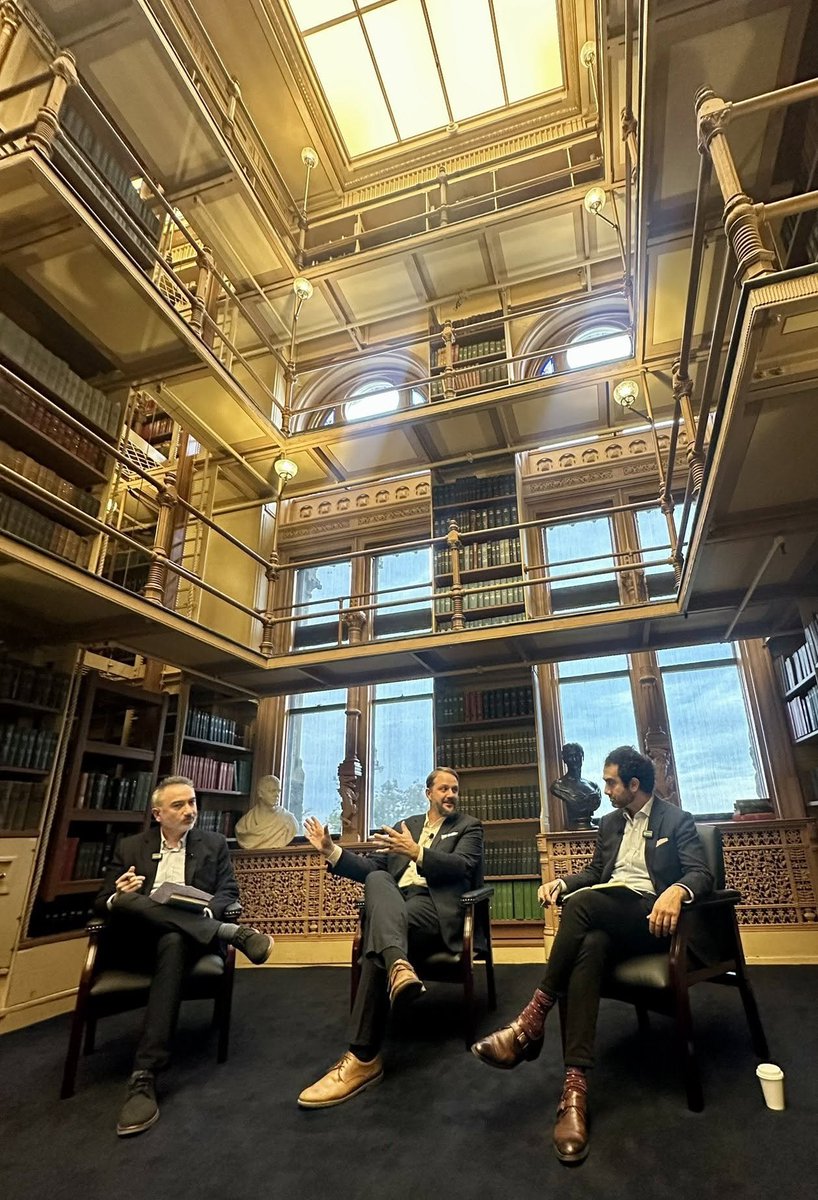
Last week, we had the Georgetown University launch of our new book — and our new Faith and the Future of Democracy Initiative, which I co-direct.
A great conversation with @AkyolinEnglish on CAN RELIGION SAVE DEMOCRACY?
Learn more about the book: https://t.co/NxakaNaYgm
Christian nationalists don't have too much faith, they have too little.
If you don't have confidence in the persuasive power of gospel, you must commend it to a nation through either fear or force.
At the heart of Christian nationalism is a deep and gnawing atheism.
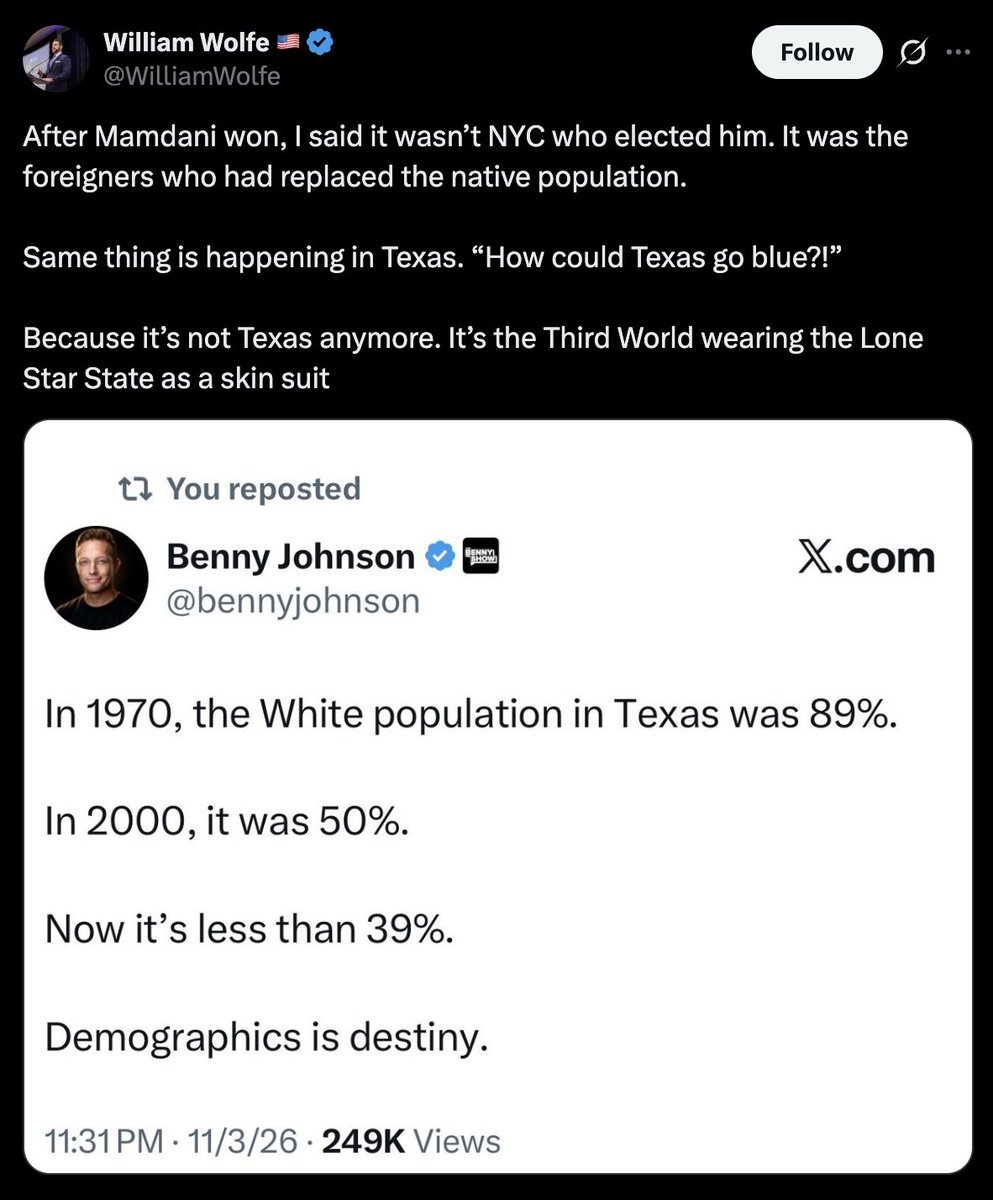
"its not Texas anymore. It's the Third World wearing the Lone Star State as a skin suit."
@WilliamWolfe
The historical success of race-based identity politics for the left and the right is, well, mixed. Be it woke left or woke right, it has a shelf life.