New modelling suggests that the balance between algae and invertebrates is shifting, with the potential to alter these ecosystems in profound and irreversible ways.
https://t.co/qlURzs1Zzx
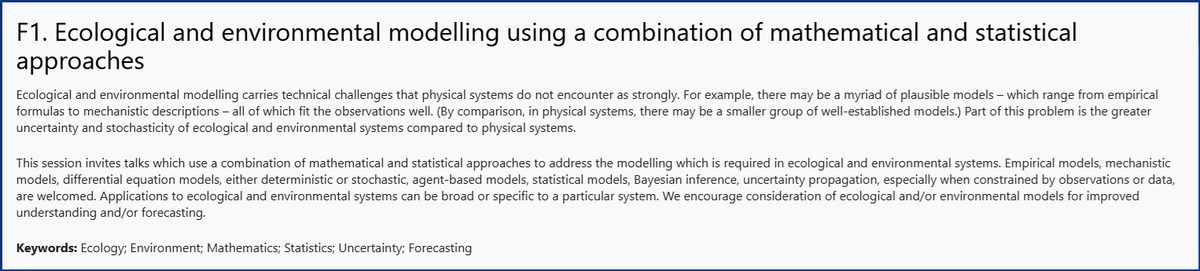
if you are
{attending MODSIM 2025 in Adelaide in Nov/Dec?}
and
{working on environmental or ecological models?}
then
{consider submitting an abstract to this session!}
https://t.co/Byb7CqkVrw
Thank you and I hope this course and/or code is useful to you in some way. :)
Any questions, feel free to email me ([email protected]).
https://t.co/frD3dTnYyb
4/4
Want to do "analysis of sloppiness" in Python?
I've just posted full Python code examples for this + PDF slides explaining how to do it, in a GitHub repository....!
https://t.co/frD3dTnYyb
It contains:
1/4
-> Interpreting model sloppiness outputs, and connections to other data-informing approaches
This repository is an elaboration of an excellent paper on the topic by Gloria Milena Monsalve Bravo - https://t.co/pHm4pzsEUD
3/4
Just published research from a Centre team led by @MD_Akinlotan introduces new metrics for assessing the value of making additional measurements in ecological management decisions. Unlike traditional value of information analysis... (🧵1/3)
Paper link: https://t.co/XVlCuEBLKS
Now published in JGR Biogeosciences!
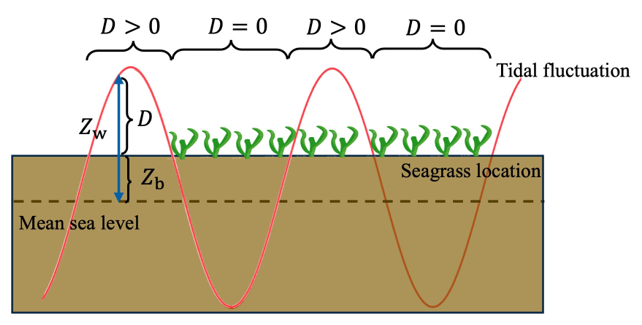
"Trade-Off Between Light Deprivation and Desiccation in Intertidal Seagrasses Due To Periodic Tidal Inundation and Exposure: Insights From a Data-Calibrated Model"
Led by Xinyan Wang, w/ Dongdong Shao (BNU).
https://t.co/EenbPlCoLa
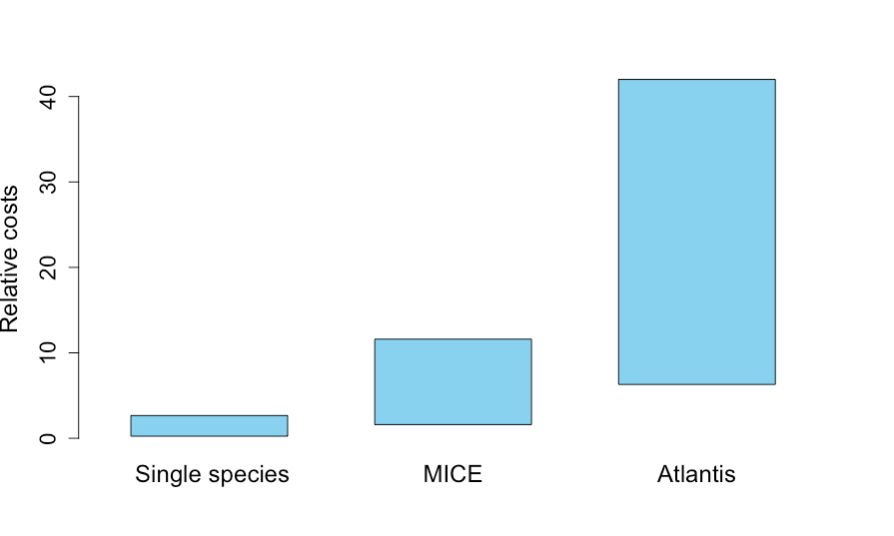
How much does a model cost? Our new paper reports the costs of different ecosystem models to support fisheries. We should consider cost-benefit tradeoffs when selecting modelling frameworks for ecological decisions https://t.co/N6l0rb7Hhu. free version 👉 https://t.co/0VGRZjHXRm
We tell decision-makers you need to specify objectives accounting for costs. Shouldn't we hold modelers to the same standards? Different models have different benefits & costs. See our new paper on cost-benefit analyses of ecosystem models for fisheries https://t.co/N6l0rb7Hhu
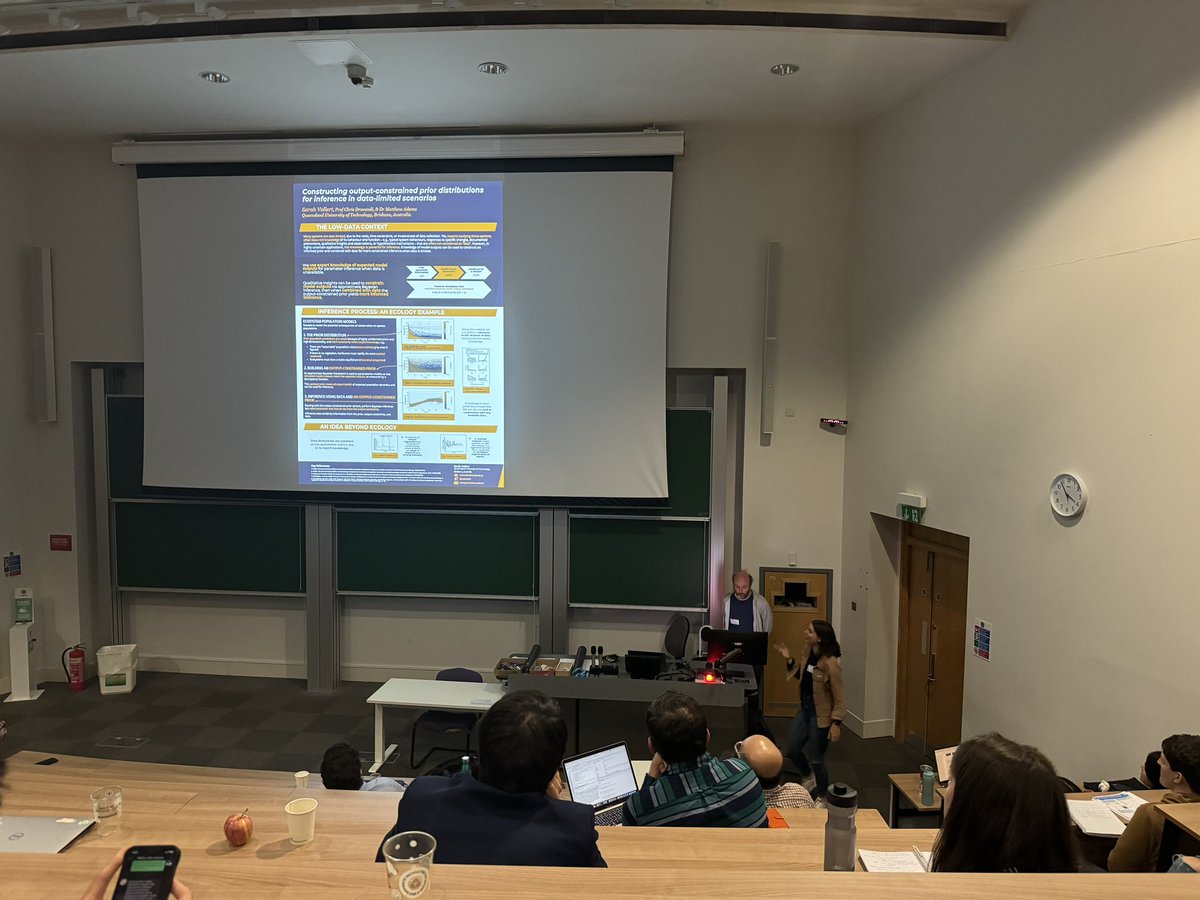
It sometimes take months to model the effects of conservations actions on a complex ecosystem. But just-published research led by Centre PhD Candidate @SarahVollert uses the latest #DataScience techniques to cut that time from months to hours!
https://t.co/ICYAI9OwiB @PLOSONE
New preprint! First paper by Elise Mills!
"A generalised sigmoid population growth model with energy dependence: application to quantify the tipping point for Antarctic shallow seabed algae"
Joint w/ Graeme Clark, @ProfMJSimpson, Mark Baird
https://t.co/HxSm2Elvnw
@saef_arc
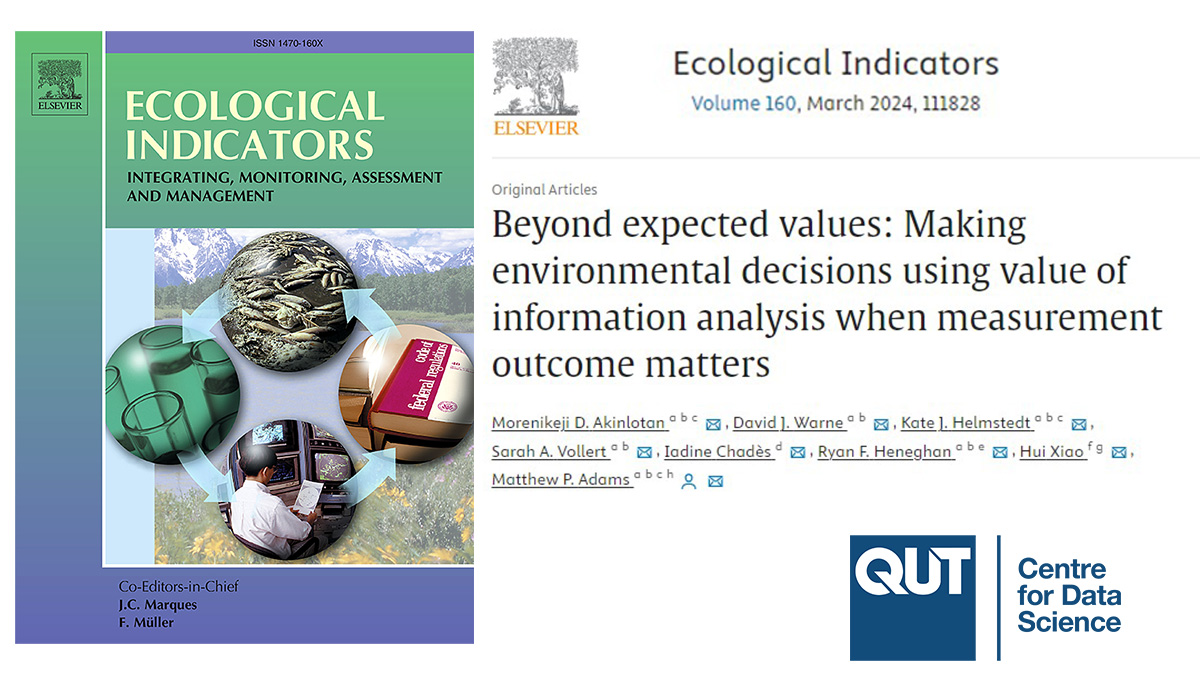
Now published in Ecological Indicators:
Value of information: how to compute risk and uncertainty metrics + the mathematical link to optimal design!
Led by @MD_Akinlotan , w/ @DavidJWarne@KateHelmstedt@SarahVollert @iadinec Ryan Heneghan @Hui_Xiaoooo
https://t.co/rEByiWtrjx
New preprint!
A guide to modelling intertidal seagrass.
https://t.co/7CuV2F3zyO
We also show an "optimal elevation" balancing light deprivation and desiccation stressors.
Led by visiting PhD student Xinyan Wang, joint with Dongdong Shao.
Now published in Inverse Problems!
"Component-wise iterative ensemble Kalman inversion for static Bayesian models with unknown measurement error covariance"
Led by @ImkeBotha w/ @dtfraz, Dang Tran, Fred Bennett, and @chris_drovandi.
https://t.co/LMRLCf4w0c