The most sincere explanation so far. We might avoid the worst case of the fourth systemic risk-driven global crisis but all most experienced people in the energy domain are extremely worried right now.
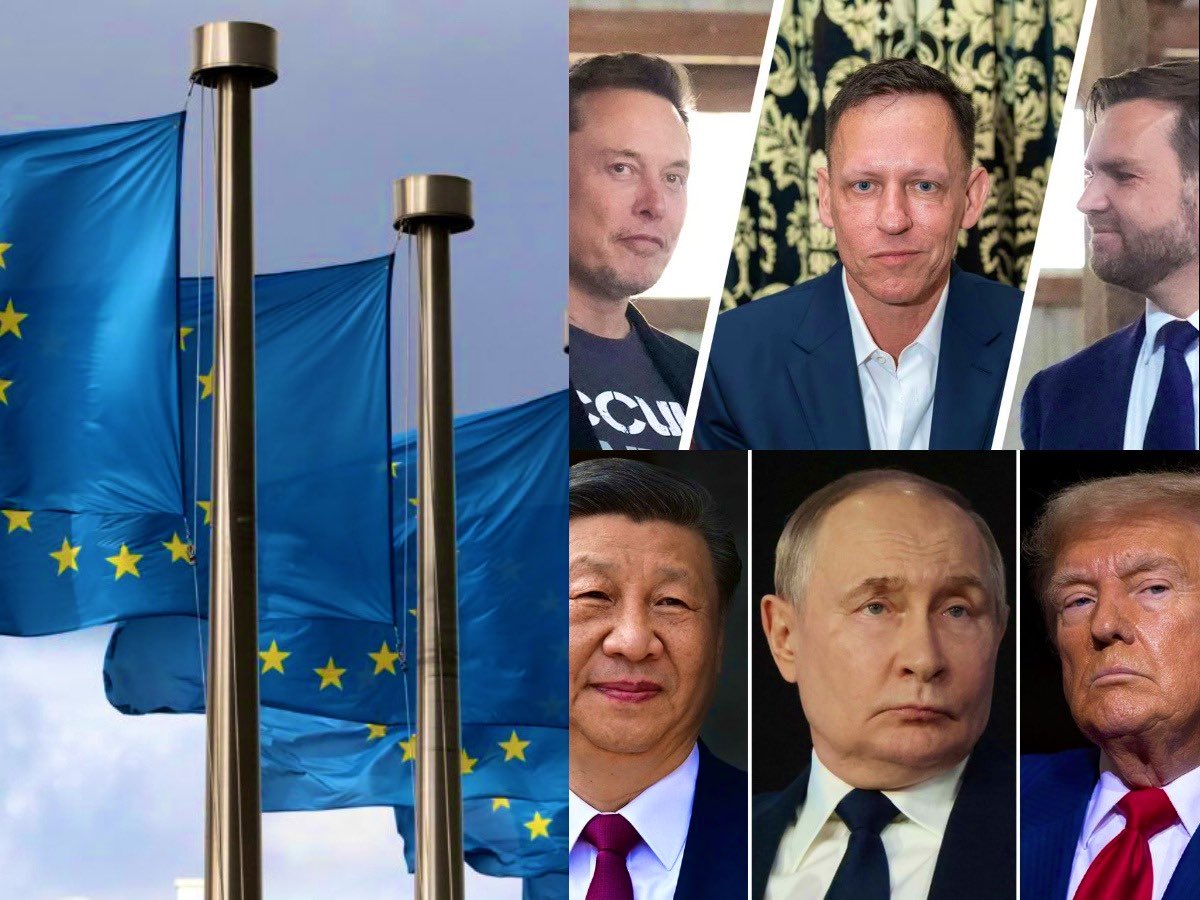
France 🇫🇷 got €93 billion investment out of which Japan 🇯🇵 (Soft Bank) alone invests €45billion into French 🇫🇷 nuclear ☢️, tech, AI & data.
This isn’t business; it’s an astronomic geo-economic investment. Meaning: US 🇺🇸China 🇨🇳 are unpredictable & Japan 🇯🇵 hedges to Europe ⤵️
«Sauriez-vous nommer trois Chinois vivants ?»
Ce test ne vise personne, mais cherche à provoquer une prise de conscience collective.
La Chine est en train de définir le XXIe siècle.
Si nous voulons y entrer, il faut s'intéresser à ce qui s'y pense—ou ne peut pas s'y penser.
« Nous fascinent les livres qui nous lisent, à notre corps défendant, et nous donnent accès à nos propres secrets. » (Régis Debray, Le Stupéfiant Image, 2023)
Tableau de Renoir
People are going to tell you to run around like a chicken with its head cut off chasing AI.
Do the opposite. Slow down. Read books. Write. Cultivate your own voice.
The people who lean into AI the most are all going to sound the same, which is why you need to be different.
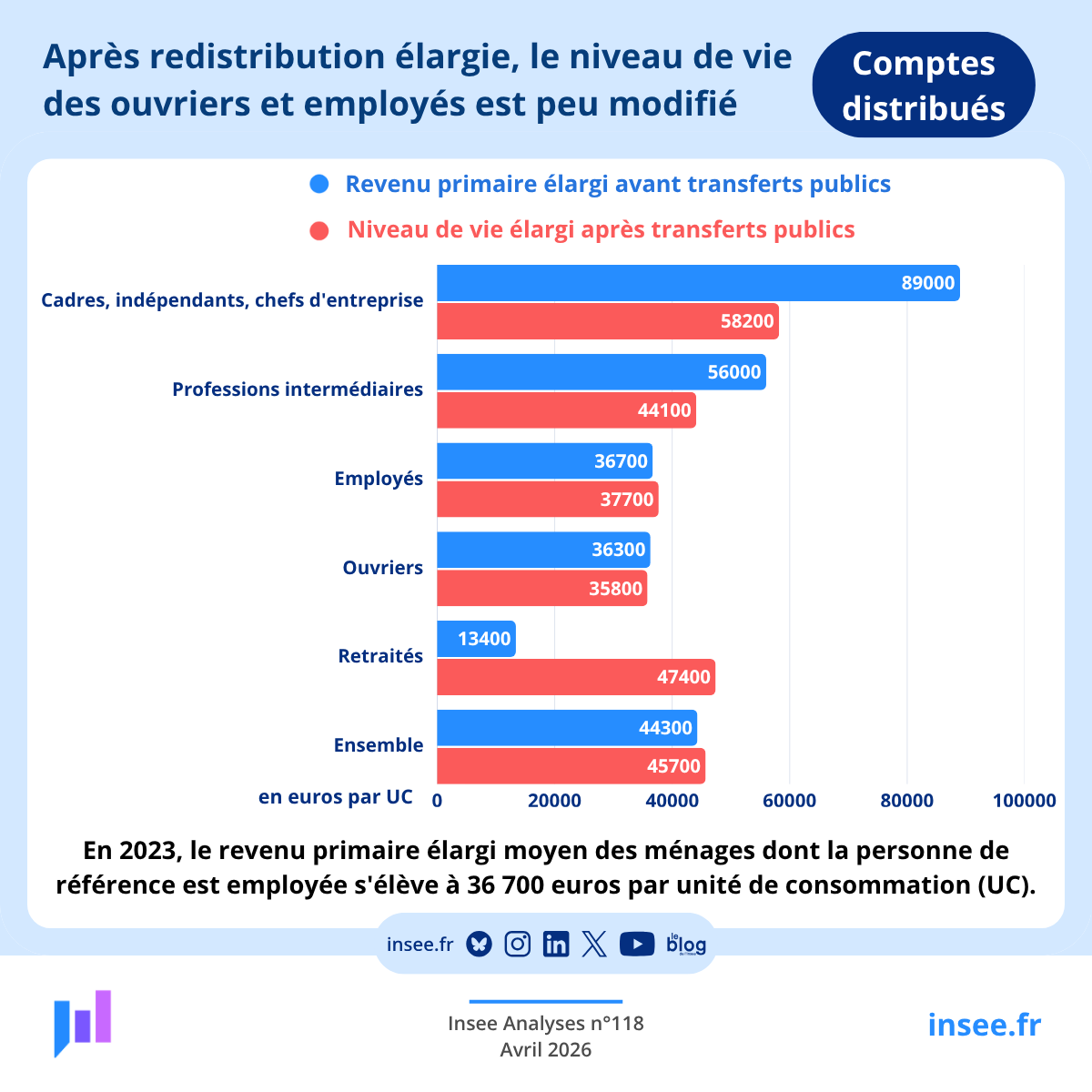
#Redistribution | Après redistribution publique nationale, le niveau de vie élargi moyen des ménages actifs employés ou ouvriers est peu modifié.
👉 https://t.co/3IlgVnBqon
Folks want to extrapolate outcomes continuously. Everyone wants to be Nostradamus.
Pundits behave as if a large enough pile of facts can abolish uncertainty. The ideological pundits interpret everything through the same lens. No matter the facts, they arrive at the same outcome: the fall of Russia or Ukraine, the guaranteed pacifism of Trump. Then there is the moral layer as well. Everyone is more moral, more ethical, and if you do not agree with them, you are the immoral one.
That has always been a recurring cultural error through history . What changes across eras is the vocabulary. The old world had augurs, oracles, court historians, theologians, and imperial strategists.
We have pundits, influencers, historians, analysts, podcasts, models, data dashboards, intelligence communities, and panels.
The conceit is the same: that command over information gives command over consequence and outcome , that one’s ego can extrapolate away obvious uncertainty.
How many now declare Trump a failure and Iran the winner? How many declare China the winner, or the US the winner?
Rumsfeld was useful on this because he understood that reality does not present itself as a closed system. Some things are known. Some things are known to be uncertain. Then there are the unknown unknowns: the forces, reactions, second-order effects, and concealed conditions that only reveal themselves in motion.
If we want to ground ourselves in reality then uncertainty is part of that ground
Rumsfeld made one of the more intelligent observations about political reality to come out of that era.
The world is not a static brief. It is an unfolding field of interaction, a pinball machine more than a chessboard.
History is full of elites mistaking situational awareness for predictive mastery. Croesus thought the oracle’s warning could be read cleanly and learned too late that interpretation is where ruin enters. Europe in 1914 believed mobilisation schedules, alliance maps, and industrial capacity gave them a rational grasp of war’s likely path. Instead they got slaughter, collapse, and a new century of disorder. Iraq showed the same pattern in modern form: rapid battlefield success, followed by consequences that the planners had neither contained nor really conceived.
That is the delusion of our culture, though it belongs to many cultures before it. People imagine that if they gather enough facts, model enough variables, or speak with enough authority, they can turn history into a managed sequence.
Yet history tells us the opposite.
Facts and analysis matter. Serious people should know as much as they possibly can. But mastery of facts never produces mastery of outcomes.
It gives you a better map of the terrain, but it won’t remove the fog, the friction, or the existence of forces you can’t even know are there.
Nobody knows the outcome of Iran and the US. Pretending otherwise is part of the disease.
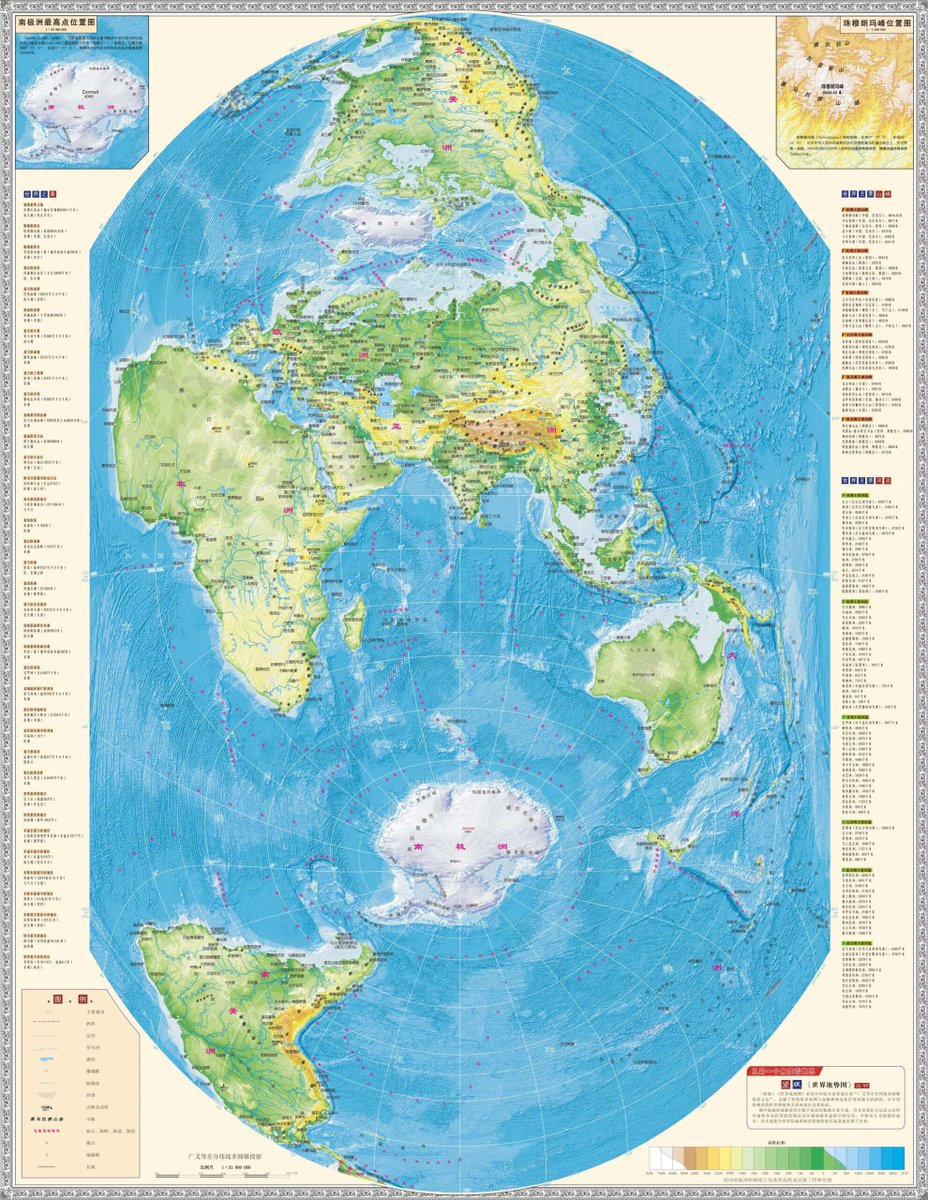
Merci @RollandNadege de mettre sous nos yeux cette carte étonnante adoptée par la Commission militaire centrale du PCC.
Tout y est.
La dislocation de l'Amérique—la marginalisation de l'Atlantique et de l'Europe.
La projection de la Chine de Xi comme puissance planétaire.
CEOs and managers are asking themselves: why should I care about geopolitics? They may not care about geopolitics but geopolitics cares about them. Two out of four systemic risk-induced global crises with multiplicative cascading effects emerged from geopolitics - Ukraine & Iran.
I’ve learned the following from dealing with clients in both public and private sector: you can’t blame people for lack of systems thinking and strategic foresight - these are skills you develop over decades. Thus, you can’t blame them for the lack of skills to face complexity
& volatility of today’s world. It’s self-chosen negligence and ignorance. Unfortunately, we all pay higher price afterwards.
The Strait of Hormuz has become the most visible Cold War 2.0 fault line in history right now. Here’s why what just happened matters.
Iran declared the strait closed to all international shipping, with one explicit exemption: Chinese and Russian vessels only, citing Beijing and Moscow’s “continued diplomatic and economic support.”
Trump responded on Truth Social minutes ago:
“Effective IMMEDIATELY, I have ordered the DFC to provide political risk insurance for ALL Maritime Trade through the Gulf. If necessary, the United States Navy will begin escorting tankers through the Strait of Hormuz. No matter what, the United States will ensure the FREE FLOW of ENERGY to the WORLD.”
Let that sink in.
Iran just physically drew the DragonBear axis on a map. Not rhetorically. With naval exclusion zones.
Trump just ordered the US Navy to break that exclusion.
We now have:
→ Iran permitting Chinese/Russian ships
→ US Navy ordered to escort Western tankers
→ IRGC authorised to “directly target and neutralise” unauthorised vessels
→ US Fifth Fleet already at high alert
Two competing global orders are about to occupy the same 21-mile-wide strait simultaneously.
The question is not whether the US Navy can force the strait open. It can. The question is what Iran hits next when it does, and whether Beijing uses its new position as Iran’s preferred maritime partner to extract concessions from both sides.
China is the only actor that benefits from being inside the exclusion zone while the US and Iran escalate around it.
That is Cold War 2.0. Live. In the Strait of Hormuz.
More in tomorrow’s webinar “The World After February” as this unfolds.
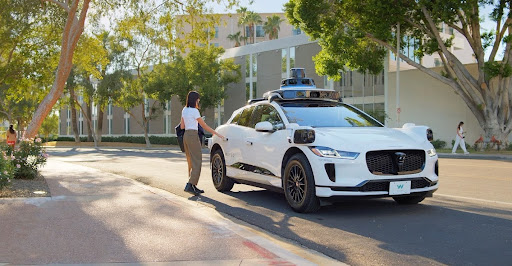
🦔 Waymo's "self-driving" taxis are being guided by workers in the Philippines. During a Congressional hearing, Waymo's chief safety officer admitted that when vehicles encounter tricky situations, they send requests to human operators overseas who view real-time camera feeds and help determine what lane to pick or propose paths for the vehicle to consider.
Waymo says the operators "provide guidance" but don't "remotely drive" the vehicles. The software is "always in charge of the dynamic driving tasks."
Senator Ed Markey wasn't buying it: "Having people overseas influencing American vehicles is a safety issue. The information the operators receive could be out of date. It could introduce tremendous cybersecurity vulnerabilities."
Tesla's VP of vehicle engineering confirmed they use similar remote operators.
My Take
When the San Francisco blackout hit, Waymos stopped in the middle of roads and blocked traffic because the support system they depend on went down. The vehicles only work reliably on specific routes they've been heavily trained on, and road construction, changed signage, or lost internet are still unsolved problems. The AI handles the routine driving, but when it gets confused, someone in the Philippines decides what lane to take.
The AI gets the headline, the valuation, and the capex justification while the humans doing the hard work are overseas and invisible. We saw it with RentAHuman, where AI agents hire humans to complete tasks they can't do. We saw it with data labeling operations that train the models. Now we're seeing it with autonomous vehicles. The technology is real but not as autonomous as the marketing suggests, and the economics only work because the human labor underneath is cheap and unregulated. I wonder how many other AI success stories would look different if we knew who was actually in the loop.
Hedgie🤗