@UB1UB2@CrimeLdn Used to be called “van dragging” back in the day. It’s been a problem, particularly in Central London, for decades. Not a new phenomenon. What is new is the social media reporting/recording, so lots of people think it’s new, and a symptom of so called ‘Broken Britain’
The funniest maths in modern environmentalism.
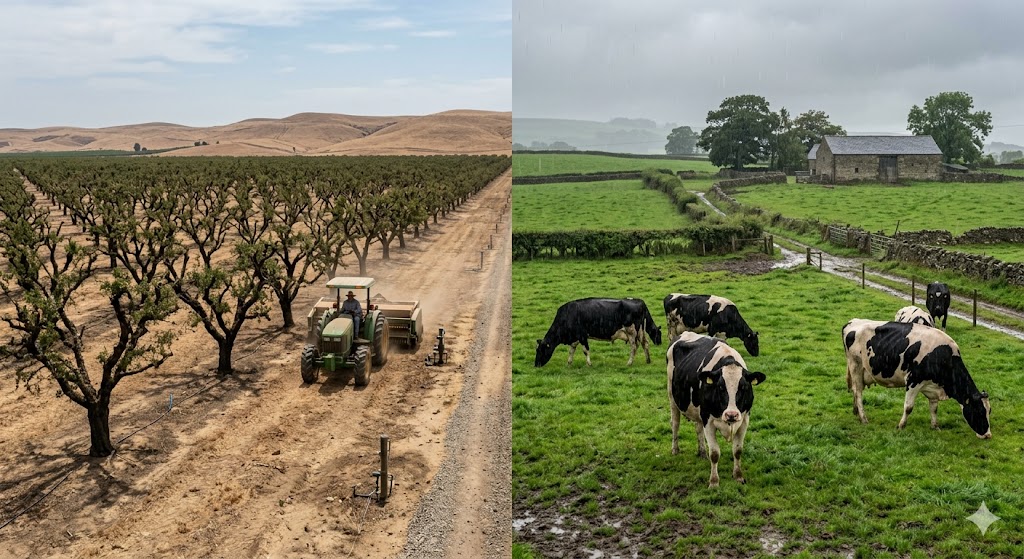
One almond requires 12 litres of irrigated water to produce. Peer-reviewed, ScienceDirect, 2017. A glass of almond milk contains roughly 50 of them. 600 litres of water before the carton is filled.
The water comes from the San Joaquin Valley in California, which sits over one of the most over-extracted aquifers on earth. The valley floor has subsided by up to nine metres in places due to groundwater depletion. The carton is then refrigerated, sailed across the Atlantic, refrigerated again, lorried to a Manchester Tesco, and bought by someone who is concerned about the environmental impact of dairy.
Meanwhile, in Cheshire.
A British dairy cow drinks roughly 70 to 100 litres of water a day and produces around 28 litres of milk. That's about 3.5 litres of water per litre of milk. The water is rainwater that fell on her field or came from a local stream fed by the same rainwater. The rain was going to fall on the field whether the cow stood in it or not. 80% of her moisture intake comes from the grass itself, which is also rain.
She converts the grass, free of charge, into a litre of milk containing seven times the protein and four times the calcium of almond milk, and shipped roughly 18 miles to the same Tesco.
To recap.
600 litres of stolen aquifer, flown halfway round the world for nutritionally worthless beige water.
Or 3.5 litres of rain that was already falling, converted by an animal you can pet, into actual food.
The shopper picks the almond.
She has been told this is the ethical position.
The aquifer would like a word.
@JJSharpers@metpoliceuk Hopefully she did the ‘half a house brick in the handbag’ trick. Worked brilliantly (allegedly 😉). No baddie on earth ever made a complaint about being lamped with a WPC’s handbag 😂 (allegedly 😂)
There was a time when every adult in Britain owned at least one woollen jumper that had been knitted by a relative.
An Aran in cream báinín, smelling faintly of lanolin because the wool had never been scoured. A Fair Isle in eight muted colours from the dyer in Lerwick. A Guernsey in tight navy worsted from a port on the Channel. The yarn came off sheep grazing the same hillsides a great-grandfather had grazed sheep on. It was carded, spun, and knitted by a woman who had been doing it since she was nine.
The jumper lasted twenty years. It was warm when wet. It was naturally flame-retardant and did not melt onto your skin if a spark from the galley stove landed on it, which was not a hypothetical concern on a fishing boat.
The mill towns of Yorkshire and the Borders ran on this. Bradford alone had seventy-three worsted mills by 1836 and considerably more by 1900. Hebden Bridge, Halifax, Hawick, Galashiels, every river valley a chimney, every chimney a wage packet for the village around it.
Most of them are flats now. Or coffee shops. Or empty.
The decline started in the 1950s. By 1995 the British Wool Marketing Board had ninety-one thousand registered producers. By 2015 it had forty-six thousand. A British sheep fleece in 2026 is, in many cases, worth less than the cost of paying the shearer to remove it. Some farmers compost the wool. Some pay to have it taken away as agricultural waste. The same fleece their grandfathers had clothed the country with is being treated as a disposal problem.
The jumper in your wardrobe is now polyester, manufactured in Bangladesh from petroleum, shedding microplastic fibres into the washing machine on every cycle, most of them ending up in the ocean and staying there for the next three hundred years.
The sheep is still on the hillside. Still growing the fleece. Still needing the shear.
Waiting for someone to remember what it was for.
@KatieMagnet I also have one in my garden. It’s lovely hearing the humming of the bees all day. They’re in pollen heaven ☺️. Sad that you’ll be losing it, but praying that you find a new source of joy (and happy 🐝)🙏☺️
@EmilySm43 Absolutely, every second would be a blessing. I wish that he had been on this earth for so much longer than he was. Miss him every single day ❤️🙏❤️
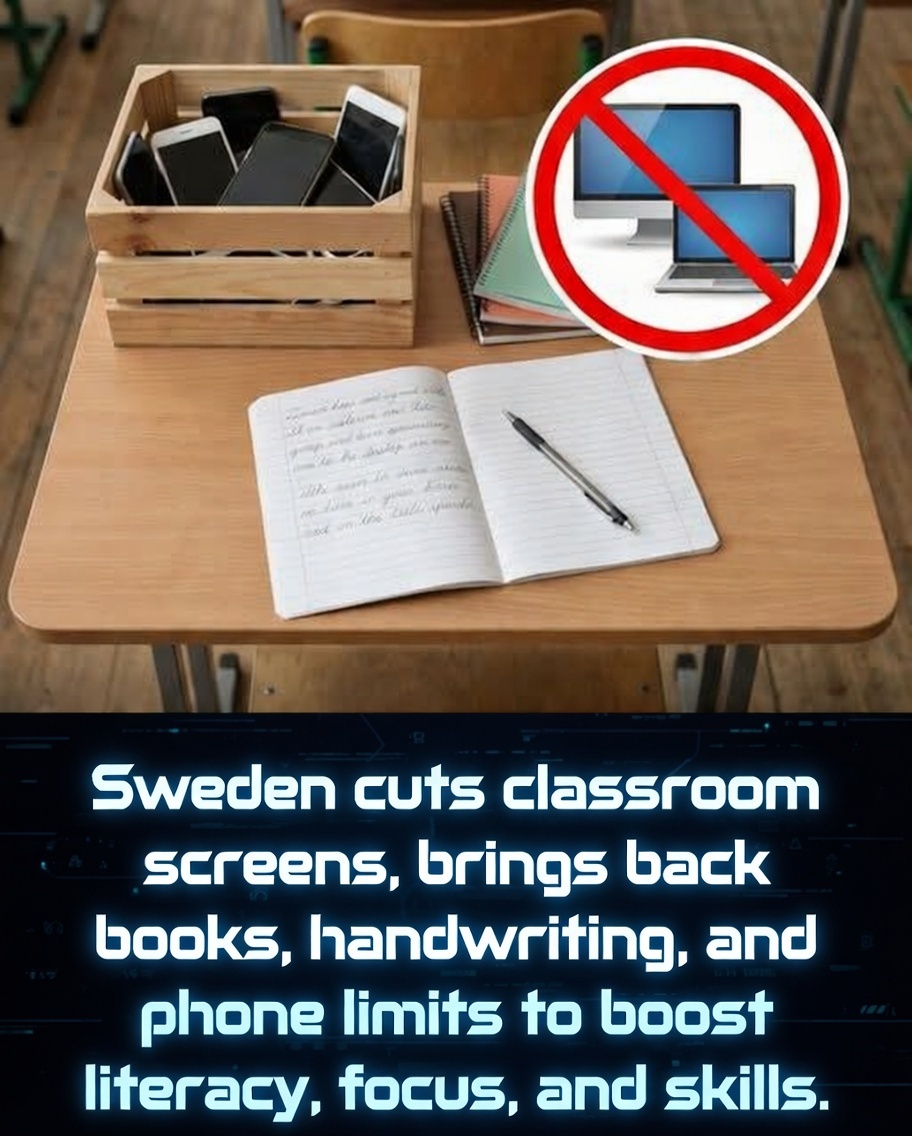
Sweden is committing more than €100 million to a sweeping classroom overhaul: replacing tablets and screens with traditional printed textbooks to help reverse falling student performance and sharpen focus.
After more than a decade of embracing digital-first education, Swedish authorities are now pivoting back to paper-based learning. Official data and recent studies cited by the Ministry of Education show that prolonged screen use in class has been linked to shorter attention spans, weaker reading comprehension, and reduced critical-thinking abilities.
Research consistently finds that reading on illuminated screens requires greater mental effort and invites more distractions compared to the calm, linear experience of physical books—factors believed to have contributed to declining academic outcomes in recent years.
Under the new plan, every student will receive printed textbooks for all core subjects, restoring books as the central learning tool. Digital devices and online resources will remain available as supportive tools, but they will no longer dominate daily instruction.
This bold €100+ million investment signals Sweden’s leadership in rethinking the role of technology in education. It underscores a broader, growing recognition worldwide: while screens provide speed and access, the hands-on, distraction-free engagement of physical books supports deeper concentration, stronger memory retention, and more effective long-term learning.
By choosing paper over pixels, Sweden is charting a path toward a more balanced, evidence-informed classroom future—one that puts proven pedagogical principles ahead of unchecked digital trends.
@MrNickKnowles@Purina My lovely old cat (RIP) was never a fan of commercial cat food, no matter how hungry she may have been. That was until I tried her with Untamed. She absolutely loved it. Not the cheapest, but much better value if bought directly from them.
This male Swan was away from his mate while recovering from an operation. Once he notices his partner, the joy of flying through the water is magnificent.
It’s worth watching their beautiful reunion. ❤️ 🦢
@MrsRatters@YesterdaysBrit1 I gave up on mine within my first 12 months. My sgt’s and Inspector eventually stopped giving me grief about it. It only ever had half a house brick in it anyway 😂
@piersmorgan I am biologically, genetically, and any other way I can describe it, female. I am also fairly tallish, have short hair, and don’t tend to dress “girly” (especially in inclement weather). I get called sir every so often. I don’t get offended, as no offence was ever intended.