"Thoughts on frameworks for DLL, daily profit targets, and give back rules?"
This single question covers the absolute core of longevity in this business. In this video, we dive deep into the mechanics of professional risk management, explaining why daily profit targets often lead to destructive behavior, how to structure your daily loss limits, and how a give-back rule protects your psychology during massive days.
If you want to manage risk like a true professional portfolio manager, you need to hear this breakdown.
@merrittblack@NTLiveMedia
https://t.co/5T8JkkFpEv
Every chart has lines, but not every line carries the same weight.
In trading, treating every minor inflection point the same way is a quick path to overtrading. True market reading comes from distinguishing a simple short-term rejection from a definitive "line in the sand" that completely shifts your directional bias.
To find consistency, you must first establish a cohesive market worldview. Once you can structure your execution around the relationship between key levels and expected destinations, you stop chasing the noise and start trading the narrative.
@merrittblack@NTLiveMedia
https://t.co/5T8JkkFpEv
You can map out the most accurate structural targets in the world, but you can never force the market to move cleanly to them.
Some days, the auction is simply content to revert to yesterday's balance and chew through volume rather than launching into a macro breakout. Longevity on the desk comes down to accepting the specific environment in front of you without frustration.
If you're managing to secure a few solid scale-outs but getting scratched on the core position, that isn't a failure... it's just trading. Protect your capital, keep your risk tightly defined, and stay ready for when the clean momentum finally returns.
Let's have a great session!
@merrittblack@NTLiveMedia
https://t.co/5T8JkkFXu3
The fastest way to ruin a promising trading career is treating every single session like a mandatory battle.
A robust process is built on selectivity, knowing your precise areas of interest and allowing the market to prove itself before you risk a single dollar. Waiting for confirmation at major distribution edges isn't missing the move; it is the most responsible way to manage risk.
This business is a marathon, and giving yourself the time to understand this rhythm is a critical part of your development. The market will always provide massive, high-probability opportunities over time, but only to those who have the composure to stay hands-off when nothing is lined up.
Stop over-managing the quiet sessions, respect your plan, and remember that protecting your capital today is what funds your execution tomorrow.
https://t.co/5T8JkkFXu3
Professional execution isn’t defined solely by the decisions made during the heat of the session; it’s built on the work done outside the active execution window. True consistency is forged in the "off-chart" hours, the deep analytical prep that serves as your ultimate stabilizer.
This commitment to the process is what allows a trader to maintain total objectivity, regardless of whether they are coming off a winning streak or a series of losses.
When you are grounded in a narrative built through rigorous preparation, your last trade no longer dictates your next move. You stop reacting to the P&L and start navigating the auction with confidence.
If your process is solid outside the charts, your emotions won't stand a chance during the session.
@merrittblack@NTLiveMedia
https://t.co/5T8JkkFpEv
This long execution by Merritt serves as a Masterclass in Trade Management and Sequencing.
By focusing on securing a great trade location, we put ourselves in a "position of strength" which helps us to shift our focus from trail stops or move to break-even as an emotional crutch to avoid discomfort (the noise of the tape) to a process-driven approach where constant analysis of variables takes place, using orderflow and market dynamics to drive conscious decisions rather than emotional reactions.
Professionalism lies in rejecting those emotional crutches to instead trust the laws of Auction Market Theory.
Mastery in trading isn't found in hyper-fixating on every tick; the real winning is in the waiting.
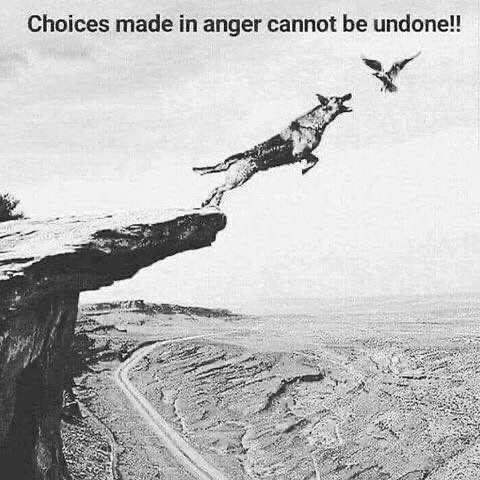
This image perfectly depicts the degenerate trader blowing accounts, over leveraging, and rage buying Evals.
Slow down.
You are not Elon Musk, you can not afford to blow 1k on accounts each week 😭
GM. here's a few hundred or maybe even 1000 words on how trading turns you into an alien. it'll always be free, you can help me by sharing as elon's algo hates links especially substack ones. k thanks.
https://t.co/1ly2CIGAF0
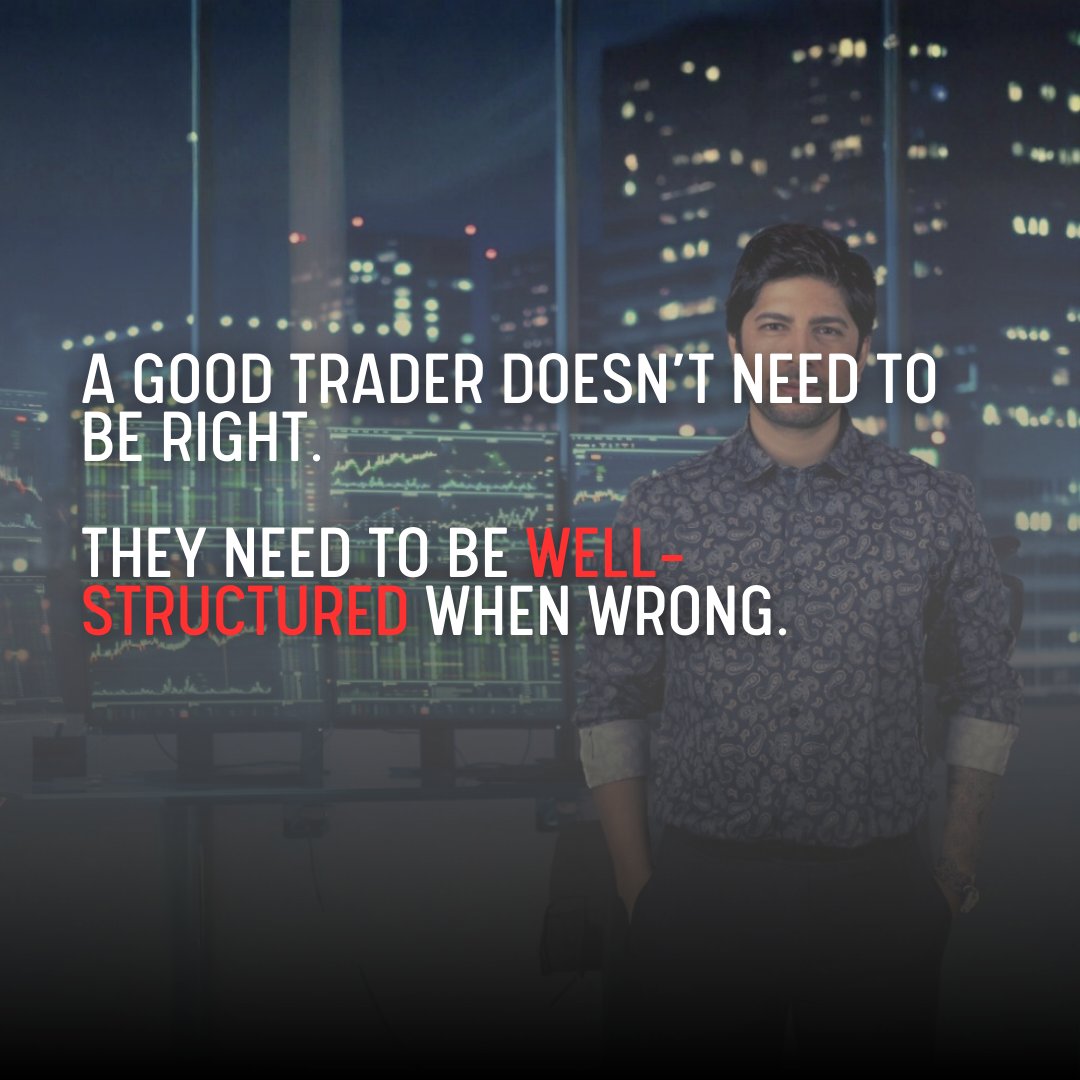
You’re human—errors are part of the game. A good trader isn’t defined by being right, but by how they handle being wrong. Structure—risk, rules, and discipline—turns mistakes into survivable events. Profits come from managing losses, not avoiding them.
【Probabilistic Thinking That Keeps You from Being Whipsawed by Trade Outcomes】
“If I had done this, I would have made money.”
“If I had done that, I wouldn’t have lost.”
When you look at the most recent trade, do you ever catch yourself thinking this way?
In fact, this pattern of thought is a dangerous trap for traders.
■ Any Outcome Can Occur
In markets, any outcome can occur.
If you have tested on a sufficiently large sample, it is essential to trust the law of large numbers rather than fixate on each individual result in front of you.
■ Commit to Playing the Probability Game
Once you have tested on a large sample, you must play “the probability game.”
That means accepting the entire distribution of outcomes that will occur.
Despite having completed your testing, riding the emotional swings of each result and thinking “I should have done X” is how you lose consistency.
The outcome in front of you is random, which is precisely why you exploit the law of large numbers through a large sample.
This particular result just happened to break this way.
It could just as easily have gone the other way.
There is no way to know that ex ante, which is why—under defined conditions and rules—you must keep executing the same trade.
■ The Law of Large Numbers and Randomness
Using probability means accepting randomness and harnessing the law of large numbers.
Even if the probability of heads on a coin toss is 50%, with only ten flips your observed frequency might be 20%.
As you increase the count to 100 or 1,000, it converges toward the true 50%.
Along that path of convergence, you can experience long stretches near 20%, including losing streaks and drawdowns—and, of course, winning streaks as well.
Any outcome is possible, but as you build a large sample, those outcomes are averaged out.
That is the law of large numbers.
Using probability is synonymous with using the law of large numbers, and we must accept every outcome that arises along the way.
Reverse‑engineering the reason for each win or loss ignores randomness and contradicts the very use of the law of large numbers.
■ Strategy Development vs. Post‑Test Execution
I can already hear the objection: “It’s important to consider what a win or a loss means.”
What I am saying, however, is expressly under the condition of “once you have tested with a sufficiently large sample.”
At the point you complete that testing, you need to operate as a player of the probability game.
If you are still building a strategy, it is crucial to examine results and form hypotheses.
But once you have tested across a large sample, you have no choice but to trust it.
If you let near‑term outcomes jerk you around and cannot trust your large‑sample test, you will never achieve consistency, and if you cannot leverage the law of large numbers, playing the probability game is impossible.
■ What a Mature Player Looks Like
Do not search for the meaning of each win or loss.
Just keep executing your rules.
That is the behavior you, as a player of the probability game, should adopt.
“Don’t look for meaning” may sound lazy, but it is not.
It is the stance of a mature player—one who accepts every possible event and turns randomness into an ally.
If this post was helpful, my book will take your probabilistic thinking to the next level.
📚 Get your copy here👇
https://t.co/tMFssKR6Oz
Many people tend to focus only on what they “should do” and on actions, while overlooking the importance of “what not to do” and “things you should not do” — in other words, the importance of not taking certain actions.
Probably, many people who do not succeed are simply doing “what not to do” too often.
If you really want to focus on “what you should do” or on taking action, make sure to first clarify “what not to do” and then faithfully stick to it.
Three important things you must understand to trade with probabilistic thinking🧵
No matter how much you claim "I'm thinking in terms of probability," without the three premises I'll introduce, you don't understand probability and can't truly "utilize" it.
🧵1/5