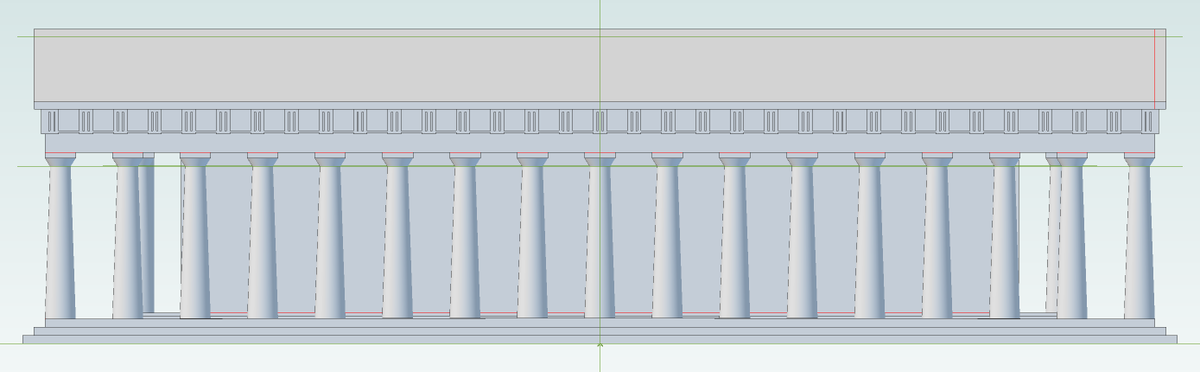
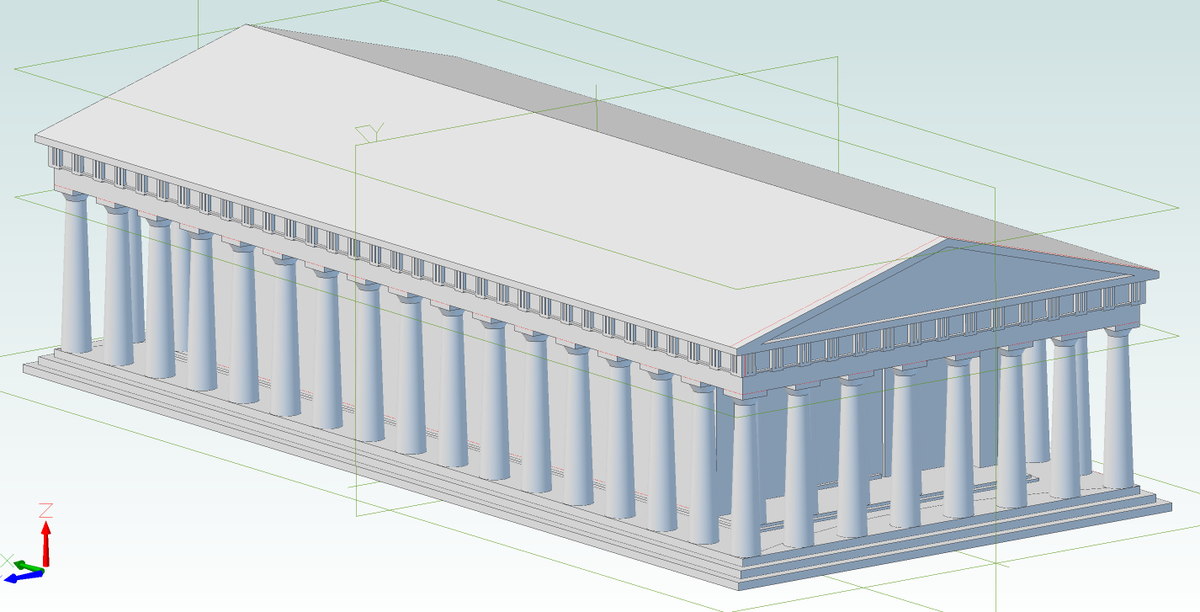
I chose to make one refinement as follows
The base of the Parthenon is not flat, but instead shaped like a dome, with the center of each side of the building slightly raised, only 11 cm over 69.5 m (one part in six hundred)
/26
When first approaching this project, I was planning to implement all the refinements I could discover. I quickly found this far too difficult
The craftsmanship of the Greeks is emphasized when even with modern tools, these refinements are still difficult to implement
/25
30. Yeroulanou, Marina. Metopes and Architecture: The Hephaisteion and the Parthenon. https://t.co/qIlau9dvSc pp. 424
Image: The British Museum. Study of a temple. https://t.co/Pl79YANcf6
When first approaching this project, I was planning to implement all the refinements I could discover. I quickly found this far too difficult
The craftsmanship of the Greeks is emphasized when even with modern tools, these refinements are still difficult to implement
/25
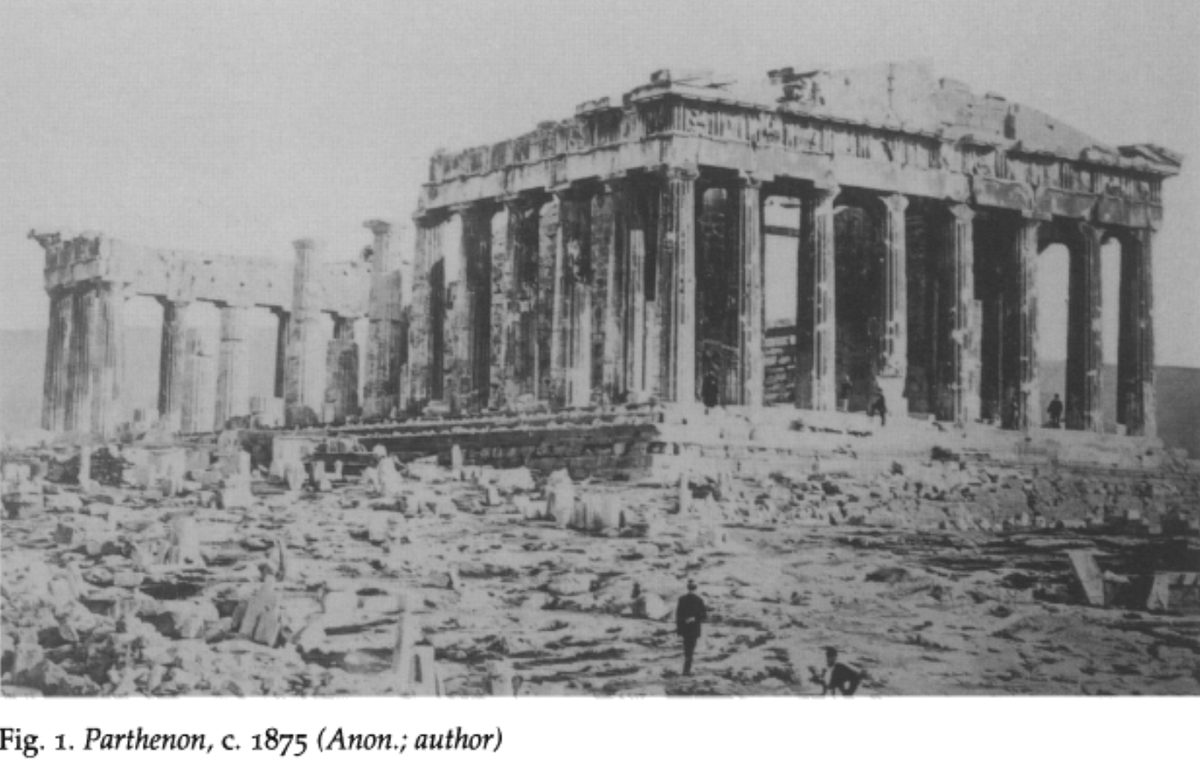
#CLST6 For my #Project4, I studied the architecture of the Parthenon, focusing on its precise proportions, symmetry & elaborate refinements
I created a 3D model of it using the CAD (Computer Aided Design) software Alibre Design Expert
(Citations by tweet at end of thread)
/1
Any architectural analysis of the Parthenon is incomplete without discussion of its “refinements”
These are small departures from flat surfaces or straight lines that are are used to make the building more aesthetically pleasing in various ways
/24