Plagiarism is not always obvious. That is why many people make the mistake without realizing it.
Many people think plagiarism only means copying entire paragraphs.
It does not.
In academic writing, plagiarism can also look like:
↳ careless paraphrasing
↳ missing citations
↳ copying a sentence “temporarily” and forgetting to change it
↳ reusing figures, tables, or text without proper credit
↳ recycling your own previous work without referencing it
That is how small writing habits turn into serious academic problems.
In research, credibility matters.
And protecting that credibility requires careful writing.
Here are 5 simple rules to avoid plagiarism in scientific writing.
1️⃣ Do not copy text directly
If the words are not yours, do not present them as yours.
If you use a sentence from another source, you must:
↳ place it in quotation marks
↳ cite the source properly
Clear attribution protects both the original author and your own integrity.
⸻
2️⃣ Write ideas in your own words
Understanding an idea means you can explain it clearly in your own language.
Do not simply rearrange a few words from the original text.
Instead:
↳ read the source carefully
↳ step away from the text
↳ explain the idea in your own way
↳ cite the source
Good paraphrasing shows comprehension.
⸻
3️⃣ When in doubt, cite
If you are unsure whether something needs a reference, it is usually safer to include one.
Citations show:
↳ where ideas originated
↳ how your work connects to existing research
↳ that you respect prior scholarship
Clear referencing strengthens your writing.
⸻
4️⃣ Do not recycle your own work carelessly
Reusing material from your previous publications without citation can create problems.
This includes:
↳ text
↳ tables
↳ figures
↳ datasets
Even your own work should be referenced properly.
⸻
5️⃣ Ask permission when required
If you plan to reuse a figure, table, or graphic from another source, permission may be required.
Always:
↳ request permission if necessary
↳ cite the original source clearly
Respecting intellectual ownership is part of responsible scholarship.
⸻
Plagiarism is usually the result of small habits repeated over time.
Good academic writing is careful, transparent, and ethical.
Save this before writing your next paper, thesis, or abstract.
♻️ Repost to help a student or researcher avoid a costly mistake.
———-
Link to Full article in the comments.
Ober, H., Simon, S.I. & Elson, D. Five Simple Rules to Avoid Plagiarism. Ann Biomed Eng 41
#AcademicWriting
1. https://t.co/qzgicZPubA
Will help you check for plagiarism before submitting any essay documents.
2. https://t.co/sSAU2taJUO
Will help you correct all grammatical errors and spellings.
RT and pass it on.
PhD Students - Why your research paper will get rejected?
Find out before submission using these 3 steps.
1. Go to https://t.co/pkVRudElqF
2. Upload your research paper
3. 𝐑𝐞𝐯𝐢𝐞𝐰𝐞𝐫𝟑 will catch critical issues in your paper.
𝐖𝐡𝐚𝐭 𝐤𝐢𝐧𝐝 𝐨𝐟 𝐢𝐬𝐬𝐮𝐞𝐬 𝐑𝐞𝐯𝐢𝐞𝐰𝐞𝐫𝟑 𝐜𝐚𝐭𝐜𝐡𝐞𝐬?
➤ Issues in study design
➤ Issues in novelty
➤ Issues in significance of the study
➤ Issues in methodology
➤ Issues in findings
➤ Issues in statistical tests
➤ Issues in conclusions drawn
➤ Issues in data analysis
➤ Issues in presentation
After this, work on these issues to fix them.
Once done, go ahead and submit your paper.
PS: Reviewer3 encrypts your paper & never use it for training.
Try Reviewer3 here: https://t.co/pkVRudElqF
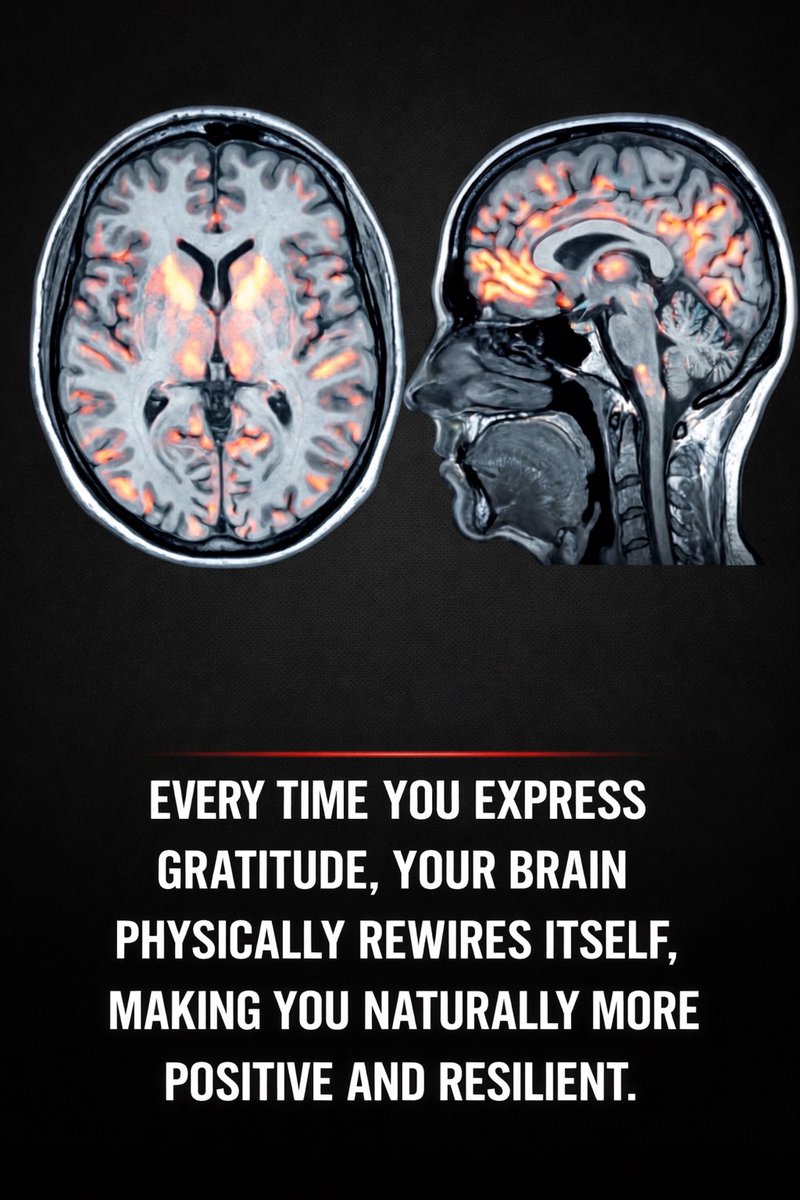
Research shows that regularly practicing gratitude can lead to measurable changes in the brain. This effect is driven by neuroplasticity, the brain’s ability to reorganize itself based on repeated thoughts and behaviors. When people intentionally focus on appreciation, neural pathways involved in emotional control and coping become stronger.
Grateful thinking also stimulates the release of dopamine and serotonin, chemicals linked to pleasure and motivation, while helping reduce cortisol, the hormone associated with stress. Brain regions such as the prefrontal cortex and hypothalamus become more active, supporting improved mood regulation and overall mental health.
Over time, gratitude does more than provide short-term emotional relief. It gradually shifts the brain away from its natural bias toward threat detection and toward noticing positive experiences instead. Simple habits like writing down what you’re thankful for or expressing appreciation aloud reinforce these patterns, making optimistic thinking more automatic.
Studies indicate that this repeated practice builds lasting neural connections, promoting emotional balance, resilience, and well-being. In essence, regularly acknowledging what’s going well can retrain the brain showing that small daily moments of gratitude can produce meaningful, long-term psychological benefits.
I spent 3 weeks analyzing the most powerful ChatGPT research prompts that actual academics are hiding.
The difference between spending 6 hours on literature review vs 8 minutes.
12 prompts I use daily for my PhD work.
Steal them 👇
If you're unemployed I urge you to consider making money online. I have already made $744.93 (R12 190.78) so far in 2026 using FREE apps. Check the thread for apps I used to make this amount.
22 BENEFITS OF A CUP OF MILK AND CLOVE WITH HOT WATER
Half teaspoon of crushed cloves mix with a cup of milk on an empty stomach will treat:
1. Infertility.
2. Sexual weakness.
3. Weakness of heart, stomach, liver and kidneys.
4. Malfunction of the heart and joints.
@snap_vino Mduduzi Shabalala and Relebohile Mofokeng have distinct tactical roles. Shabalala, an attacking midfielder for Kaizer Chiefs, excels in creativity, dribbling, and long passing, focusing on playmaking. Mofokeng, a versatile midfielder or winger for Orlando Pirates, balances offensive contributions (4 goals, 6 assists in 32 matches) with defensive reliability, using 1-2 combinations and strong positioning. Mofokeng benefits from Pirates' winning environment, enhancing his performance, while Shabalala faces challenges at Chiefs, potentially affecting consistency. Their styles reflect their teams' dynamics.