This is generally one of the problems with zk. Exploits become impossible to detect.
This is one of the reasons I was always skeptical of zk rollups which only publish state changes. A defi hack on such a chain would be insanely hard to debug, because the only thing that's visible would be a transaction that credits all the funds to the exploiter.
All of which makes me more bullish on constructions like Tempo Zones!
For the first time, contractors can get paid, hold, earn and spend, all inside the same app 💸
Introducing the Deel stablecoin wallet: hold earnings in DLUSD, earn rewards, spend anywhere, with no crypto exchange, separate accounts, or lost value in transit.
Launching in Latin America today, with APAC, MENA, and Africa to follow.
Coming soon for employees! 👀
Thanks to our partners at @Stablecoin, @privy_io, @tempo, @Morpho, and @Sentora for making this possible.
Read more in the comments 👇
Watching the @tempo team work (often over their shoulder at their office) is like watching a team of smart octopuses, each with eight arms, each playing several keyboards at the same time, making music together. 🐙🎹
This Slack + agents tool is a big reason how:
Morpho is now live on @tempo
Tempo handles the payments. Morpho puts idle balances to work.
Enterprises and applications can add onchain yield to their services with the open credit network for the world.
Valinor officially announces $25M seed round, led by @CastleIslandVC with participation from @PaulPPrager & Nazar Khan of TeraWulf, @NeoclassicCap, @Maven11Capital, Susquehanna Crypto, @Paxos, @thefintechfund, @deptvc, @57blocks Capital, @bsqcapital, and others!
"Valinor is purpose-built to power a new era for credit markets, which it terms Open Credit: a blockchain-enabled infrastructure upgrade that expands the capital markets and improves outcomes for borrowers and lenders."
https://t.co/mzPPKyx97X
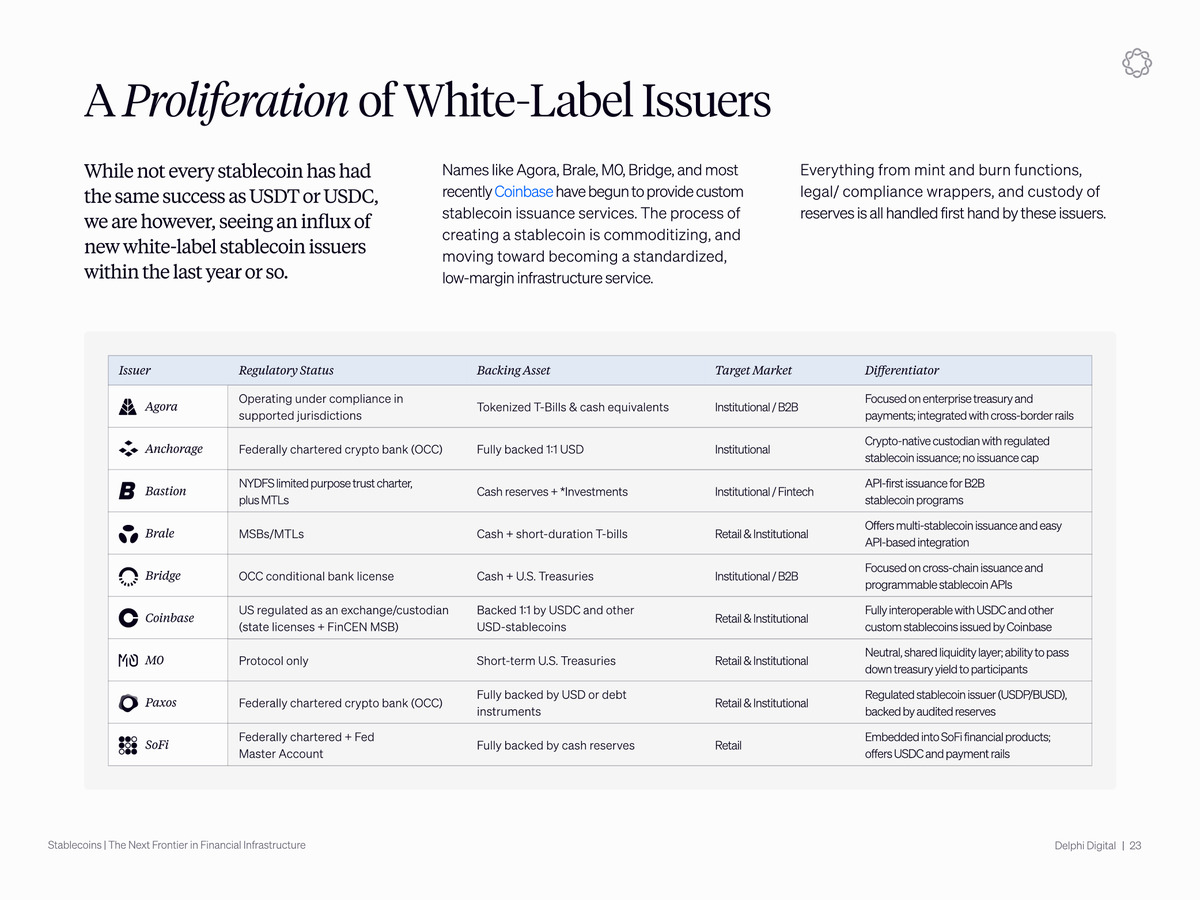
Stablecoin issuance is commoditizing.
Now a growing wave of white label issuers handle the entire stack.
Projects like Paxos, Bridge, Anchorage, and M0 are all providing issuance as a service. The process is becoming standardized and low-margin, which means the moat in stablecoins is shifting from who can issue to who has distribution.
That's why Tether and Circle have dominated for five years. Their edge was in liquidity depth and exchange integrations that created a flywheel no one else could replicate.
The long tail of stablecoin issuers won't win by competing head to head on those terms. The ones gaining traction are finding a different angle.
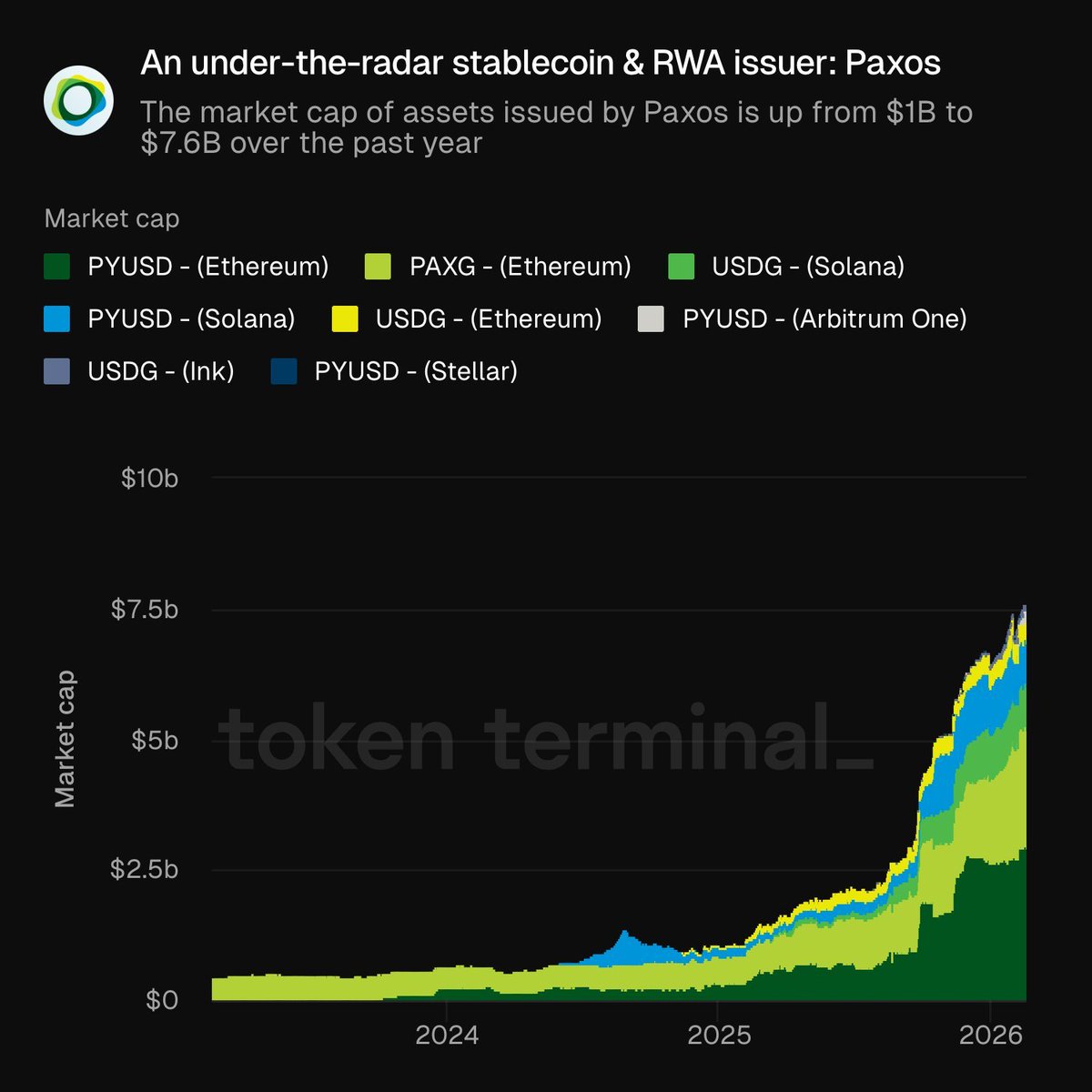
Paxos is one example. They provide issuance infrastructure and regulatory compliance while partners like PayPal handle distribution. That model has taken the market cap of Paxos-issued assets from roughly 1B to 7.75B in roughly one year.
Distribution is the moat.