Extremely happy that our work got accepted in #ATVB! We functionally profiled 400 biobank samples, linking cellular lipid uptake, storage and handling to treatment outcomes of statin therapy and residual cardiovascular risk.
https://t.co/juNgqzoaVP
Out now! We established a platform for functional characterization of gene variants, providing insight for 315 LDLR variants. Functional data improves cardiovascular risk assessment, going beyond "pathogenic" and "benign" groups. Important for #FH
https://t.co/RORf5cQvqI
Great attendance to the session on genetic contributions to cancer risk at @eshgsociety
Going on right now!!!
Very happy to chair this session together with @MaxTamlander
Thanks to the presenters for very good talks and the audience for excellent discussion.
What is the cardiovascular significance of adipose tissue surrounding the heart? Our study, published in @JAMACardio today, asked this question: https://t.co/Zkn1tmUkVP.
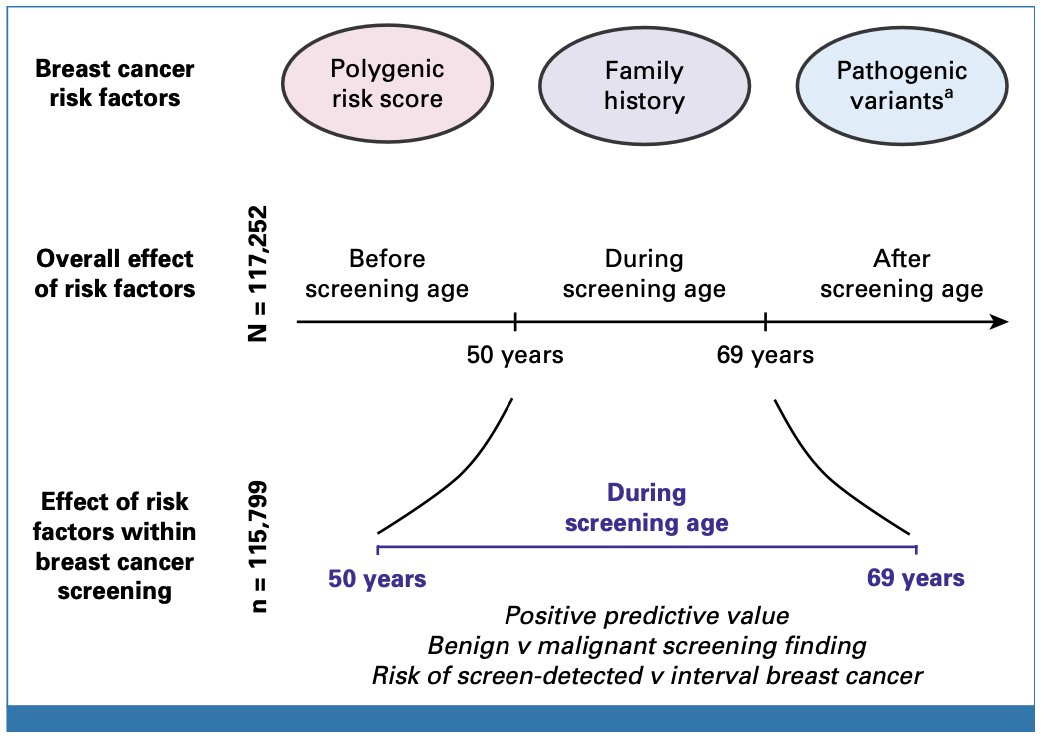
In our latest paper @JCO_ASCO, we demonstrate how inherited factors perform for risk assessment in real-life breast cancer screening data. A special focus is on a breast cancer polygenic risk score (PRS), which is a more recently identified inherited risk factor.
🙍🏽♀️ 117,252 women in @FinnGen_FI
☢️693,730 breast cancer screenings from the nationwide Mass Screening Registry within @CancerRegFi
https://t.co/bRlVmqipq3
Details follow in the thread:
How do inherited factors summarized in polygenic risk scores (PRS) impact the risk of colorectal cancer?
Our work now published @BrJCancer
Brief highlights from the paper with @brad_jermy@adductor@samrip@ninajmars and others!
https://t.co/BvrxDuQd3k
🧵1/n
Our study highlights opportunities for risk-based colorectal cancer screening arising from polygenic risk scores for colorectal cancer.
We are grateful for @FinnGen_FI, the biobanks and participants who have donated samples for making our work possible.
7/n
Hereditary risk of colorectal cancer should be assessed in a more comprehensive way, shows a study led by @FIMM_UH researchers. Using comprehensive genetic information, the age and frequency of screening could be tailored based on individual risk.
https://t.co/Zp6lJaag76
Perinnöllistä suolistosyöpäriskiä tulisi arvioida nykyistä kokonaisvaltaisemmin, uusi suomalaistutkimus osoittaa. Kattavaa geenitietoa hyödyntämällä seulontojen aloitusikää ja tiheyttä voitaisiin räätälöidä yksilöllisen riskin mukaan.
https://t.co/uiPAXrcl96
Out on @medrxivpreprint! We set-up an analysis platform and characterized >300 low-density lipoprotein receptor gene variants. Hope this will help in diagnosis of #FH and shed light on the genetic complexity of #hypercholesterolaemia@HelsinkiUniMed
https://t.co/r1NGCjY8Ia
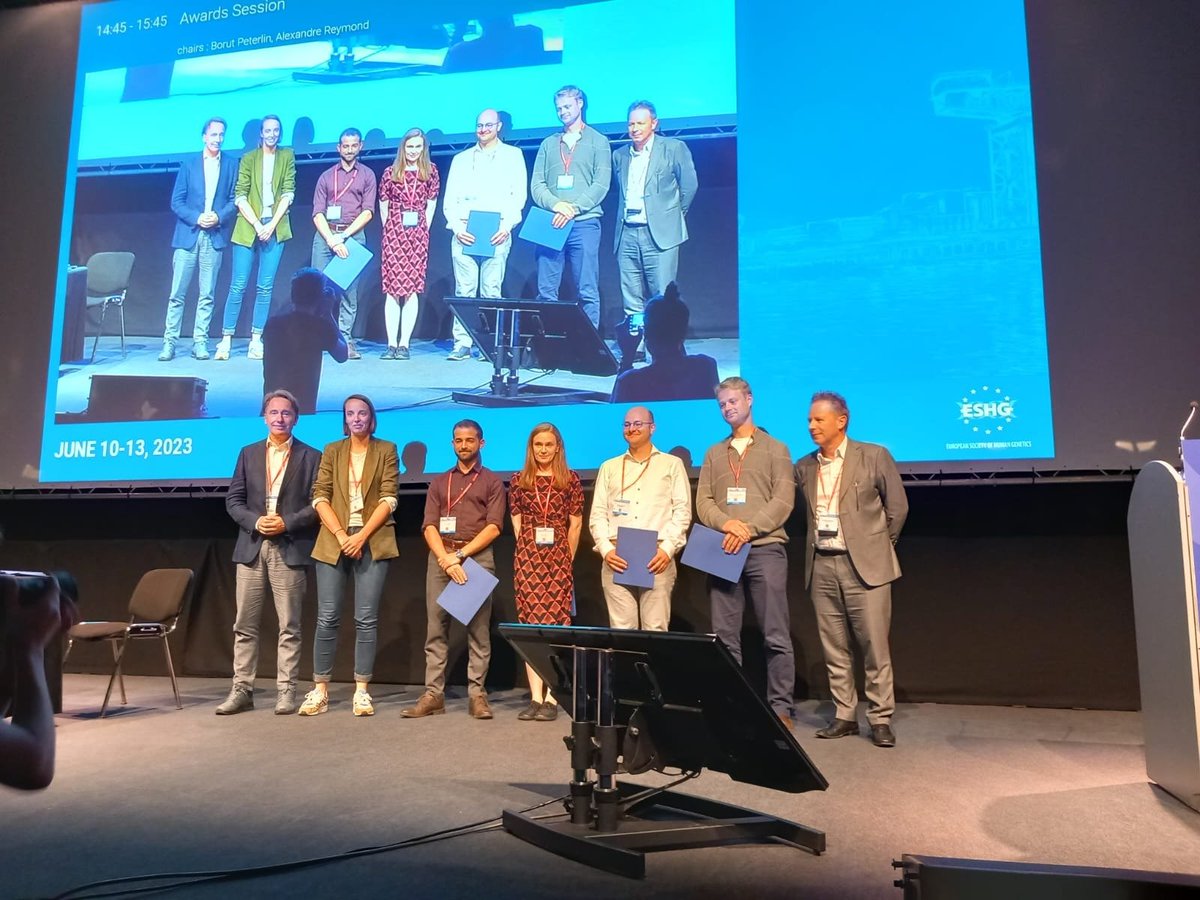
Wow! Very grateful to receive this award, big thank you to the organizers and committee members for the possibility to present our work at ESHG 2023, with special thanks to my awesome PhD advisors @ninajmars@samrip
See you at ESHG 2024!🇩🇪 #eshg2023
The ESHG Early Career Awardees 2023:
Anne Hebert, BE
Thomas Vanderstichele, UK
Wouter Steyaert, NL
Adam Jackson, UK
Lettie Rawlins, UK
Kristin Tsuo, US
Yuval Yogev, IL
Max Tamlander, FI
Jana Gurasashvili, UK
Congratulations to all! #eshg2023#genetics#genomics