I've launched endpointLabs 🚀 (Finally!)
Helping businesses reduce software costs, connect their systems and put AI to practical use.
Everything from marketing tracking and reporting to workflow automation.
New site is live. Take a look, and get in touch if I can help:
https://t.co/dtPJ2Brjle
DCA means buying as your cash comes in. You get paid, you buy.
Its whole job is to turn Cashflow/Income into coin.
Earmarking $182k in a script, or a smart contract, and letting it drip out for 6 months is a different move.
The money is already yours. Spreading it out means choosing to hold cash and buy later. On average, half of it sits idle for three months.
So what does that cost? I priced it off today's market. Options imply ~46% vol for BTC. Cash earns ~4%.
At market pricing, buying all at once and dripping it out are worth the same on average. Zero edge.
What changes is the path. Going all in ends ~22% behind the drip in 1 run out of 10, and ~26% ahead in another 1 out of 10.
The drip wins 57% of the time.
Going all in wins the other 43%, and wins bigger when it does.
The edge only shows up if you have a view. For every 10 points a year you think BTC beats cash, going all in is worth about 2.5% more of your stack. If your idle USDC earns nothing, the drip costs you about 1% on top.
Money arriving each month? DCA is the right tool. Buy as it lands.
Already holding the cash? Then you're choosing between a price view and how much swing you can sit through.
A script hides that choice. You still made it.
Time in the market is better than timing the market.
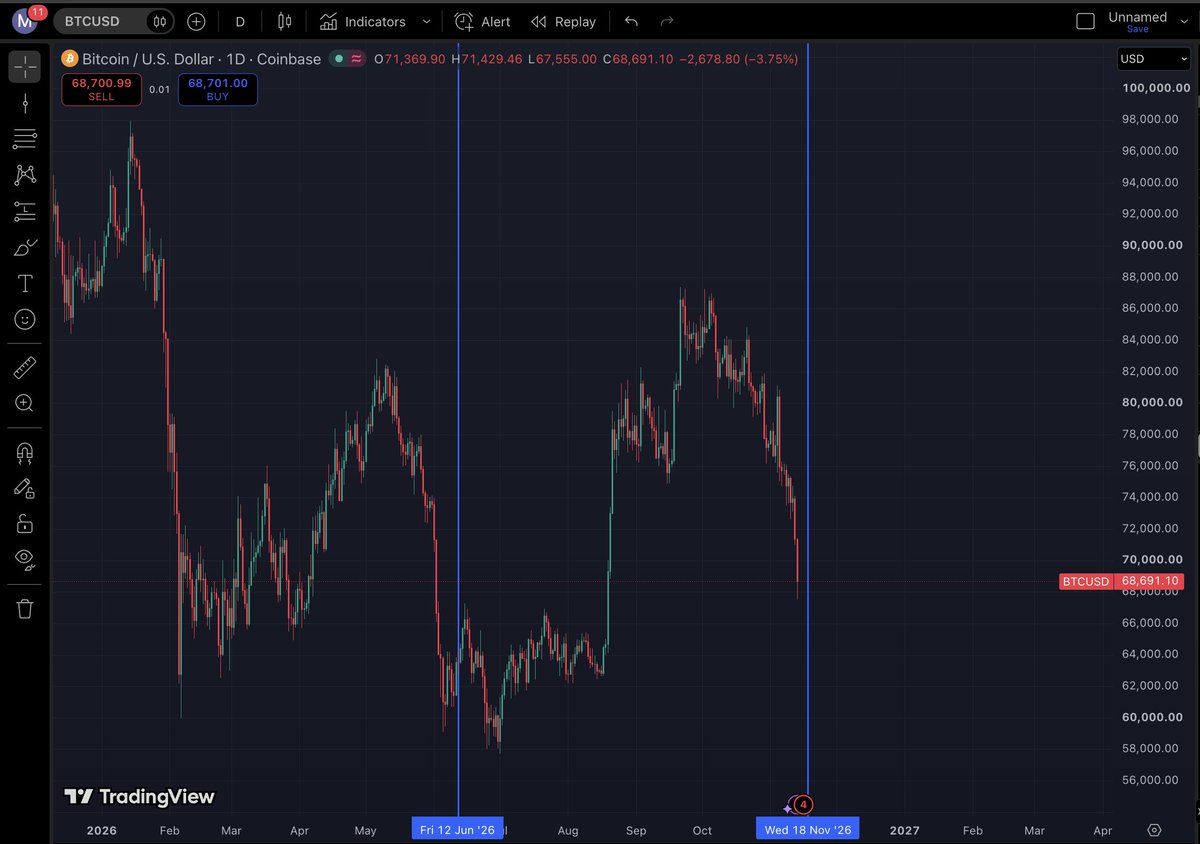
Bitcoin fell under $60,000 today, about 30% below where it was a month ago, and the "paper bitcoin" crowd is back, telling you Wall Street can print unlimited synthetic BTC and short it into the ground.
It sounds smart until you walk through what actually happens. So let's do that.
1/ Someone opens a short on a bitcoin future. For that trade to exist, somebody else has to open the long on the other side. Add up every long and short in the market and you get zero. No coin was created. Open interest is a count of bets, and every bet has two sides.
2/ So how does a short reach the spot price at all? Often the trader on the long side is a market maker who doesn't want the risk, so they hedge by selling real bitcoin. That selling is real, and it does push the price down. Here's what the paper bitcoin crowd leaves out: every short has to close. Shorting pulls selling forward from tomorrow into today, and tomorrow it comes back as buying. That's what a short squeeze is.
3/ Look at who is actually short on CME. A big share of it is funds that own ETF shares and short futures against them to collect the gap between the two prices. When CME shorts hit a record in 2024, analysts said it was mostly this trade. That short is covered by bitcoin the fund already bought. It's a hedge with no view on direction, and the paper bitcoin crowd counts it as Wall Street betting against you.
4/ Now options. An option is insurance, and the dealer who sells it hedges it every day by buying or selling bitcoin. When dealers own more options than they've sold, their hedging buys the dips and sells the rips, which calms the market down. When they've sold more than they own, they're forced to chase the move, which makes it bigger. Researchers found this pattern across more than 60 futures markets going back to 1974. Options have no opinion about direction. They amplify or dampen whatever the market is already doing.
5/ So where does the real speed in a crash come from? Leverage that gets force-closed. On 10 October 2025, about $19 billion of leveraged crypto positions were liquidated in a single day, and most of them were longs. The worst version is a long where the margin is bitcoin itself. When the price drops, the position loses and the collateral shrinks at the same time, so you hit your liquidation price faster and the exchange sells for you. That's a double hit. A dollar-margined future doesn't have that loop, and a bought option can never be force-sold at all, because the most you can lose is what you paid.
6/ "One coin backs six claims." Let's check. A future is a bet settled in dollars. An option is insurance, and its delta is just the seller's hedge. A spot ETF only issues new shares when real bitcoin, or cash to buy it, comes in. None of these is a second claim on anyone's coin.
7/ On a cleared exchange like CME, every position is marked to market twice a day, and losers pay winners in cash, so risk can't quietly pile up. History's famous corners happened where markets were thin or rules were weak. Two traders cornered onions in 1955, Congress banned onion futures, and onion prices got wilder afterwards. The Hunt brothers squeezed silver in 1980, and the corner broke when the exchange tightened its rules.
8/ The research agrees. A study in Management Science found bitcoin futures made the spot price more informative. The San Francisco Fed found that futures let pessimists into bitcoin for the first time in 2017. A price where only the believers get to vote was never a real price. Futures gave the doubters a vote.
9/ So here's what's actually happening when bitcoin dumps. Real sellers outnumber real buyers, and leverage makes it happen faster. Derivatives move risk around and turn the volume up or down. Where the price settles is still decided by people who want coins and people who want dollars.
The supply is still 21 million. Paper bitcoin is just fear with a chart.
I am seeing too many "liquidity crisis" posts and that's just not reality.
This is a massive deleveraging event. The AI trade is unwinding, and traders are selling whatever they can to cover margin and Bitcoin/Gold are part of that.
That doesn't mean AI is over. Earnings are still stellar and token demand is still surging.
If this were a liquidity crisis, the plumbing would show it and it just doesn't:
• SOFR: 3.91%, inside the Fed's target range.
• Repo facility: barely touched.
• VIX: 36 vs 52 in the April 2025 tariff tantrum
• HY spreads: 3.52% vs 4.61% in April 2025
US President Donald Trump says that he, Xi Jinping, and Vladimir Putin are "really making history" by holding trilateral talks in China today.
Live blog: https://t.co/33C0wZ4wYu
@TonyWard867811 They're also missing how much AI is squeezing entry-level hiring, and a higher minimum wage makes young workers even more expensive to take a chance on.
The trend is your friend… and the UK jobs trend is pointing one way.
Private sector:
• HMRC payrolls -34k in Oct, -95k y/y, falling since the 2024 peak
• Retail/wholesale -79k y/y, hospitality -2.7%
• Vacancies: hospitality -10% y/y, retail 51k→47k, professional services 77k→71k
• Small firms (1–9 staff) cut 22k vacancies in a single quarter
State-funded:
• Health & social care is the biggest vacancy pool at 122k, nearly 1 in 5 of all openings
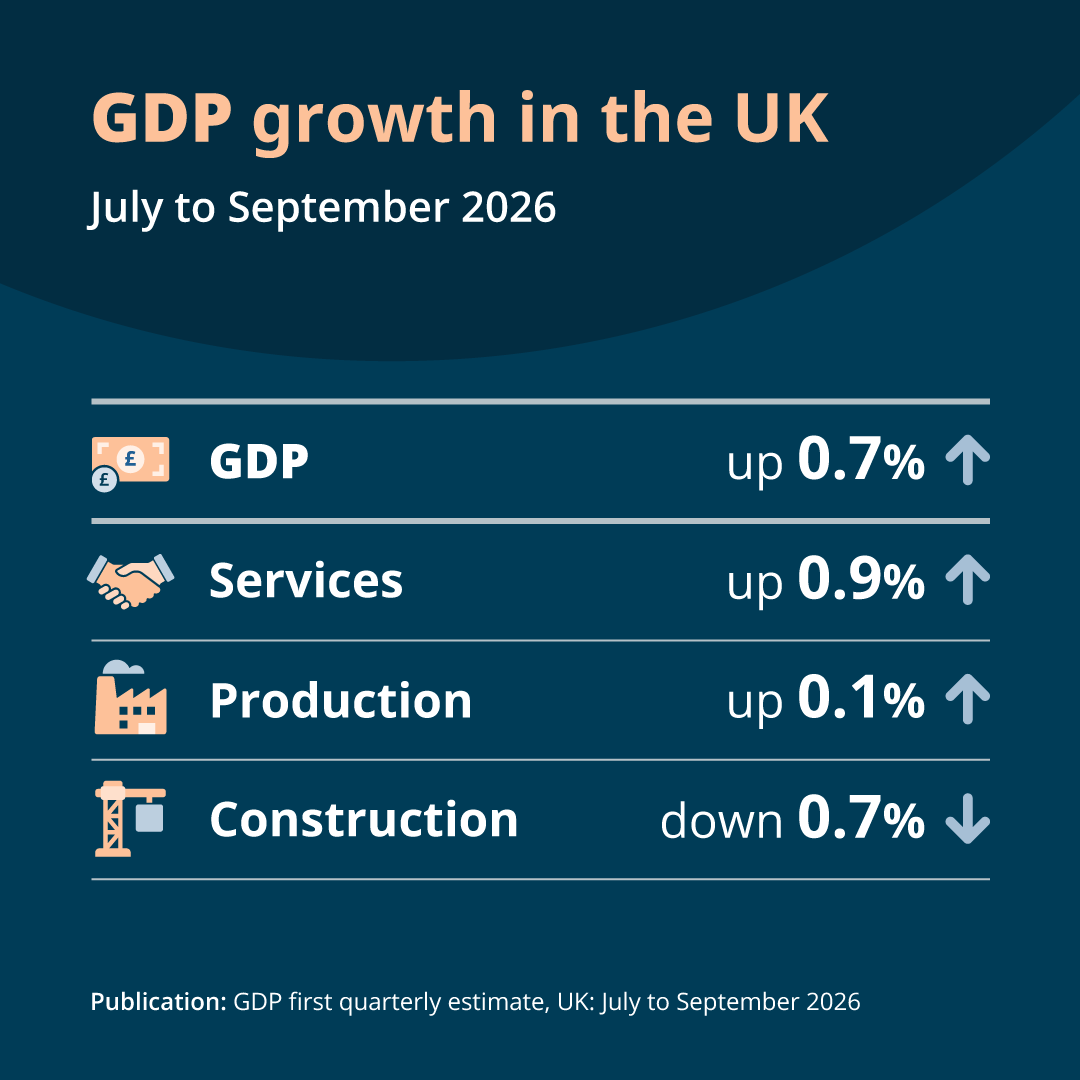
• Public spending is part of what's carrying GDP (+0.7% q/q)
So GDP grows while private hiring shrinks. Firms are absorbing a higher minimum wage and employer NICs by cutting headcount, not hiring.
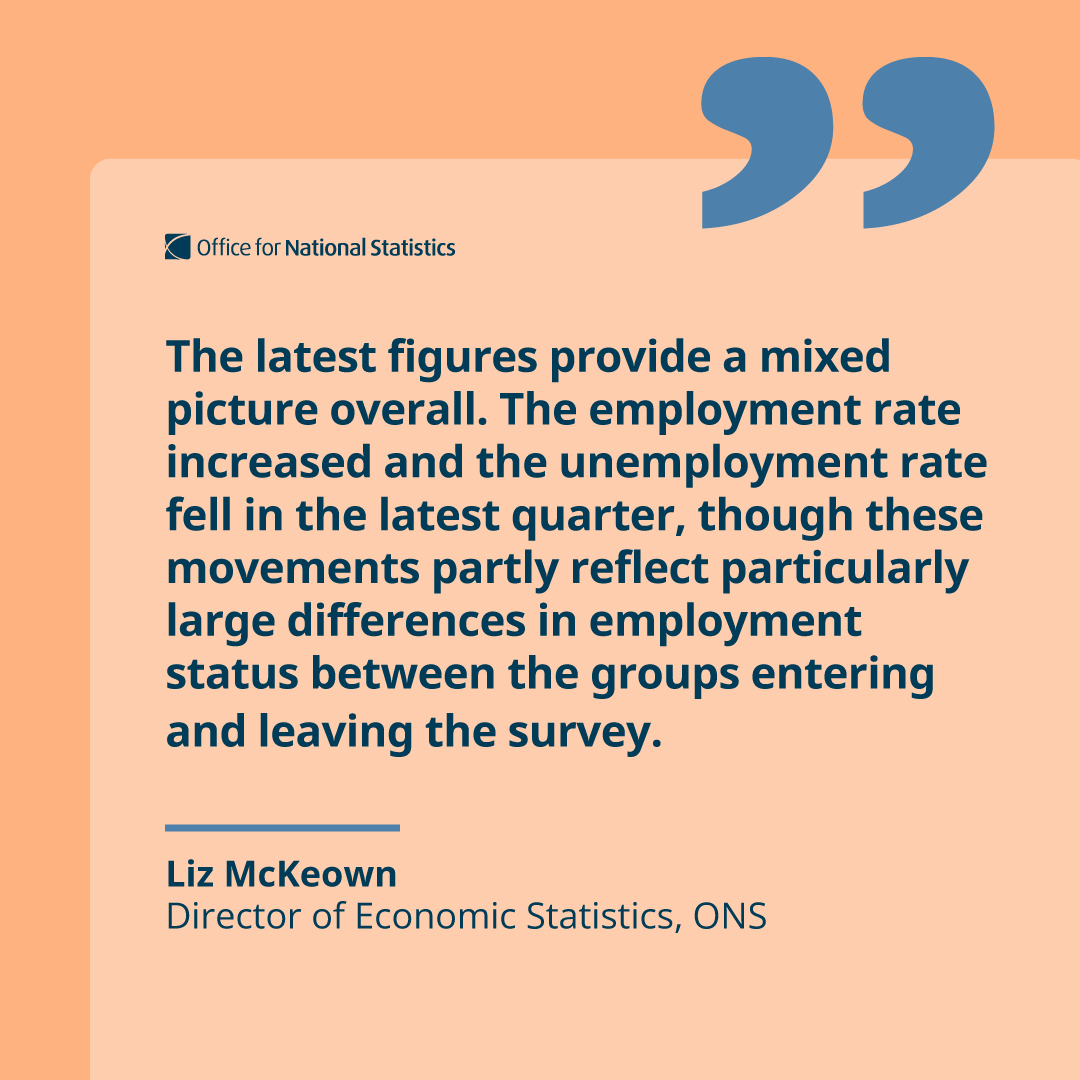
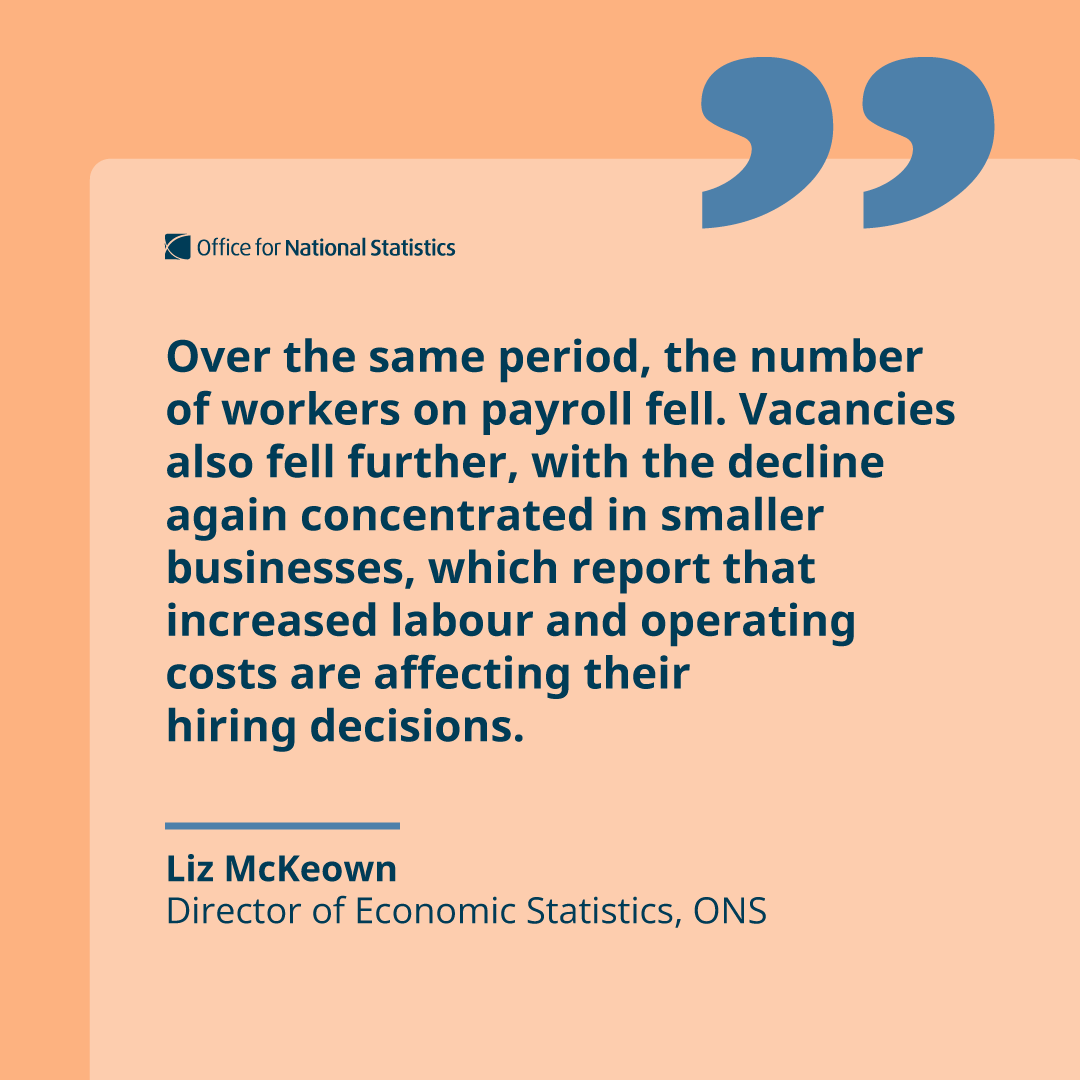
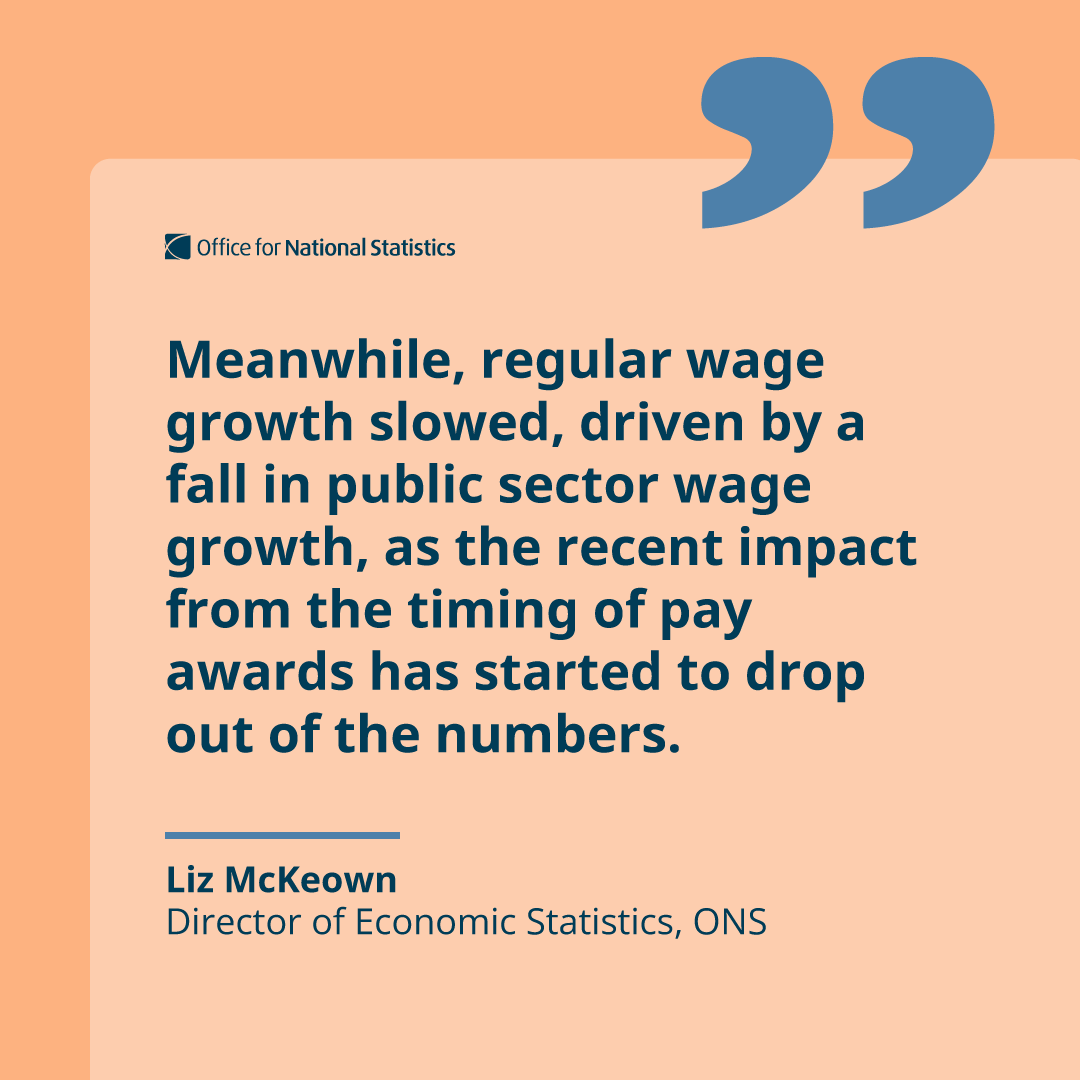
We’ve published the latest labour market figures.
Commenting on today’s figures, ONS Director of Economic Statistics, Liz McKeown said 💬
Read the latest Labour market overview ➡️ https://t.co/hr4Jrev14x
New data show that the average property has shed nearly £63,000 in value over the past five years after adjusting for inflation ⤵️
https://t.co/wgPRK7p6cR
GDP is estimated to have grown by 0.7% in Quarter 3 (July to Sept) 2026 compared with Quarter 2 (Apr to June) 2026 and has grown 1.9% since the same quarter a year ago.
Services grew 0.9% and production grew 0.1% while construction fell by 0.7%
➡️ https://t.co/16WhpBGYhy