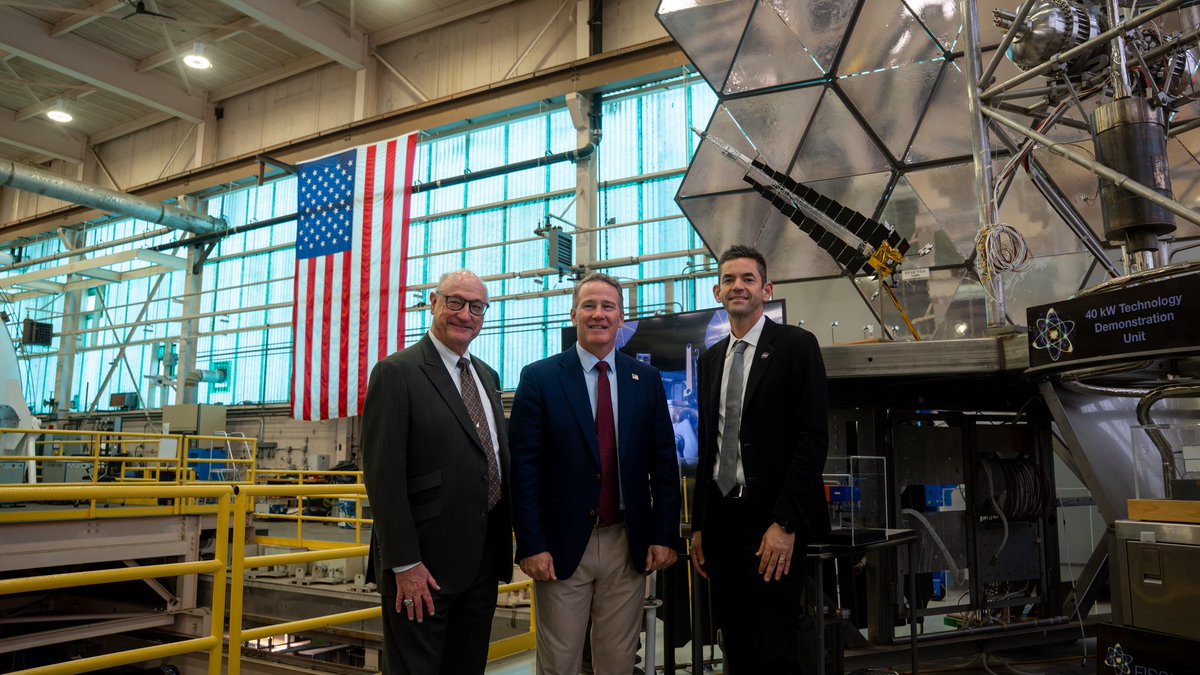
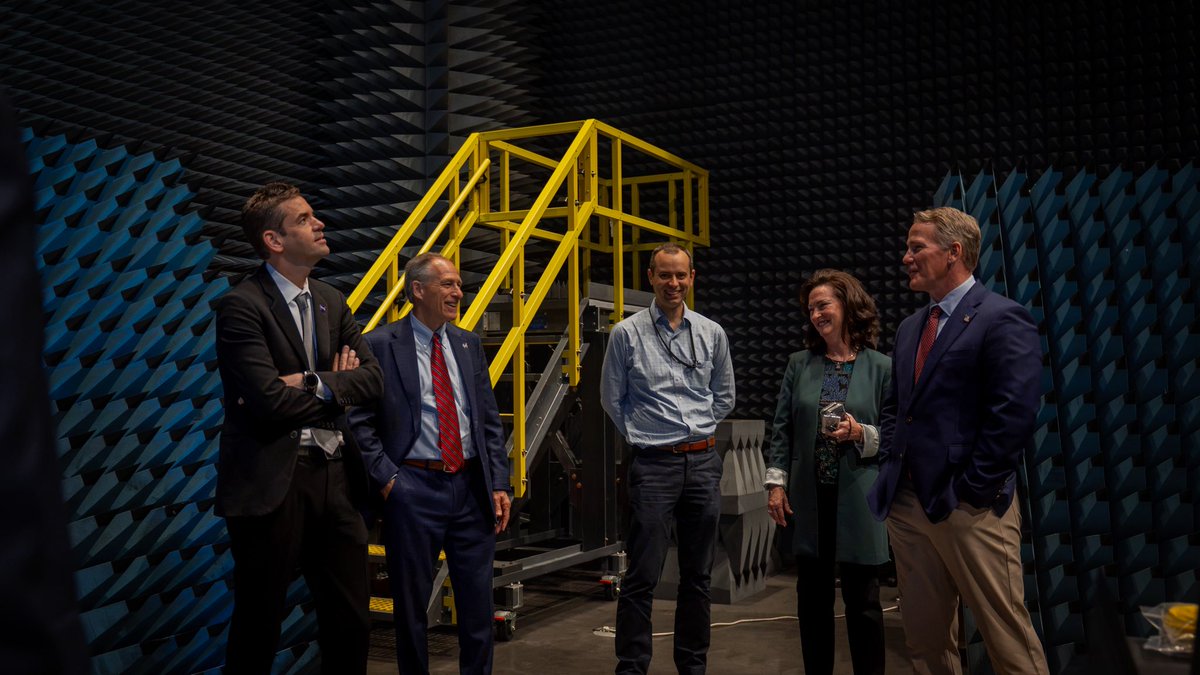
It was a pleasure to visit @OhioAerospace and @NASAglenn alongside @SenJonHusted today.
We met with Ohio’s aerospace community and saw firsthand the work underway at Glenn supporting our missions, including advancing nuclear power in space and helping usher in a Nuclear NASA.
Ohio has helped America achieve the near impossible before, and the talent here will be essential as we return American astronauts to the Moon, build the Moon Base, and shape the future of space exploration.
Ready for an Artemis update?
Tune in Friday, Oct. 23, at 2 p.m. ET (1800 UTC) to hear our latest progress and accelerated plans for Artemis lunar missions.
Watch live: https://t.co/EePpimRqsU
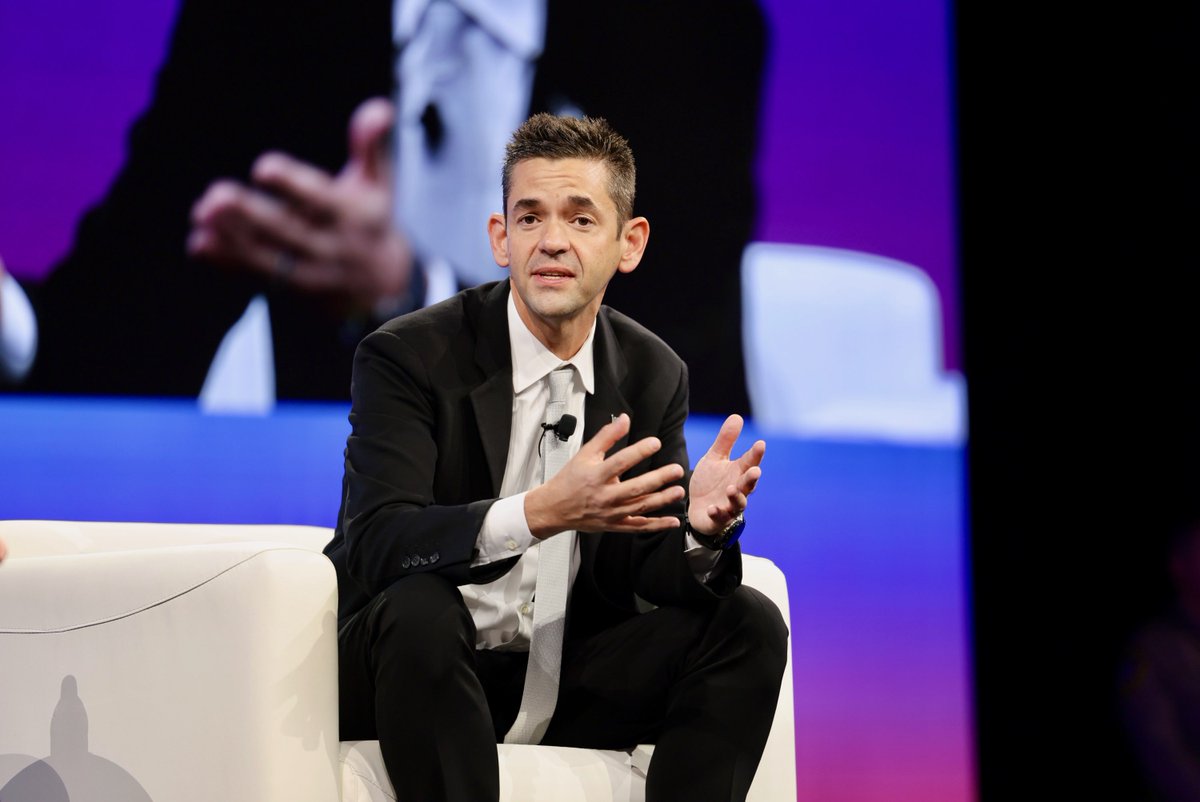
Artemis II was not Apollo 8 either. At NASA, we are making the most of architecture decisions made, for better or worse, over decades. Regardless of the state of the lander, we must launch annually and keep moving in the direction of the Moon. Delaying for a perfect set of objectives doesn't make the rocket cost less, achieve the overall Artemis goals faster, or make anything safer.
When the LEM wasn't ready, NASA changed Apollo 8 from an Earth-orbit test of the lander to a mission around the Moon, moving the lander test to Apollo 9. When Gemini VI's Agena target failed, we pulled Gemini VII to the left and had Gemini VI to rendezvous with it. In both cases, NASA adapted to circumstances, made the most of what was available, and kept moving forward.
Some people choose to make this about their affinity for certain hardware, or equally, their distaste for certain hardware or people or companies, but it should be about what advances America's space program...and that is what Artemis III will do.
I think it depends on the lens you are looking through:
- From Industry's Perspective: I have no issue with private capital and commercial industry making speculative investments in a future orbital or lunar economy. If companies want to raise the funding to launch missions to the Moon to prospect, extract resources, or manufacture, they are welcome to do so within the confines of the Outer Space Treaty, applicable law, and what few best practices have been established. In that respect, I don't see it as much different from the oil and gas industry prospecting for viable wells where permitted. I think we all agree that to have a bright future in space, beyond what taxpayers can fund, it is imperative to unlock its economic potential, and NASA is happy to help through Space Act Agreements, subject matter expertise, reimbursable work through our chambers and labs for testing, etc.
- From NASA's Perspective: That said, and this is very important, what NASA is doing on behalf of the taxpayers, the American people, and frankly all of humanity, does not depend on an economic or industrial justification. We are returning to the Moon and building a Base to feed that hunger for exploration, to realize its scientific potential, to inspire this nation as Apollo did, and most importantly, to dial in all the capabilities necessary for the next great leap to Mars. Just as in the past, the technologies we pioneer to "get there" will have direct benefits, including economic ones, back here on Earth. And if a lunar economy ignites along the way, all the better. But it is not a sure thing that the value extracted from lunar regolith will exceed all the associated costs. If/when the economics work out, that would certainly be exciting, but regardless, NASA still ventures on.
Enjoyed welcoming our friends from @FloridaHouseDC to @NASA Headquarters.
Florida is America’s gateway to the stars. Its workforce has helped launch some of our nation’s greatest achievements and will be essential as we return American astronauts to the Moon, build a Moon Base and prepare for Mars.
Thank you to Florida House for helping tell that story and connecting students, businesses and communities with the opportunities ahead.
It was great meeting with Uzbekistan’s space leadership at IAC earlier this month.
Glad to see Uzbekistan join the Artemis Accords as our 77th signatory. Looking forward to working together to advance transparent and responsible space exploration.
Welcome to the Artemis Accords, Uzbekistan 🇺🇿
Uzbekistan has joined 76 other nations around the world by committing to the peaceful and safe exploration of space. https://t.co/xjbRr1KmLH
Thanks to President Trump, over 100 American hostages have returned home, and today, one more does the same.
No Commander-in-Chief has rescued more Americans. That’s what America First means. 🇺🇸
.@NASA is rebuilding its X-plane portfolio, and soon we’ll be flying faster and higher, just as we did in decades past.
It was great joining Charlie Precourt at #NBAABACE to talk about the future of aviation.
Thanks to @NBAA for having us!
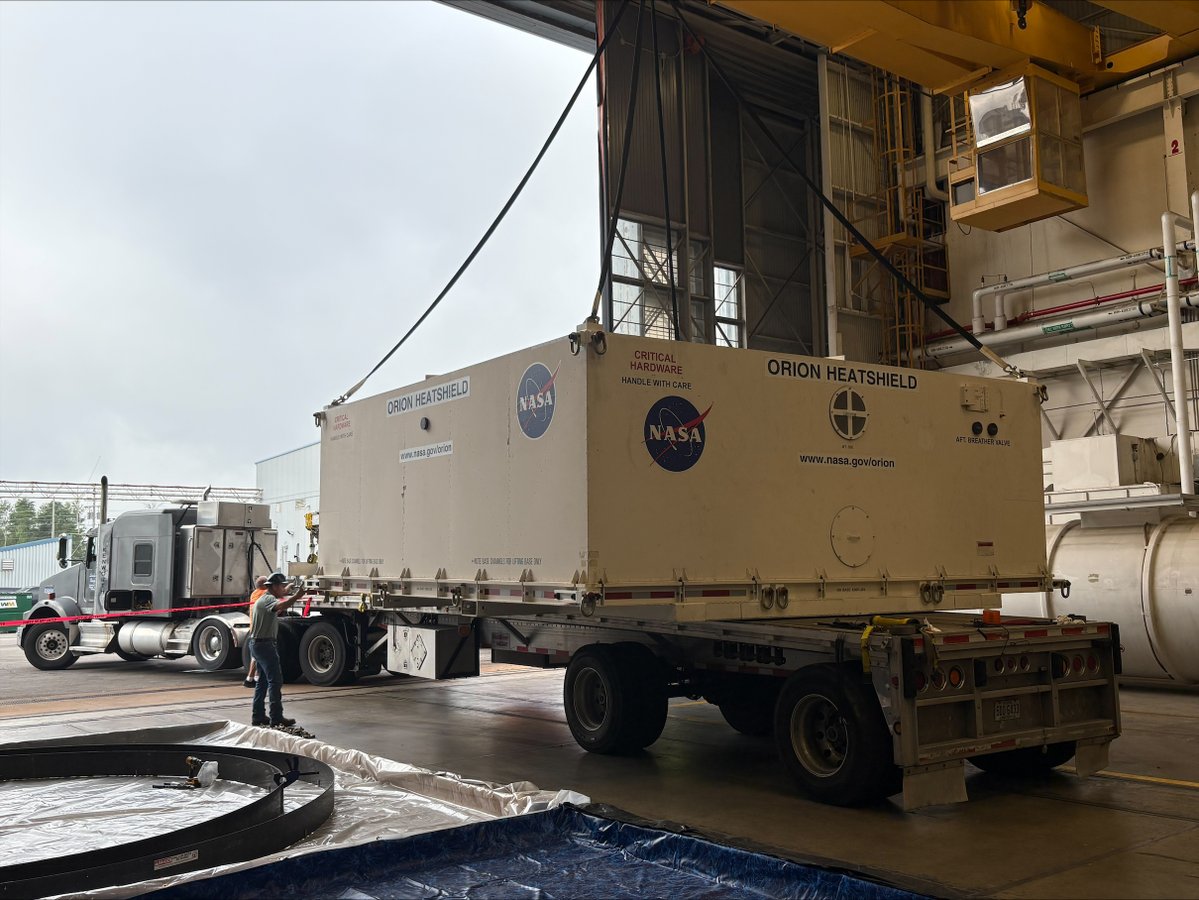
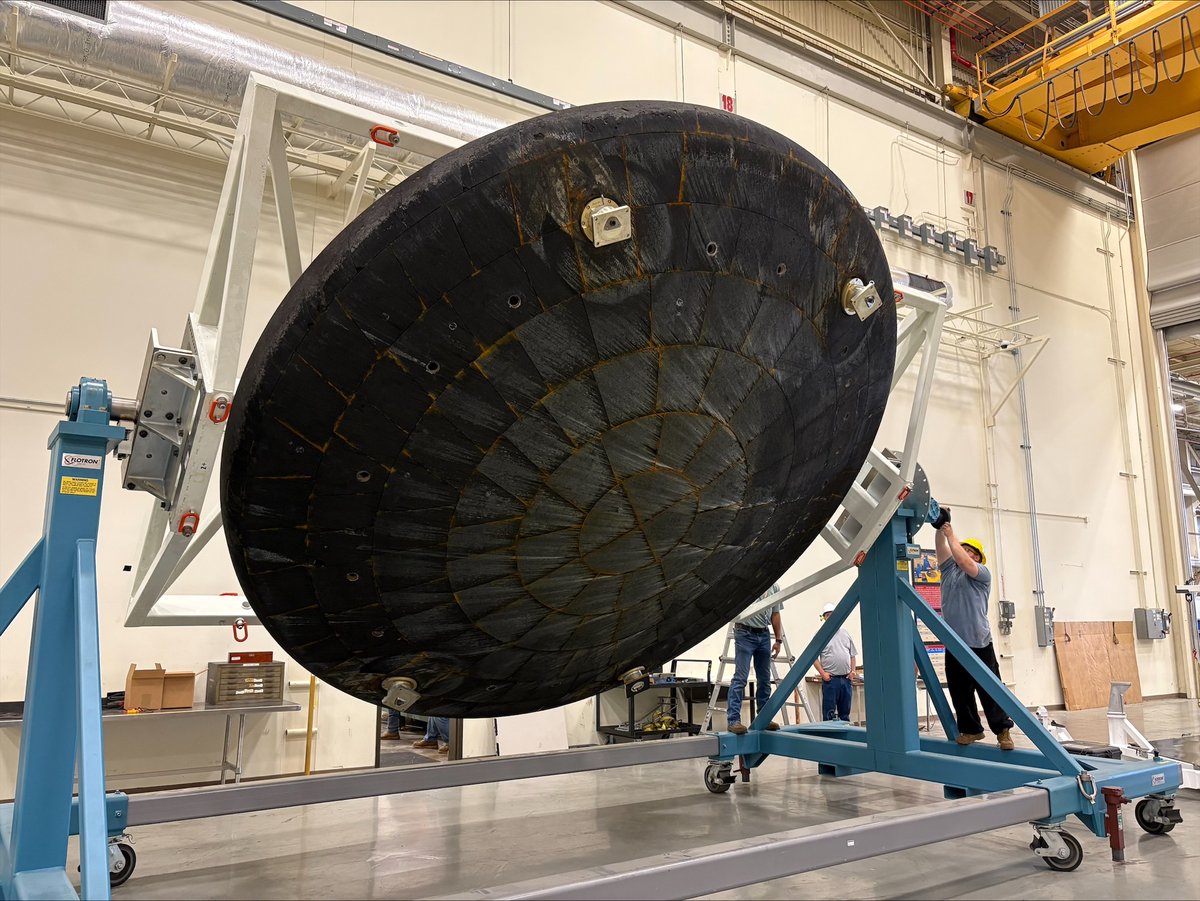
After Artemis II, an analysis was done on the Orion spacecraft’s heat shield, confirming that it performed as expected.
At NASA Marshall, we worked on sample extraction and internal X-ray scans that provided further engineering insight.
Read more >> https://t.co/kof3E1muTH
There's a lot of ground to cover when you're building a Moon Base.
During the first phase of @NASAMoonBase development, robotic rovers will gather new details about the lunar South Pole region, while lunar terrain vehicles will extend the reach of each Artemis mission.
Jedi vibes on the left, Sith energy on the right ⚔️
@NASAWebb captured the duality seen in nebula NGC 7129. Separating the left & right gas cavities lies a star 5-8x the mass of our Sun. When it was younger it ejected hot outflows that carved the molecular cloud on the left.
Congratulations to the civil servant employees sworn in today at NASA Glenn as part of @NASAAdmin’s insourcing initiative.
The large group gathered for orientation — and had the chance to tour several world-class facilities — at our Neil Armstrong Test Facility in Sandusky, Ohio.
We’re excited to work with you at NASA’s only center in the Midwest as we transform aviation, revolutionize space exploration, and inspire new discoveries for the benefit of all.
Welcome to the @NASA team!