Assistant Professor in Natural Hazards @CamUniGeography &
@EarthSciCam | Fellow @CaiusCollege | All hazards are multihazards, but are any of them natural?
@deotectonics That is dramatic footage, yes. Have you tried quantifying the relative rate of displacement from the video? Looks like it took ~1s but hard to tell if it was ~constant or accelerated
@deotectonics Nice work on this! Could you say a little about how you computed the maximum displacement (line graph) here? I am curious to compare approaches.
Again, all data is online here (https://t.co/F5Ye7wbRk6). If you have any questions about the use of this or the processing chain, please do reach out.
Very sad to see the damage from the earthquake in Myanmar. My thoughts are with all affected by this disaster.
Understanding where and how much the fault slipped can help with damage assessments, so we've made some preliminary estimates from S2 (data: https://t.co/F5Ye7wbRk6)
The fault terminates quite abruptly at the northern end (very close to the Irrawaddy) but gradually to the South. The southern termination is quite a bit further than some estimates I have seen, likely somewhere just west of Penwegon.
New perspective article discussing how we define natural hazards in today's world.
Key message: a barrier between 'human' and 'natural' events is often unhelpful, and we must consider the interaction between multiple hazards in all cases.
https://t.co/vHkHzPDoks
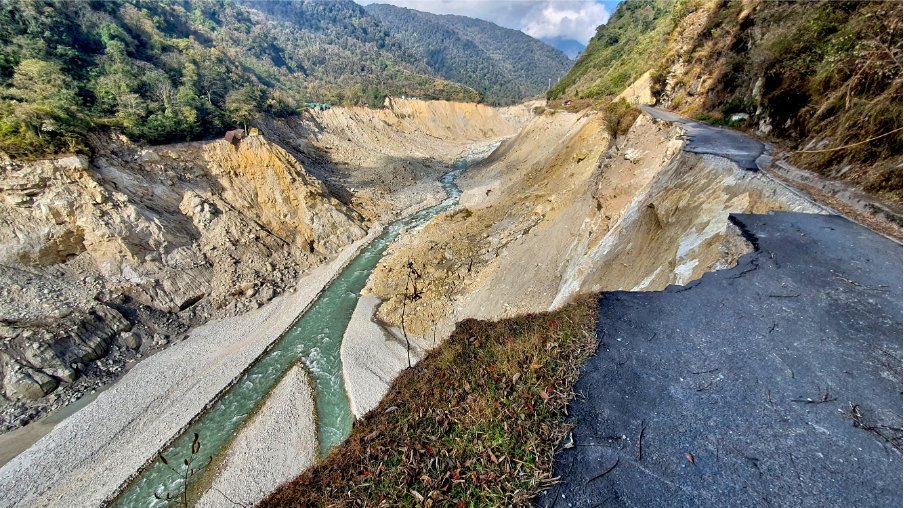
Our paper on the 2023 S. Lhonak GLOF & multihazard cascade, out today in Science!
This ‘natural’ hazard had the fingerprints of human activity all over it: climate change, glacier retreat, permafrost degradation, and hydropower dam failure.
Read here: https://t.co/5GUdgQ7RN5
Expertly led by @GlacierHazards, and with a wide team of authors from around the world, this work has pulled together an exceptional range of data to build an understanding of how and why this multihazard cascade occurred – and some clues as to how we might reduce future risk.
New paper led by Alex Dunant on innovative strategies for multihazard modelling!
The approach uses a computationally efficient network-based model to simulate cascading interactions between hazards (e.g. earthquake-landslide) and the resulting impacts.
https://t.co/Pak6JPNb18
For those of you in the UK, you might notice one point here: 10-year old Leah Harrison was killed by a mudslide during a school trip. A real tragedy, and one that highlights the complexity of preventing landslide disasters in all environments.
https://t.co/9dG3JkI7X2
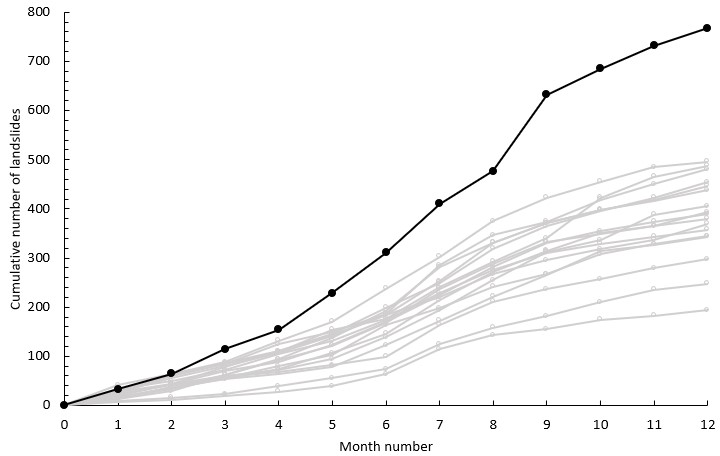
A sad reality: more people died from landslides in 2024 than any other year on record.
High temperatures, rainfall intensities, and infrastructure development are all likely contributors. Despite progress in monitoring & mitigation, much work is needed to reduce landslide risk.
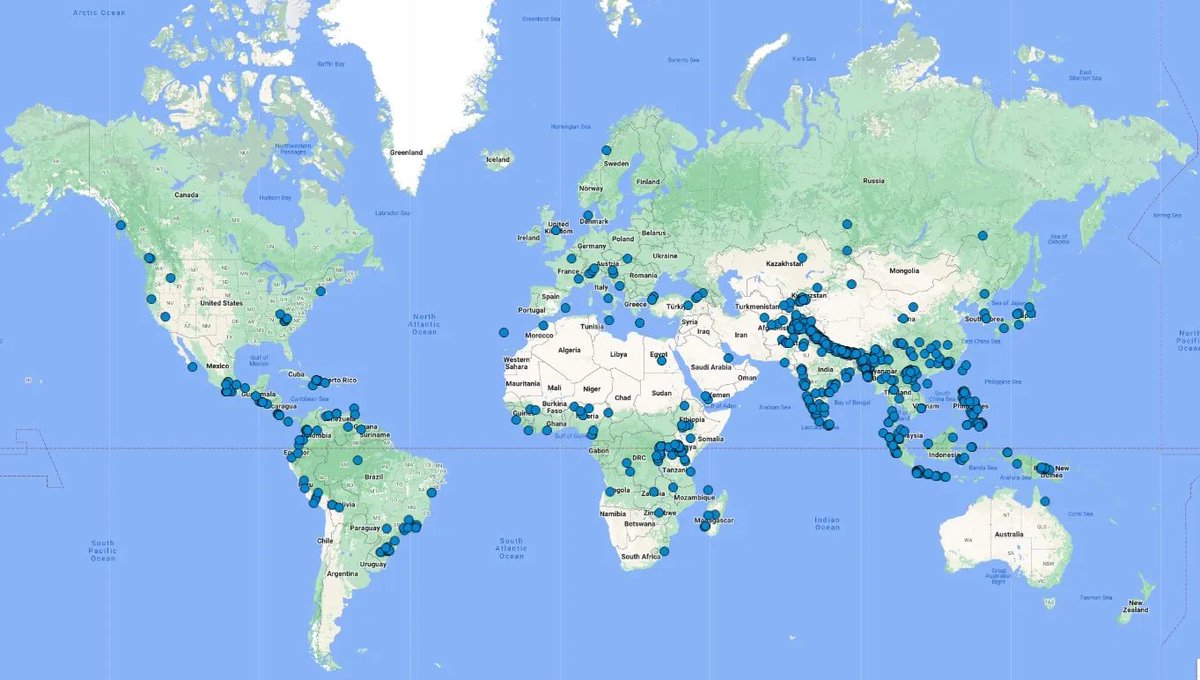
I have posted my provisional analysis of fatal landslides in 2024 on my blog. In total, 708 fatal landslides (excluding those triggered by an earthquake), cost 4,492 lives. This is far higher than in any previous year for which I have data.
https://t.co/McU041CEyx
CC license.
There are clear clusters of fatal landslides in high-mountain Asia, S and SE Asia, central Africa and central America - but fatal landslides remain a near-global challenge.
https://t.co/HktSw4vEf5