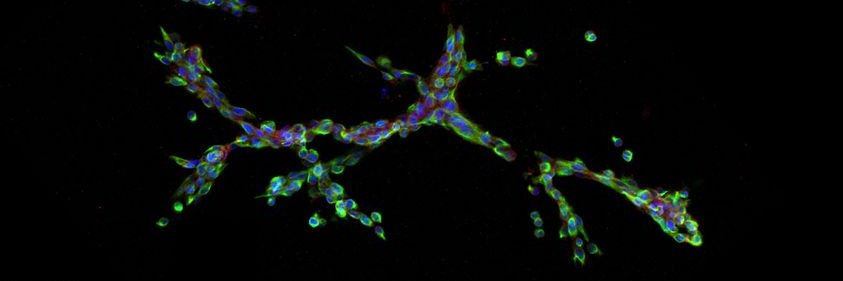
Resistance to EMT promotes breast cancer spread; unexpected results from a collaboration between @ETH_en, the Helmholtz Centre Munich and DKFZ. The analysis of patient-derived biopsies sheds new light on metastasis-forming events in breast cancer. More: https://t.co/xEb4nFSnq9
Cheers to @hi_stem_lab members on their recent publication! 🥂
They show that susceptibility to irreversible EMT restrains clonal propagation, whereas resistance to #mesenchymal reprogramming sustains disease spread in #BreastCancer models.
👉 https://t.co/bG1UkIITzz
>40000 EMT papers so far, many of which published in journals requiring the highest level of rigor and the best physiological relevance.
But no one knows (roughly) what a mesenchymal state is, and the unknown stuff controls everything of cancer cells.
https://t.co/At0MHdKFhe
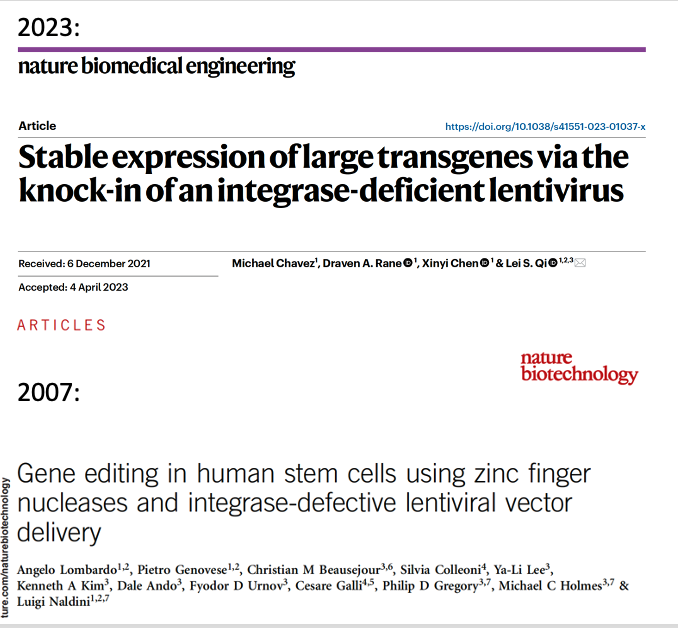
I wonder if ChatGPT could be used to ask this question during peer review:
"Has one key finding of this work been published before?"
In this case the answer would be "yes" (in 2007).
Clearly we need AI since "human I" appears to have underperformed here.
#smh
On Monday I lost my mentor, my friend, my business partner, my scientific father, Jeffrey Pollard.
Jeff inspired every second of my life with his passion, scientific integrity and emotional intelligence.
He left an incredible legacy which made him immortal. I love you Jeff ❤️
@giorgiogilestro Sì non c'è un nesso solido. Il problema é che non é così clear-cut la differenza tra un adenovirus respiratorio e uno gastrointestinale, e descriverli come fossero sempre e solo dei virus da raffreddore non aiuta.
@giorgiogilestro Non è del tutto esatto, questo. Gli adenovirus gastroenterici sotto accusa (Ad40 e Ad41) hanno un tropismo gastroenterico, e quando causano sintomi si tratta di sintomi tipo diarrea e altri disturbi del tratto digestivo, non il naso che cola.