PhD in Molecular Genetics, Post-Doctoral Scientist at Novo Nordisk Foundation Center for Stem Cell Medicine – reNEW. Brickman lab, Organoids and Embryos.
This interaction may help to maintain master developmental regulators in a "poised" state, suggesting a role for mTOR in linking environmental cues to the timing of gene activation.
Read the preprint here:
https://t.co/LGrM2pE4AM
mTOR and Chromatin Regulation: An Environmental-Epigenetic Axis
In our new preprint, we demonstrate that mTOR, the central regulator of cell growth and metabolism, functions as a chromatin regulator in mouse ESCs.
We find that nuclear mTOR selectively binds to developmental gene promoters in synergy with PRC1-deposited H2AK119ub1.
At these sites, mTOR associates with the RNA Polymerase II machinery and coincides with high levels of RNA Pol II pausing.
How does metabolism act through generic chromatin modifiers promote specific cellular states? Simultaneous modification of transcription factors and chromatin, enhancing epigenetic signal to noise ratios.
https://t.co/SUx8ZninUo
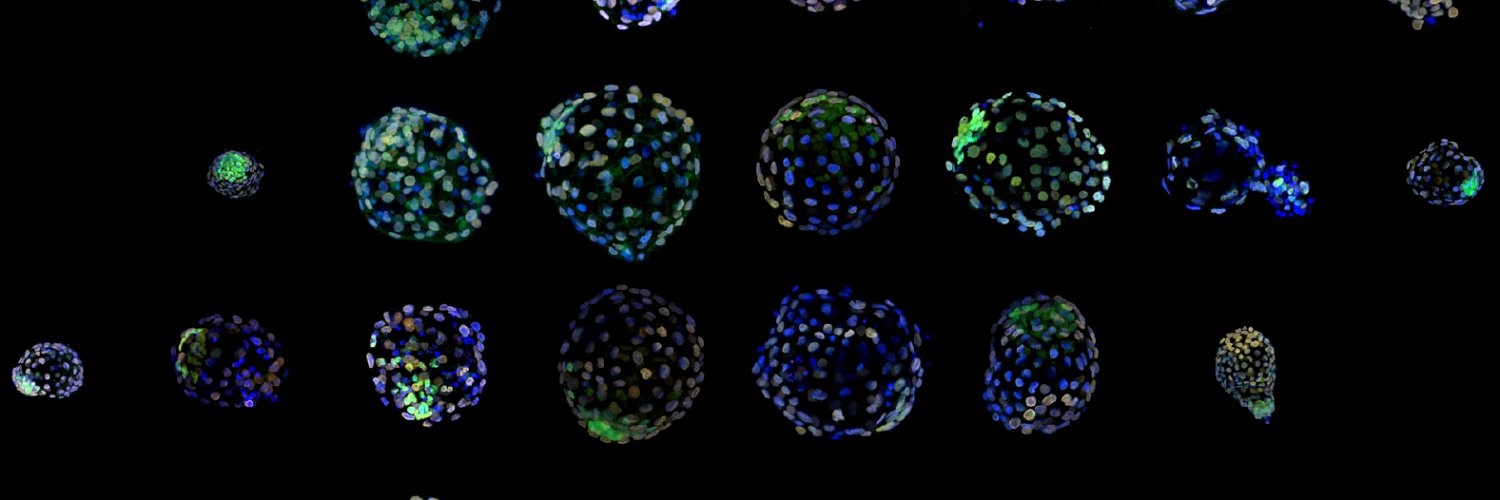
Can metabolism regulate more than bioenergetics during human development? Our new study says YES! We show that metabolism influences cell fate choice in human naïve pluripotent stem cells, histone acetylation, and trophectoderm maturation. https://t.co/5Ms6tNyT5l @NatureCellBio
📢 Preprint! Does the environment of a father before conception influence offspring?
Even more, how do paternal genetics & age interact with exposures to affect F1 outcome?
We tested this systematically, with intriguing findings & some cautionary tales
https://t.co/THGgCcMQNL
I am so excited to share this part of my PhD where we tackle the question: What impact do 3D contacts have on how enhancers regulate their target genes? https://t.co/wtyAWg4c4j
1/
A nice video from Fabian Bachinger @VallierLab describing his research on large scale production of hepatocytes for cell based therapy. Thank you @wellcome_leap for supporting us the past 3 years #WellcomeLeap
https://t.co/Lybr1gQIXu
Human TFs face a molecular trade-off between activity and specificity encoded as submaximal dispersion of aromatic residues in their disordered regions. A collaborative effort of @dhnisz, @VingronLab and Graf Lab published today in @NatureCellBio https://t.co/OkvRuF6nhT
The @dhnisz lab with the @VingronLab found chemical features in transcription factors (TFs) that encode submaximal transcriptional activity. The findings in @NatureCellBio hint ways to create optimized TFs that could be used for regenerative therapies. --> https://t.co/W32EkGftOE
Humbled & excited that our paper on molecular recording of cellular decision in Trunk-Like Structures (TLS) got featured on the cover of @Dev_Cell! w/ B. Law, M. Chan @Princeton, Z. Smith @Yale, A. Meissner @MPI_MolGen & @jvveenvliet!
Link to the paper:
https://t.co/dqLLoF4r2n
1/2 The presence of extraembryonic cells in the developing gut has long puzzled scientists. @BatkiJulia (l) and @hetzel_s (r) (#Meissner lab) now gained new insight into the fate and molecular characteristics of these cells. @NatureCellBio Read more: https://t.co/YOHN9v4VxK
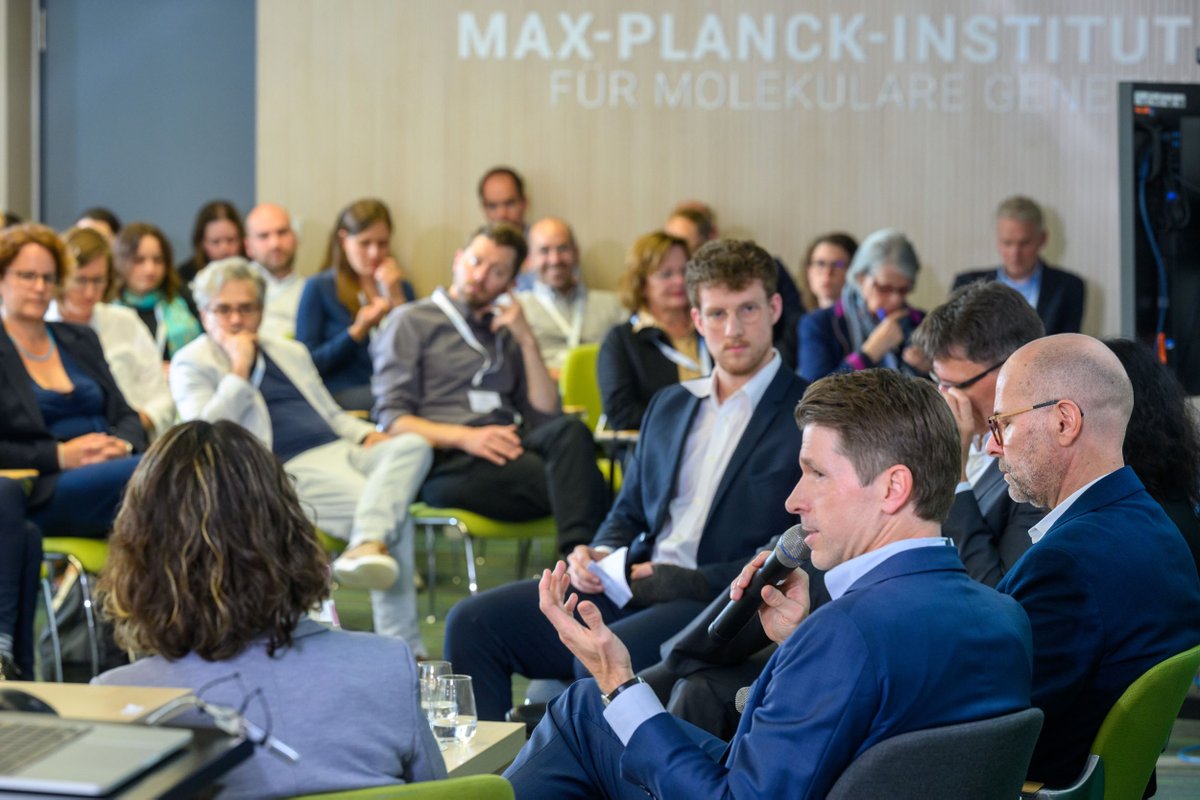
Great panel discussion on the future of Berlin science with Georg Duda @berlinnovation, @maxplanckpress Vice President @AsifaAkhtar1, Christian Rommel @BayerPharma, and MPIMG Director Alexander Meissner at our #MPIMG60years celebration!