My paper, "The Cross-Sectional Implications of the Social Discount Rate", is forthcoming in Econometrica! The basic idea of the paper in 5 tweets, and then some acknowledgements
1/9
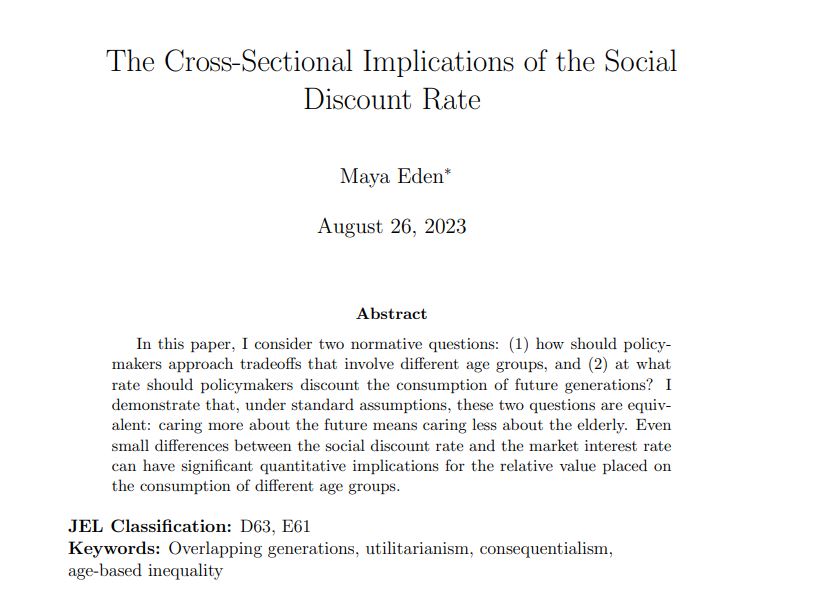
Should policymakers discount the future less than the market? @MayaREden shows that any Paretian social welfare function that has this property must also favor more transfers from older people to younger ones @GPIOxford https://t.co/YjwYAYhZEU
Congrats to my colleague @SandroAmbuehl who was voted tenure and promotion to Associate Professor. I look forward to all your future contributions to our department @econ_uzh!
We're happy to welcome Steve Cicala and Ursina Schaede to @econ_uzh!
Steve joins us as of this week as the new Vontobel Professor of Sustainable Economics, and Ursina as UZH Visiting Assistant Professor.
Thrilled to have them on board!
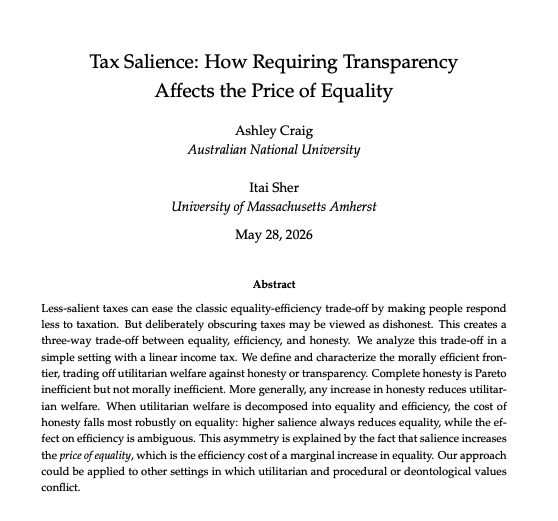
New paper with @ash_craig
Higher taxes promote equality but reduce efficiency. Making taxes less salient, so people respond less, eases this tension. But deliberately obscuring taxes may be viewed as dishonest.
We study the tradeoff between utilitarian welfare and honesty.
In a newly awarded CHF 969K @snsf_ch grant project, UBS Foundation Professor Roberto Weber will explore how people’s moral values shape their decisions in markets and their support for policies.
https://t.co/2nxMHjz0Wk
#EconomicsForSociety#UZH#shareUBS
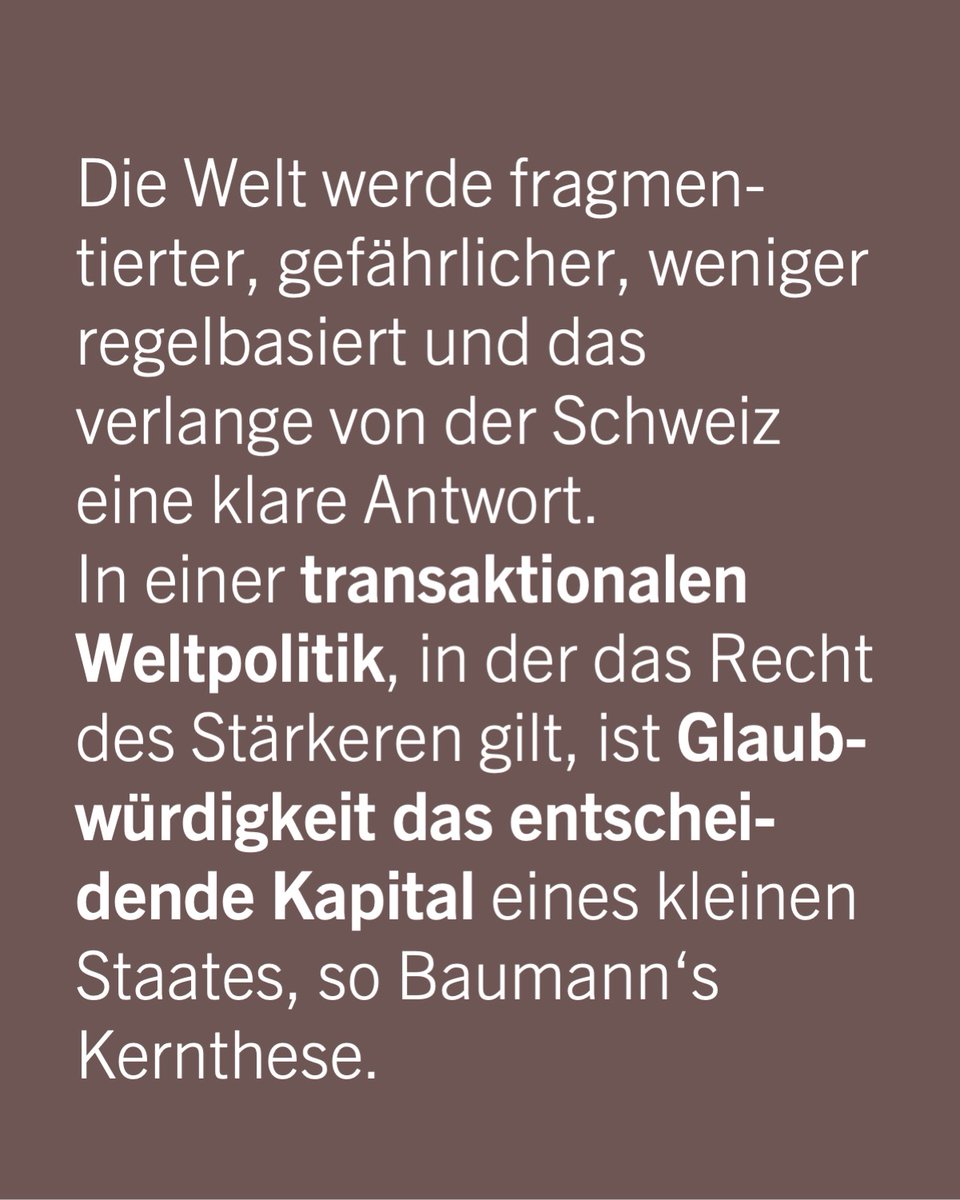
Die Welt werde fragmentierter, gefährlicher, weniger regelbasiert und das verlange von der 🇨🇭Schweiz eine klare Antwort. Dies betonte Frau Botschafterin @alexandradiplo in ihrem Impulsreferat am #UBSCenterPodium.
https://t.co/tIwXTXChhW
#EconomicsForSociety#UZH#shareUBS
Join us for today’s webinar, Monday May 11, 11am EDT/ 5pm Paris, for David Lagakos presenting “American Life Histories”. What does it take to live a meaningful life?
Email us for the zoom link @WelfareEconomic
@Jabaluck@itaisher@WelfareEconomic Bigger because other things are lost (culture and communities in the case of the holocaust, and human knowledge/ achievements/ culture in the case of extinction). But this is controversial because it requires a departure from the individualistic framework
Very nice to see mainstream economists engaging with population ethics! Interesting discussions in the comments (I was tempted to add to them but am still too Twitter-shy. Maybe @itaisher can do it) @WelfareEconomic
A 5% risk of death for everyone on earth is WORSE THAN 35 HOLOCAUSTS in expectation.
It's 50-200x larger than Nordhaus's estimate of the PDV of climate risk for people alive today.
5% is ~2x the mortality in 1918 if you caught spanish flu.
@itaisher@WelfareEconomic@Jabaluck Sorry I wasn’t following closely enough 😂 but I want you to talk about how the badness of human extinction (and the holocaust for that matter) is not reducible to the number of lives lost (because of the impersonal value of culture). Actually I don’t know if you think that
In her research, @MayaREden delves into the deep, unresolved questions within normative economics. She explores the ethical considerations surrounding population, individual rights, and societal obligations.
https://t.co/yJbd37092Q
#EconomicsForSociety#UZH#shareUBS
Join us today at 11am EST/ 5pm Paris for Itzhak Gilboa’s presentation:
Lexitarian Population Ethics: A Position-Based Axiomatic Approach. Email us for the zoom link! @WelfareEconomic
Political decisions often create winners and losers. This can’t always be avoided, but as research by economist @MayaREden shows, predictable and transparent criteria can help minimize unfairness.
https://t.co/4PNBLS9xsq
#EconomicsForSociety#UZH#shareUBS
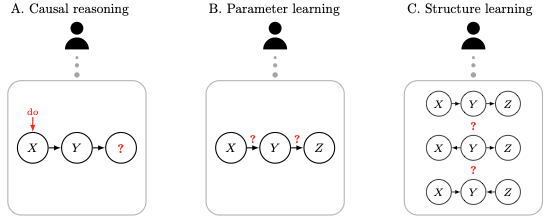
1/ New review paper out today! "Mental Models of Causal Structure in Economics and Psychology" with MIT cognitive scientist @RaBhui and econ theorist Heidi C. Thysen. How do people come to believe that one thing causes another—and what happens when those beliefs are wrong? 🧵
Can we get social discount rates from individual ones? I argue no, and that we must use ethical reasoning for it. More strikingly, I argue that we cannot even get individual discount rates from market interest rates, and must also reason ethically.
https://t.co/ux9OszBPwc
Great blogpost as usual
My 2 cents: pure time discounting is normatively strange even at the individual level. I see no reason why what happens to me on Monday should matter more than what happens on Tuesday. Discounting is a decision bias, the right benchmark is time neutrality
@WelfareEconomic join us TODAY at 11am EDT/ 5pm Paris for my presentation on guidelines for macroeconomic policy based on person-affecting population ethics
Email us for the zoom link!