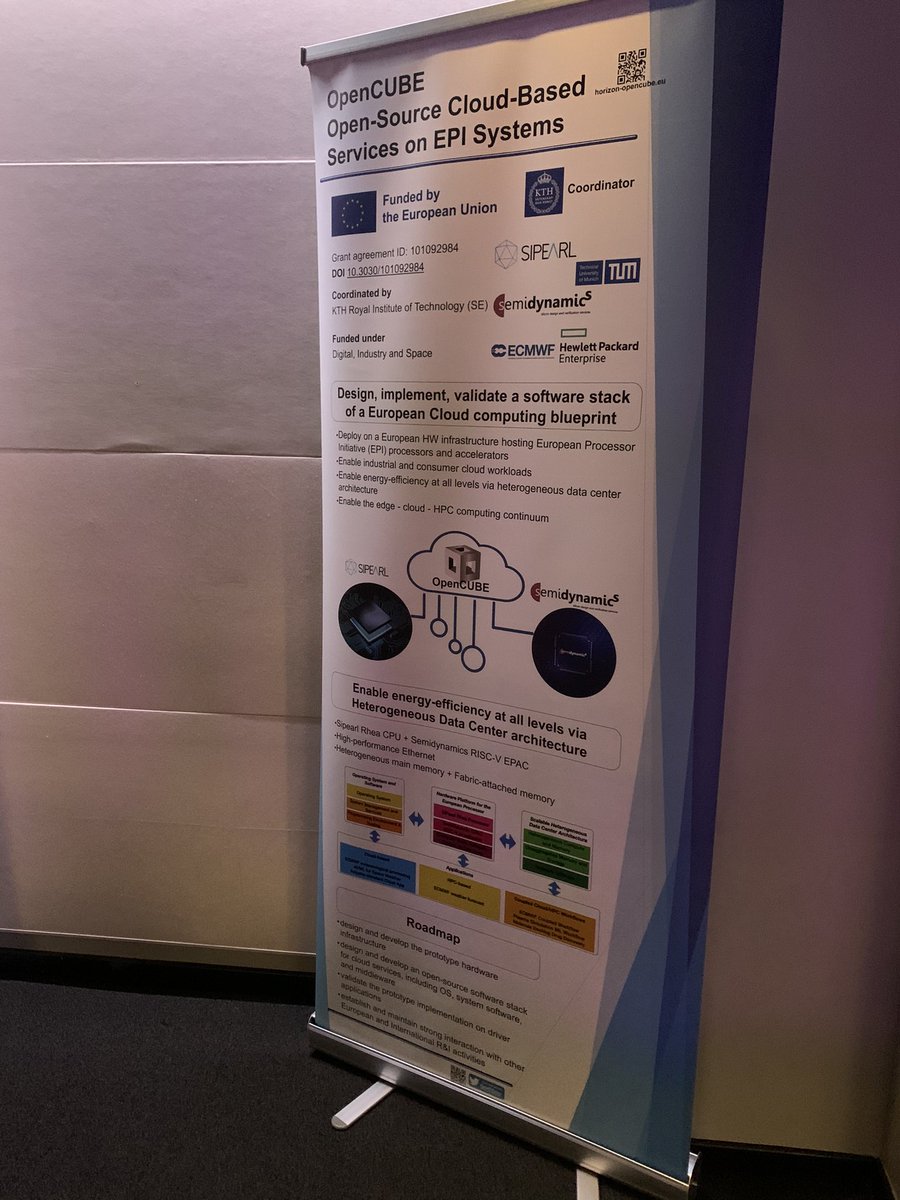
Beautiful work by the KTH ScaLab Daniel Medeiros, Gabin Schieffer, and Ivy Peng on pushing molecular docking workload to converged computing systems (HPC + Cloud )with Kubernetes & Airflow. @OpenCUBE_EU@KTHuniversity#ConvergedComputing#MolecularDocking
ISC BOF 2023: @Plasma_PEPSC_EU discussion focused on addressing all limitations and gaps present, while identifying priorities towards ... "Pushing Flagship Plasma Simulation Codes to Tackle Exascale-Enabled Grand Challenges via Performance Optimisation and Codesign" @ISChpc
More pictures from EuroHPC Summit 2023: @Plasma_PEPSC_EU Project Coordinator and Associate Professor Stefano Markidis at the Parallel Session focusing on Space Physics and Astrophysics Codes.
Scientists at EPFL’s Swiss Plasma Center & @DeepMind have developed a new magnetic control method for plasmas based on deep reinforcement learning and applied it to a real-world plasma for the 1st time in the @TCV_tokamak research facility. #nuclearfusion
https://t.co/VStZPEbfUP
yesterday at the Sage and NextGenIO workshop in Ljubljana! Still jet-lagged 😴 but many great talks about heterogenous memories and multi-tier storage 😀 https://t.co/IIbqNPYrrM
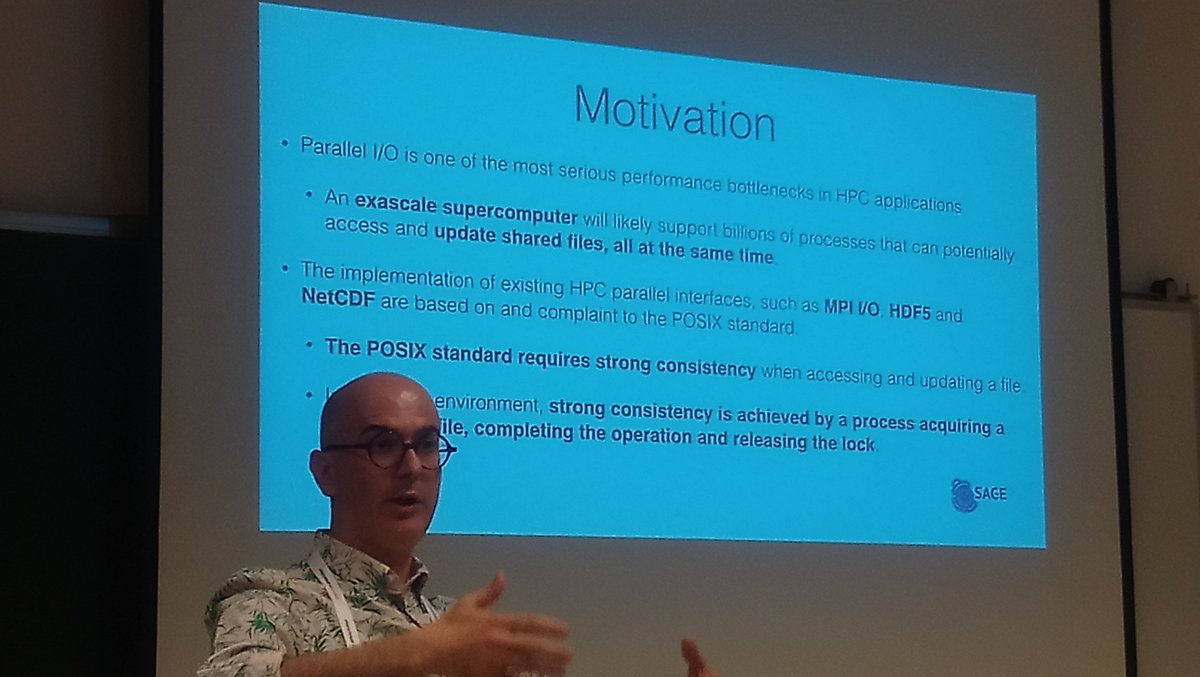
"Parallel I/O is one of the most serious performance bottlenecks in HPC applications" : the ground motivation at the forefront of Stefano Markilis (from @KTHresearch & @SageStorage) talk on exploring scientific application performance using large scale object storage. #EHPCSW
🥇Best paper on programmability, performance and precision loss of #Nvidia tensor cores at #IPDPS#ASHES18(https://t.co/NZlkWVXT1y)!!! Celebrating in Vancouver 🇨🇦!!!
Our paper on benchmarking #NVIDIA#Volta#GPU for #HPC shows that we can get up to 83 Tflops/s when running mixed-precision large sgemm and #NVIDIA#Tensor#Cores flops can be used to decrease loss of precision! #GTC18
https://t.co/RnXlYVMPbV