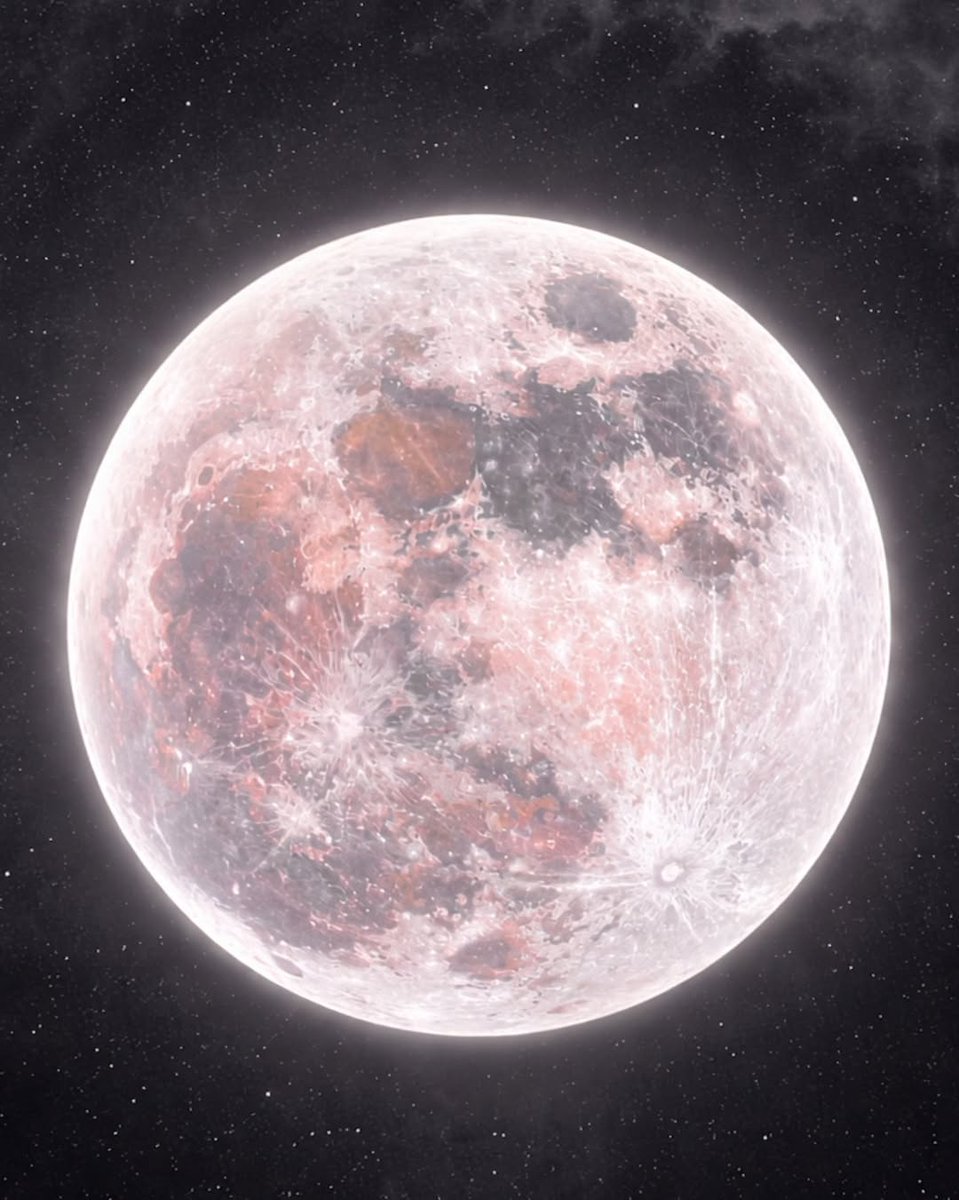
🚨: The Sun takes 225 million years to orbit the Milky Way. It has already completed 20 orbits and has 22 to go before it runs out of fuel and becomes a red giant.
Cerebro no lo sabía, pero ya había conquistado el mundo.
Este fragmento final del capítulo "A Pinky and the Brain Christmas" dura segundos...
Pero se te queda años en el corazón.
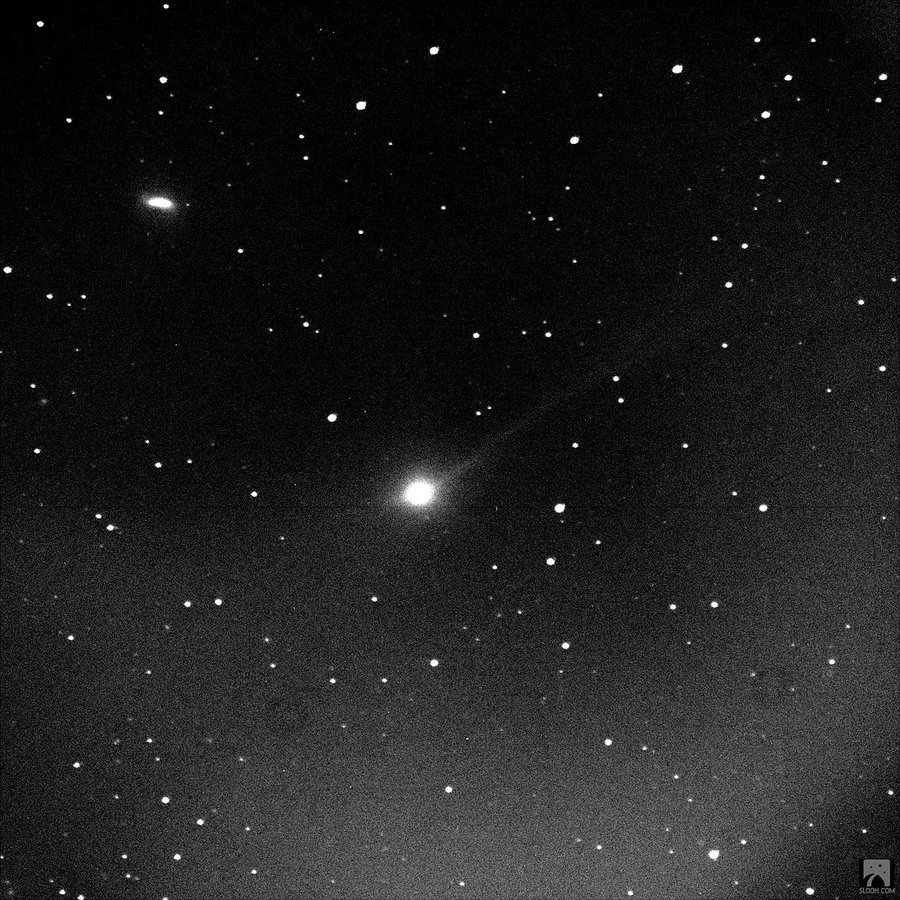
BREAKING🚨: New November 16 Image Shows 3I/ATLAS Behaving in Ways No Natural Comet Should
What we’re seeing tonight challenges every natural explanation on the table.
The dust and jet patterns refuse to behave like anything in our solar system.
And the closer we get to December 19, the more 3IATLAS defies the rulebook of comets.
“The deeper we look, the stranger this interstellar visitor becomes — and today’s image raises the sharpest questions yet.”
At first glance, it looks like a classic comet streaking across the dark — but the moment you examine the structure around the nucleus, the entire picture breaks away from anything that resembles ordinary comet physics.
The core glows with an unusually sharp intensity, surrounded by a hazy envelope that seems disturbed, as if material is being displaced in directions that cannot be explained by simple sunlight or solar wind.
The dust pattern showed irregularities that do not match standard thermal behavior. Instead of a uniform outflow, the brightness gradients show directional asymmetry, like something is shaping or modulating the release rather than allowing it to disperse naturally.
The most striking feature is the dual-tail geometry. One tail extends away from the Sun — as expected — but it is so thin, so sharply defined, and so unusually narrow that it resembles a controlled jet more than a chaotic plume of dust.
The tail does not fan outward the way a natural dust plume should. Its edges remain unnaturally tight, creating the appearance of a guided wake rather than random particulate drift. Meanwhile, faint but unmistakable is the anti-tail: a structure pointing toward the Sun instead of away from it. Anti-tails can occur in rare natural cases when extremely tiny dust grains line up along the plane of the solar system, but the structure seen here is too straight, too refined, and too cleanly separated from the main plume to fit that explanation comfortably.
Image taken from the Canary One 0.5-meter telescope.