I'm thrilled to announce that our paper "Sludge Management in the Textile Industries of Bangladesh: An Industrial Survey of the Impact of the 2015 Standards and Guidelines" has been published in the prestigious MDPI journal! https://t.co/9XP4oxLGO4 #mdpiwater via @Water_MDPI
Results are impressive globally, though opposite from Bangladesh’s perspective. Surprisingly, no industrial survey of the textile industry in Bangladesh has focused on sludge management practices and the implications of the 2015 standards have not been reported in the literature;
My research "Sludge Management in the Textile Industries of Bangladesh: An Industrial Survey of the Impact of the 2015 Standards and Guidelines" is available on @ResearchGate: https://t.co/utx2uXnmti
I'm thrilled to announce that our paper "Sludge Management in the Textile Industries of Bangladesh: An Industrial Survey of the Impact of the 2015 Standards and Guidelines" has been published in the prestigious MDPI journal! https://t.co/9XP4oxLGO4 #mdpiwater via @Water_MDPI
New article: Mineral–Soil–Plant–Nutrient Synergisms of Enhanced Weathering for Agriculture: Short-Term Investigations Using Fast-Weathering Wollastonite Skarn https://t.co/hCjKuldudG
This is the literal "puff" that I have talked about so many times in my air pollution classes, when discussing the modeling of dispersion of plumes. Happen to see it today at the rooftop garden where we conduct ambient weathering experiments. Notice the p…https://t.co/4e4SN75gKk
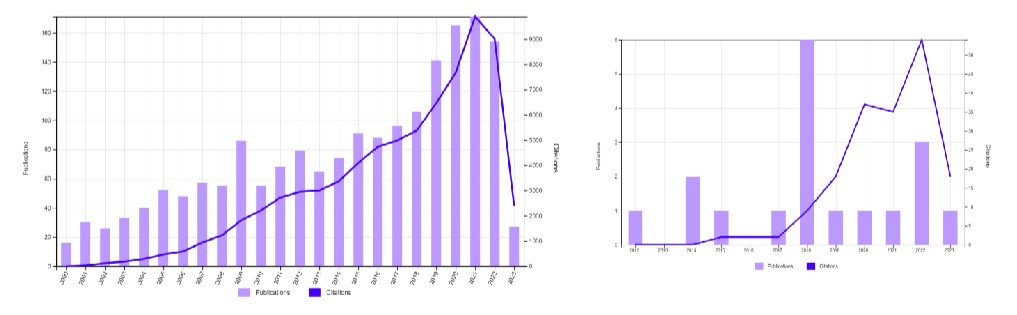
Comparative bibliometric trends of microplastics and perfluoroalkyl and polyfluoroalkyl substances: how these hot environmental remediation research topics developed over time - now published in RSC Advances https://t.co/l423Ho7RMf
"Nori’s Stance on Soil Sampling by Rebekah Carlson https://t.co/OD0nCp2tav."
An analogy can be made with "emission factors" for air pollution, but in the reverse sense ("sequestration factors" for negative emissions). Emission factors are used when sampling is impossible/complex.