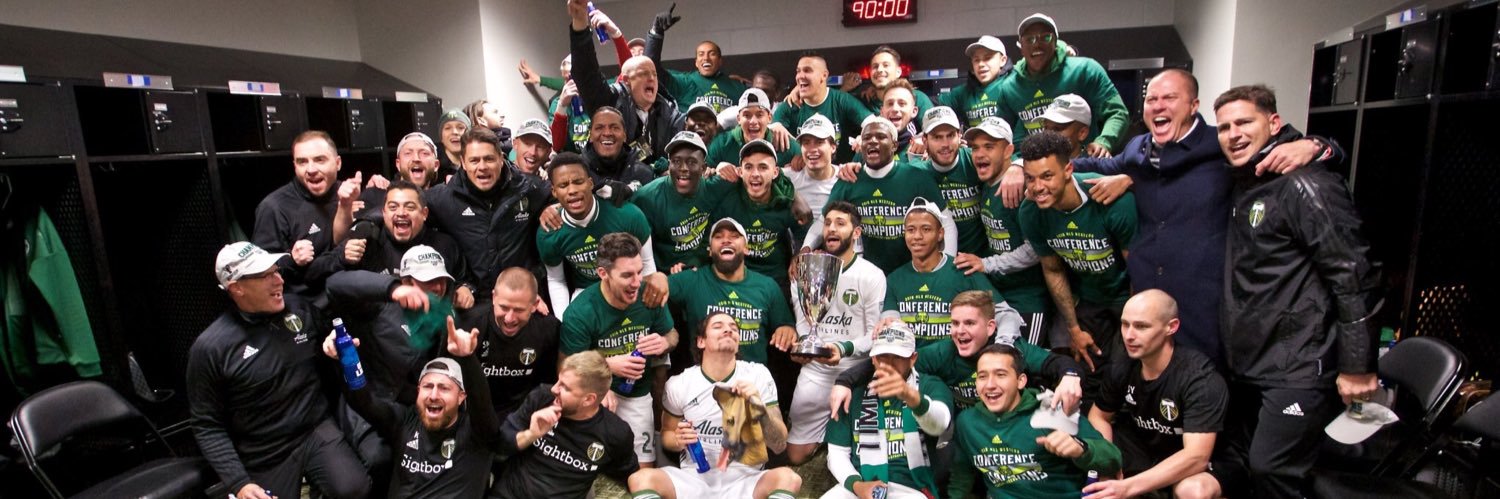
A little update on a fun personal project.
You'll be hearing a lot more from me on all things sports, sports tech & SaaS, human performance, sport science, and more on my new website.
I don't have a subscription or product to sell you- just frontline insight from 20+ years in these fields.
Here is a note from the editor (me) teeing up this new journey:
https://t.co/7nV8xbKQmB
#Sports #SportsTech #HumanPerformance #SaaS
@AndrewNemec The “creatine causes cramping” myth has long been debunked- I’d love to dive deeper into this. Cramping has also been well established as being multi-factored- in other words it’s not just from behind dehydrated. Something more likely going on -
Its not all doom & gloom- there are good people actively working to help get better information, collaboration, and support put in place for multiple sports. I hope the conversation continues forward: if there is money invested in youth sports, let's make sure its spent wisely.
"70% of kids stop playing sports by age 13"
I can tell you firsthand that many coaches who encourage participation in multiple sports face huge challenges in logistics.
There's very little collaboration with the many cooks in the kitchen for the remaining 30% of athletes.
I get it: youth sports coaches already have a ton on their plate. But when there's $ 15K being spent on team travel, but no $ for accredited strength coaches, athletic trainers, nutrition support, etc., and yet you have injuries, burnout, and poor results- whats the real cost?
@johncanzanobft I often think of specialization models we use which are largely based on the US club soccer model. One issue is that the soccer model is being exposed with objective data- it ain't working.
What might that mean for other youth sports using that model?
https://t.co/sI5Dy02pTk
@PaulSpacey What strikes me is the $10K/yr+ price, and yet many clubs I’ve spoken with have no budget to specifically address player health & performance during that key development window- at the same time they ask me for a (free) magical 5 min exercise routine to prevent injuries.
@CoachBMcCaslin@carvperformance What I’ve seen over all these years is many staffs hungry to collect even more data to ask better questions.
However, the scenario you’ve described is also true: overwhelmed staff don’t know where to start because they may have the wrong people leading the charge.
I wrote my Masters project thesis 'Practical Implementation and Application of Integrated Technologies in an NCAA Football Team Setting' in 2015.
Fast forward a decade and "written plans for use of performance technology" are now official NCAA recommendations.
Having been in this realm all these years I am reminded of one thing:
There are schools in 2026 who are still not operating under the same practices and procedures that early leaders had in place 16+ years ago.
University of Oregon is a great example. They were one of the earliest adopters of GPS technology with dedicated & qualified staff using specialized tools to collect data on athlete performance.
16 years later, they have an entire Sport and Performance Science department, budget, Mariota Building, etc.
Then there are other current/recent power-conference schools who don't employ a single, fully dedicated Sport Scientist- if they make use of much technology at all.
These recommendations will hopefully serve as guidance for all institutions, and in particular those schools who are caught playing catch-up during tumultuous times (good luck with that).
https://t.co/yPjsvWFKtW
@SBJ For some added context on data management from performance tech: there are still many institutions not addressing this explosion of sports data.
https://t.co/fUZQ1xs2h3
@andrew_althoff I realize I'm hijacking the thread but I'm sharing an article I wrote addressing those data management questions. Still surprises me to see NCAA/pro teams who have done little to addresses any of the questions when it comes to this type of data.
https://t.co/fUZQ1xs2h3
#MyXAnniversary reflection:
I had a Twitter account prior to this one that was mixed with both personal and professional postings.
What spurned me to delete the old account and create this MDHCSCS account that has been (mostly) field-related content to sports and human performance:
I made an informed comment on a rash of injuries with a specific football team during August when daily doubles were still allowable in NCAA football circa 2012. This came in the form of retweeting a post from a "regional expert" of collegiate sports that reported a high number of starters sitting out during camp suffering from injuries.
I, as a former collegiate football player, credential strength coach, and someone who had coached football myself, simply said something to the effect of: "practicing for 2-3 hours, twice a day, on most days of the week, without a day off is not conducive for preparing for the season if the result is that your best players suffer injuries and can't practice. Many other (more successful teams) don't have daily doubles anymore in 2012."
The regional expert took exception to my informed opinion, and retweeted my post with their own comment:
"If you don't think athletes need daily doubles to get in shape and prepare for the season, you are clinically insane."
Those last words in bold italics are an exact quotation.
11 years later, this place is still as toxic as ever. But alas, I am still here. Maybe I've been the problem all along.
Happy tweeting everyone.
DM me and I'll tell you who it was 🤣
@johncanzanobft I hope Ricci is at a minimum kept in the room for consulting for the hire *if* this process progresses. He's well respected with fans and fellow alumni.
@AdamArchuleta I trained under @Results_Period who was influenced by Jay for portions of our programming & cited you as an example. We did lots of isos, ballistics, and VBT in those days. I ran a 4.8 but got down to 4.44; not as fast as you of course 🤣 but the proof was in the pudding.
@BrendanThompsn It’s refreshing to read thoughtful dialogue on this topic from an informed viewpoint. I think the FTC program has great qualities, and think the same as you regarding contextual aerobic capacity and cardiac development.