Hey @Target The “reusable bags” you are giving away are cheaply made. I picked up one at the checkout counter, and the strap broke. If I hadn’t caught it, it would have landed on my foot. That would not have been pleasant.
Bring back plastic bags, they can be repurposed.
With the death of the King of Norway the mantle of the oldest reigning monarch in Europe & Scandinavia passes to Carl XVI Gustav, King of Sweden, who is 80. He has reigned for 53 years and is also the longest serving monarch 🇸🇪🇸🇪
In April 1945, during the closing days of WWII, the rare Lipizzaner horses of Austria’s historic Spanish Riding School, along with hundreds of other thoroughbreds, were trapped in Hostau, Czechoslovakia. Nazi Germany had confiscated the horses to build an experimental "Aryan" equine breed, but as the war drew to an end, the stud farm found itself stranded between the retreating German Army and the advancing Soviet Red Army. Fearing that incoming troops or starving local refugees would slaughter the priceless herd for meat, the farm's German caretakers secretly reached out to American forces to arrange a surrender and rescue.
Recognizing the immense cultural value of the 400-year-old breed, General George S. Patton, a former Olympic equestrian, authorized a high-stakes, covert rescue mission designated Operation Cowboy. He tasked a small unit from the U.S. 2nd Cavalry Group with pushing 20 miles behind enemy lines into Soviet-assigned territory to seize the farm. Given their limited manpower, the American unit took the extraordinary step of enlisting surrendered German Wehrmacht soldiers, as well as liberated Allied POWs, to secure the area and handle the animals.
When fanatical Waffen-SS units launched counterattacks to retake the installation, American GIs and Wehrmacht soldiers stood shoulder-to-shoulder, firing side-by-side to defend the farm. The joint force successfully repelled the attacks, rounded up over 1,200 horses, including 375 Lipizzaners, and safely herded and trucked them past American lines just hours before Soviet forces arrived. Operation Cowboy remains one of only two documented instances in World War II where American and German Wehrmacht soldiers fought as allies against Nazi SS troops.
To secure the surrender before the Soviets arrived, U.S. Captain Thomas Stewart had to engage in a bizarre piece of military theater. When he crossed into enemy lines to negotiate, the commanding German general refused to surrender his garrison to a lone American captain, claiming it would dishonor his men. Capt. Stewart agreed to the general’s terms: he promised to return the following day with a fleet of U.S. tanks. When Stewart rolled back into town with two light tanks and an armored task force, the German general formally surrendered with full dignity, instantly transforming his Wehrmacht troops, liberated Cossack riders, and Polish POWs into a unified defense force to herd the Lipizzaners to safety.
#archaeohistories
It’s hard to imagine living a life so well that when you die, the entire world, a world that hates each other, stops for a minute to all talk about how awesome you were.
My 7-year-old daughter heard me say that Dolly Parton died, and got visibly very sad. I was surprised she even knew that name.
“You know Dolly Parton?”
In the sweetest timid voice, she replied:
“Well, I don’t _know_ know her. But she sent me books.”
🥹😢😭
Throughout his life, Colin Anson remained mindful of his roots in Germany and the debt he owed to Britain for saving his life. But how did he feel towards Germany? The answer is aptly demonstrated by an incident that occurred while he and his wife Alice were travelling through Austria later in life:
"In our carriage there was an older man with a young boy. It turned out to be grandfather and grandson. The grandfather was explaining in German about the mountains we were passing through. Alice and I found it very interesting and I started to join the conversation in German. Then we talked about holidays, different countries and travel. He said that he had been in Sicily. And I replied, ‘Yes, me too, but that was only during the war.’
He then said, ‘Ah, I was in the Luftwaffe, a Stuka pilot.’ I was surprised and admitted that I had been hit by a Stuka. One thing led to another and it transpired that he remembered an operation over Sicily in which he and his mates had attacked Allied shipping in Augusta Bay. His memory was so accurate. ‘But,’ he said, ‘a smokescreen had been laid and obscured most of the ships – with the exception of one, so we concentrated our fire on that one ship that was laying the smoke screen.’ It was the moment when I realized that he may well be the very pilot who had dropped the bomb that wounded me! He was terribly embarrassed and I had to console him and explain: Why should I resent it? It was his job. It was his duty. Today I would not hold it against anyone for having been a Nazi. What else should they have done?
Alice and I always feel perfectly happy in Germany, especially now. The current generation are not Nazi and have no personal link to the actions of the Nazi regime. They are not responsible for the actions of their ancestors. They often feel guilt by association for what their parents or grandparents may have done during the war."
Not once in all the years that I knew Colin did I encounter any bitterness for what he had lost – the country of his birth and home, his father, his education and a future like those of his schoolmates in Germany. There were no regrets. He retained a sense of pride, and was even philosophical as he reflected back on his life. He would never accept that he had ever been a hero, and I learnt to acknowledge that: we would not make heroes out of him and his comrades. But his story did deserve to be told – that he finally accepted. I feel incredibly lucky and privileged to have been allowed to enter his world, his past, to understand his perspective as an eyewitness to history, and to have listened to a life which the intervening years could not erase.
(end).
As the sun sets over our Tennessee mountain home, we're grateful for a supporter of the Smokies who has always carried these mountains in her heart. 🌄💛Thank you, Dolly, for sharing your love for the Great Smoky Mountains with the world.
One woman (Erika Kirk) loses her husband and people put her on trial and judge her actions.
Another woman (Lindsay Clancy) strangles her 3 children and people are working overtime to justify her actions.
We have lost all perspective.
Tonight, the Empire State Building tower lights will turn to a pink sparkle at 9:25 to honor the late Dolly Parton.
Dolly was a global cultural icon whose seven-decade career reached generations of fans. Beyond entertainment, Dolly leaves a significant philanthropic legacy through the Dollywood Foundation and Imagination Library, which has provided hundreds of millions of books to children worldwide.
At Nine-Two-Five tonight, we celebrate her and her legacy 💖
On September 11, half a million people were taken off Manhattan by boat.
It took nine hours.
Everyone remembers the footage of people walking north across the Brooklyn Bridge. Almost nobody talks about the people south of the towers, who could not walk north, because north was where the towers had just come down.
Bridges closed. Tunnels closed. Subways stopped. Hundreds of thousands of people were standing at the edge of an island inside a cloud of concrete dust with nowhere left to go on foot.
A Coast Guard lieutenant named Michael Day got on the radio and called for every boat in the harbor. Any vessel willing to help evacuate Lower Manhattan, report in.
The harbor turned around and came at Manhattan.
Ferries. Tugboats. Dinner cruise boats. Fire boats. Private yachts. Sandy Hook pilot boats. Roughly 150 vessels and about 800 mariners, most of them civilians who happened to own a boat with a working engine.
At points the dust was so thick they were docking by radar because they could not see the seawall they were pulling against.
One captain was offered four thousand dollars by a man who wanted to be run across alone. He turned it down and kept loading people.
Another captain wrote down the name of a passenger afterward. Harold. He had been shaking badly when they pulled him aboard. Once he understood he was safe and headed for New Jersey, he asked to ride back with them and help.
The final count was over 500,000.
Dunkirk moved 338,226 men, and Dunkirk took days.
There was no plan for this. Nobody was in charge of it. One man with a radio asked, and a harbor full of strangers pointed their boats at the smoke.
Many of those mariners have cancer and lung disease now from the air they were breathing that day.
It is the largest water evacuation in human history.
It was finished before dinner. 🇺🇸
The last to die.
August 18, 1945. Three days after Japan’s surrender announcement. The war was supposed to be over.
Over Tokyo, two B-32 Dominators flew a photo-reconnaissance mission to make sure the cease-fire was real. One of them carried a 19-year-old kid from Pottstown, Pennsylvania: Sgt. Anthony J. Marchione, photographer’s assistant.
Japanese die-hard pilots ignored the Emperor’s order. They scrambled from Yokosuka and Atsugi, climbed hard, and attacked!
Marchione was helping a wounded buddy when a 20 mm cannon shell tore through the fuselage and into his chest. He stayed conscious long enough to say "Stay with me". 2nd Lt. Kurt Rupke held him as he bled out in the clear sky above Tokyo.
Tony Marchione never made it back to Okinawa. He became the last American killed in air combat in World War II.
The war that began with a surprise attack by Japanese warplanes ended the same way, with one final, forgotten death.
Police are searching for a man in Philadelphia who harassed several individuals while wearing a Chucky doll mask, reportedly asking a female jogger if she was “ready to die.”
JUST IN: 13 Penn State fraternity brothers charged with running a major cocaine trafficking ring, with some pledges allegedly forced to cut & package cocaine as part of their “indoctrination” into the frats.
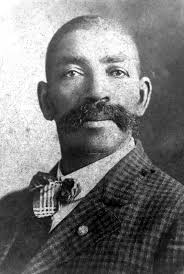
The most successful lawman in the history of the American West was born into slavery, could not read a single word, and once arrested his own son for murder.
His name was Bass Reeves.
He was born in Arkansas in 1838 and owned by a man named George Reeves. During the Civil War the two of them were playing cards, something was said, and Bass beat him and ran. He went into Indian Territory and lived with the Cherokee, Creek and Seminole for years. He learned to shoot, he learned to track, and he learned to speak five different languages, none of which he could write down.
When the war ended he came out a free man with a very specific set of skills and no way to use them, so he farmed.
Then in 1875 the federal government had a problem. Indian Territory had become the place outlaws went because white marshals could not operate there and did not know the ground. Judge Isaac Parker needed deputies who could. Somebody pointed at the farmer who knew every creek in the territory and spoke to everyone in it.
Reeves was 37. He worked the job for the next 32 years, over a district of 75,000 square miles.
He made more than 3,000 arrests. He killed 14 men in the line of duty. He was never once wounded, though on separate occasions men shot the hat off his head and the belt off his waist.
And he could not read the warrants he was serving. So before he rode out, he had someone read the stack to him out loud, and he memorized them. All of them. Names, charges, descriptions. When he needed a specific warrant he pulled the right piece of paper out of the pile every time. In 32 years he never arrested the wrong man.
He also just lied to people constantly. He would ride out as a farmer, a cowboy, a drifter, whatever the situation called for. Chasing two brothers in the Red River Valley, he showed up at their mother's house dressed as a run-down tramp in a floppy hat with three bullet holes shot through it, told her he was on the run from a posse, and asked for a meal. She fed him. She let him stay. When her sons came home that night he sat with them and pitched them on letting him join up.
He waited until all three of them were asleep in the same room. Then he quietly handcuffed both of them without waking either one and walked them 28 miles back to his camp in the morning. Their mother followed him for miles down the road cussing at him the entire way.
In 1887 he was tried for murder himself, for the shooting of his own trail cook. A Black deputy on trial for killing a white man in 1887 Arkansas. He was acquitted.
In 1902 his son Bennie killed his wife. The other deputies did not want to touch it. Reeves asked for the warrant, said it was his to serve, and went out and brought his own son in within two weeks. Bennie got life at Leavenworth. He served his time so cleanly that citizens petitioned for his release and he got it.
Then Oklahoma became a state in 1907 and brought its segregation laws with it. Reeves was 68 years old with three thousand arrests behind him, and he did not keep the federal job.
So he took a job as a city policeman in Muskogee, walking a beat downtown.
For the two years he walked it, there was not a single reported crime on that beat.
Some historians argue the Lone Ranger was based on him. That part gets debated. Everything above it is just the record.
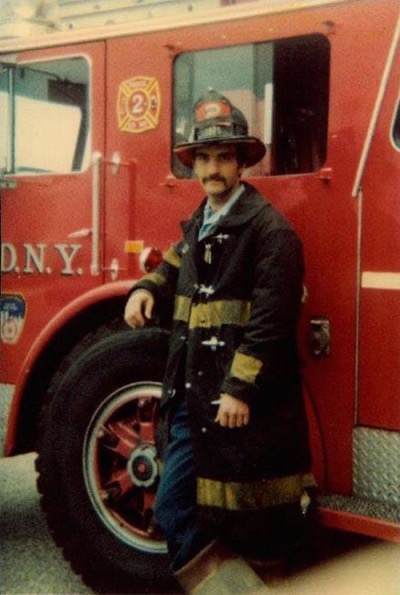
🇺🇸 25 Heroes of 9/11 You Don’t Know: #25 Ronald Bucca
He was a former Vietnam veteran Green Beret with the 11th Special Forces Group. He climbed by stairs higher than any other first responder that day.
Bucca was a longtime member of FDNY Rescue 1 and eventually became a Fire Marshal. He studied the towers for years after the 1993 bombing. He had warned that the terrorists would return. He was right.
On September 11, he called his wife one last time. He told her “A plane just went into the Trade Center and we’re going into the building now.”
Then he hung up. When he got to ground zero he climbed the South Tower with his partner, Fire Marshal James Devery.
Around the middle floors Devery stopped to help a badly burned woman named Ling Young and get her out. Bucca kept going up alone.
Higher up he linked with Battalion Chief Orio Palmer, who had taken a working freight elevator part of the way. Together they reached the 78th-floor sky lobby, the impact zone. No other first responders are known to have gone higher.
At 9:52 a.m. Palmer radioed that they had two isolated pockets of fire and “numerous 10-45 Code Ones.” They were fighting the fire and trying to help the wounded.
At 9:59 a.m. the South Tower collapsed. When his body was recovered from the World Trade Center rubble on October 23, 2001, his jacket was not on his back.
Instead, it was found wrapped around a civilian woman next to a group of people near a stairwell pocket where they had been trapped.
As a Fire Marshal he did not have to go in. He went anyway. He was the first Fire Marshal ever killed in the line of duty for the FDNY.
He left behind his wife Eve, their daughter Jessica, and their son Ronald Jr. His son became a Green Beret at age 23 and has completed 5 combat tours.
Bucca is memorialized at the South Pool on Panel S-14.
Never forget Fire Marshal Ronald Bucca.
This high school in Oklahoma has one of the best first-day traditions for freshmen. The seniors line up outside as the freshmen arrive, and before heading inside for their first day of high school, every kid has to give their mom one last goodbye kiss