Yes, anyone can build anything now. We know. But it wasn't that hard to do before. You execute a series of steps toward a goal.
The problem is psychological. Most people will still fail to start, and even more will fail to iterate. Your competition isn't as large as you think.
meanwhile in Pakistan, if you want to import a 3D printer you have to get an NOC from the ministry of interior and clearance from 12 intelligence agencies.
You aren't going to get lucky repeating the same day.
You need to go on more side quests. Weekly. Daily if you can. Even one tiny new decision can substantially increase your chances at luck.
This is not a proud moment for Pakistan; it’s a shameful moment for the Pakistani government. If this guy were in Pakistan, he would be stuck dealing with FBR issues. We don’t encourage or support talented young people in our own country. We never provide them opportunities, and when they go abroad and succeed through hard work, people like you call it a proud moment for Pakistan.
The self-hating lot are at it again
This time it's about the Pakistani success story of 26-year-old Sualeh Asif who's made it to the Forbes Billionaires list with an estimated real net worth of $1.3 billion - Elon Musk's Space X is reported to be buying his company for $60 billion
The argument they are using is that Pakistan did nothing for him and his success is all because his university education and further business success was in America
While that may indeed be partly true, since MIT is where he obtained his higher education, it is also true that his school was all done in Pakistan - and that he represented Pakistan in the Maths Olympid for 2-3 years - and that he did his A levels at Karachi's Nixor College
Furthermore, admission at MIT, which is one of the world's best universities, is based on one's academic and extracurricular achievements, and all these were most likely achieved during his schooling in Pakistan
So to say that Pakistan contributed nothing to his success and did nothing for his talent is not entirely accurate
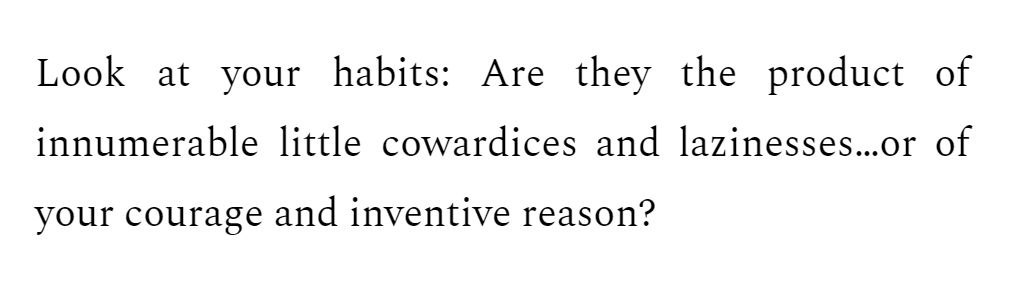
according to stoicism, a life wasted by fear, inaction, and doubt is the worst thing you can do. your lack of urgency and imagination is killing your potential.
yeah, becoming a billionaire isn’t just about individual brilliance.
it’s heavily shaped by the system you’re operating in; infrastructure, capital, access, timing, people around you. some environments compress decades of progress into a few years, others slow everything down. pakistan, especially in tech, still sits in the second category. things are improving, but the gaps are real, and they compound over time.
sualeh asif is a strong example of what happens when raw ability meets the right environment at the right time. he made it to mit, built with the right people, and scaled something that reached a $29.3 billion valuation by november 2025, raising $2.3 billion along the way. it crossed $1 billion in annualized revenue and is used widely across serious engineering teams.
he’s from karachi, represented pakistan at the international math olympiad from 2016 to 2018, and was already building things in college. none of that is accidental, but none of it exists in isolation either.
and that’s the part that usually gets ignored. there are many people with high raw ability across the country who never get similar outcomes. not because they lack intelligence or work ethic, but because they don’t get access to the same compounding factors; exposure, mentorship, environments that push them, or even basic awareness of what paths exist.
so the conversation shouldn’t drift into blind admiration or empty criticism. it should get precise. outcomes like this are a combination of ability, environment, and timing. if even one of those is missing, the trajectory changes.
focusing on outliers still matters, but for the right reason. not as mythology, but as data points. they show what’s possible when the variables align. if those examples are studied properly and made visible, they can recalibrate expectations for others who are capable but unaware.
that’s where narrative has a role; not to exaggerate, but to reflect reality accurately. to show that potential exists, but also that it needs the right conditions to convert into results. without that, most of it stays latent.
@sualehasif996
https://t.co/VeVZ8zVGFl
Finally the kind of role models Pakistani youth needs: Sualeh Arif.
Not property dealers, tax evaders, bank defaulters, rent seekers, born into wealth etc.
But a self-made kid from a middle-class family in Karachi. Studied at MIT, started a hugely impactful company, changed the way people write code, now worth over $ 1 Billion at the age of 26!
https://t.co/rLzJibEWcb
Stop trying to be smart. It’s ruining you. Those who obsess over knowledge end up drowning in it.
Instead, pick just one source and dive deep into learning. Then implement the knowledge immediately.
Reading is the antidote to brainrot. The cognition curve is flattening faster than ever, books uniquely fight against this. Better vocabulary, better imagination, better thinking. Train your brain like you train your body. Books are weights for the mind.