@baroncoleman Why has nobody mentioned that not one single member of Charlie's security team pulled out their firearm to protect Charlie after he started going down?
1- The White House transferred $400M of tax payer funds this week to pay for the ballroom, under the guise of “security”. Tracing it now for us…
2- Trump is spending the weekend at Camp David. He wont even spend 15 min at Camp David normally.….something is up.
@RealCandaceO@baroncoleman Hats off and huge kudos to Ian Carroll for promoting Baron Coleman! Baron would not be where he is today if it wasn't for Ian recommending him to his own followers. My top 3 podcasters are Candace, Ian & Baron!!!
Attention fedslopers, TPUSA whores, and anyone who genuinely believes Charlie was shot with a 30-06:
This is two sequential frames.
At 60fps, 0.01667 seconds had elapsed, or if we're being generous, 0.0333 seconds at 30fps.
The shirt aside, how would a temporary cavity result in his hairline standing straight up?
Keeping in mind that it necessarily must be a result of the temporary wound cavity, as Charlie, for all intents and purposes, had not and was not moving yet within the 0.01667 - 0.0333 seconds you see here.
Open to being wrong, give me your best explanation.
I'm a cardiologist. I've spent twenty years as the person patients trust to interpret their bodies. And I need to tell you something that most physicians won't say out loud:
AI is about to change the power dynamic between you and your doctor. Forever.
Four days ago, OpenAI's o3 model diagnosed 18 children with rare diseases that the best human specialists at Boston Children's Hospital couldn't solve — some after nearly twenty years of searching. Published in the New England Journal of Medicine.
Two weeks ago, WashU researchers proved that nine routine blood markers can calculate your biological age — and predict cancer risk years before any tumor forms. A free calculator. Available to anyone.
Last month, AI-enhanced coronary CT angiography detected inflamed arteries in patients whose standard stress tests said "normal." Patients who would have gone home reassured and wrong.
The pattern is unmistakable. The tools that used to require a specialist, a referral, a three-month wait, and a $400 copay are migrating into your phone, your bloodwork portal, and your own hands.
And I'm watching something in my practice I never expected.
Patients are walking in more informed than some of the residents I trained. They've run their PhenoAge score. They know their ApoB. They've read the study about Lp(a) before I've had time to bring it up. They come with questions so specific that the conversation starts at a level it took me years of training to reach.
This used to threaten physicians. It shouldn't. It should liberate us.
Because here's the truth about the old model: a 15-minute appointment where your doctor runs a basic metabolic panel, glances at the numbers, says "looks fine," and sends you home — that model was never good enough. It was just all we had. It missed 75% of future heart attacks. It caught cancer late. It told women with microvascular disease they had anxiety. It filed children with rare diseases as "unsolvable."
AI doesn't replace the physician. I've said this before and I mean it — the human moment, the clinical judgment, the hand on the shoulder when the diagnosis lands — that's irreplaceable.
But AI does something the old model never could: it gives you the ability to see inside your own biology with a depth and speed that was impossible a decade ago. To track your own numbers. To calculate your own biological age. To bring data to your doctor that elevates the conversation from "am I sick?" to "where exactly am I heading, and what do we do about it?"
The patient who walks in with their ApoB, their Lp(a), their hsCRP, their PhenoAge calculation, and a list of questions from the latest research — that patient doesn't threaten me.
That patient is the easiest person in my practice to keep alive.
Because they've already done the one thing most patients never do: they stopped waiting for permission to understand their own body.
I went into medicine because I wanted to help people live longer. What I've learned is that the patients who live longest are the ones who took ownership — not of my job, but of their own data, their own questions, and their own decisions.
The tools are here. The research is published. The calculators are free. The blood tests cost less than a dinner out.
You don't need to wait for your annual physical to find out what's happening inside you. You don't need permission to understand your own biology. And you don't need to accept "looks fine" from anyone — including me — when the science offers a deeper answer.
The revolution isn't coming. It's in your pocket. In your patient portal. In the published studies you can read yourself.
The only question left is whether you'll use it — or keep waiting for someone to tell you it's time.
Your body. Your data. Your life.
Take ownership. Your future self is counting on it.
I'm a cardiologist. I've spent twenty years as the person patients trust to interpret their bodies. And I need to tell you something that most physicians won't say out loud:
AI is about to change the power dynamic between you and your doctor. Forever.
Four days ago, OpenAI's o3 model diagnosed 18 children with rare diseases that the best human specialists at Boston Children's Hospital couldn't solve — some after nearly twenty years of searching. Published in the New England Journal of Medicine.
Two weeks ago, WashU researchers proved that nine routine blood markers can calculate your biological age — and predict cancer risk years before any tumor forms. A free calculator. Available to anyone.
Last month, AI-enhanced coronary CT angiography detected inflamed arteries in patients whose standard stress tests said "normal." Patients who would have gone home reassured and wrong.
The pattern is unmistakable. The tools that used to require a specialist, a referral, a three-month wait, and a $400 copay are migrating into your phone, your bloodwork portal, and your own hands.
And I'm watching something in my practice I never expected.
Patients are walking in more informed than some of the residents I trained. They've run their PhenoAge score. They know their ApoB. They've read the study about Lp(a) before I've had time to bring it up. They come with questions so specific that the conversation starts at a level it took me years of training to reach.
This used to threaten physicians. It shouldn't. It should liberate us.
Because here's the truth about the old model: a 15-minute appointment where your doctor runs a basic metabolic panel, glances at the numbers, says "looks fine," and sends you home — that model was never good enough. It was just all we had. It missed 75% of future heart attacks. It caught cancer late. It told women with microvascular disease they had anxiety. It filed children with rare diseases as "unsolvable."
AI doesn't replace the physician. I've said this before and I mean it — the human moment, the clinical judgment, the hand on the shoulder when the diagnosis lands — that's irreplaceable.
But AI does something the old model never could: it gives you the ability to see inside your own biology with a depth and speed that was impossible a decade ago. To track your own numbers. To calculate your own biological age. To bring data to your doctor that elevates the conversation from "am I sick?" to "where exactly am I heading, and what do we do about it?"
The patient who walks in with their ApoB, their Lp(a), their hsCRP, their PhenoAge calculation, and a list of questions from the latest research — that patient doesn't threaten me.
That patient is the easiest person in my practice to keep alive.
Because they've already done the one thing most patients never do: they stopped waiting for permission to understand their own body.
I went into medicine because I wanted to help people live longer. What I've learned is that the patients who live longest are the ones who took ownership — not of my job, but of their own data, their own questions, and their own decisions.
The tools are here. The research is published. The calculators are free. The blood tests cost less than a dinner out.
You don't need to wait for your annual physical to find out what's happening inside you. You don't need permission to understand your own biology. And you don't need to accept "looks fine" from anyone — including me — when the science offers a deeper answer.
The revolution isn't coming. It's in your pocket. In your patient portal. In the published studies you can read yourself.
The only question left is whether you'll use it — or keep waiting for someone to tell you it's time.
Your body. Your data. Your life.
Take ownership. Your future self is counting on it.
Found the suppressed video of Charlie Kirk at the Andy Biggs launch rally May 31, 2025. It’s been scrubbed from TPUSA outlets.
In it, Charlie spoke of a long 10-year journey and the wild ride ahead pushing toward 2026. He urged: keep the narrative and the story straight.
Frank Turek claimed they were “mentoring Charlie to be better.” Bullshit. Charlie was the best-flawed like any man, but a powerhouse.
What they meant was narrative control.
Charlie started breaking free, telling his own story. He never got to finish it. The truth got him killed on Sept. 10, 2025.
He wasn’t perfect. He was controlled.
This was his last major TPAction rally.
They couldn’t control him forever. Rest in power and peace, Charlie. The fight continues.
Gary Brecka, who chairs Bobby Kennedy's MAHA action committee, says America's food system was engineered to make you sick on purpose.
He's careful with his words for most of the interview. Not here. Brecka argues the disastrous dietary guidelines Americans grew up trusting were never an accident.
BRECKA: "That food pyramid wasn't architected by accident. Lucky Charms wasn't more nutritious than grass-fed steak by accident. Highly processed foods didn't make it to the top of the chart. That was intentional."
"We are undoing decades of intentional malfeasance that, in my opinion—not to be a conspiracy theorist—was designed to make the American population sick and more dependent on drugs."
DR. PHIL: "I couldn't agree with you more, and I don't think it's just wild conspiracy theory."
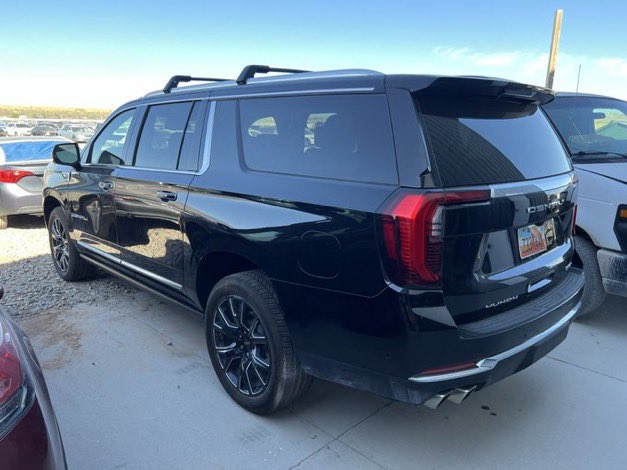
🚨 Here is the Carfax report for the 2025 GMC Yukon XL Denali that Charlie Kirk was riding in.
It’s considered a crime scene, but this car was auctioned off and ultimately sold to someone in California 🧐
@alleytopfiles@DAndersonMusic1
We've been lied to.
While we're discussing obvious lies, let me clarify that I've never been more confident than I am right now that Tyler was in custody before 6:25p on 9/11.
Holy shit... It's long and painful but anyone in Colorado needs to listen to this. Holy shite...
Victor Marx: "sometimes you just gotta kill em"
"sometimes you just gotta smoke em and bury them in the swamp" ...🤯
Frank Turek: "how do you get away with murder?"
Victor replied:" oh well you know"...🤯.
No victor I don't know WTF are you talking about!!!
You have a safe house with 27 girls WTF.. there's so much in this but the main point is how close Victor Marx is to Frank Turek.
WTF @victormarx ?
WTF @DrFrankTurek ?
You two are sick in the head with your satanic giggles. 😡
Part 1
Murderer @victormarx is connected to them all.
Everyone that was in the SUV when Charlie died is a close association to Victor.
Frank Turek, Mikey McCoy, Rob McCoy, Jack Hibbs and Butch Hibbs, Andrew Feraci and the entire security team all closely linked with Victor Marx.
Maybe that's why @phil_lyman pretended not to know who Victor Marx was even though he is running for Governor of Colorado. 😡
Dear Blake,
@BlakeSNeff
We can speak to this with total accuracy as we were in communication with Candace (and Erika’s team) at that time immediately after the execution.
I don't believe you were in communication with Candace at that time. @RealCandaceO
We spoke with Candace directly on the phone shortly after Charlie was killed.
Candace was totally distraught about Charlie and she was completely distraught for Erika as a wife as a mother and as a personal friend.
This was Candace’s position by our obsevation at that time and for many many days after his death.
After a few days there were aspects of the offtcial story that did not make sense to her and she was not alone in feeling this, but this was disconnected to Erika.
But at that time her sympathy and thoughts about Erika were completely kind loving and helpful. She would have done anything for her.
I have consistantly advised transparency on all these matters.
So please don't push this falsehood as it harms the media platform that we helped to create and it harms the TPUSA brand.
It's unethical.
Kind regards,
John.
Who remembers when Charlie Kirk’s security team were frantically passing things to each other just seconds after he was shot?
What was that?
@Villgecrazylady