#WATCH | Geneva, Switzerland: Foreign Secretary, Baloch National Movement, Faheem Baloch says, "Today we had a long march in Geneva to tell the world what kind of atrocities are going on in Balochistan. The people are being abducted, tortured, and killed... The security forces have started abducting the family members of those talking about the human rights violations and killings."
Balochistan Is Not Pakistan.
Geneva, Switzerland: The Baloch National Movement (BNM) held anti-Pakistan rally in Geneva during the 63rd Session of the UN Human Rights Council, drawing attention to human rights concerns in Balochistan.
A photo exhibition was also organised alongside the rally, featuring images highlighting what organisers described as ongoing human rights violations in the region. The event sought to draw international attention to the situation in Balochistan and call for greater scrutiny of the reported concerns.
#FreeBalochistan
#WATCH | Geneva, Switzerland: The Baloch National Movement (BNM) held anti-Pakistan rally in Geneva during the 63rd Session of the UN Human Rights Council, drawing attention to human rights concerns in Balochistan. A photo exhibition was also organised alongside the rally, featuring images highlighting what organisers described as ongoing human rights violations in the region. The event sought to draw international attention to the situation in Balochistan and call for greater scrutiny of the reported concerns.
The Baloch National Movement holds a protest rally against Pakistan Army in Geneva during the 63rd UN Human Rights Council session, seeking international attention to human rights concerns in the region.
A photo exhibition accompanied the protest, featuring images that organisers said documented the violations.
The real criminal is running the nation, while activists demanding justice are detained and arrested. Welcome to a state run by the uniform.
@realZalmayMK@baloch_ambreen@MarioNawfal
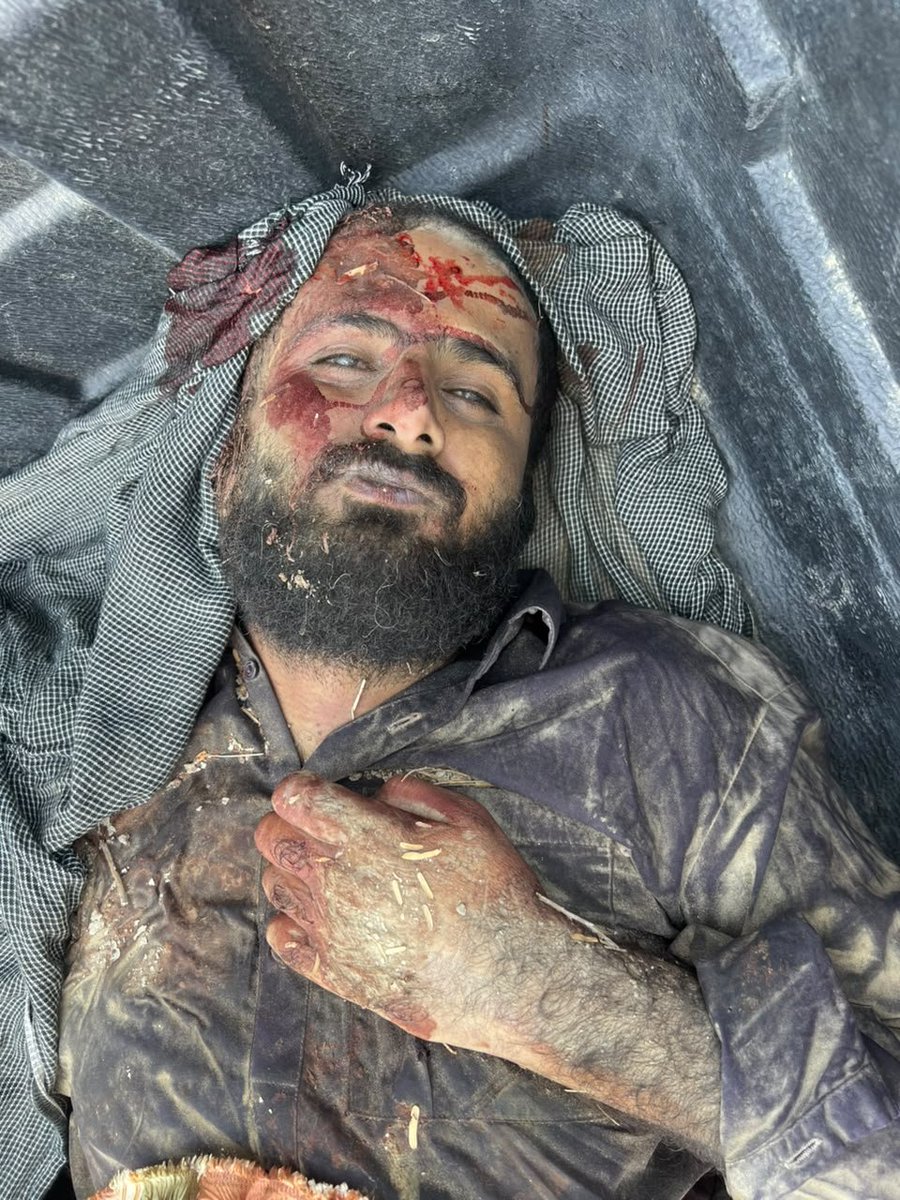
On 24 August, Hassan Rafiq was released on bail but was abducted by Pakistani forces from outside Turbat Jail just after his release. Today, his body was found alongside those of two other victims of enforced disappearance, Nadil and Ehsan, in Kuldan area of Dannuk, #Balochistan.
Pakistan Army extrajudicially killed 3 people and dumped their bodies today in the Kuldan, Dannuk area of District Gwadar, #Balochistan. One of the victims has been identified as Ehsan Baloch, who was forcibly disappeared by Pakistani forces on January 22 from his house in Jiwani
The injured civilian from the Kharan drone attack testified to this brutality in his final moments before losing his life. This is not the first incident; the Pakistani army is committing daily genocide of the Baloch nation. #Kharan#Balochistan
Military operations in Balochistan are being carried out amid grave and persistent abuses against civilians, including extrajudicial killings, injuries, enforced disappearances, and collective punishment.
In Killi Yar Muhammad Sonaro, Wadh, FC firing killed four civilians and injured several others, including 7 year old Shahzaib.The killing and injury of civilians, particularly children, expose the devastating human cost of military operations.
The repeated use of military force against Baloch civilians, the killing of children, and the constant fear imposed on communities cannot be dismissed as isolated incidents. This persistent pattern of violence reflects a deliberate and systematic policy aimed at suppressing the Baloch population and denying its fundamental rights.
This is genocide and it demands international action.
@UN_SPExperts@UNHumanRights@amnestysasia@a_siab@mjdawar@HRCP87@EUPakistan@eu_eeas
#StopBalochGenocide
Mahgul’s Killing: After the Sons, the Mutilated Bodies of Baloch Daughters Are Now Being Dumped — Dr. Naseem Baloch
Chairman of the Baloch National Movement, Dr. Naseem Baloch, has said that the abduction of Mahgul Baloch under the cover of darkness at night, brutal torture, gouging out her eyes and killing her, and then dumping her mutilated body behind Turbat University is not a sudden or accidental crime, but a dangerous beginning of extending the state war crimes that have been practiced against Baloch youth for years—abduction, torture, killing, and dumping mutilated bodies—to Baloch women as well. The Baloch nation must consider this a test case because the state wants to see what the possible reaction will be if, after Baloch sons, Baloch daughters are also picked up from their homes, tortured, and their mutilated bodies are dumped under the shadow of military checkpoints. If there is no strong collective resistance against this crime today, this silence will pave the way for the state and its killer army for the next abduction, the next killing, and the next mutilated body.
He said that the available evidence regarding the abduction and killing of Mahgul Baloch points towards the armed groups commonly known in Balochistan as “death squads.” These are not ordinary criminal groups but a regular part of the Pakistan Army and intelligence agencies, which are used to crush the Baloch national movement, terrorize political activists and ordinary citizens, and cover up state crimes. In return, they are provided protection and given a free hand in looting, extortion, and other crimes in society. Therefore, Mahgul Baloch’s killing cannot be described merely as a crime committed by a death squad while absolving the state and the military of responsibility. In reality, the state army has committed this painful war crime through proxy killers.
The Chairman said that this crime is even more horrifying because Mahgul Baloch’s body was dumped in an area where there are numerous military checkpoints, security installations, and an extensive surveillance system. On the one hand, the state has placed every road, village, and small and large settlement of Balochistan under a military siege, and even everyday activities are strictly monitored. On the other hand, within this very siege, the killers abduct a Baloch woman, torture her, kill her, dump her mutilated body, and leave without fear. This incident cannot be presented to the Baloch nation as a failure of security because the killer has left his mark, and the Baloch nation is fully aware of it.
Rather, it is the result of a state system in which the killer and the protector have become different faces of the same power. There must be an independent forensic, medical, and judicial investigation into the killing of Mahgul Baloch, the torture inflicted upon her, and all circumstances surrounding the dumping of her body. Evidence must be preserved, and along with the responsible individuals, their state patrons must also be exposed.
He said that the National Party, along with the so-called nationalist parliamentary parties, cannot absolve themselves of this crime by issuing a few formal statements. Describing Mahgul Baloch’s killing merely as a “deteriorating law and order situation” is a continuation of attempts to absolve the state, for which the National Party provided political justification, legal facilitation, and practical support during its time in government. A party that paved the way for military aggression , enacted legislation in support of state actions, and whose affiliated individuals are still, at various levels, serving as the hands and arms of the same military today—its current superficial rhetoric is not condemnation but political complicity in the crime. Those who call Kech their political centre: the Baloch nation has the right to ask them that if they cannot mobilize the people even over the abduction, brutal torture, and mutilated body of a Baloch woman, then what use are their nationalism, representation, and politics?
Is the Baloch nation alive only to carry the mutilated bodies of its sons and daughters? Although we cannot stop this oppression by force immediately, this by no means means that we should remain silent, conceal the names of the killers, or continue to give time to their political facilitators. Our voice, pen, protest, strike, public gatherings, and organized political resistance are the forces that the state fears, and this is what is called a national movement. And to crush this movement, Pakistan is committing such war crimes.
Baloch society, political activists, students, women, human rights organizations, and the international community must immediately raise a united and effective voice for justice for Mahgul Baloch and for the protection of Baloch women. Picking up Mahgul Baloch’s body and quietly returning home will not make this crime the last crime. Only organized and sustained resistance can send a message to the state that the Baloch will not silently accept the blood of their sons and daughters.
https://t.co/7SfOsW5YdD
Former BNM Vice Chairman Dr. Khudabakhsh Baloch’s Family Subjected to Continued Collective Punishment: Dr. Naseem Baloch
Wednesday, September 9, 2026 | #BNMChairman
https://t.co/Plgz9Eosyz
Dr. Naseem Baloch, Chairman of the Baloch National Movement (BNM), has said that the family of the party’s former Vice Chairman, Dr. Khudabakhsh Baloch, has been subjected to systematic and relentless collective punishment for years. His elder brother, Qadir Bakhsh Baloch, has been forcibly disappeared for the third time. This is not merely the abduction of an individual; it is a recurring state crime aimed at breaking, intimidating, and silencing an entire family.
Dr. Naseem Baloch said that Qadir Bakhsh Baloch and his sons have endured years of unspeakable persecution and suffering at the hands of the Pakistani state. This is the third time that the head of the family, Qadir Bakhsh Baloch, has been subjected to enforced disappearance. Previously, he and both of his sons were detained by the Pakistani military and taken to torture facilities, where they were subjected to severe physical and psychological abuse before eventually being released.
However, their release did not mean freedom. They were forced to live under constant fear, surveillance, and the ever-present threat of being taken away again. Now, once again, Qadir Bakhsh Baloch has been torn away from his home, his family, and his life. Those he has left behind are forced to live every moment with the anguish of not knowing where their loved one is being held, what condition he is in, or what kind of suffering he may be enduring.
Dr. Naseem Baloch said that the Pakistani state has turned collective punishment into a permanent ordeal imposed upon Baloch national and social life. Across Balochistan, there are now scarcely any days when a home or neighbourhood is not raided or attacked, when a mother is not deprived of her child, or when a child is not separated from their father and a sister from her brother.
Only a handful of families in Balochistan can now be counted among those who have remained untouched by state repression, enforced disappearances, torture, and military aggressions . Here, people are not merely disappeared; entire families are robbed of their sleep, peace, future, and sense of security. Mothers remain startled by every knock and sound at the door for years. Children grow up waiting for their fathers to return. Families are left suspended between life and death, enduring each day the agonising uncertainty of not knowing whether their loved ones are alive or dead.
He said that the Baloch nation will undoubtedly endure these phases of oppression, violence, and state terrorism with courage and resilience. However, those who participate, at any level, in the brutal system of Pakistani colonial rule; those who assist state crimes, whether openly or from behind the scenes; and those who claim to represent the national cause while remaining silent in the face of the cries emerging from Baloch homes will not escape the judgment of history or the accountability of the Baloch nation.
State power may provide them with temporary protection, positions, and privileges, but it cannot erase their role from the collective memory of Baloch society. The day the Baloch nation collectively rejects them, they will have nowhere left on earth to hide their role, their silence, or their complicity in these crimes.
Pakistan must end its occupation of Balochistan instead of continuing the bloodshed, grave human rights violations, and crimes against humanity that the Baloch people have endured for decades.
The genocide committed against the Bengali people remains a painful chapter in history, and barely half a century has passed since those atrocities. The world must not allow another nation to face a similar tragedy. In such a short period of history, the genocide of two nations must never be acceptable to the international community.
Western powers, particularly the United Kingdom, bear an important historical responsibility for the political arrangements created during and after the British withdrawal from the Indian subcontinent. Their policies and strategic interests contributed to circumstances that enabled Pakistan’s occupation over Balochistan, including its strategically important coastline.
The consequences have been devastating for the Baloch people. This historical mistake must be acknowledged and corrected. The international community cannot remain silent in the face of continued enforced disappearances, extrajudicial killings, repression, and other grave human rights violations.
Pakistan must end its occupation of Balochistan. Otherwise, history will hold accountable those who remain silent, and those who enable these injustices.
@10DowningStreet@UKParliament@BBCNews@reformparty_uk
یہ لاشیں زیرِ حراست جبری لاپتہ بلوچوں کی ہیں، جنہیں فورسز نے قتل کرکے خوف و ہراس پھیلانے کے لیے سڑک پر پھینک دیا ہےیہ صرف ظلم نہیں، یہ ایک منظم اور سوچے سمجھے انداز میں کی جانے والی بربریت ہے، جسے دنیا کے سامنے بے نقاب کرنا ہم سب کی ذمہ داری ہے۔
#StopBalochGenocide#Balochistan
Banok Washma Baloch, eine Unterstützerin der BNM, nahm an der Awareness-Demo in Göttingen teil. Die Demonstration richtete sich gegen die Bombardierung von Surab in Belutschistan durch die pakistanische Armee.
Sie sprach über die getöteten Zivilisten und das Leid der betroffenen Familien. Sie forderte Gerechtigkeit für die Opfer und rief internationale Organisationen und Menschenrechtsinstitutionen dazu auf, die Menschen in Belutschistan zu schützen und weitere Gewalt zu verhindern.
#BNM #JusticeForSurab #SurabMassacre #StopBalochGenocide #Balochistan #Menschenrechte
2 اگست 2026 کو جرمنی کے شہر گوٹنگن میں بلوچ نیشنل موومنٹ (BNM) نے ایک پُرامن احتجاجی ریلی کا انعقاد کیا۔ یہ مظاہرہ بلوچستان کے ضلع سوراب میں 12 اگست 2026 کو پاکستانی فورسز کی جانب سے کیے گئے مبینہ فضائی حملوں اور بلوچ شہریوں کے خلاف جاری تشدد کے خلاف کیا گیا۔
یہ احتجاج بلوچ عوام کے حقِ زندگی، آزادی، انصاف اور انسانی حقوق کے لیے ایک پُرامن آواز تھا۔ مظاہرین نے مطالبہ کیا کہ بلوچ عوام کے خلاف مبینہ ریاستی کارروائیوں کا فوری خاتمہ کیا جائے.
#BalochGenocide
#SaveBalochistan
#BNM
#Göttingen 🇩🇪
📢 PROTEST & MARCH: JUSTICE FOR SURAB
📍 Göttingen, Germany
The Baloch National Movement (BNM) invites all human rights defenders, activists, and conscientious citizens to stand in solidarity with the people of #Balochistan against ongoing human rights violations and war crimes.
🗓 Date: Saturday, August 22, 2026
⏰ Time: 14:00 – 17:00
📍 Location: Gänseliesel, Markt, 37073 Göttingen, Germany
Stand up for justice and human rights! ✌️
#SurabMassacre
Free, Just, and Prosperous Balochistan is Inevitable, Declare Speakers at BNM Awaran Zone
Friday, August 14, 2026 | #BalochPledgeRenewalDay
https://t.co/xc0HK5EWC5
Speakers Talar Naz, Mirak, Zubair, and Masood addressed a gathering organized in the Awaran Zone on the occasion of "Baloch Pledge Renewal Day." Describing August 11 as a historic day for the Baloch nation, the speakers stated that it serves as an enduring lesson to continuously struggle against injustice and reclaim stolen freedom. They reiterated that the Baloch national movement will persevere through all sacrifices until foreign occupation ends, national identity is safeguarded, and an independent state is established.
Highlighting the historical context, the speakers recalled that on November 13, 1839, Britain invaded Kalat, laying the foundation for Balochistan's prolonged subjugation. However, the Khan of Kalat, Mir Mehrab Khan, along with his companions, fought against the occupation and embraced martyrdom, keeping the flame of national sovereignty alive. Following decades of continuous resistance and immense sacrifices, the British were compelled to retreat, leading to Balochistan restoring its independence on August 11, 1947. According to the speakers, the resistance of the Khan of Kalat and all martyrs remains a source of pride and strength for the Baloch nation.
During the event, deep concern and anger were expressed regarding the fact that shortly after regaining independence on August 11, 1947, Pakistan forcibly and deceitfully occupied Balochistan on March 27, 1948. Despite decades of ongoing atrocities—including enforced disappearances, extrajudicial killings, and military actions—the Baloch nation has never accepted this rule. The Baloch people and leadership remain fully committed to making generational sacrifices to restore their homeland's independence and protect national dignity.
The speakers emphasized the need to evaluate past national shortcomings and organize the nation according to modern demands. They asserted that demanding independence alone is insufficient; active preparation must be made in education, defense, and global advancement to ensure the stability of a future independent Balochistan. Rejecting opposition propaganda claiming that "an independent Balochistan cannot progress," they declared that Balochistan possesses an ideal geopolitical location, a long coastline, vast natural resources, and a rich history and culture—making a free, just, and prosperous state not only achievable, but inevitable.